The landscape of generative artificial intelligence is undergoing a significant transformation as researchers pivot from the standard autoregressive paradigm toward diffusion-based architectures. While GPT-style models—which currently dominate the industry through products like ChatGPT and Claude—rely on a sequential, token-by-token generation process, emerging diffusion language models represent a departure by iteratively refining masked sequences. This technical shift promises to address long-standing bottlenecks in inference speed and structural coherence, prompting a broader industry debate regarding the necessity of autoregressive generation.
The Evolution of Diffusion: From Images to Text
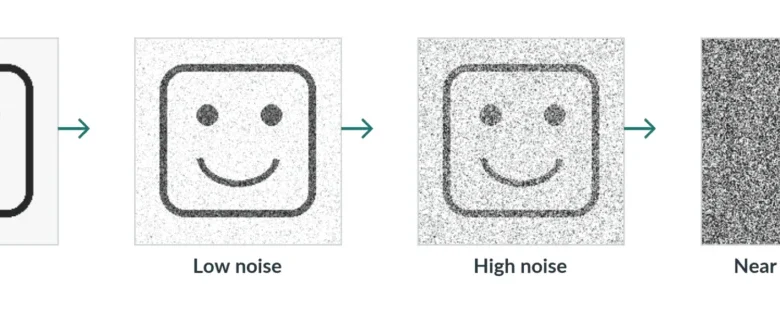
Diffusion models first gained prominence through their mastery of continuous data, specifically in the realm of image synthesis. The 2020 landmark paper, "Denoising Diffusion Probabilistic Models," established the framework for transforming Gaussian noise into coherent visual content. By learning to reverse a forward diffusion process—where clean data is systematically corrupted with noise—these models could generate high-fidelity imagery.
However, the application of this logic to language remained elusive for years. Unlike the continuous values of pixels, text consists of discrete token IDs. Adding traditional Gaussian noise to a discrete identifier is mathematically nonsensical, as "noise" does not exist in a latent space of vocabulary indices. This necessitated the development of masked diffusion, a technique where tokens are replaced with a [MASK] token rather than corrupted by additive noise.
The breakthrough occurred in 2025 and 2026, driven by a wave of high-profile research projects. Models such as LLaDA, Mercury, and Google DeepMind’s Gemini Diffusion demonstrated that diffusion-based language models could rival traditional transformers in quality while potentially overcoming the "serial dependency" problem that plagues current LLMs. By 2026, the release of DiffusionGemma underscored the transition from academic curiosity to functional, potentially scalable architecture.
Autoregressive Constraints vs. Diffusion Flexibility
To understand the shift, one must first analyze the fundamental mechanism of autoregressive models. An autoregressive model calculates the probability of a sequence by factoring it into a series of conditional probabilities: $p(x) = prod_i=1^N p(x_i mid x1, dots, xi-1)$. This design necessitates a rigid, left-to-right generation order. During inference, the model cannot predict the tenth word until it has finalized the ninth, creating a serial dependency that limits the parallelization capabilities of modern GPU hardware.
In contrast, masked diffusion models treat generation as a refinement task. Instead of predicting the next token in a sequence, the model starts with a "canvas" of unknown positions—frequently represented as a sequence of masks. In a single forward pass, the model can predict multiple tokens across different positions simultaneously. This allows the system to establish the global structure of a sentence before filling in the specific details, a method that mirrors how human writers might draft an outline before finalizing prose.
The comparative efficiency is striking. While an autoregressive model requires $N$ sequential passes for a sequence of length $N$, a diffusion model can theoretically converge on a high-quality sequence in significantly fewer iterations. This parallelization is the primary driver behind the current research interest in the field.
Chronology of Development
- 2020: The publication of "Denoising Diffusion Probabilistic Models" establishes the foundation for image-based diffusion.
- Early 2025: Research into discrete diffusion models accelerates, with projects like LLaDA exploring how to apply noise-reduction logic to textual token IDs.
- Mid-2025: Mercury and Gemini Diffusion demonstrate that discrete diffusion can produce coherent, long-form text, challenging the primacy of the Transformer-decoder architecture.
- 2026: Google releases DiffusionGemma, signaling that major AI labs are actively integrating diffusion-based generation into their product roadmaps.
Mechanisms of Masked Diffusion
The technical process of a diffusion language model is divided into three distinct phases: initialization, prediction, and refinement.

Initialization involves setting the output canvas. At the start of the process, the model is provided with either an empty sequence of masks or a noisy representation of the intended output. The model then executes a series of "denoising" steps. In each step, the neural network examines the masked sequence and estimates the probability distribution of tokens for every unresolved position.
Unlike autoregressive models, which must commit to a token immediately, diffusion models use confidence-based metrics to decide which tokens are sufficiently "resolved" to be finalized. If a model is uncertain about a specific word, it leaves the position masked and revisits it in the next iteration. Some advanced samplers even incorporate a "revision" step, where the model may overwrite previously committed tokens if later iterations indicate a higher probability of a more coherent sentence structure.
Implications and Challenges
Despite the technical promise, the transition to diffusion models faces significant hurdles. The first is the complexity of training. Standard autoregressive models benefit from a clear, objective loss function that is well-understood by researchers. Diffusion models, particularly those involving discrete tokens, require more complex optimization strategies to ensure the denoising process remains stable throughout training.
Secondly, there is the question of computational overhead. While diffusion models are faster at inference due to parallelization, the total number of operations required to reach a final, high-quality output can sometimes exceed that of a standard LLM. Researchers are currently debating whether the latency gains at inference justify the increased complexity of the model architecture.
Furthermore, there is the "Revision Problem." Because diffusion models can change previously generated tokens, they risk creating output that flickers or lacks consistency if the sampling temperature is not carefully managed. Achieving the same level of logical flow found in state-of-the-art autoregressive models remains an active area of investigation.
Broader Impact on the Industry
The shift toward diffusion models is not necessarily a signal that autoregressive models are becoming obsolete. Rather, it represents a diversification of the generative toolkit. Industry experts suggest that the future of large language models may lie in hybrid architectures. For instance, an autoregressive model might be used for simple, short-form tasks, while diffusion models could be deployed for complex creative writing or code generation where global structural coherence is more important than immediate, sequential output.
Moreover, the successful implementation of diffusion in text provides a path toward multi-modal integration. If both text and images are generated using diffusion-based processes, creating unified models that generate video, audio, and text simultaneously becomes significantly more straightforward.
Conclusion and Future Outlook
The rise of diffusion language models marks a pivotal moment in AI development. By challenging the necessity of the "one token at a time" paradigm, researchers are opening doors to more efficient and structurally flexible generative systems. While it is premature to declare the end of the autoregressive era, the emergence of models like DiffusionGemma proves that the industry is actively seeking alternatives to the sequential bottleneck.
As the research community continues to refine these models, the focus will likely remain on optimizing sampling procedures and improving the stability of discrete denoising. For stakeholders in the technology sector, the lesson is clear: the architecture of intelligence is not fixed. As computation becomes more accessible and algorithms more sophisticated, the methods by which we generate synthetic text will continue to evolve, moving closer to the parallel, holistic processes that define human cognition. For those looking to stay ahead, monitoring the development of hybrid models that combine the reliability of autoregressive training with the speed of diffusion inference will be essential.