Empowering AI Agents with Real-Time Data: Amazon Bedrock AgentCore Launches Web Search API

The integration of artificial intelligence into enterprise workflows has long been hindered by the inherent limitations of static training datasets. As AI models rely on information captured during their pre-training phase, they are frequently ill-equipped to handle dynamic, time-sensitive tasks such as monitoring evolving security vulnerabilities, tracking fluctuating market prices, or navigating shifting regulatory landscapes. To address this critical gap, Amazon Web Services (AWS) has announced the general availability of the Web Search API within Amazon Bedrock AgentCore. This new capability enables AI agents and applications to perform live web queries, providing a secure, cited, and enterprise-grade method for gathering up-to-the-minute information without compromising internal data security.
Bridging the Knowledge Gap
In modern software development and cybersecurity, the ability to act on current information is paramount. Security teams, for instance, must constantly monitor for new Common Vulnerabilities and Exposures (CVEs) affecting open-source packages and container base images. Previously, this required manual intervention or the implementation of fragmented, third-party search integrations that often lacked the security rigor required for enterprise production environments.
The Amazon Bedrock AgentCore Web Search API changes this paradigm by providing a native search interface directly within the AWS ecosystem. By routing search queries through an Amazon-operated index rather than third-party engines, organizations can ensure that their search activities remain within their secure cloud perimeter. Furthermore, every API call is signed with standard AWS credentials, eliminating the administrative burden of managing, storing, and rotating external API keys.
Architectural Advantages and Security Controls
The technical architecture of the Web Search API is designed to satisfy the strict governance requirements of large-scale organizations. When an agent invokes the API, the system returns structured data including page titles, URLs, publication dates, and highly relevant extracts. This metadata is essential for auditability, as it allows developers to implement "citation requirements"—a standard practice for ensuring that AI-generated reports are traceable to authoritative sources.
One of the most significant features of this release is the ability to enforce "guardrails" at the code level. Developers can configure specific constraints—such as publication date windows, domain blocklists, and search budgets—that the AI model cannot override. This ensures that the agent operates within defined parameters, mitigating the risk of hallucinations or the retrieval of irrelevant, outdated, or untrusted information.
Operational Efficiency: A Case Study in Security Monitoring
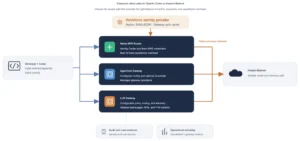
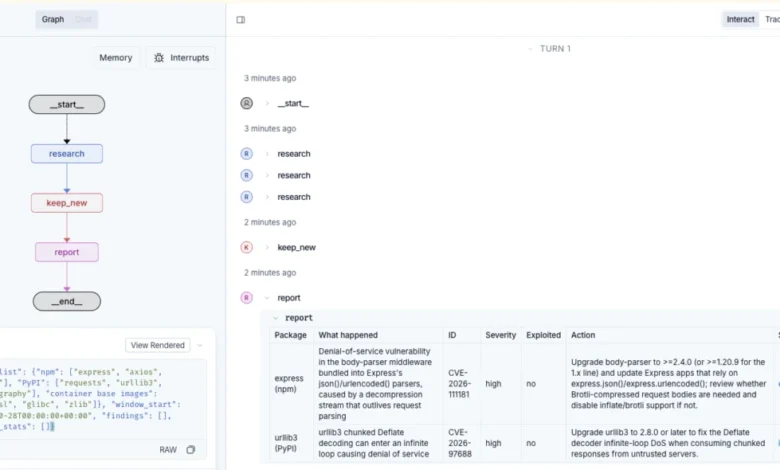
To demonstrate the practical application of this technology, AWS has provided a blueprint for building a "Daily Dependency Watch" using LangGraph, an orchestration framework often used with LangChain. In a typical scenario, a security team might need to check thousands of dependencies across multiple software ecosystems.
By leveraging the Web Search API, a LangGraph-based agent can fan out research tasks in parallel. In recent internal tests, a workload that would have taken 99 seconds using a sequential search approach was completed in just 36 seconds when parallelized across three research branches. This 63% improvement in latency highlights the efficiency gains achievable when agents are equipped with high-concurrency tools.
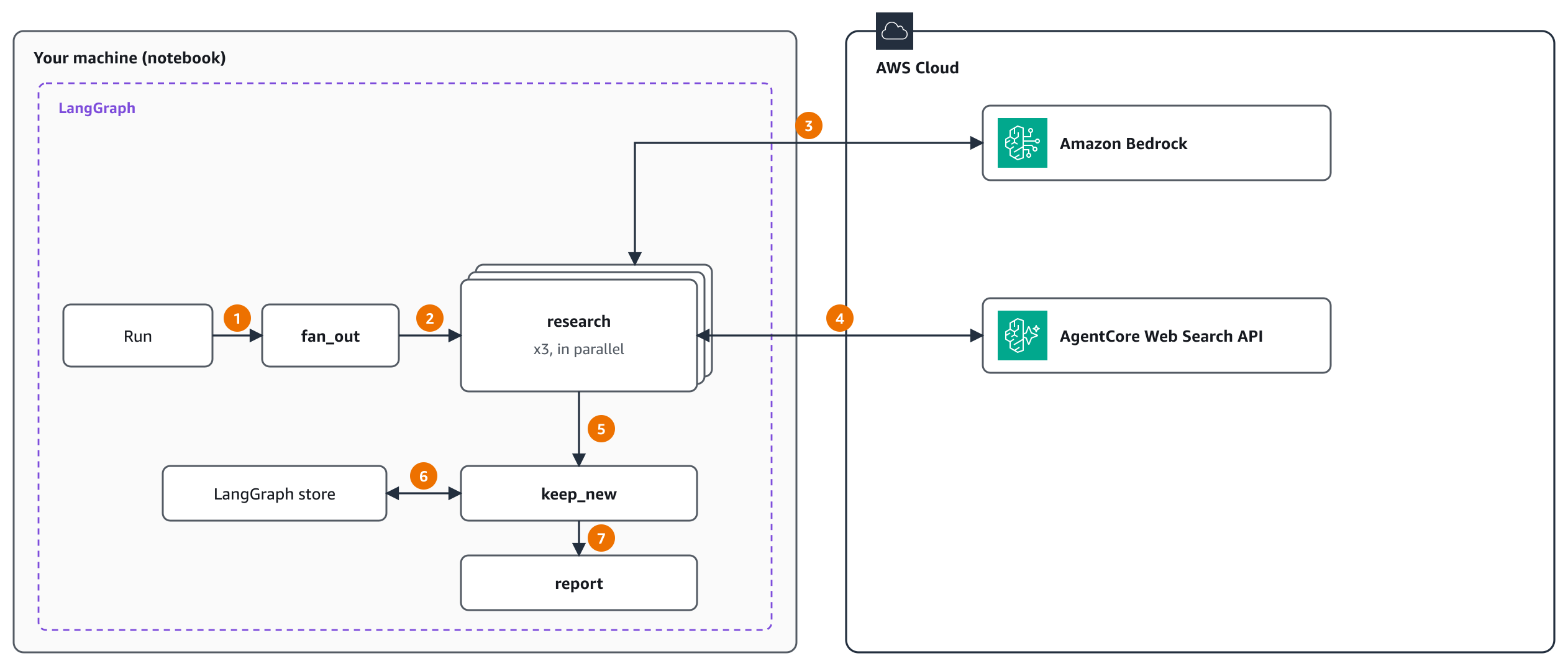
Furthermore, the integration with LangGraph allows for sophisticated "evidence checks." Before a finding is reported to a human analyst, the code validates the source, verifies the presence of relevant IDs (such as a CVE number), and checks the publication date against the allowed window. If an agent produces a result that fails these programmatic validation checks, the findings are discarded or flagged, ensuring that human analysts only review high-confidence, verified information.
Scalability via AgentCore Gateway
For organizations managing multiple teams or departments, the AgentCore Gateway provides a centralized management layer. An administrator can define a single "source policy"—for example, a mandatory blocklist of untrusted websites—and apply it globally across every agent and Model Context Protocol (MCP) client within the organization.
This capability is particularly valuable for compliance-heavy sectors like finance or healthcare. By centralizing the governance of web access, IT security teams can maintain oversight without needing to modify the underlying code of every individual agent. When a team needs custom requirements, administrators can create specific web search targets, each with its own tailored policy, ensuring that the principle of least privilege is maintained throughout the organization.
The Role of Runtime Environments
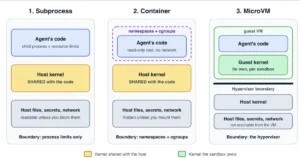
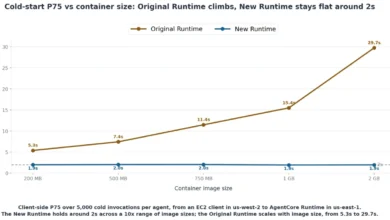
Beyond the development notebook, AWS has optimized the deployment of these agents through AgentCore Runtime. This managed environment supports agents built with various frameworks, allowing for seamless transition from prototype to production. The runtime offers two primary compute options: isolated microVMs, which ensure that each agent session is sandboxed and data-isolated; and EC2 instances, which provide the flexibility required for resource-intensive workloads, such as GPU-accelerated tasks or multi-day agent sessions.
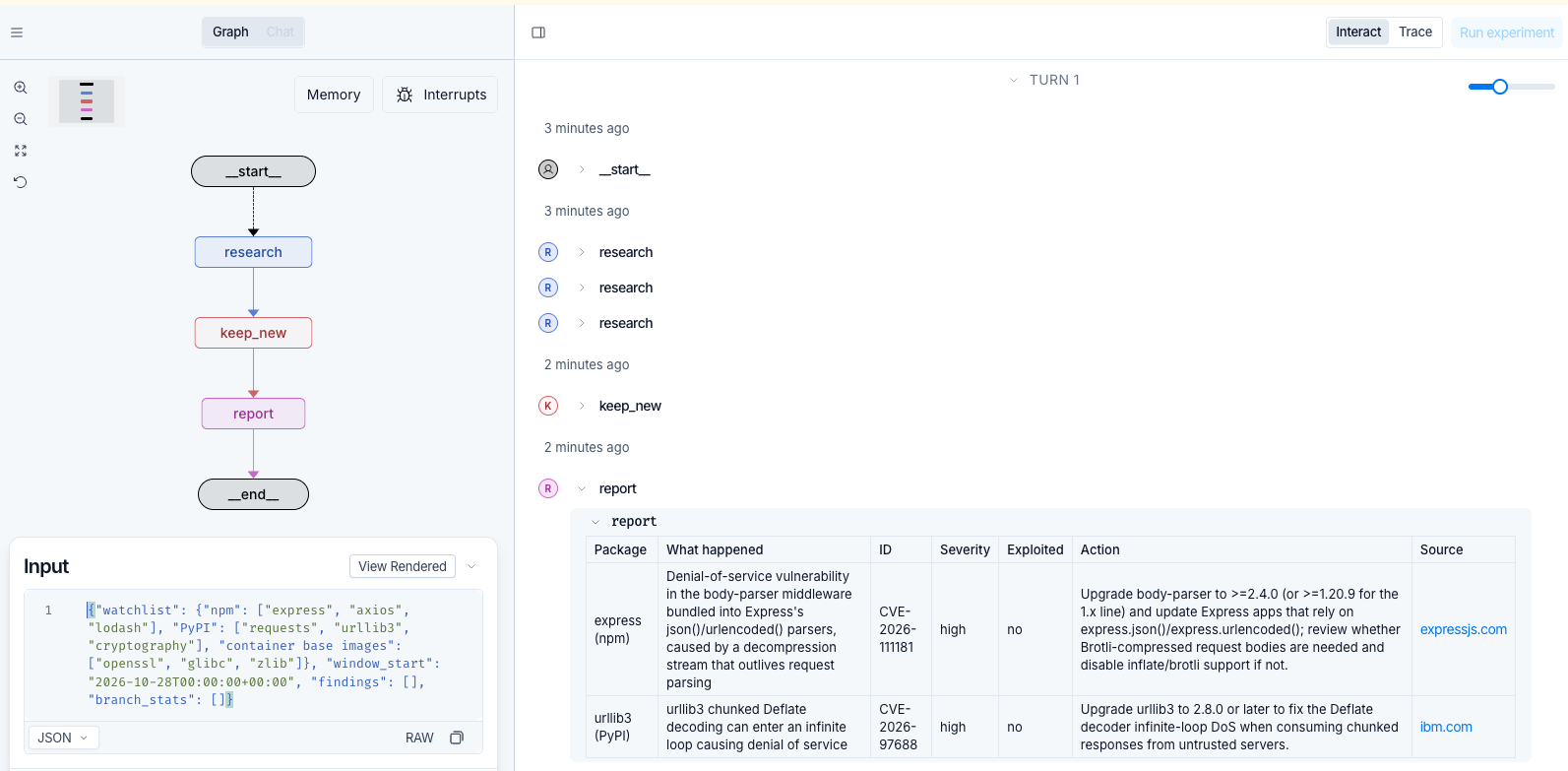
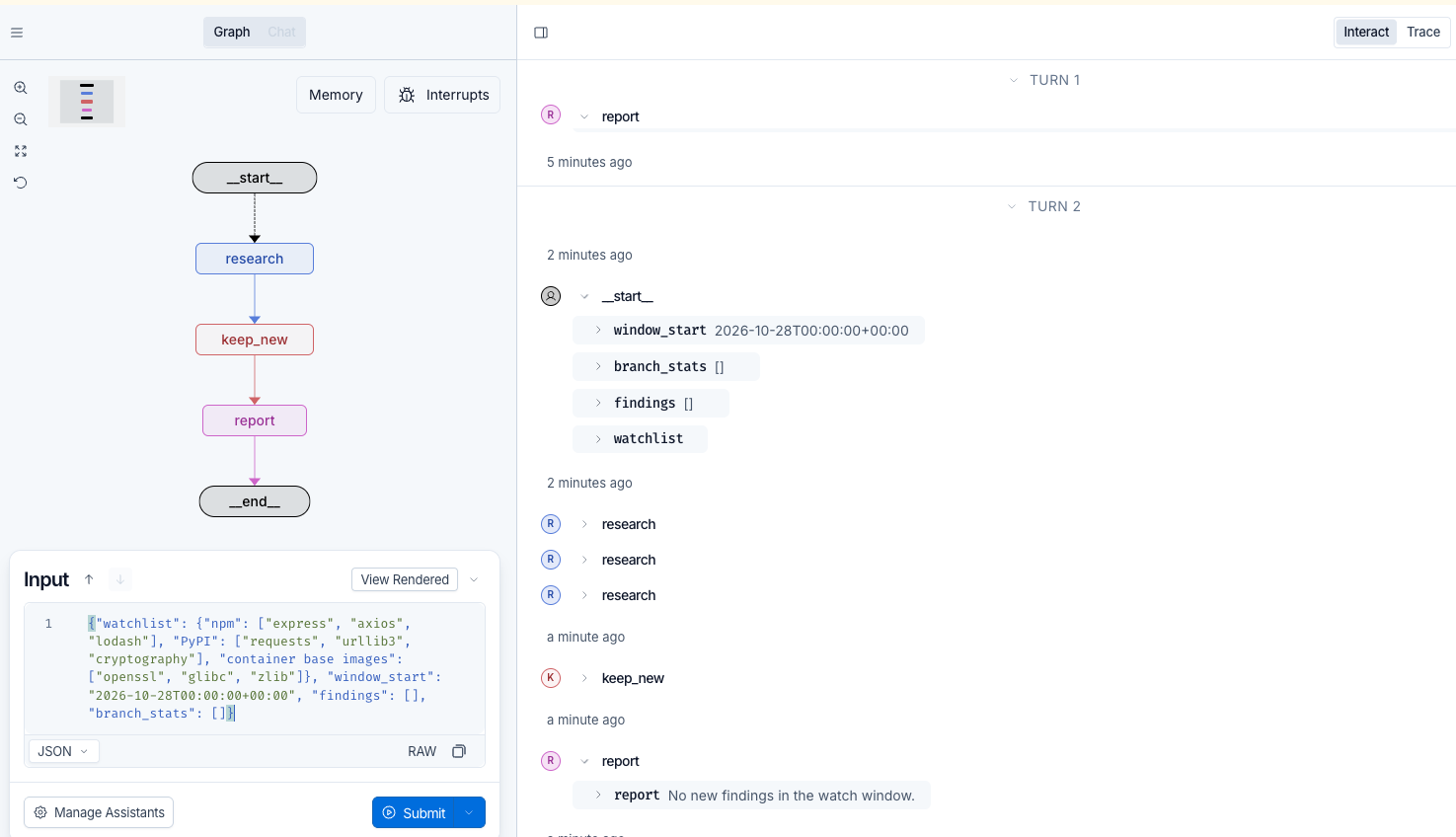
This infrastructure is designed to be ephemeral where necessary, preventing the accumulation of stale data. For long-running jobs that require persistence, the system integrates with durable storage solutions like Amazon DynamoDB, allowing agents to "remember" previous findings and avoid redundant reporting. This creates a closed-loop system where the AI continuously learns from its own history, reducing noise for end-users.
Broader Implications for Enterprise AI
The introduction of the Web Search API signifies a maturation of the agentic AI market. Early enterprise AI implementations often struggled with "context window" constraints and the inability to distinguish between high-quality news and unverified internet noise. By providing a curated, index-based search tool, AWS is effectively moving AI agents from the "generative experiment" phase into the "operational reliability" phase.
Industry analysts note that this shift is essential for the widespread adoption of autonomous agents. "The challenge has never been the model’s ability to process information," says a software systems architect familiar with the release. "The challenge has been ensuring that the information the model consumes is fresh, verified, and comes from a source that the enterprise actually trusts. By baking these controls into the API, AWS is removing the friction that usually prevents C-suite decision-makers from green-lighting autonomous agents."
Compliance and Ethical Considerations
As AI agents become more prevalent, the importance of transparency cannot be overstated. The Web Search API enforces strict adherence to citation standards, requiring that any output shown to a human user must be linked back to its source. This requirement is not merely a feature; it is a critical component of responsible AI development, allowing organizations to satisfy regulatory demands regarding data lineage and explainability.
Furthermore, the "acceptable use" policies associated with the API provide a framework for ethical data retrieval. By providing a clean interface for web search, Amazon is discouraging the "scraping" behaviors that often lead to legal and technical complications, instead promoting an API-first approach that respects the digital ecosystem.
Future Outlook
The path forward for Amazon Bedrock AgentCore appears to center on the integration of these tools into the broader AWS portfolio. As the ecosystem of LangChain and LangGraph tools continues to expand, developers can expect more pre-built integrations that allow for rapid deployment of complex agents.
For security teams, the ability to build, test, and deploy a dependency monitoring system in a matter of hours—rather than weeks of custom development—represents a significant leap in operational capability. As organizations move to integrate these agents into their daily routines, the focus will likely shift toward fine-tuning the "evidence check" layers to further reduce the rate of false positives and improve the precision of agentic outputs.
For now, the availability of the Web Search API marks a critical milestone. By providing the tools to bridge the gap between static training data and the rapidly changing real world, Amazon is enabling a new generation of enterprise agents that are not only intelligent but also accurate, accountable, and operationally ready. Developers interested in exploring these capabilities are encouraged to review the official documentation and the provided GitHub-hosted notebooks to begin building their first secure, web-aware agents.