AI-Powered Robotics Revolutionize Global Recycling and Waste Management Ahead of COP31

As international delegates assemble in Türkiye for the COP31 climate summit, discussions are heavily anchored by a pressing, practical challenge: transforming linear consumer models into enduring circular economies. Against the backdrop of an official zero-waste agenda championed by global leaders, the statistics surrounding global resource consumption paint a stark picture. At present, less than 7% of all materials entering the global economy originate from recycled or reused sources. Concurrently, municipal solid waste generation has surged past 2 billion tons annually—a staggering trajectory that environmental watchdogs warn could nearly double by the year 2050 if structural interventions are not rapidly scaled.
For decades, the recycling industry has struggled with inefficiencies, heavy reliance on scarce manual labor, and contamination issues that render much of our waste unsuitable for high-grade repurposing. However, a profound technological pivot is underway. Powered by advanced vision AI, edge computing, and high-speed industrial robotics, innovators around the globe are fundamentally reshaping how municipal solid waste, plastics, and discarded textiles are handled. By automating the identification, sorting, and extraction of valuable materials from fast-moving conveyor belts, these technologies are diverting thousands of tons of waste from overcrowded landfills while unlocking new commercial value from materials once deemed worthless.
The Evolution of Waste Management: From Manual Sampling to Real-Time Data
Historically, material recovery facilities (MRFs) operated largely in the dark. Processing tens of thousands of tons of waste daily, plant operators traditionally relied on manual sampling of less than 1% of the total waste stream to gauge composition and quality. This analogue approach meant that facility managers were constantly playing catch-up, guessing material breakdowns that fluctuated wildly by the hour, season, and regional supplier.
The integration of artificial intelligence into industrial waste processing has rewritten this paradigm. By leveraging powerful edge-computing hardware and deep-learning models trained on massive cloud infrastructures, modern recycling systems can analyze thousands of passing objects per second under harsh industrial conditions, such as heavy dust and poor lighting.
"A more circular economy relies on making better use of what we already have," explained Josh Parker, head of sustainability at NVIDIA. "AI can help us understand what’s in a waste stream, identify what can be recovered and automate the work of sorting it. We’re giving innovators the computing tools to make those processes more effective and bring them to more places."
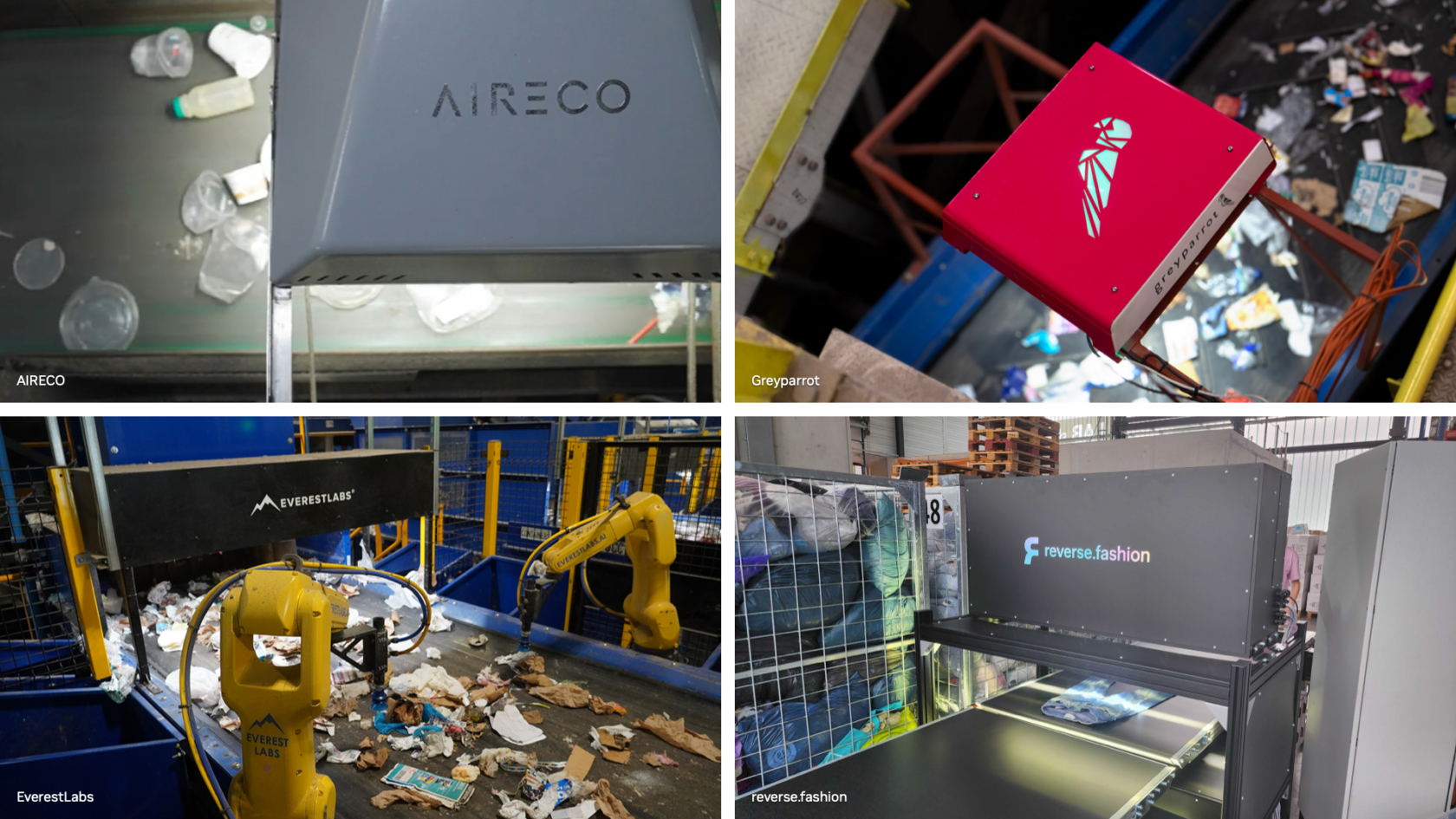
Four pioneering startups participating in the NVIDIA Inception program are leading this charge, deploying computer vision and robotics across diverse sectors of the circular economy to drastically improve resource recovery rates.
AIRECO: Transforming Plastic Waste Economics
In the realm of plastic recycling, economic viability has long been the primary bottleneck. Recycled plastics can only compete with virgin polymers if their price and quality match industrial standards. Yet, incoming plastic scrap is notoriously inconsistent, and traditional manual sorting often results in mixed materials being downcycled into low-grade products that cannot be recycled further.
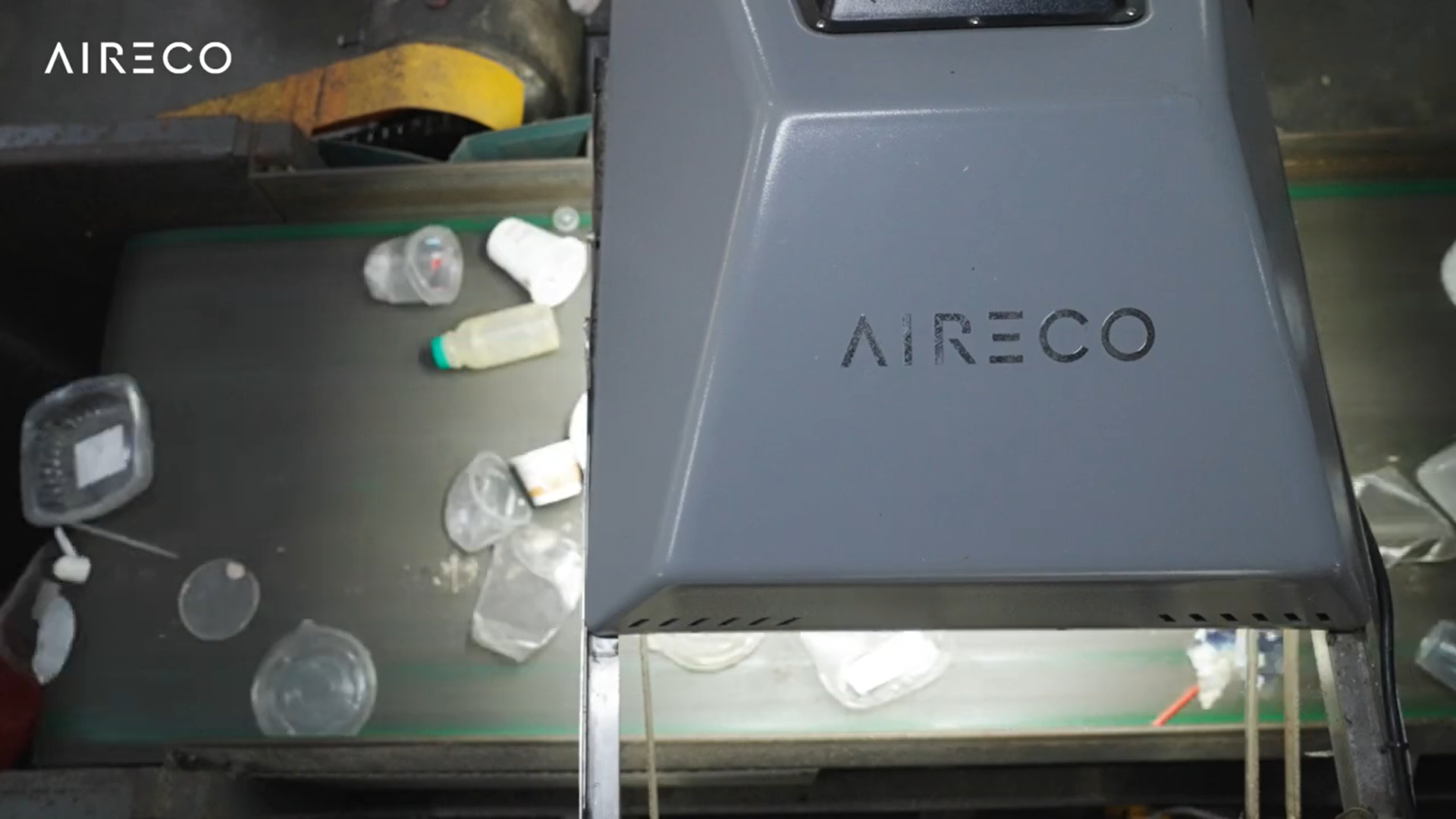
AIRECO, a Taiwan-based technology startup, is tackling this challenge head-on by utilizing high-precision vision AI to achieve closed-loop recycling. Operating out of a pilot line at a recycling plant in Tainan, AIRECO employs NVIDIA Jetson Orin NX modules to execute real-time inference. This computational power drives automated robotic arms capable of isolating specific plastic polymers from mixed scrap piles with a recognition accuracy exceeding 95%.
"The finer you sort, the more you can recycle," noted Chun-Feng Liu, founder and CEO of AIRECO. "With finely sorted material, it’s more likely that an item can stay in the loop — a plastic bottle recycled back into a bottle again and again, rather than ending up in other products that are hard to recycle further."
Looking ahead, AIRECO is preparing for a full commercial production rollout next year. The company aims to nearly triple its annual waste processing capacity from 18,000 to 48,000 tons while simultaneously slashing operational costs by an impressive 85%, proving that environmental sustainability and financial profitability can align.
EverestLabs AI: High-Speed Robotics on the Front Lines
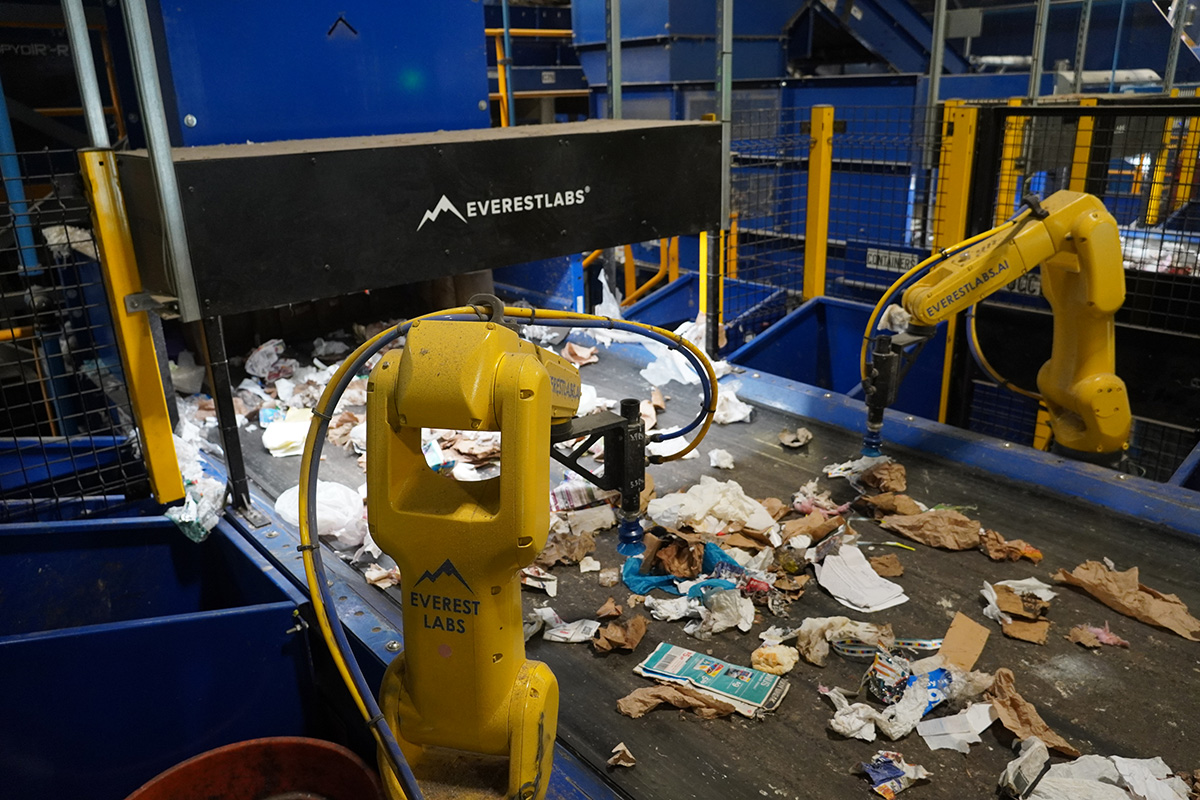
At material recovery facilities handling household recyclables, speed is everything. Conveyor belts move at rapid clips, leaving automated systems fractions of a second to identify, target, and extract valuable commodities. EverestLabs AI, a U.S.-based innovator, has emerged as a leader in this high-stakes environment, deploying roughly 150 computer-vision-guided robots across facilities in North America and Australia.
"Other robots have infinite time to finish their tasks," remarked R. Paul Singh, CEO of EverestLabs AI. "We don’t have that luxury because our conveyor belts are going to come in at a certain speed, and we have to act at a fast clip before the material moves. It’s a real-time game."
EverestLabs trains its complex neural networks on high-performance data center GPUs optimized via NVIDIA CUDA, while executing real-time inference on NVIDIA RTX GPUs deployed at the edge. To date, the company estimates its deployed systems have successfully identified approximately 40 billion individual objects, recovered roughly 25,000 tons of recyclable material, and prevented an estimated 30,000 metric tons of carbon dioxide emissions.
Beyond physical sorting, EverestLabs is expanding its software capabilities by releasing agentic AI tools designed to provide actionable, data-driven insights to facility operators and corporate executives alike. By capturing rich metadata regarding material types, brand packaging, and structural composition, these systems are bridging the gap between physical plant operations and corporate sustainability reporting.
Greyparrot: Unprecedented Visibility into the Waste Stream
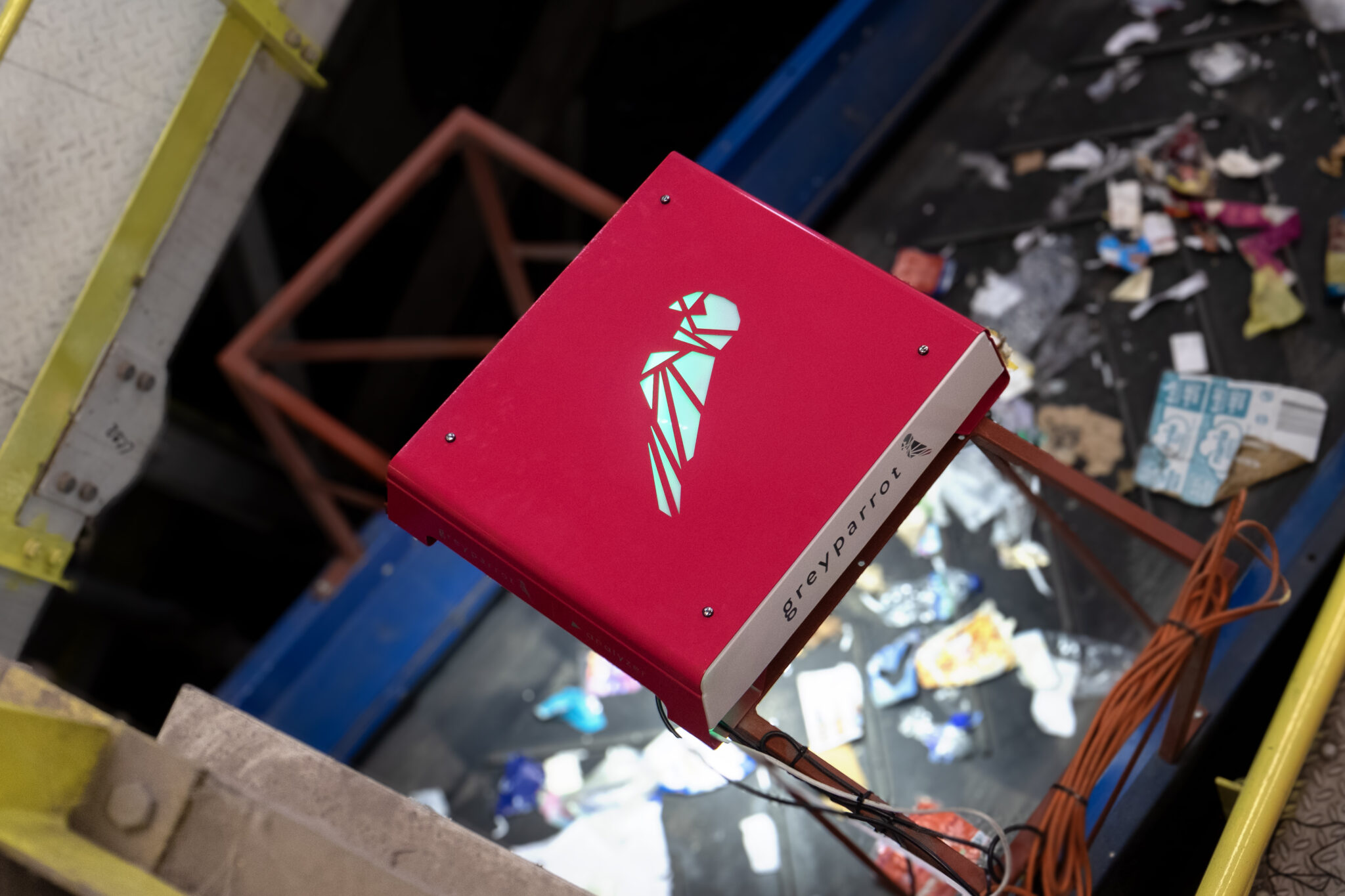
For facility operators managing massive tonnages of mixed recyclables, gaining complete visibility over incoming waste streams has traditionally been impossible. U.S. and U.K.-based startup Greyparrot engineered its Analyzer platform to solve this exact visibility gap. Suspended directly above high-speed conveyor belts—moving at velocities up to 4 meters per second—the system uses sophisticated computer vision to classify every passing item by material type and brand identity.
"Waste changes all the time. It shifts by hour, by season, by supplier," observed Ambarish Mitra, cofounder of Greyparrot. "Before, operators guessed based on a tiny sample, and now they can see exactly what’s on the belt."
By training its AI models on billions of objects using NVIDIA GPUs and deploying rapid detection software via NVIDIA Jetson modules at the edge, Greyparrot has scaled its technology to over 300 Analyzer systems operating across more than 20 countries. Collectively, these systems have recorded over a trillion bounding-box detections, compressing the time required to audit 15 tons of waste from an arduous 375 hours down to a mere six hours.
The commercial and environmental implications of this transparency are profound. Facilities utilizing Greyparrot’s real-time analytics report operational efficiency gains ranging from 10% to 30%. Major global packaging entities, including Amcor, utilized the platform to achieve a 12% lift in the recovery yield of food-grade polypropylene. Meanwhile, fast-moving consumer goods giants such as Coca-Cola, Colgate-Palmolive, and Kenvue leverage the technology to track how their specific packaging designs perform in real-world recycling facilities.
reverse.fashion: Automated Sorting for the Global Textile Crisis
While municipal solid waste and plastics receive substantial regulatory attention, the fashion and textile industry presents an equally daunting environmental crisis. Europe alone generates nearly 7 million tons of used textiles annually. Approximately one-quarter of these discarded garments are collected separately and manually sorted into hundreds of distinct categories, ranging from vintage resale streams to downcycled industrial cleaning cloths and furniture insulation. Because this manual process is labor-intensive, slow, and expensive, vast amounts of reusable textile value remain trapped in a linear disposal cycle.
Berlin-based startup reverse.fashion is introducing automation to this traditionally stagnant sector through high-resolution computer vision. The company’s sophisticated system analyzes textiles moving across conveyor belts at speeds of 3 meters per second, passing each item through more than a dozen vision AI models optimized via NVIDIA TensorRT software and powered by edge-based NVIDIA Jetson modules.
The technical hurdles in textile sorting are exceptionally high. Unlike rigid plastic containers or aluminum cans, fabrics feature intricate weaves, variable wear-and-tear, and diverse color combinations. "Compared to classical waste sorting, our AI models have to run at very high resolution because humans are picky with textiles," explained Karsten Pufahl, cofounder and chief technology officer of reverse.fashion. "The computer vision pipeline needs to spot small defects to determine the quality and potential value of each garment."
By accurately identifying product classifications, physical defects, color profiles, sizing parameters, brand markers, fabric constructions, and seasonal styles, reverse.fashion’s technology can successfully sort a volume of garments in a single hour that would previously have required an entire week of manual labor. The system is currently being deployed across textile processing facilities throughout Europe.
Broader Economic and Environmental Implications
As world leaders deliberate policy frameworks at COP31, the technological evolution demonstrated by these NVIDIA Inception startups underscores a vital reality: achieving a circular economy is no longer merely an ideological aspiration, but an achievable industrial engineering objective.
The convergence of edge AI, high-speed computer vision, and adaptive robotics addresses the core vulnerabilities of traditional waste management—high labor costs, data opacity, and low recovery yields. By transforming heterogeneous waste streams into clean, highly classified, and commercially viable secondary raw materials, AI-driven recycling is redefining the baseline of sustainable manufacturing. As these technologies scale globally over the coming decade, they offer a tangible pathway toward decoupling economic growth from resource depletion, turning the global waste crisis into an engine for sustainable industrial renewal.