The Power Struggle: How the Insatiable Electricity Demand of AI Data Centers Sparked a National Backlash

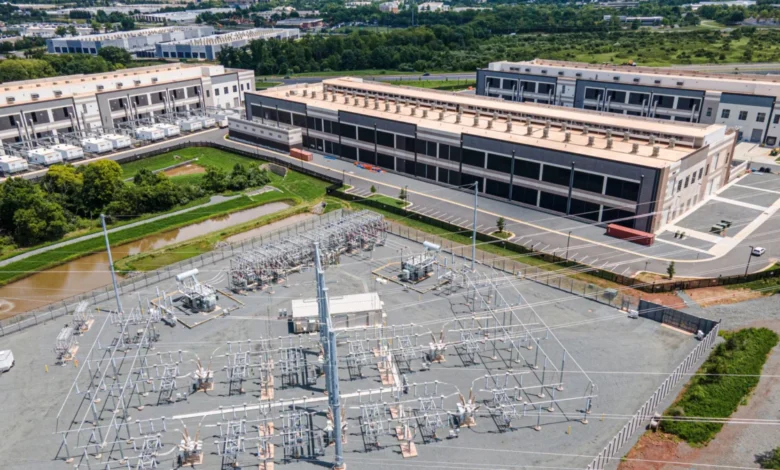
Driving through Ashburn, Virginia, presents a surreal landscape of concrete monolithic structures bearing corporate monikers like Skybox and CloudHQ. Situated in Loudoun County—a region globally recognized as Data Center Alley and responsible for housing the largest concentration of data center infrastructure on Earth—this suburban enclave has inadvertently become ground zero for a burgeoning grassroots movement. While voters across the United States cast ballots during the midterm elections last week, the local friction in Ashburn illustrated a much broader, nationwide reckoning over the physical and economic footprint of artificial intelligence.
For months, executives within Big Tech have attempted to frame the growing public resistance to data centers through the lens of a broader culture war. Following the midterms, OpenAI Chief Global Affairs Officer Chris Lehane asserted in a public statement that these massive technological hubs have effectively transformed into a proxy for widespread public unease regarding economic affordability, corporate consolidation, and a generalized loss of individual agency over the future. Yet, a deeper examination of the realities on the ground in Data Center Alley suggests that characterizing the backlash merely as a symbolic culture war obscures a much more fundamental, physical constraint: electricity.
The Electricity Dilemma: Grid Connection Versus Onsite Generation
The fundamental conflict driving the data center backlash centers on an unprecedented appetite for electrical power. AI companies looking to train and deploy advanced large language models require vast computational capacity, which translates directly into astronomical energy consumption. Broadly speaking, developers utilize two primary methods to power these facilities: connecting to existing public utility grids or generating electricity onsite behind the meter.
In Northern Virginia, where data center expansion has historically followed a steadier, albeit rapid, trajectory compared to the breakneck pace seen in other parts of the country, most facilities rely on direct grid integration. Inside an operational Equinix facility in Ashburn, massive diesel generators stand ready as emergency backups, but the primary power is drawn directly from the local utility provider, Dominion Energy. The energy mix supplied by Dominion heavily relies on natural gas—a fossil fuel that, while cleaner than coal or oil, falls significantly short of renewable energy standards.
The sheer scale of these operations defies conventional industrial metrics. The average data center operating currently in this specific part of Virginia boasts a power capacity of approximately 54 megawatts. To put this into perspective, a single facility of this size consumes more electricity than the entire Denver International Airport.
Elena Schlossberg, a prominent activist spearheading opposition against data center proliferation in Virginia, notes that the tech industry’s persistent framing of the issue as a culture war is fundamentally misleading. According to Schlossberg, local residents are not reacting to abstract ideological grievances, but rather to tangible utility burdens. "It was always about power," she states, referring explicitly to electricity.
The Regulatory Fallout and Local Economic Strain
While some protestors are undoubtedly motivated by broader anti-tech populism, the immediate, localized consequences of drawing immense loads of power from the shared grid have driven the political fallout. In Virginia, mounting public pressure and subsequent protests have successfully compelled state regulators and lawmakers to implement rigorous new rules. Under current state mandates, data center developers are now legally required to bear the full financial cost of constructing new transmission lines to the grid, ensuring these infrastructure expenses are not shifted onto residential and small business ratepayers.
Furthermore, industry insiders report that developers are actively bracing for forthcoming regulations that could legally mandate their disconnection from the grid during periods of peak public demand. Activists like Schlossberg warn of severe downstream consequences should the grid remain critically strained. Potential outcomes include facilities running their emergency diesel generators more frequently or utilities expanding fossil-fuel generation capacity rather than investing in green energy alternatives to meet the surging demand.
The Shift Toward Rural Onsite Generation
Outside of established hubs like Northern Virginia, the overwhelming majority of next-generation AI data centers currently under development are engineered on an entirely different scale. The computational power demanded by current AI infrastructure models is so immense that companies are increasingly bypassing traditional urban and suburban utility grids altogether. Instead, developers are acquiring tracts of land in sparsely populated rural areas where local grid infrastructure is virtually nonexistent.
Operating in these remote locations requires developers to bring their own power sources, relying on behind-the-meter natural gas-powered turbines supplemented by extensive arrays of diesel generators for backup. Highlighting this trend, artificial intelligence startup Anthropic recently agreed to a $3.4 billion deal to secure dedicated gas turbine power—marking one of the largest private energy procurement agreements ever executed by an AI enterprise.
While smaller AI training facilities typically require a baseline of 300 megawatts—an amount comparable to heavy industrial sites like repurposed steel mills—idealized future facilities are projected to draw up to 6,000 megawatts. This staggering volume of electricity matches the total energy consumption of a major metropolitan center like the city of Chicago, which currently relies on more than twenty dedicated power plants operating within city limits, alongside dozens more situated further afield.
Environmental and Community Impacts
The concept of technology companies generating their own electricity might initially appear advantageous, as it theoretically isolates the local public grid from severe strain. However, industrial power generation of this magnitude inevitably impacts surrounding ecosystems and communities. Historically, when public utilities constructed heavy industrial infrastructure, local populations retained substantial legal avenues to influence siting decisions through public hearings and regulatory oversight. Today, private technology conglomerates are independently undertaking projects of equivalent or greater magnitude with significantly less public accountability.
Natural gas turbines invariably release air pollutants, and the emergency or supplemental use of diesel generators presents even more acute environmental hazards. The unprecedented speed at which tech companies have rushed to operationalize these facilities has occasionally resulted in severe environmental non-compliance. Notably, the Environmental Protection Agency previously cited Elon Musk’s xAI for violating clean air regulations after the company installed and operated dozens of unauthorized natural-gas-fueled turbines to power a massive data center in Memphis, Tennessee.
Broader Implications and Global Shifts
Big Tech’s tendency to attribute local resistance to a broader culture war obscures a fundamental urban planning reality: there is an inherent limit to how desirable it is to live adjacent to a high-density, high-consumption "city of computers." While technology firms are increasingly adapting their strategies by offering higher tax revenues, creating local employment opportunities, and engaging in community-benefit negotiations—concessions directly prompted by recent wave-making protests—fundamental concerns remain. When a small rural municipality or suburban township is asked to host an industrial complex with the resource footprint of a major theme park, an international airport, and a heavy steel plant simultaneously, public trepidation is a rational response.
Nevertheless, industry insiders maintain that their ultimate operational ambitions are constrained far less by localized public opposition than by a stark global shortage of accessible electricity.
As public pushback intensifies and regulatory frameworks tighten across the United States, developers are adapting their geographic strategies. Newly elected political figures are adopting skeptical stances on rapid data center expansion, prompting companies to look elsewhere. Domestically, developers are increasingly turning to sparsely populated regions with existing fossil fuel infrastructure, such as the Permian Basin, where vast networks of natural gas pipelines simplify the logistics of securing onsite power generation. Concurrently, major technology firms are accelerating international expansion; Google notably announced a $15 billion investment in data center infrastructure projects in Malaysia just one day after the U.S. midterms.
For the most radical proponents of unfettered technological scaling, however, terrestrial limitations may soon become obsolete entirely. Reflecting the ambitions of the sector’s most prominent figures, Elon Musk remarked on social media immediately following the midterm results that establishing orbital data centers in outer space is beginning to look "pretty appealing right now." Whether humanity’s digital future ultimately resides in remote rural valleys, foreign markets, or the vacuum of space, the physical laws governing electricity consumption ensure that the friction between artificial intelligence and planetary resources will remain a defining challenge of the decade.