The HS2 Reset: Financial Realities, Structural Overhauls, and Crucial Lessons for Modern Project Management

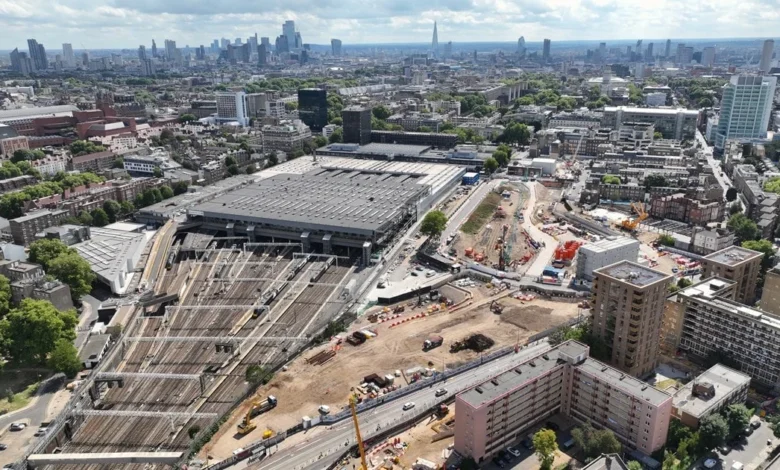
High Speed Two (HS2), the flagship high-speed rail initiative designed to transform Britain’s transport infrastructure, faces an astronomical financial trajectory, with projected costs soaring between £87.7 billion and £102.7 billion. According to the National Audit Office’s (NAO) comprehensive report, High Speed Two reset, published in June 2026, the full scope of the railway could open up to 13 years later than originally scheduled. While the eye-watering figures command immediate attention, the deeper narrative centers on systemic organizational strain, governance failures, and the complex challenge of realigning a mega-project that has severely outgrown its administrative framework.
Background and Chronology of a Troubled Programme
The genesis of HS2 was envisioned as a monumental modernization of the United Kingdom’s rail network, connecting London, the Midlands, and the North. However, the endeavor has been plagued by perpetual revisions. The initiative underwent significant resets in 2020, followed by further restructuring of the Euston station terminus in both 2020 and 2023. Compounding these adjustments, the northern leg, known as Phase 2, was officially cancelled in 2023, effectively shrinking the active programme into a London-to-Birmingham link.
The latest chapter, the January 2025 reset initiated by HS2 Ltd’s newly appointed chief executive, aims to arrest spiraling expenditures and address structural flaws. Despite these ongoing interventions, the NAO report underscores that the current estimates still carry high degrees of uncertainty, prompting a projected delivery window for a firmer cost baseline by spring 2027.
Financial Breakdown and Escalation Factors
The financial expansion of HS2 is unprecedented, with current projections indicating that the London-to-Birmingham line will cost roughly twice the initial 2020 forecasts. To date, expenditures—including funds allocated to the now-cancelled Phase 2—have reached £46.8 billion as of March 2026.
An internal analysis by HS2 Ltd attributes the staggering £48.6 billion increase from the original funding envelope to the current £93.2 billion target across four primary drivers:
- Inflation: Accounting for 34% of the increase, driven by macroeconomic pressures and rising global material costs.
- Underestimation: Comprising 32%, reflecting inaccurate initial forecasts regarding the time and resources required for construction and testing.
- Inefficient Delivery: Representing 23%, attributed to suboptimal productivity and execution on completed works.
- Scope Changes: Accounted for 11%, capturing essential engineering and structural requirements omitted from the original baseline.
Crucially, the NAO notes that approximately two-thirds of the cost escalation stems directly from estimating inaccuracies and delivery inefficiencies rather than broader economic shifts. Furthermore, the operational cost of the reset initiative itself has reached £153 million.
Revised Timelines and Operational Milestones
The timeline adjustments for the railway reflect severe delays across all phases. Initial passenger services operating between Old Oak Common and Birmingham are now projected to commence between May 2036 and October 2039. Meanwhile, the completion of the full line running from Euston to north of Birmingham is scheduled between May 2040 and December 2043. Compared against the 2020 master plan, these dates represent delays ranging from 3 to 13 years.
To mitigate further risks, strategic scope reductions have been implemented. Notably, trains will operate at a reduced maximum speed of 320 km/h instead of the planned 360 km/h. This adjustment permits a simpler train control and signaling architecture, reducing testing overheads and saving an estimated £1 billion to £2.5 billion. While this optimization potentially advances the operational timeline by at least a year, it incurs an estimated trade-off of £1.3 billion in long-term economic benefits derived from slightly slower journey times.
Governance, Structural Reforms, and the Euston Terminal
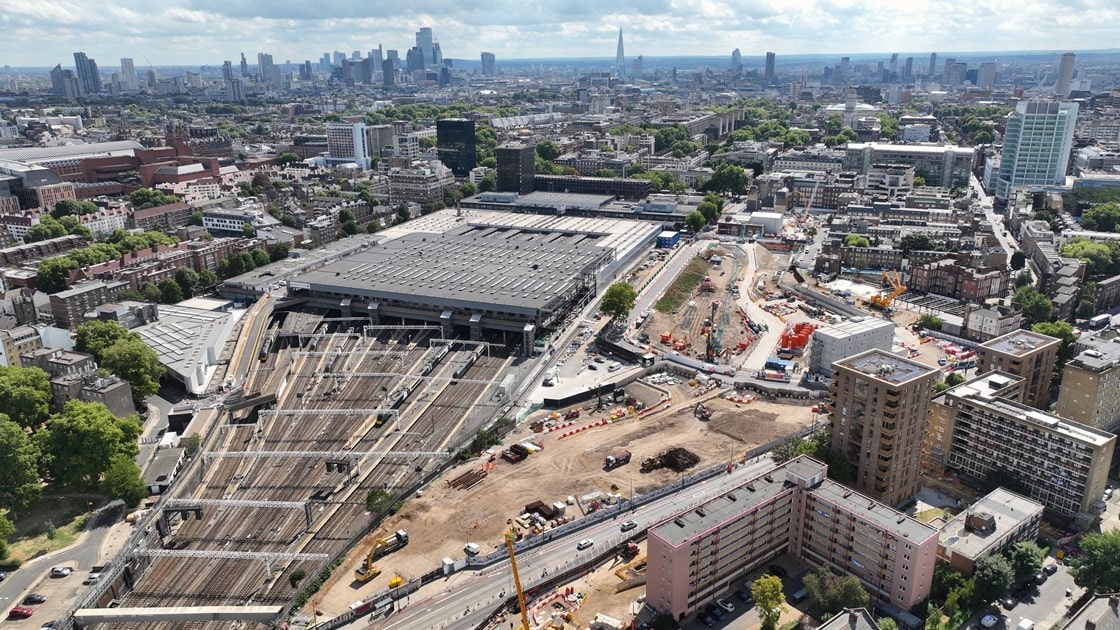
The administrative architecture governing HS2 has undergone substantial structural overhaul. The Department for Transport (DfT) retains its role as sponsor and primary funder, while HS2 Ltd executes construction. To address historical fragmentation at the London terminus, a newly established corporate body, the Euston Delivery Company, has been deployed to act as a "single directing mind" with the explicit authority to manage trade-offs and streamline decision-making.
The January 2025 reset established four distinct workstreams aimed at rectifying commercial, operational, and structural deficiencies. Concurrently, DfT and HS2 Ltd have been systematically processing 124 strategic recommendations originating from prior independent reviews, having completed 45 recommendations (36%) by February 2026.
Broader Implications and Lessons for Project Management
Beyond the specific domain of civil engineering and high-speed rail, the NAO report serves as an exhaustive case study for project management across industries, highlighting critical vulnerabilities that manifest in projects of all scales:
-
Premature Execution Without a Stable Baseline
The chief executive’s review confirmed that physical construction commenced prematurely. Once heavy civil works are underway, operational momentum creates immense political and financial resistance to halting and fixing flawed plans. Modern project governance demands that foundational assumptions and cost baselines be thoroughly verified before authorizing execution phases. -
Organizational Agility and Scope Alignment
Following the cancellation of Phase 2, HS2 Ltd failed to scale down its administrative center to match its diminished operational footprint. Mega-projects frequently suffer from bloated central bureaucracies, siloed departments, and commercial skill gaps. Organizational structures must actively mirror the exact parameters of the current scope. -
Data Integrity and Stakeholder Trust
Reliable forecasting is contingent upon verifiable, transparent data. When project teams lack confidence in the numerical integrity of status reports and baselines, strategic decision-making falters. Re-establishing data validity is a mandatory prerequisite for any organizational turnaround. -
Supply Chain Leverage and Cost Transparency
Initial attempts by HS2 Ltd to renegotiate major contracts in 2024 failed due to a lack of precise internal cost intelligence and an unappealing risk-transfer framework. Subsequent successful renegotiations involved resolving historic liabilities first—identifying approximately £500 million in disputed costs—thereby establishing a viable path toward targeted savings of £2 billion. -
Risk Mitigation Through Scope Optimization
Accepting "good enough" engineering parameters can drastically curtail systemic risk. By recalibrating maximum train speeds and simplifying signaling requirements, the project successfully shed billions in complexity and testing exposure, proving that strategic scope reduction can be an effective risk-management tool. -
Collaborative Governance and Defined Authority
Complex programmes require clear lines of authority rather than layered bureaucratic boards. Establishing dedicated corporate entities like the Euston Delivery Company resolves jurisdictional deadlocks, ensuring single-point accountability for critical path decisions. -
Guarding Against the Sunk Cost Fallacy
DfT disclosures indicate that had contemporary cost realities been understood in 2020, the benefit-cost ratio of HS2 would register between 0.3 and 0.4—categorized conventionally as poor value for money. The decision to continue hinges on the premise that previously expended capital is a sunk cost, reinforcing the necessity for rigorous, stage-gate business case validations throughout a project’s lifecycle.
Outlook and Future Trajectory
The immediate future remains intensely demanding for the HS2 programme team. HS2 Ltd is currently integrating the initial iterations of its updated baseline, with the final comprehensive baseline scheduled for formal release in spring 2027. Concurrently, the organization is conducting capability assessments across ten core functional areas—spanning project controls, programme management, and integration—to eradicate priority competency gaps.
As the programme navigates these extensive corrective measures, industry analysts emphasize that rushing the reset process to satisfy political timelines risks generating further systemic instability. For project professionals globally, the HS2 trajectory remains a definitive reminder that robust planning, transparent data structures, and disciplined scope governance are non-negotiable prerequisites for long-term delivery success.