WoW Forever: A Comprehensive Analysis of the November 2026 Classic Expansion Launch

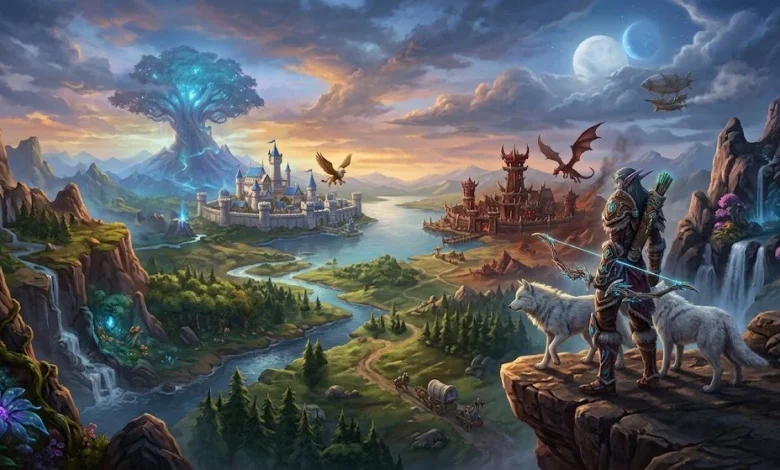
The gaming landscape is bracing for a significant shift as Blizzard Entertainment prepares to launch WoW Forever on November 4, 2026. This iteration represents a unique design philosophy: maintaining the rigid, slow-burn mechanics that defined the original 2004 World of Warcraft experience while simultaneously integrating modern quality-of-life features and expanded content. With a hard-capped level limit of 60, the expansion is clearly aimed at players who value the journey over the destination, yet it offers enough fresh material to entice veterans who have exhausted the existing Classic Era servers.
The Foundation of the Experience
The core design of WoW Forever remains rooted in the traditional group-dependent leveling curve. Unlike modern iterations of the game, which prioritize solo-play speed and streamlined questing, WoW Forever preserves the punishing, quest-heavy pacing that demands cooperation. The fundamental mechanics—gold scarcity, the importance of Auction House management, and the necessity of coordinated party play for even mid-level dungeons—remain untouched.
For the player base, the most critical takeaway is that the "Classic feel" is intentional. The introduction of new zones and systems is intended to augment the existing world rather than replace it. By refusing to increase the level cap, developers are signaling that the prestige associated with reaching Level 60 will remain a long-term goal, not a trivial milestone.
A Chronology of the Launch
The rollout strategy for WoW Forever is staggered, ensuring that players do not burn through content within the first week. The timeline is as follows:
- November 4, 2026: Official launch. Players gain access to the new starting area of Zephras Isle, the mid-level zone Shen’Dralas, the frontier region of Riverglades, and the level-60 endgame zone of Mount Hyjal.
- Late November 2026: Initial community settling period, characterized by character leveling and the exploration of new racial class combinations.
- December 9, 2026: Scheduled release of the first raid tier. This gap between the launch and the first raid is designed to allow the player base to reach the level cap and complete the necessary attunements, which remain a staple of the Classic experience.
New Frontiers: Zones and Geography
The expansion introduces four primary zones designed to deepen the world-building of the Classic era. Zephras Isle serves as the primary starting zone for the new Skyborne race, offering a tutorial-dense environment for levels 1–12. Shen’Dralas provides a mid-level narrative bridge, tying into established Classic lore, while the Riverglades (levels 35–45) act as a challenging frontier environment. The most anticipated addition is Mount Hyjal, which functions as a dedicated endgame zone for level 60 players, specifically designed to follow the narrative beats of the Archimonde encounter.
These additions add a significant amount of "ground to cover." While they do not explicitly speed up the leveling process, they offer variety for players who have already leveled multiple characters through the traditional Classic zones.
Demographic Shift: The Skyborne and New Class Matrices
The inclusion of the Skyborne race—available to both the Alliance and the Horde—is the most substantial change to the game’s meta. By allowing both factions access to the same new race, Blizzard is mitigating the demographic imbalances that often plague Classic servers.
Furthermore, the expansion expands the racial-class matrix. The inclusion of Dwarf Shamans and Undead Paladins represents a significant departure from the traditional restrictions of the 2004-era game. This change forces a complete re-evaluation of character planning. Players who previously chose a race based on the most optimized racial bonuses for their class now have a broader array of choices, which will likely lead to a more diverse distribution of race-class combinations across the player population.
The Legacy System: Horizontal Progression
Perhaps the most notable addition is the Legacy System. This horizontal progression path allows players to earn account-wide, non-combat perks. By tying these rewards to milestones such as crafting goals, dungeon clears, and exploration, the developers are incentivizing a "completionist" playstyle. This system effectively rewards the time spent playing secondary characters, ensuring that even if a player is not focused on raiding, their time is still contributing to the overall strength and aesthetics of their entire account.
Economic and Profession Dynamics
While full details regarding profession overhauls are pending, the introduction of "campsites" is a confirmed quality-of-life feature. These locations allow groups to congregate and share unique buffs, further reinforcing the importance of social gameplay. Economically, the game remains unchanged; the Auction House will continue to operate under strict deposit and undercutting rules, ensuring that gold remains a difficult resource to acquire. For many players, the "first mount" achievement will remain a primary economic hurdle, preserving the sense of accomplishment that defined the original game.
Analytical Perspective: Why Boosting Remains Relevant
Despite the new content, the underlying design of WoW Forever remains time-intensive. The persistence of the "time-sink" model has led to a sustained demand for third-party boosting and carry services. In the context of this expansion, these services are not used to bypass the game’s mechanics, but rather to navigate the "time gaps" inherent in the leveling and dungeon-grinding processes.
Market analysts observing the Classic community suggest that as long as the level cap remains fixed at 60 and the leveling speed remains intentionally slow, players will continue to seek ways to optimize their time. The demand for help with new dungeons or leveling new Skyborne characters is expected to spike immediately following the November 4 launch. It is important to note that these services target the player’s time investment rather than the game’s core systems, which remain strictly governed by the original 2004-era logic.
Broader Implications and Official Stance
The strategy behind WoW Forever is a calculated effort to appease two distinct demographics: the purists who demand the original 2004 experience, and the modern player who expects a degree of horizontal progression. By layering the Legacy System on top of the classic level-60 structure, Blizzard is attempting to create a sustainable "forever" game.
Official statements from the developers have remained focused on the preservation of the "Classic mindset." The decision to delay raids until December 9 is a clear indication that the developer intends for the initial month of the game to be focused on the leveling experience and the exploration of new zones.
The lack of public information regarding attunement policies for the upcoming raids has created a degree of speculation within the community. However, most experts suggest that Blizzard will likely lean toward the traditional, more rigorous attunement processes, as these were instrumental in maintaining the longevity of the endgame in previous iterations.
Conclusion: A Measured Evolution
WoW Forever is not a reimagining of World of Warcraft, but rather a maturation of the Classic concept. It adds sufficient content to refresh the experience for veterans while keeping the core pillars—group-dependent leveling, scarce resources, and community-focused raiding—firmly in place.
As the launch date of November 4, 2026, approaches, the community’s focus remains divided between the excitement of new zones like Mount Hyjal and the traditional anticipation of the long, arduous climb to level 60. With the integration of the Legacy System, players now have a reason to engage with every facet of the game, ensuring that even the most "tedious" parts of the classic loop contribute to a broader sense of progression. The success of this expansion will ultimately hinge on whether the new content can live up to the standard of the original game while respecting the limitations that have made the Classic experience a unique phenomenon in the history of massively multiplayer online role-playing games.