Apple Watch Audio Intelligence Feature Siri Recaps Raises Privacy and Accuracy Concerns in Developer Beta

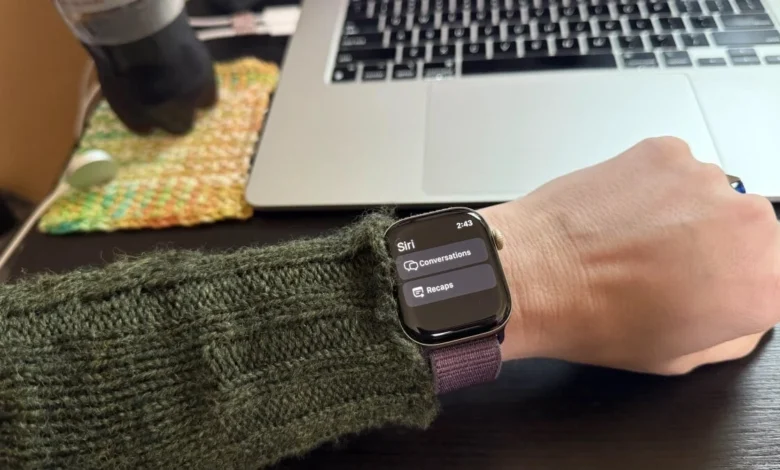
Apple Inc.’s latest push into conversational artificial intelligence has sparked fresh debates over personal privacy and ambient computing accuracy. Following its initial announcement in September, the technology giant has rolled out the developer beta for its new "Audio Intelligence" suite, which includes a feature tentatively dubbed "Siri Recap." Designed to continuously monitor, analyze, and summarize ambient conversations picked up by wearable hardware, the tool has already drawn intense scrutiny from early adopters, privacy advocates, and technologists alike.
While Apple positions its on-device machine learning architectures as a leap forward in personal productivity and ambient assistance, the real-world deployment of continuous audio summarization reveals significant technical limitations and profound ethical questions regarding consent in everyday social interactions.
Main Facts and Core Functionality
The Siri Recap feature operates by utilizing the internal microphones of compatible hardware to capture spoken dialogue throughout the user’s day. Instead of generating verbatim audio transcripts or permanent audio files—which Apple explicitly avoids to mitigate severe privacy risks—the system processes ambient speech locally using advanced natural language processing models. It then compiles these interactions into hourly textual summaries accessible via the paired iPhone’s Siri application.
Unlike traditional voice assistants that require a distinct wake word, such as "Hey Siri," this ambient intelligence layer runs persistently during designated active windows. Users interact with the feature via a newly introduced Control Center toggle on the Apple Watch, which serves as a manual override to pause or resume the background listening state.
According to technical documentation released to developers, the feature requires specific hardware configurations, including an Apple Watch Series 12 (or Ultra 4) paired with an iPhone 16 or newer model (excluding the iPhone 16e). After updating to software version 27.3, users navigate through the Watch application to enable the setting, establish operating schedules, and configure elevated device passcodes alongside upgraded audio routing protocols.
Chronology of the Feature’s Rollout
The genesis of Apple’s current audio intelligence framework traces back to the company’s autumn hardware event in September, where executives showcased several capabilities aimed at contextualizing real-world audio. Among these was "Live Rewind," a flashy demonstration feature intended to let users recall brief spoken instructions, such as a recitation of daily specials by a restaurant server, seconds after they were uttered.
Following the initial hardware showcase, development teams focused heavily on expanding the underlying architecture from short-term audio buffer retention to prolonged, day-long conversational synthesis. This work culminated in the mid-winter release of the developer beta for software version 27.3.
Early testers who spent the initial 24 hours with the feature enabled noted a stark contrast between the utility of targeted tools like Live Rewind and the sweeping, invasive nature of Siri Recaps. While Live Rewind proved largely circumstantial and difficult to trigger within its narrow 15-second retention window, Siri Recaps immediately began generating dense, chronological dossiers of users’ daily routines—spanning school pickups, medical discussions, casual family banter, and professional check-ins.
Technical Architecture and Operational Mechanics
A foundational design choice in Apple’s implementation of Siri Recap is the deliberate omission of speaker identification and raw audio retention. Conversations are aggregated anonymously within the summary text, meaning the system does not explicitly tag whether a statement was made by the user, a family member, a colleague, or a stranger. Furthermore, because no permanent audio recordings are saved to local storage or cloud servers, the data vanishes automatically after approximately seven days unless manually exported to a notes application.
This design strategy successfully circumvents several legal hurdles associated with wiretapping and non-consensual recording in various jurisdictions. Legally, the wearer is not retaining an audio recording of the conversation. However, this technical distinction does little to alleviate the social friction introduced when individuals realize their offhand remarks, internal emotional states, and private negotiations are being logged and summarized by an artificial intelligence algorithm.
Analysis of Accuracy and Information Fidelity
Despite the sophistication of Apple’s on-device neural engines, early testing highlights substantial deficiencies in the system’s comprehension and contextual reasoning. Human note-takers generally capture the nuance of debates, attributing specific arguments to distinct individuals and separating divergent viewpoints. Siri Recap, lacking speaker identification, frequently collapses complex dialogues into homogenized, passive-voice overviews.
For example, when testers engaged in nuanced discussions regarding future space colonization or medical prognoses, the resulting summaries often conflated distinct subjects, misattributed medical roles (such as assigning a prognosis to an incorrect family member), and omitted crucial details like book titles or specific dates. In instances where multiple independent topics—such as a child’s exam preparation and an unrelated household administrative task—occurred within proximity, the AI frequently intertwined the data points into misleading summaries.
Consequently, relying on Siri Recaps for accurate historical recall introduces significant operational risks. Important specifics are routinely dropped, while minor passing remarks are elevated to primary bullet points based solely on conversational volume or acoustic prominence.
Industry Context and Privacy Implications
The release of Siri Recap arrives at a time of heightened consumer skepticism regarding ambient data collection. While tech conglomerates increasingly market ambient computing as the next frontier in human-computer interaction—promising seamless assistance that anticipates user needs without active prompting—critics argue that the societal cost of perpetual listening outweighs marginal productivity gains.
Privacy advocates point out that even if data is processed entirely on-device and deleted within a week, the psychological impact on interpersonal trust remains corrosive. Conversations conducted in domestic spaces, medical offices, and private social gatherings rely on an implicit social contract of ephemerality. Introducing an invisible algorithmic third party that parses, summarizes, and categorizes these exchanges fundamentally alters the dynamics of human communication.
Furthermore, the lack of granular controls presents a persistent challenge. Users cannot easily designate specific subjects as confidential or program the algorithm to ignore sensitive environments short of manually toggling the feature off via the watch interface—a step that is easily forgotten during fast-paced daily routines.
Broader Industry Impact and Future Outlook
As Apple evaluates feedback from the developer beta, the company faces critical decisions regarding the commercial readiness of its audio intelligence suite. Expanding the feature from a restricted developer preview to a general consumer release will depend heavily on whether the underlying machine learning models can achieve higher fidelity in speaker diarization, topic separation, and factual accuracy.
If deployed widely without significant improvements in accuracy and social notification protocols, tools like Siri Recap risk accelerating "surveillance fatigue" among consumers who are already overwhelmed by automated tracking mechanisms. Conversely, if Apple successfully refines the technology to deliver precise, privacy-compliant memory augmentation, it could redefine the baseline expectations for wearable technology.
For now, early adopters find themselves walking a fine line between the undeniable technological fascination of reviewing an automated summary of their day and the lingering discomfort of knowing that their most casual, unguarded moments have been quietly cataloged by an algorithm.