The release of the 2021 SaaS Survey marks another critical milestone for the software industry, offering business leaders, entrepreneurs, and institutional investors an unprecedented look into the financial and operational health of Software-as-a-Service (SaaS) companies. For the ninth consecutive year, this comprehensive benchmarking initiative has been produced in close collaboration with the KBCM Technology Group—formerly known as Pacific Crest Securities—a financial institution with a long-standing history of guiding technology sector transactions and valuations.

As the digital economy continues to mature and cloud-based solutions remain the backbone of enterprise operations, the demand for reliable, data-driven performance metrics has never been more urgent. The 2021 report serves as a vital compass for executive teams navigating shifting market dynamics, fluctuating capital availability, and aggressive growth targets. By compiling responses from hundreds of industry participants within the forEntrepreneurs readership and the broader tech ecosystem, the survey provides granular insights into revenue growth, customer acquisition costs, sales efficiency, and operational expenditures.

Background and Evolution of the Industry Standard
To fully appreciate the significance of the 2021 SaaS Survey, it is necessary to examine its origins. In 2010, KeyBanc Capital Markets recognized a distinct void in the marketplace. While the SaaS business model was rapidly gaining traction, company founders and venture capitalists lacked standardized metrics to evaluate whether their performance metrics—such as churn rates, annual recurring revenue (ARR) growth, and lifetime value—were aligned with industry standards.

To address this information gap, the firm launched the inaugural Pacific Crest SaaS Survey. Over the subsequent decade, the report evolved from a modest industry questionnaire into the definitive gold standard for SaaS benchmarking. Leadership teams routinely rely on these findings during board meetings, valuation assessments, and strategic planning sessions. When Pacific Crest transitioned under the broader KBCM Technology Group umbrella, the commitment to rigorous data collection and objective analysis remained steadfast. The 2021 edition continues this tradition, capturing the unique post-pandemic economic environment characterized by accelerated digital transformation, surging enterprise software demand, and intense competition for specialized tech talent.

Methodology and Survey Execution
The integrity of any benchmarking report rests upon the breadth and accuracy of its data collection methodology. The 2021 SaaS Survey gathered extensive quantitative and qualitative data from a diverse cross-section of private and public software companies. Participants ranged from early-stage startups generating less than $2 million in ARR to massive, publicly traded enterprises scaling past $100 million in revenue.

Adam Noily and the analytical team at KBCM Technology Group spearheaded the complex data aggregation, normalization, and reporting process. Their methodology involved filtering responses to account for varying business models—such as enterprise-focused versus self-serve product-led growth (PLG) motions—ensuring that the benchmarks remain actionable for executives regardless of their specific target market. Furthermore, the collaboration with the digital entrepreneurial community ensured a high volume of authentic, grassroots participation from active operators who deal with daily scaling challenges.

Key Focus Areas and Structural Breakdown of Part 1
The 2021 report is expansive, requiring a two-part publication structure to thoroughly address every facet of modern SaaS operations. Part 1 focuses heavily on top-line growth metrics, go-to-market strategies, sales and marketing efficiency, and customer retention dynamics.

Among the primary section headings contained in Part 1 are comprehensive evaluations of revenue growth distribution, customer acquisition cost (CAC) paybacks, sales productivity, and net retention rates. These operational metrics dictate how efficiently a company can convert venture capital or operating cash flow into sustainable recurring revenue. For instance, the report highlights the shifting thresholds for sales efficiency, noting how lengthened enterprise sales cycles and remote work environments have altered the traditional metrics required to achieve unicorn status.

For readers seeking the complete macroeconomic picture, Part 2 of the survey expands into crucial internal mechanics, including research and development (R&D) expenditures, gross margin trends, human resource allocation, employee compensation structures, and executive equity distribution. Together, both segments offer a holistic blueprint for scaling an enterprise software organization from inception to initial public offering (IPO) or strategic acquisition.

Analyzing the Data: Key Trends from the 2021 Report
A detailed examination of the data visualizations and slide decks accompanying the 2021 release reveals several defining trends that shaped the software sector during this period.

First, top-line growth remained exceptionally robust, driven by an enterprise customer base that viewed cloud infrastructure and software automation as existential necessities rather than discretionary line items. Companies demonstrating growth rates exceeding 50% year-over-year commanded premium valuations, prompting management teams to prioritize market share acquisition over near-term profitability.

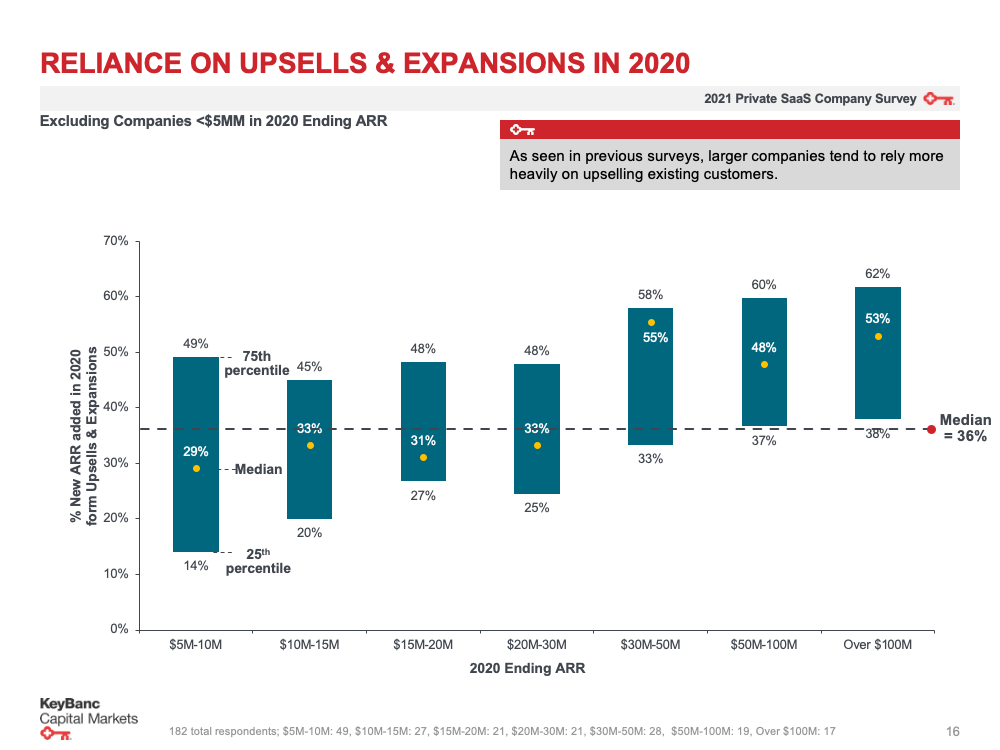
Second, the data surrounding customer retention and Net Revenue Retention (NRR) underscored the power of the "land and expand" model. Best-in-class SaaS companies reported NRR figures well above 110%, indicating that existing accounts were not only staying loyal but were consistently increasing their software consumption through upsell and cross-sell motions. This metric emerged as the single most critical indicator of product-market fit and long-term enterprise value.

Third, sales and marketing efficiency metrics revealed mounting pressure on customer acquisition costs. As digital advertising channels became increasingly saturated and remote prospecting proved more complex, the CAC payback period lengthened across multiple revenue tiers. Consequently, organizations placed renewed emphasis on customer success initiatives and retention strategies to maximize the lifetime value (LTV) of their existing client base, offsetting the rising costs of acquiring net-new logos.

Economic Implications and Strategic Takeaways
The release of the 2021 KBCM SaaS Survey carries profound implications for founders, CFOs, and venture investors. In an economic climate characterized by aggressive capital deployment and high valuation multiples, access to precise benchmarking data allows management teams to calibrate their burn rates responsibly.

For early-stage entrepreneurs, the survey serves as a reality check against unrealistic growth expectations, providing clear operational targets that institutional investors look for during Series A and Series B funding rounds. For late-stage executives preparing for public markets, the data offers a transparent window into the gross margin profiles and operational leverage expected by public equity analysts.
Moreover, the human capital insights embedded within the report shed light on the intense competition for engineering, product, and sales talent. As remote work models decentralized the labor market, salary benchmarks shifted dramatically, forcing companies to rethink their geographic hiring strategies and employee retention incentives.

Accessing the Full Report and Visual Data
Due to the dense statistical nature of the findings, industry analysts strongly recommend reviewing the primary source documentation rather than relying solely on summarized excerpts. The visual data decks—spanning dozens of detailed slides—illustrate complex financial distributions, median performance percentiles, and longitudinal trends dating back to the inception of the survey series.

Business leaders can download the complete, unabridged document via the official 2021 KBCM SaaS Survey report link. Additionally, those interested in the granular internal operational metrics can access the corresponding dataset through the companion Second Part publication, which outlines the remaining specialized sections of the study.

As the SaaS landscape continues to evolve in response to technological disruptions, shifting interest rate environments, and changing enterprise demands, longitudinal benchmarks like the KBCM report remain indispensable. They provide an objective factual foundation upon which the next generation of enterprise software giants will build their operational strategies, ensuring financial discipline and sustainable long-term value creation.