The Comprehensive Guide to Implementing Standardized Electrical Inspection Checklists for Safety and Compliance


Electrical safety remains a cornerstone of modern infrastructure management, yet the complexity of modern electrical systems often leads to inconsistent inspection outcomes. An electrical inspection checklist transforms an inherently complex safety review into a structured, repeatable sequence of evidentiary tasks, findings, and corrective actions. By moving beyond reliance on memory or disorganized field notes, professional inspectors can ensure comprehensive coverage of critical safety parameters, directly correlating with the standards set forth by the National Electrical Code (NEC).
The evolution of inspection standards has been driven by the need for greater accountability. Historically, electrical oversight was largely qualitative, relying heavily on the individual expertise of the inspector. However, as residential, commercial, and industrial systems have integrated increasingly complex technologies—such as bidirectional EV charging and sophisticated healthcare-grade power systems—the margin for error has diminished. A standardized, checklist-driven approach provides a necessary safeguard, ensuring that every inspection is as rigorous as the one preceding it, regardless of the specific technician performing the work.
The Mechanism of Structured Inspection Workflows
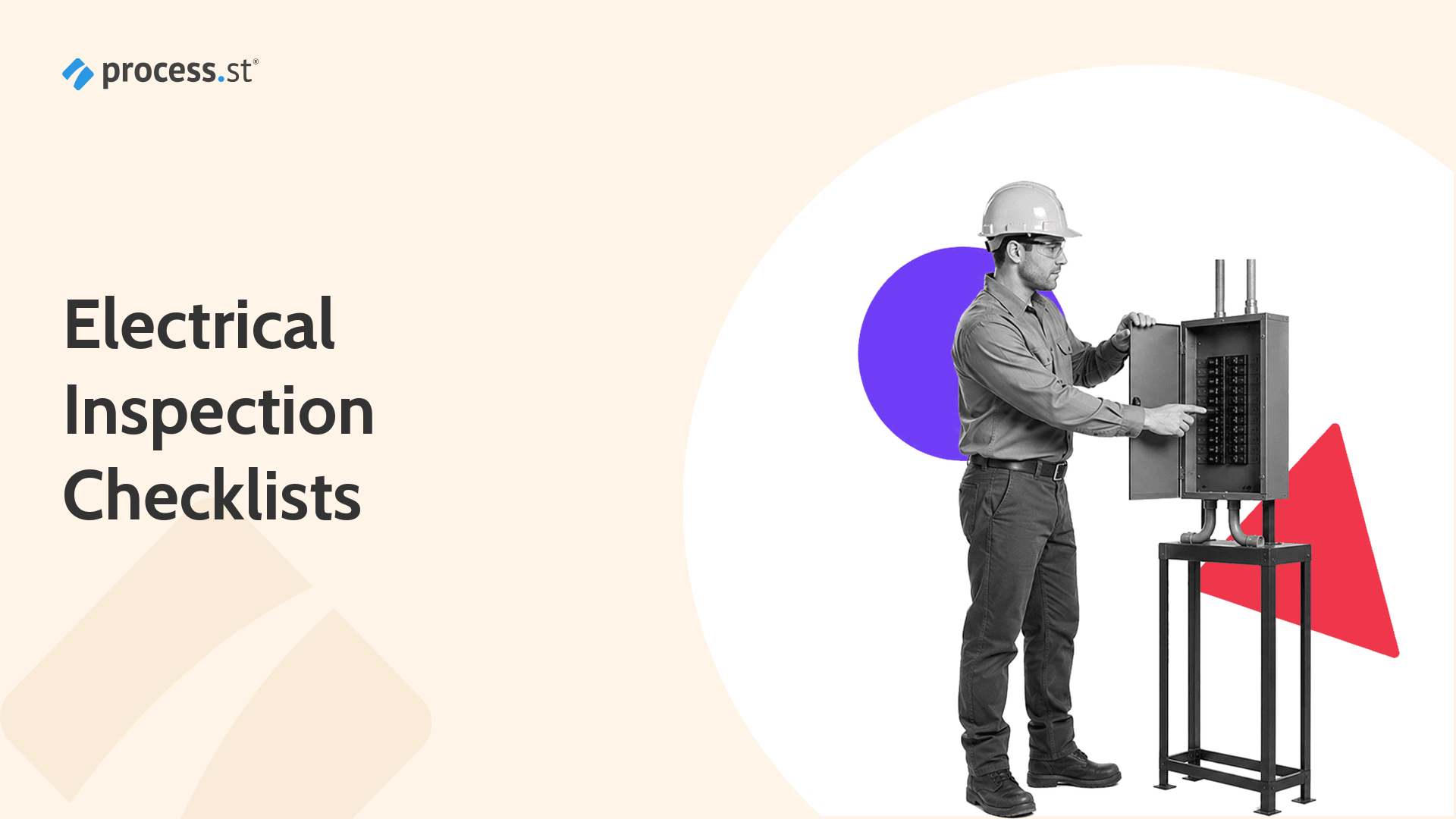
At its core, an electrical inspection process must reconcile two competing requirements: the need for rigid, enforceable procedural compliance and the flexibility to adapt to unique, site-specific variables. A high-functioning checklist acts as a bridge between these poles. Each task within a well-designed digital workflow is mapped to a specific NEC reference, providing the inspector with both the "what" and the "why" of a required action.
Data integration is a vital component of this transition. By utilizing form fields for documentation, inspectors can record pass/fail outcomes, capture photographic evidence of damage, and assign corrective tasks in real-time. This methodology shifts the inspection from a subjective assessment to a data-driven report. When inspection history is centralized within a compliance platform, organizations gain the ability to analyze trends—such as recurring equipment failures in specific types of installations—allowing for predictive maintenance and proactive safety interventions.
Categorical Approaches to Electrical Oversight
Standardization does not imply a "one-size-fits-all" model. Different environments present distinct hazards, requiring tailored workflows. The following sectors represent the most critical areas where structured inspection checklists are essential.
1. General Electrical Infrastructure
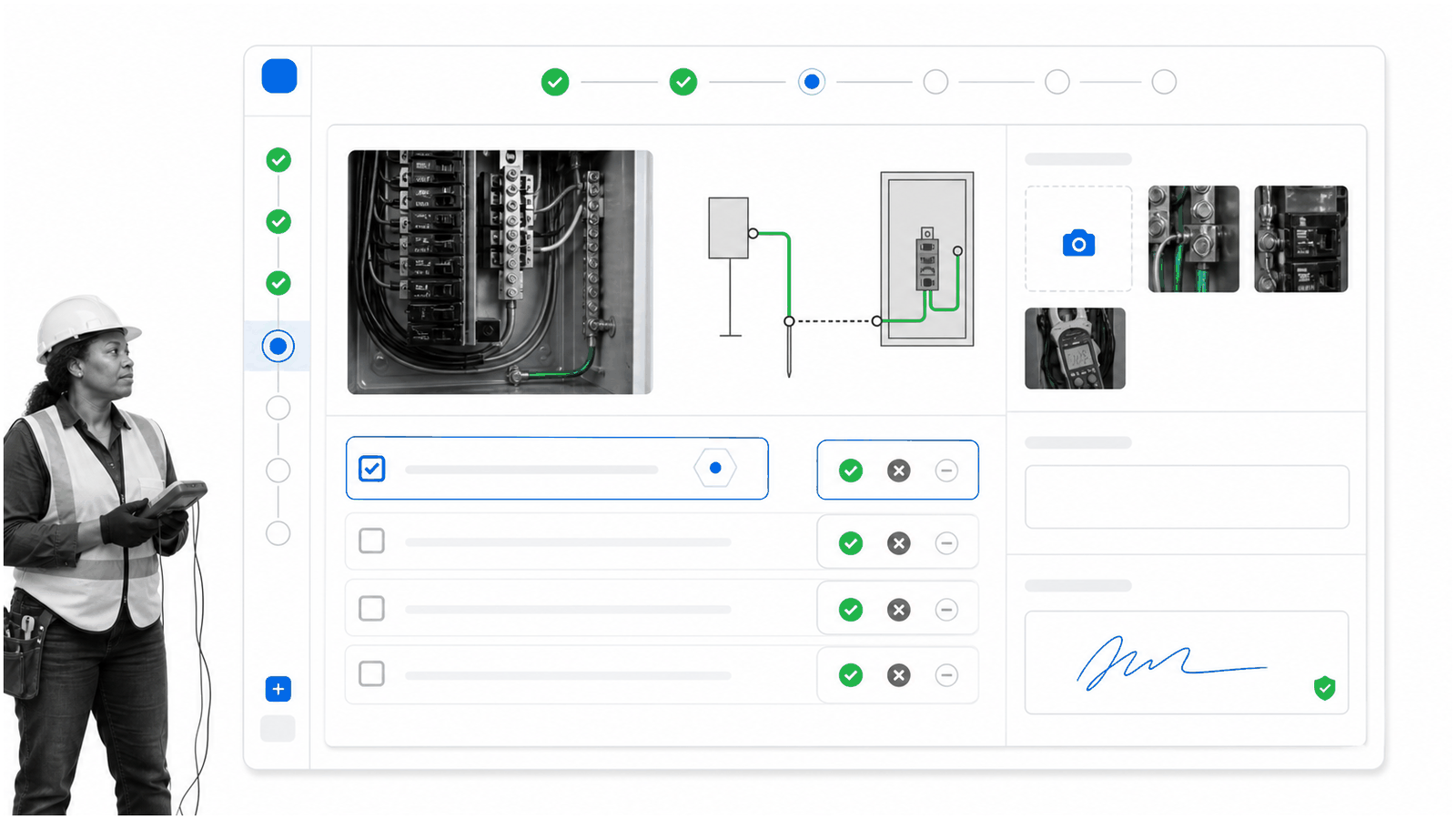
The baseline for all electrical safety is the general inspection, which focuses on grounding, bonding, and overcurrent protection. Before any diagnostic measurement is taken, the inspector must prioritize their own safety, confirming personal protective equipment (PPE) protocols and establishing safe access to energized equipment. This phase of the inspection is fundamental to preventing arc-flash incidents and electrical shocks.
2. Motors and Industrial Control Systems
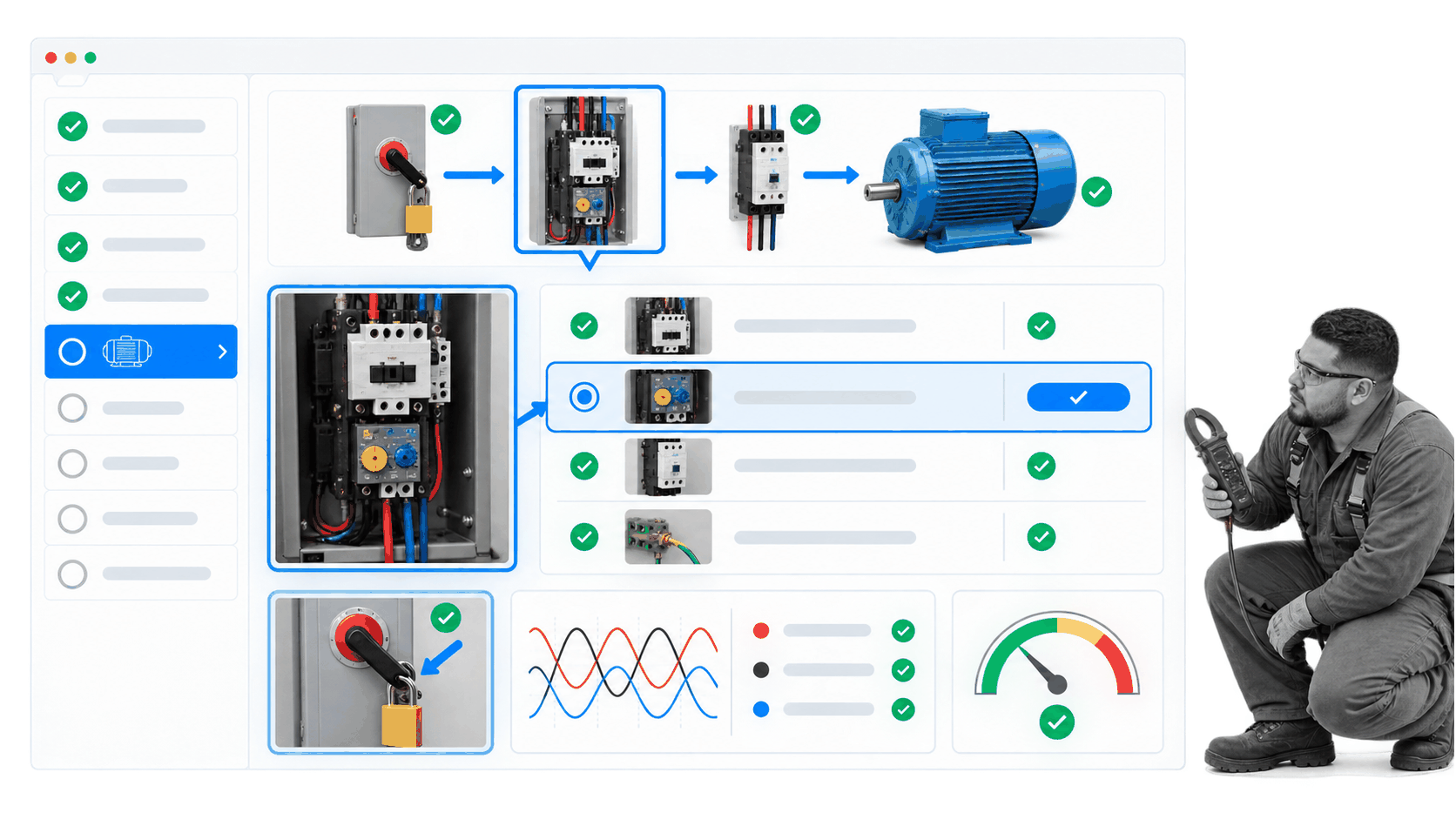
Premises and industrial motor circuits require specific attention to nameplate accuracy, controller integrity, and overload protection. Unlike general household appliances, industrial motors operate under high-stress conditions where a failure in the protective circuitry can lead to fire or catastrophic mechanical damage. Inspections here must clearly distinguish between visible observations—such as thermal damage or missing labels—and technical performance testing, which requires calibrated instrumentation.
3. Marinas, Docks, and Boatyards
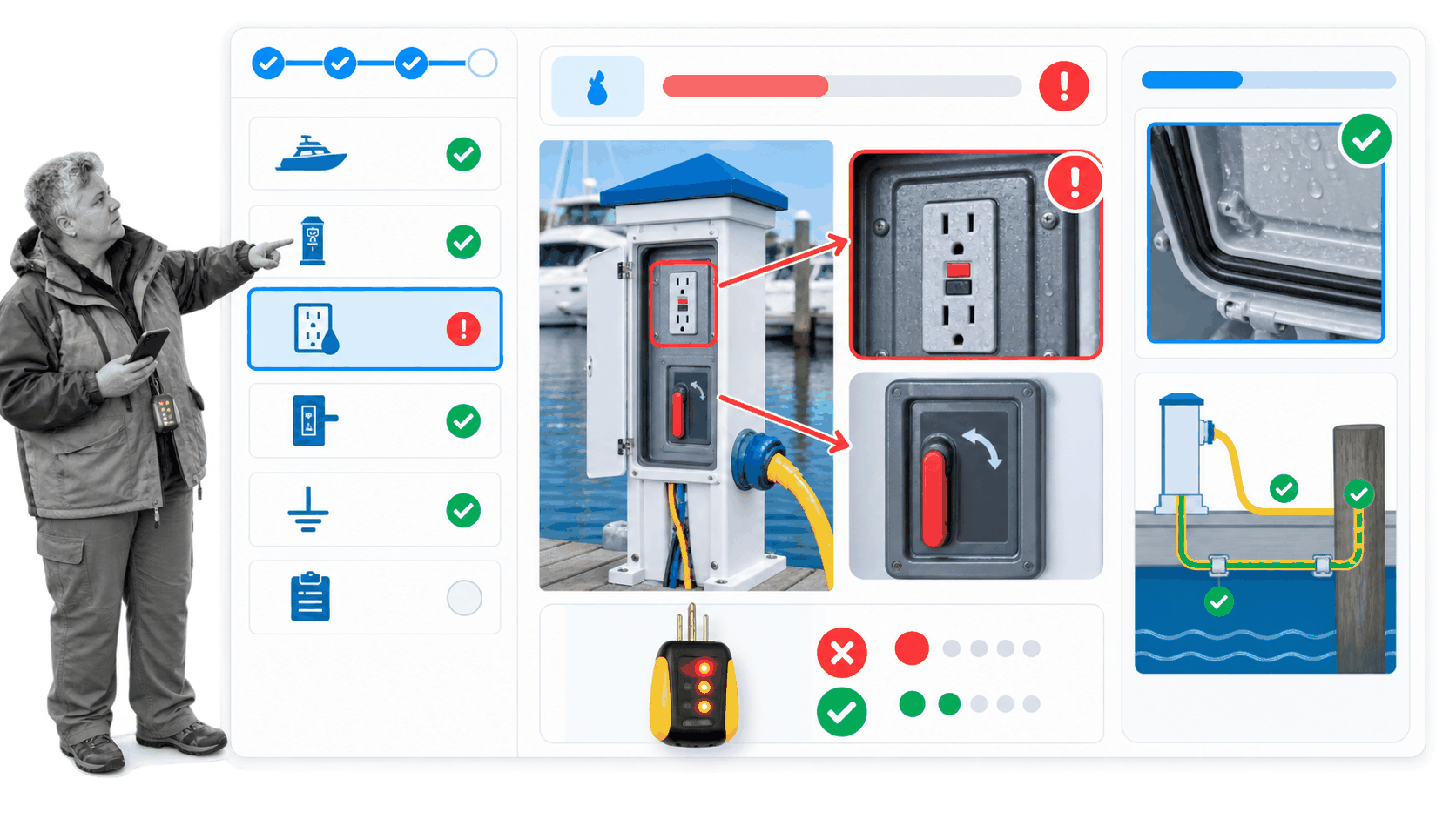
The convergence of water and electricity in marina environments creates a high-risk scenario for "Electric Shock Drowning" (ESD). Because salt and moisture significantly accelerate the degradation of wiring and enclosures, the inspection cycle in these locations is often more frequent than in land-based structures. A robust marina checklist emphasizes the integrity of shore-power pedestals and the functionality of ground-fault protection, specifically addressing the corrosive nature of the environment.
4. Electric Vehicle (EV) Charging Infrastructure
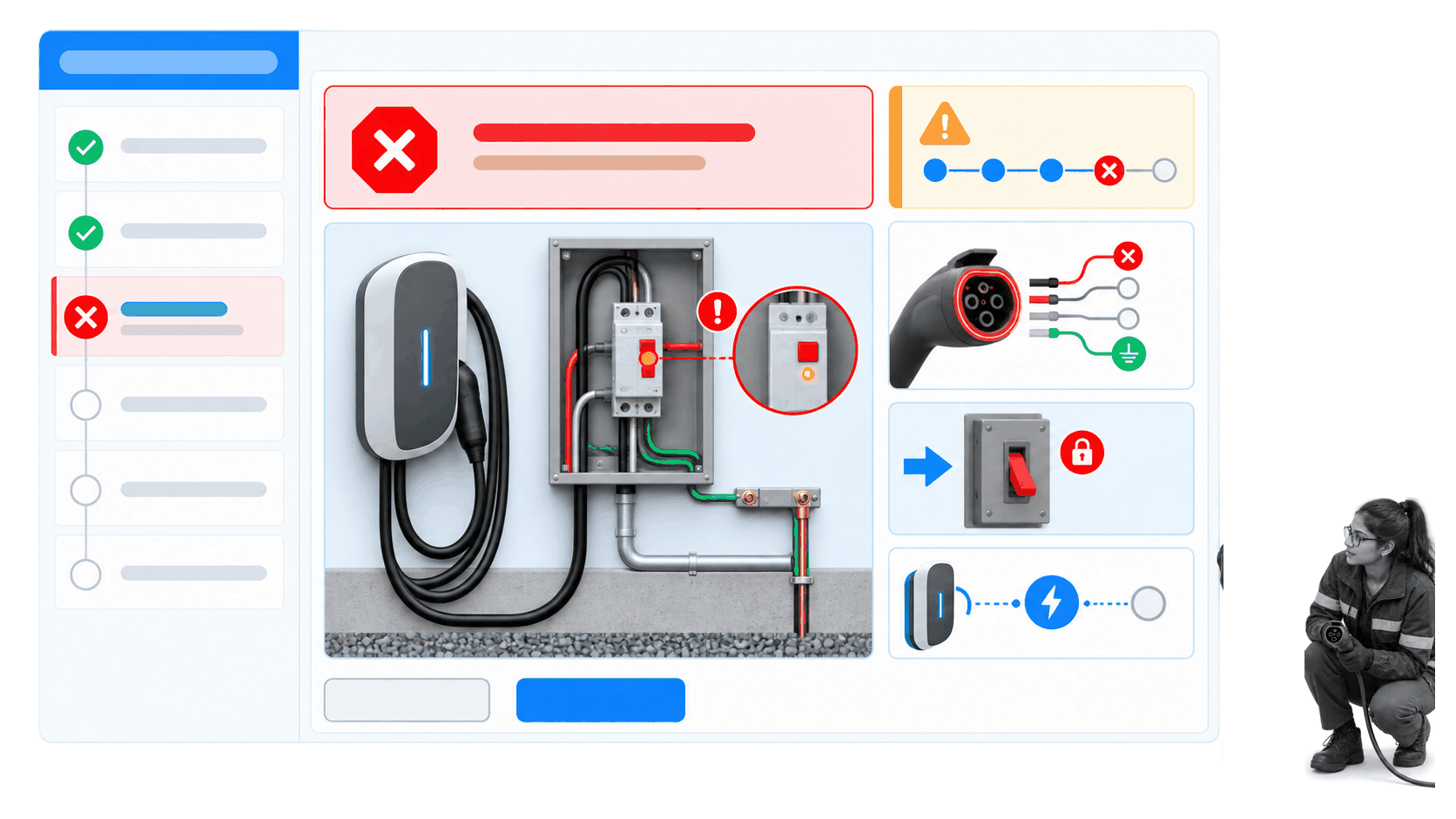
As EV adoption scales, the installation of charging equipment has become a standard requirement for residential and commercial parking. The inspection of this equipment must account for the connection between the charger, the branch circuit, and the building’s energy-management system. Crucially, as vehicle-to-grid (V2G) technology matures, inspections must now verify the safety of bidirectional power flow, ensuring that back-feeding into the grid does not compromise utility worker safety during outages.
5. Agricultural Environments
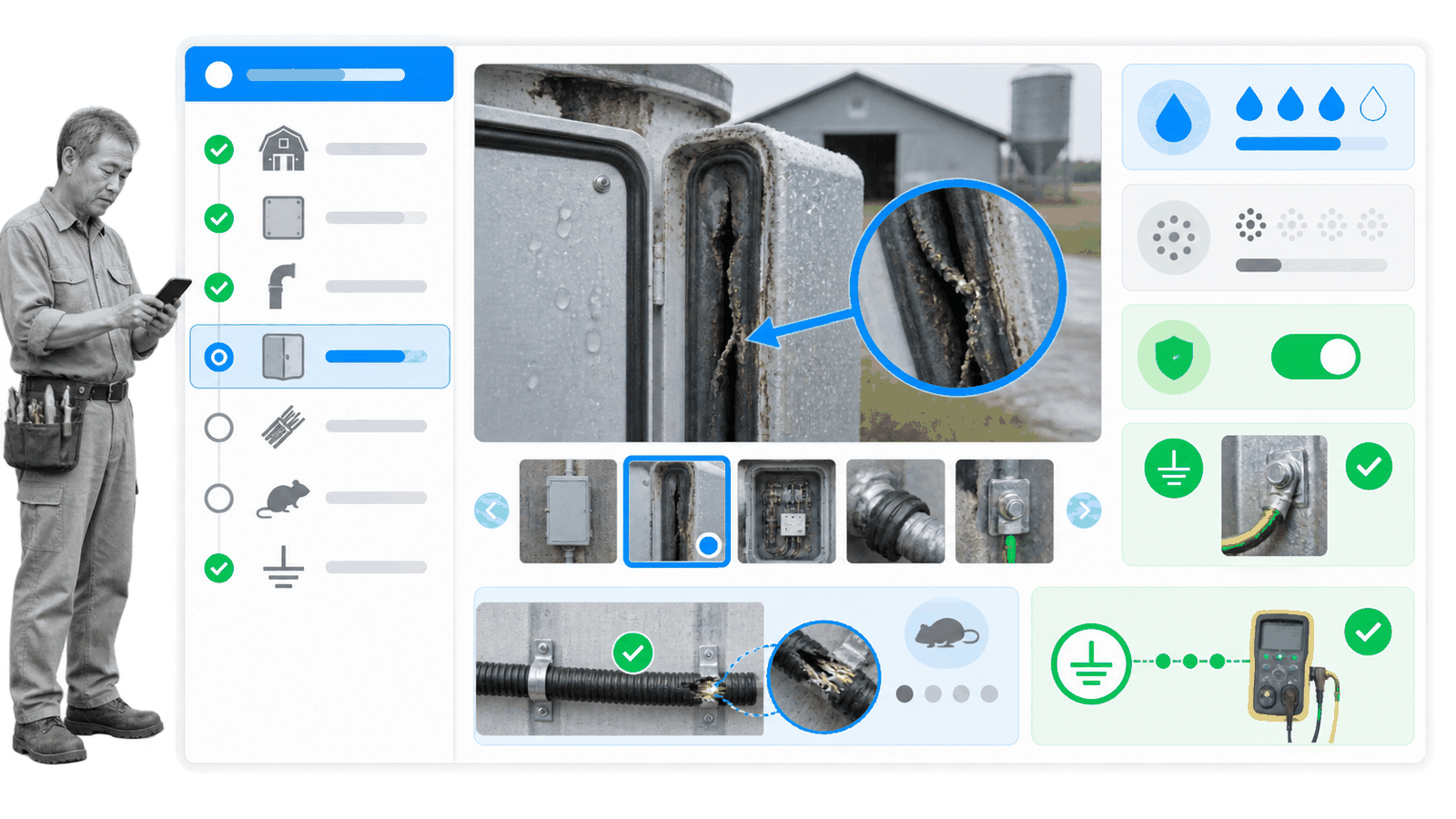
Agricultural buildings are uniquely challenging due to their exposure to extreme temperature fluctuations, ammonia-rich atmospheres, and physical wear from livestock and machinery. An inspection here is not merely about whether the equipment functions today, but whether the installation is robust enough to survive the harsh environment over the long term. Documentation of physical damage to enclosures and the presence of corrosive dust is critical to preventing short circuits that could ignite flammable materials like hay or bedding.
6. Healthcare Facilities and Life-Safety Systems
The stakes for electrical inspection in healthcare are the highest. In patient-care spaces, an electrical fault is not just a building issue; it is a clinical risk. Inspectors must operate within the framework of both the NEC and NFPA 99, ensuring that essential electrical systems—such as those powering life-support equipment—maintain total redundancy. These checklists often include mandatory stop-tasks that prevent a system from being cleared for use if critical safety criteria are not met.
7. Residential Rough-In Inspections
The residential "rough-in" stage is the most critical juncture in the construction of a new home. Once the walls are closed, access to wiring, boxes, and support structures is permanently obscured. A thorough inspection at this stage must confirm correct box-fill calculations, proper cable support, and the presence of required AFCI/GFCI protection. Documenting the location of wiring via photography at this stage creates an invaluable "as-built" record for future maintenance or home modifications.
8. Air-Conditioning and Refrigeration Systems
The importance of inspecting cooling equipment was underscored by the Grenfell Tower Inquiry, which identified an electrical fault in a refrigerator as the initial catalyst for the tragedy. This highlighted that while building-level fire performance is vital, the safety of individual appliances—particularly those that run 24/7—is equally important. Inspections must verify that the maximum protective device rating matches the equipment’s nameplate data, preventing the common, yet dangerous, practice of using oversized breakers that provide no real protection.
Data-Driven Compliance and Regulatory Trends
The movement toward digital, automated inspection workflows is being accelerated by a broader shift toward "Compliance Operations" in facility management. Regulatory bodies are increasingly requiring proof of inspection that is not only accessible but also auditable over time. When an inspector completes a checklist, they are not just checking a box; they are creating a legal record of safety compliance.
Data from these platforms suggests that organizations using automated workflows experience a 30% reduction in safety-related incidents over a five-year period. This reduction is largely attributed to the "forced sequence" nature of digital checklists, which prevent an inspector from skipping a step, even when they are under time pressure.
Furthermore, the integration of AI-assisted diagnostic tools into these platforms allows for the real-time identification of anomalies. For example, if an inspector inputs data regarding a recurring failure of a specific breaker brand in an agricultural setting, the system can flag this pattern, prompting a broader site review or a change in procurement specifications.
The Broader Impact on Public Safety
The ultimate goal of standardized inspection is the mitigation of risk to the public and property. Every fire prevented by an accurate inspection of an air-conditioning unit, and every life saved by the verification of ground-fault protection in a marina, represents a successful outcome of the inspection process.
However, the efficacy of these tools relies on the human element. The checklist is an instrument, not a replacement for the qualified inspector. Authorities having jurisdiction (AHJ) remain the final arbiters of safety. The use of these workflows is intended to empower inspectors to provide consistent, high-quality assessments that align with both the NEC and the specific needs of the installation environment.
As technology continues to advance—with the proliferation of decentralized energy resources, smart home systems, and high-intensity industrial automation—the methods used to inspect these systems must evolve in tandem. Transitioning to digital, data-rich inspection processes is no longer a luxury; it is a fundamental requirement for any entity responsible for the safety and reliability of electrical infrastructure. Through careful implementation, consistent record-keeping, and a commitment to standardized safety protocols, the electrical inspection process can continue to serve as the most effective barrier against electrical hazards in an increasingly electrified world.