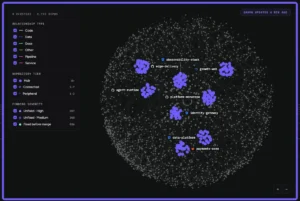
Digital.ai, a leader in enterprise software delivery and intelligence, has officially addressed this industry-wide friction with the launch of Release 26.3. Unveiled today, this significant upgrade marks a strategic evolution in the DevOps landscape by elevating AI agents to the status of first-class citizens. By embedding agentic workflows directly into established compliance and governance frameworks, the platform allows organizations to resolve the long-standing tension between the demand for rapid innovation and the necessity of rigid security.
The Evolution of the Software Delivery Pipeline
The shift toward "agentic" software development is not merely a trend; it is the next logical step in the automation of the enterprise. For years, DevOps has relied on deterministic automation—scripts and tools that perform specific tasks under predictable conditions, such as automated security scans, unit tests, and deployment triggers. However, the current influx of probabilistic AI agents introduces a layer of unpredictability. Unlike deterministic scripts, these agents make decisions based on patterns and data, which can lead to divergent outcomes.
The challenge, until now, has been the lack of a centralized "governance fabric" that can harmonize these two worlds. In many enterprises, AI agents have been relegated to "shadow" roles, operating outside of official CI/CD pipelines to avoid the friction of manual oversight. Digital.ai Release 26.3 changes this dynamic by providing a unified environment where probabilistic AI and deterministic automation can coexist, while maintaining a "human-in-the-loop" requirement for critical policy decisions.
Chronology of the AI Integration Journey
To understand the significance of Release 26.3, one must examine the timeline of software delivery maturation:
- 2010–2015: The Rise of DevOps. The industry shifted from manual, siloed releases to continuous integration and continuous delivery (CI/CD). Automation became the gold standard for reducing human error.
- 2016–2020: The Value Stream Management Era. Organizations began focusing on the visibility of their entire delivery pipeline, utilizing tools like Digital.ai to monitor the flow of value from idea to production.
- 2021–2023: The Generative AI Boom. Large Language Models (LLMs) enabled developers to generate boilerplate code and troubleshoot bugs, leading to a massive increase in the volume of code produced.
- 2024–Present: The Agentic Transition. Enterprises began deploying autonomous agents to handle not just code generation, but the entire deployment workflow. This introduced the "governance gap" that Digital.ai is now targeting with the 26.3 release.
Data-Driven Implications for Modern Enterprise IT
The urgency for this release is underscored by recent industry data. According to reports from various software engineering research firms, nearly 70% of organizations have integrated some form of AI into their development workflows. However, fewer than 30% have implemented a formal governance strategy for these tools. This discrepancy creates a massive attack surface.
Furthermore, the complexity of modern enterprise environments—which span legacy mainframes, on-premises data centers, and multi-cloud containerized clusters—makes manual oversight nearly impossible. Digital.ai’s internal analysis suggests that without a centralized governance layer, the average enterprise risks a 40% increase in "configuration drift" when using autonomous agents for deployment. Release 26.3 is designed to mitigate this risk by forcing agents to adhere to the same compliance guardrails that human developers have followed for decades.
Official Perspectives and Executive Strategy
Derek Holt, CEO of Digital.ai, emphasized the importance of this harmony during the product announcement. "Enterprise software delivery in the AI era combines AI agents, people, and automation as companies accelerate their agentic journey from coding to delivery," Holt stated. "Our customers need those three to work seamlessly together across all delivery pipelines. Release 26.3 brings the power of agents and AI into harmony with traditional DevOps automation and human judgment across all delivery targets from mainframe and data centers to cloud and containers."
By facilitating a "bring your own model" (BYOM) approach, Digital.ai is signaling that it understands the enterprise need for flexibility. Organizations are not one-size-fits-all; some may prefer proprietary, internally trained models to protect intellectual property, while others may opt for hosted AI infrastructure. Release 26.3 accommodates both, allowing companies to integrate their preferred models directly into the pipeline without sacrificing the platform’s security and auditing capabilities.
Technical Implications of the Upgrade
The upgrade introduces several key functional improvements that distinguish it from previous iterations. First, the integration of agentic workflows into existing templates means that legacy systems, which often lack modern API support, can now be "wrapped" in a layer of AI-driven intelligence. This effectively modernizes mainframe operations without requiring a complete rewrite of legacy code.
Second, the platform’s enforcement of human-in-the-loop (HITL) protocols ensures that even if an agent proposes an optimization or a deployment change, it must pass a human approval gate if it touches sensitive production environments or regulatory compliance zones. This is a critical feature for industries such as finance, healthcare, and government, where the stakes of an autonomous error are extremely high.
Broader Impact on the DevOps Landscape
The introduction of Release 26.3 suggests that the industry is entering a phase of "DevOps maturity" regarding AI. We are moving away from the "wild west" of early AI adoption toward a structured, regulated, and scalable operational model. By treating agents as first-class citizens, Digital.ai is effectively formalizing the "AI-Ops" workflow.
This shift has profound implications for the labor market as well. As developers move from writing individual lines of code to managing "fleets" of autonomous agents, the skill sets required for DevOps engineers will shift toward architectural oversight and policy enforcement. The ability to define, monitor, and audit the actions of an AI agent will become a more valuable skill than the ability to write basic automation scripts.
Conclusion and Future Outlook
As enterprises continue to navigate the complexities of digital transformation, the need for robust, reliable, and secure software delivery mechanisms has never been greater. Digital.ai Release 26.3 serves as a pivotal bridge between the promise of AI-driven speed and the reality of enterprise risk management. By providing a framework where agents, humans, and deterministic tools operate in a unified, governed space, Digital.ai is setting a new standard for how large organizations will manage their software lifecycles in the coming decade.
Existing users of the Digital.ai platform can begin upgrading their current templates immediately. The integration of these new capabilities across legacy and modern cloud platforms represents a significant milestone in the effort to bring order to the chaotic, rapid-fire world of AI-assisted development. As organizations begin to deploy these tools, the focus will undoubtedly shift toward measuring the efficacy of agent-driven outcomes, setting the stage for the next wave of innovation in the DevOps sector. With the 26.3 release, the message to the industry is clear: the future of software delivery is agentic, but it must be governed to be sustainable.