Qodo Advances Autonomous Software Development with New Approval Workflows and Agent Session Review Capabilities

The rapid integration of generative AI into the software development lifecycle has fundamentally altered how code is authored and reviewed. While AI agents have proven highly efficient at generating boilerplate code, managing unit tests, and submitting pull requests (PRs), the human-centric bottleneck of manual code approval remains a significant friction point. Qodo, a leader in AI-driven code quality and governance, has introduced two transformative features—Approval Workflows and Agent Session Review—designed to transition engineering teams toward a truly autonomous, policy-governed software factory.
These advancements arrive at a critical juncture for software engineering organizations. As AI-assisted coding tools become standard in enterprise environments, the sheer volume of generated code has surged, leading to larger, more complex pull requests that require increasingly rigorous oversight. By implementing automated governance, Qodo aims to reconcile the desire for rapid development velocity with the non-negotiable requirements of enterprise-grade security and code quality.
The Growing Bottleneck in AI-Assisted Development
For years, the promise of the "software factory" has been to treat code development as a streamlined, repeatable process. However, the current reality often involves a paradox: while the act of writing code has accelerated, the process of verifying and merging that code has slowed down significantly.
Data from the 2025 DORA (DevOps Research and Assessment) report, widely considered the gold standard for software delivery performance, highlights the severity of this issue. According to the findings, teams that have embraced high levels of AI adoption are producing pull requests that are, on average, 154% larger than their non-AI-assisted counterparts. Furthermore, the time required for human review has increased by 91%. This trend suggests that while AI is excellent at generating output, it often shifts the cognitive burden to human reviewers, who must now navigate much larger codebases and more frequent updates.
Engineers are currently tasked with manually stitching together multiple PRs across different repositories to understand the impact of a single, AI-generated feature. This manual "mental assembly" is not only time-consuming but also prone to oversight, creating a scenario where high-velocity coding leads to low-visibility architectural risks.
Introducing Automated Governance: The Qodo Approach
Qodo’s new suite of tools addresses these challenges by shifting from manual, ad-hoc approvals to a policy-governed, automated system. The core philosophy, as stated by the company, is to ensure that a software factory is only as reliable as its quality controls.

Approval Workflows
The new Approval Workflows feature allows organizations to codify their engineering standards directly into the development pipeline. Instead of requiring a human to sign off on every minor change—which wastes valuable senior engineering time—teams can now define specific criteria for "low-risk" changes.
Under these workflows, if a PR meets predefined quality, security, and architectural standards, the system can automatically approve the change. This does not mean that all oversight is removed; rather, it means that human reviewers are empowered to focus their efforts on high-risk, complex, or mission-critical code. By automating the "rubber stamp" portion of the process, teams can maintain high throughput without compromising the structural integrity of their software.
Agent Session Review
Perhaps the most significant innovation is the Agent Session Review, currently available as a research preview. This tool leverages Qodo’s "Agentic Toolbox" to provide a holistic view of the work performed by an AI agent over the course of a session.
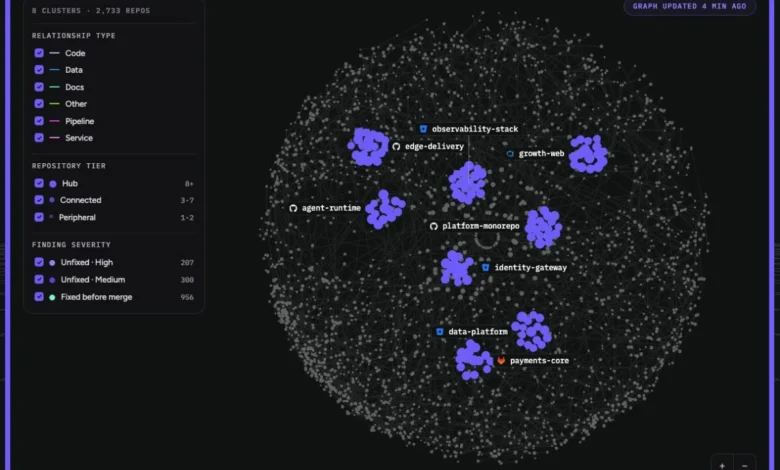
Rather than viewing a single PR in isolation, Agent Session Review gathers every change related to a specific development task—even if those changes span multiple repositories. The tool then presents this as a cohesive "assessment." It highlights where the agent may have deviated from the original project plan, suggests an optimal merge order, and points out areas that require specific human attention. By linking every potential risk to tangible evidence within the codebase, Qodo provides a layer of transparency that has previously been missing in agent-led workflows.
Industry Context and the Shift to Autonomous Factories
The evolution of these tools reflects a broader trend in the tech industry: the move from "AI as a writing tool" to "AI as an autonomous agent." In the early days of generative AI for code, tools were primarily used for autocomplete functions or simple bug detection. Today, organizations are experimenting with agents that can take a Jira ticket, execute the code, run tests, and propose a complete feature.
However, the industry has learned that autonomy without guardrails is dangerous. The "Autonomous Software Factory" is a vision where AI handles the routine, repetitive aspects of development, while humans act as architects and auditors. Qodo’s latest update is a direct response to the "trust gap"—the hesitation felt by CTOs and VPs of Engineering when deploying AI that operates without sufficient oversight.
By providing a clear, verifiable record of every approval decision, Qodo is also addressing the growing need for auditability in software development. As regulatory requirements around AI and cybersecurity tighten, the ability to trace why a piece of code was approved, who authorized the policy, and what the AI agent was thinking during the process will become mandatory for many enterprises.

Implications for Engineering Teams
The deployment of these features has several immediate implications for engineering managers and their teams:
- Increased Developer Velocity: By removing the "waiting game" for PR approvals, developers can move to the next task faster. The reduction in context-switching—caused by waiting for feedback—is expected to have a compounding positive effect on productivity.
- Standardization of Quality: Since policies are set at the organizational level, "quality" becomes a constant rather than a variable dependent on the individual reviewer’s mood or current workload.
- Enhanced Focus for Senior Engineers: Senior staff, who are often the most constrained resource in any tech organization, can offload the review of low-risk, routine PRs to the automated workflow, allowing them to focus on complex system architecture and high-level strategy.
- Improved Onboarding and Context: New developers or team members can use the Agent Session Review to quickly understand the changes an AI agent has made, as the tool provides a clear narrative of the session rather than just a list of code diffs.
The Path Forward
The transition to automated, agent-driven software development is unlikely to be a single event, but rather a gradual layering of governance tools over existing development processes. Qodo’s decision to release the Approval Workflows as a Beta and the Agent Session Review as a Research Preview indicates a commitment to gathering real-world data and refining the technology based on how teams actually work.
As the industry continues to move toward more complex agentic behaviors, the success of these platforms will depend on their ability to integrate seamlessly with existing DevOps stacks. Qodo’s focus on the entire "session" rather than just the "PR" is a critical strategic differentiator, recognizing that modern software is rarely contained within a single file or repository.
For organizations currently struggling with the "AI productivity trap"—where code generation outpaces code review—the implementation of policy-governed approval workflows may provide the necessary structure to reclaim control. By automating the mundane and providing deep, evidence-based insights for the complex, Qodo is setting the stage for a new era of software production where speed and safety are not mutually exclusive, but rather, mutually reinforcing.
Teams interested in testing these new capabilities can access the beta and research preview via the Qodo website. As these tools mature, they will likely become a baseline requirement for any organization looking to scale their AI-assisted engineering efforts without inviting technical debt or security vulnerabilities into their production environments.