The High Speed Two Reset: A Comprehensive Analysis of the National Audit Office Report and the Future of Britain’s Infrastructure

The latest assessment from the National Audit Office (NAO), published in June 2026 under the title High Speed Two reset, confirms that the flagship high-speed railway line is now projected to cost between £87.7 billion and £102.7 billion. This staggering financial trajectory, coupled with a delivery timeline that sees the full operational capacity of the line delayed by up to 13 years compared to the original 2020 projections, marks a critical juncture for UK infrastructure planning. The NAO report serves as both a post-mortem of previous management failures and a roadmap for the ongoing, complex restructuring of the project.
Chronology of a Programme in Flux
The history of HS2 is a timeline characterized by repeated strategic pivots. Initially conceived as a transformational project to link London, the Midlands, and the North, the programme has faced persistent headwinds. In 2020, the government initiated its first formal reset of the project to address mounting cost pressures. That same year, the redevelopment plans for Euston station underwent their first significant overhaul, a process that was repeated in 2023.
The most dramatic alteration occurred in 2023, when the government officially cancelled Phase 2 of the project, which was intended to extend the line toward Manchester. This decision effectively reframed HS2 as a London-to-Birmingham shuttle service. Following this, a comprehensive reset of the remaining programme commenced in January 2025. By March 2025, a new chief executive review concluded that the organization was not properly equipped for the scale of the task, citing premature construction starts and fragmented contract management. The current phase of the reset, which entails a further £153 million in administrative costs, is scheduled for completion in the spring of 2027, by which time a new, firm baseline for costs and delivery will be established.
Financial Breakdown and Cost Escalation
The doubling of the anticipated costs since 2020 has prompted intense scrutiny from taxpayers and parliamentarians alike. According to the data provided by HS2 Ltd and analyzed by the NAO, the financial surge is not merely a product of macroeconomic volatility. While inflation accounts for 34% of the £48.6 billion increase, the remainder is attributed to internal systemic issues.
Underestimation of construction and testing requirements constitutes 32% of the cost rise, while inefficient delivery practices—reflecting poor productivity levels—account for 23%. A further 11% of the increase is attributed to scope changes, representing essential requirements that were omitted from initial project designs. The reality that two-thirds of the total cost overrun stems from estimating errors and operational inefficiencies suggests that the fundamental project management framework was inadequate for a project of such geographic and engineering complexity.
Operational Adjustments and Strategic Redesign
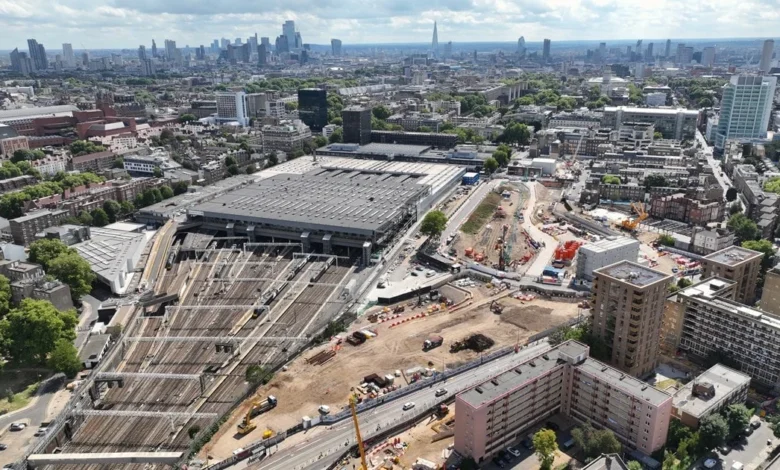
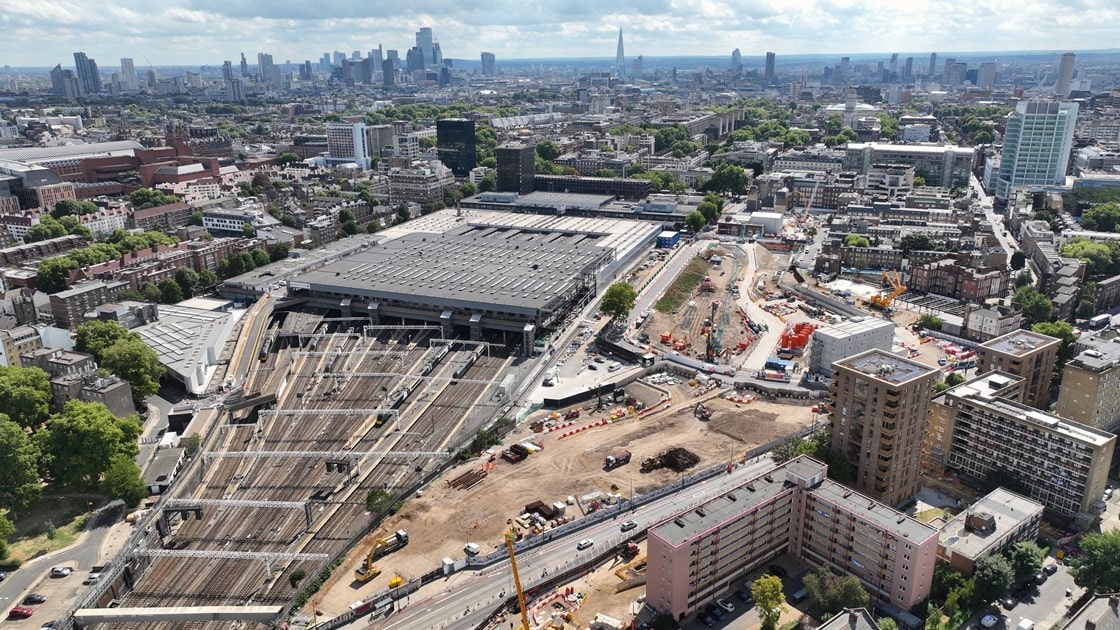
In response to the identified failures, the Department for Transport (DfT) and HS2 Ltd have implemented a rigorous, four-stream recovery strategy. Central to this is the establishment of the Euston Delivery Company, an entity designed to provide a "single directing mind" for the London terminus—a site that had previously suffered from a lack of clear, unified authority.
Furthermore, technical specifications have been modified to mitigate risk. The decision to cap train speeds at 320 km/h, down from the originally planned 360 km/h, allows for a less complex signalling and control system. While this reduces potential long-term benefits by approximately £1.3 billion, it is projected to save between £1 billion and £2.5 billion in immediate capital expenditure and accelerate the delivery timeline by at least one year. This transition from "gold-plated" specifications to "fit-for-purpose" infrastructure reflects a broader shift in government policy toward realistic deliverability over optimistic ambition.
Governance and Institutional Reform
The NAO report highlights that the relationship between the DfT and HS2 Ltd had, until recently, been characterized by a lack of mutual trust and inconsistent data sharing. The current reform agenda places a heavy emphasis on data integrity. Prior to the establishment of the 2027 baseline, the organization is conducting a deep-dive audit into the quality of its underlying assumptions.
This governance reform extends to contract management. Previous attempts to renegotiate major supply chain contracts in 2024 were largely unsuccessful due to the client’s inability to accurately define its own costs and risk exposure. Subsequent efforts have proven more fruitful, with the project management team identifying £500 million in historic costs that the state will refuse to pay, while setting a target for a further £2 billion in savings through more robust commercial negotiations.
The Problem of Sunk Costs and Value for Money
The economic justification for HS2 has faced significant challenges. Had the current cost estimates been available in 2020, the project’s benefit-cost ratio would have plummeted to between 0.3 and 0.4, a figure widely regarded in public policy as representing poor value for money. However, the government has maintained the project’s momentum, relying on the principle that the £46.8 billion already spent as of March 2026 represents "sunk costs" that cannot be recovered. The DfT is now under pressure to ensure that every future pound spent is justified by demonstrable, tangible economic benefits, moving away from abstract long-term projections.
Implications for Future Infrastructure Delivery
The HS2 experience serves as a cautionary tale for the management of "mega-projects." The NAO’s findings provide several critical takeaways for the wider industry:
- The Perils of Premature Execution: Starting construction before a plan is finalized often leads to irreversible inefficiencies. The report underscores that the pressure to be seen "breaking ground" can ultimately compromise the project’s long-term feasibility.
- Organizational Agility: When the scope of a project changes—as it did when Phase 2 was cancelled—the supporting organizational structure must be adjusted immediately. HS2 suffered from a bloated, centralized administrative core that remained disconnected from the needs of the frontline delivery teams.
- Transparency in Data: A project’s baseline is only as reliable as the data supporting it. If the workforce and the executive boards do not trust the veracity of the numbers, they cannot make informed decisions.
- Simplification as Risk Mitigation: The move to lower the maximum train speed demonstrates that reducing technical complexity is a legitimate and often necessary strategy to lower project risk and control costs.
Looking Ahead: The Path to 2027
As the project moves into the latter half of 2026, the focus remains on the transition toward the finalized 2027 baseline. The primary risks remain the potential for further, unforeseen construction challenges and the difficulty of maintaining staff morale and institutional memory during a multi-year reset.
The NAO has advised that while the 2027 deadline is a necessary goal, it must not be pursued at the expense of accuracy. If further time is required to ensure that the new plan is robust, the government should be prepared to allow for it. The overarching sentiment of the audit is one of "cautious realism." For the DfT, the objective is no longer to deliver the project as originally conceived, but to salvage the remaining utility of the railway, provide a reliable service between London and Birmingham, and establish a framework that prevents a recurrence of the mismanagement that has plagued the programme for the last decade.
The success of this reset will be measured not by the speed of the trains, but by the ability of the government to demonstrate that it has finally mastered the art of managing complexity. With significant portions of the line still to be completed and the critical Euston terminus still in the early stages of a refined development plan, the coming 18 months will be decisive. The lessons learned from the HS2 reset are already being integrated into future government infrastructure procurement policies, signaling an end to the era of optimism-driven planning in the UK public sector.