The Comprehensive Guide to Mastering the Content Development Lifecycle for Modern Enterprises

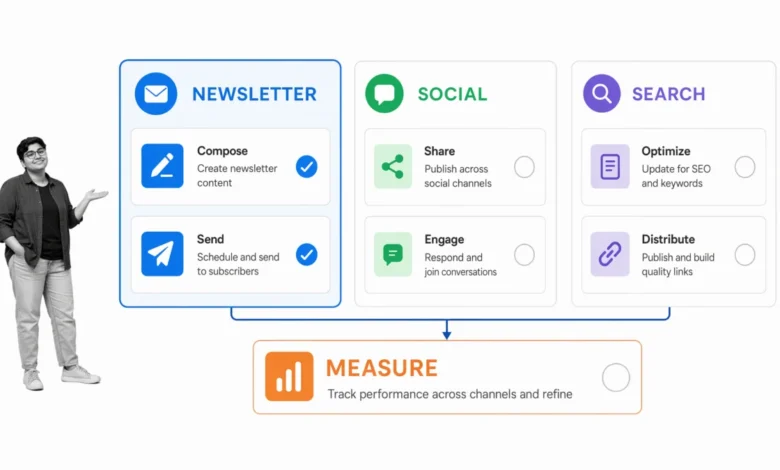
Content development represents the foundational infrastructure of modern digital communication, serving as the systematic process through which organizations move from conceptual ideation to the delivery of high-value assets. Unlike casual content creation, professional content development is a rigorous, multi-stage workflow encompassing research, strategic planning, production, rigorous peer review, distribution, and iterative performance analysis. In an era where digital noise is at an all-time high, the ability to produce content that is both discoverable and genuinely useful has become a primary competitive advantage for businesses across all sectors.
The Evolution and Definition of Content Development
At its core, content development is the architecture of information. It bridges the gap between raw data and audience engagement by applying governance and operational standards to the creative process. Historically, organizations relied on fragmented methods—often involving disjointed email threads and unmanaged file versions—to track the progress of editorial assets. Today, the industry has shifted toward centralized content workflow management. By utilizing dedicated operational platforms, teams can now ensure that every article, white paper, or video campaign serves a specific business objective, such as lead generation, brand authority, or customer retention.

The transition from "content creation" to "content development" reflects a shift in organizational maturity. While creation focuses on the output, development focuses on the lifecycle. This lifecycle begins with audience intelligence and ends with data-driven refinement, ensuring that content does not simply exist, but actively contributes to the company’s bottom line.
Distinguishing Development, Strategy, and Marketing
Confusion often arises when distinguishing between content development, content marketing, and content strategy. While these disciplines are deeply interconnected, their functions remain distinct:
- Content Strategy: This represents the high-level vision. It dictates the "why" and "when," defining the overarching goals, brand voice, and long-term roadmap for how an organization communicates with its audience. It provides the framework within which all other content activities occur.
- Content Marketing: This is the application of content to achieve specific commercial goals. It emphasizes the distribution, promotion, and psychological impact of assets on the target demographic. Its primary focus is the conversion of passive readers into active customers or brand advocates.
- Content Development: This is the operational engine. It is the execution layer that transforms the abstract strategy into a tangible, high-quality asset. It encompasses the tactical steps of writing, editing, compliance checking, and technical optimization.
If strategy is the map and marketing is the destination, content development is the vehicle that ensures the journey is successful, safe, and efficient.
The Eight-Stage Operational Framework
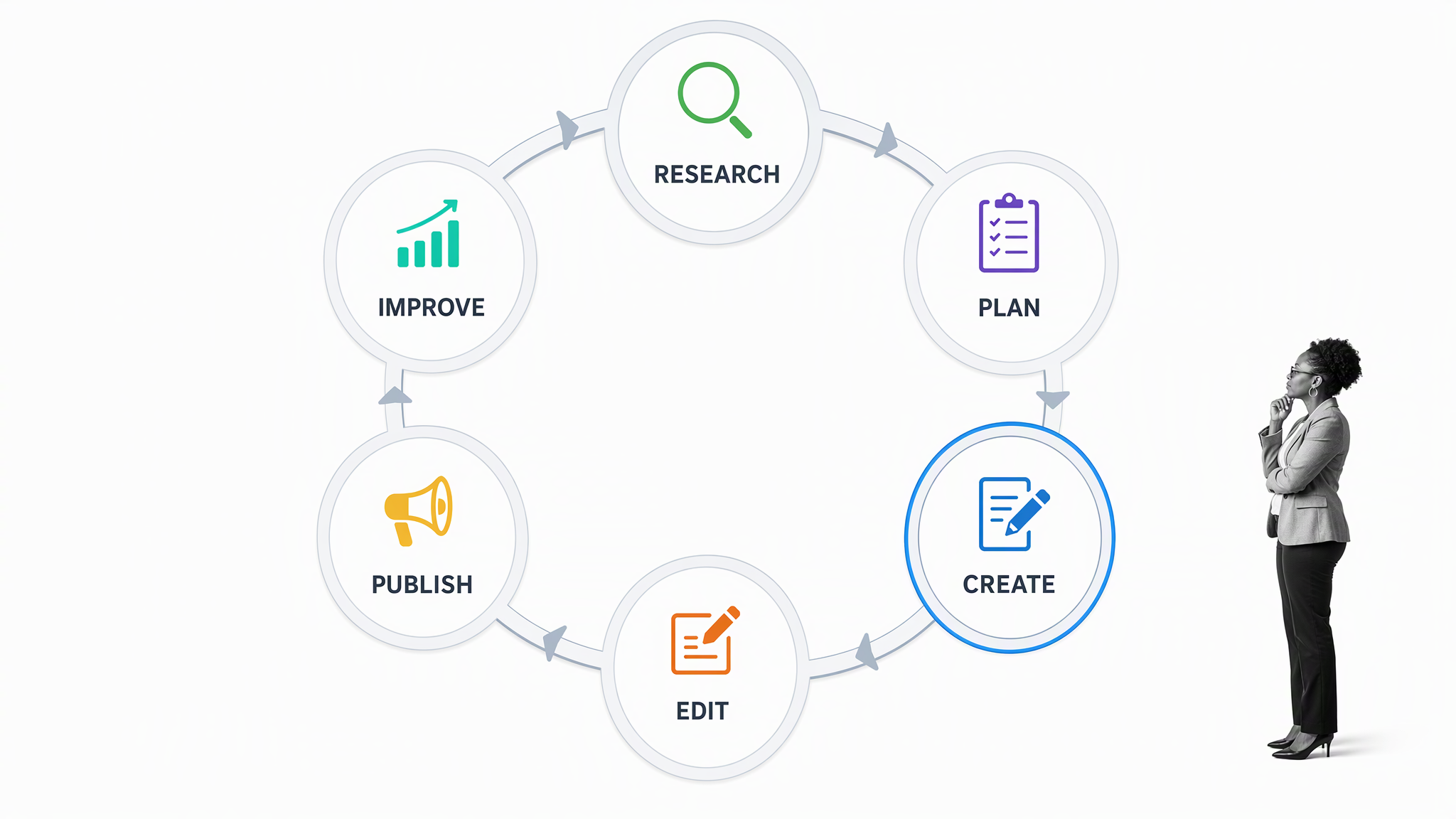
A robust content development process is generally defined by an eight-stage sequence that ensures quality control and accountability.
- Research: Before a single word is drafted, teams must perform exhaustive audience and keyword analysis. This involves identifying the specific pain points of the target persona and aligning those needs with high-volume, low-difficulty search terms to ensure visibility.
- Planning: This phase involves creating a structural roadmap, often including H2 and H3 header hierarchies. Planning prevents the common pitfall of "writer’s block" and ensures the final piece maintains a logical flow.
- Creation: This is the drafting phase. It requires a synthesis of research and planning into a cohesive narrative. Modern workflows increasingly leverage AI tools to assist in outlining and data synthesis, provided a human editor maintains oversight for factual accuracy and brand alignment.
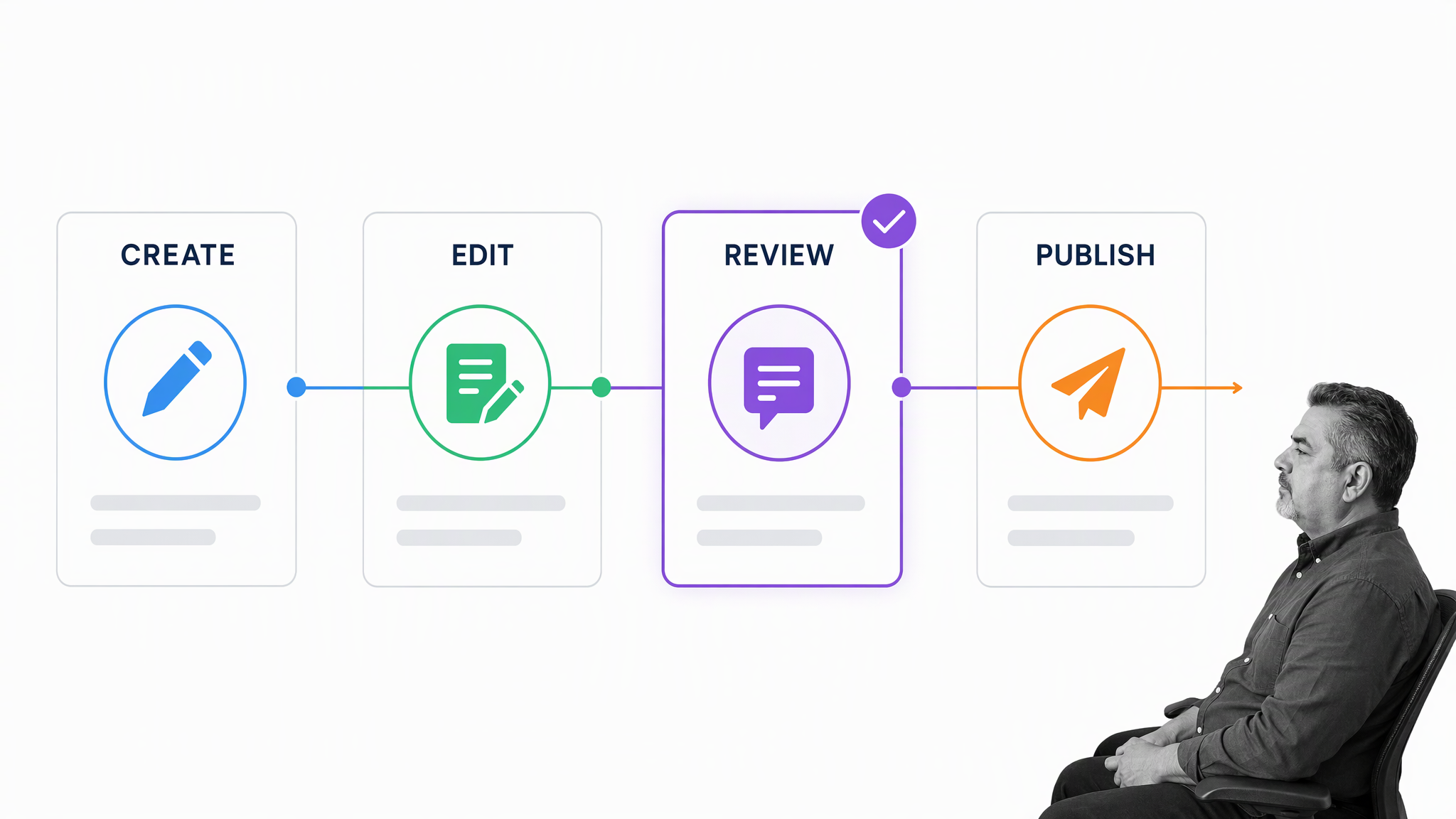
- Editing: Once a draft exists, the focus shifts to refinement. Best practices involve reading content aloud to catch rhythmic errors, "killing darlings" by removing unnecessary prose, and ensuring the tone remains consistent with the brand’s identity.
- Review: This is a formal governance gate. It is distinct from editing in that it involves a secondary subject matter expert or stakeholder checking the content against compliance standards, legal requirements, and business goals.
- Publishing: This stage is the final quality assurance check. It includes validating technical elements such as metadata, URL slugs, internal linking, and mobile responsiveness. It is the point at which the asset transitions from a draft to a live public resource.
- Promotion: High-quality content requires a distribution strategy. This includes syndication through email newsletters, social media channels, and partner outreach. Promotion must be adapted to the specific channel rather than utilizing a "one-size-fits-all" copy approach.
- Reflection: This is the continuous improvement phase. By analyzing metrics such as traffic, time-on-page, and conversion rates, teams can determine which assets require updates, which should be retired, and how to optimize future development cycles.
The Role of Data and Automation in Modern Workflows
Recent industry data suggests that businesses utilizing standardized content workflows report a 25% to 30% increase in productivity compared to those using manual processes. The integration of "Compliance Operations Platforms" has become essential for organizations dealing with high volumes of content. These platforms allow teams to maintain an audit trail, which is critical for regulated industries like finance and healthcare, where every claim made in a piece of content must be substantiated.
Furthermore, the integration of Artificial Intelligence into the development process has fundamentally changed the speed of production. However, industry leaders emphasize that while AI can assist in the discovery and clustering of topics, it cannot replace the human element of judgment. A "human-in-the-loop" approach ensures that the final output maintains the nuance and emotional intelligence required to resonate with human readers—factors that are currently beyond the reach of automated systems.

Broader Implications for Business Growth
The long-term impact of a disciplined content development process is the creation of a "content engine." When a company moves from episodic, reactive content production to a repeatable, standardized process, they create an asset library that compounds in value over time. Each piece of content acts as a digital salesperson, working 24/7 to educate potential customers and build trust before a human sales representative is even involved.
For example, companies that prioritize the "Reflect" stage often find that they do not need to constantly churn out new content. Instead, they can focus on refreshing existing high-performing content, which is often more efficient for search engine rankings than creating new, unproven assets. This "content decay" management—identifying and updating older posts that are losing traction—has become a cornerstone of sophisticated digital marketing strategies.
Conclusion and Future Outlook
As the digital landscape becomes increasingly saturated, the organizations that succeed will be those that view content development not as a creative luxury, but as an operational necessity. By implementing the eight-step model—Research, Plan, Create, Edit, Review, Publish, Promote, and Reflect—businesses can ensure that their digital output is consistently high-quality, legally compliant, and strategically aligned with business growth.
Ultimately, the goal of content development is to build a reliable machine that turns raw information into a competitive asset. Whether through the use of sophisticated project management software or the rigorous application of editorial checklists, the focus remains the same: providing the audience with value that is accurate, accessible, and timely. As organizations look toward the future, those who master the intersection of human creativity and operational efficiency will be the best positioned to capture and retain audience attention in an increasingly crowded global market.