The Ethical Blueprint: How to Tailor Your Resume Without Crossing the Line into Fabrication

In the current professional landscape, the mandate to "tailor your resume" has become the primary mantra of career coaches and job-search consultants. However, the rise of generative artificial intelligence has blurred the distinction between strategic optimization and professional dishonesty. As AI tools gain the capability to generate content in seconds, candidates are increasingly tempted to allow these systems to "hallucinate" skills, experiences, and titles to better match algorithmic job-filtering software. This shift has created a critical tension in the recruitment industry: how does a candidate present their best self without inventing a version of their professional history that cannot withstand the scrutiny of an interview?
The integrity of the hiring process rests on the accuracy of the information provided by the applicant. When a candidate misrepresents their background, the consequences extend beyond a failed interview; they risk long-term damage to their professional reputation. Recent data from employment background screening firms suggest that approximately 75% of HR managers have uncovered lies on resumes, leading to immediate disqualification. The proliferation of AI-assisted drafting has only heightened the necessity for a standardized, ethical approach to resume customization that prioritizes "source of truth" documentation.
The Evolution of Resume Customization in the AI Era
Historically, tailoring a resume was a manual process of reordering bullet points to highlight the most relevant achievements. Today, the process is often outsourced to Large Language Models (LLMs). While these tools offer efficiency, they lack an innate understanding of the user’s actual career history. If prompted to "make this resume match this job description," an AI will frequently prioritize linguistic alignment over factual accuracy.
For instance, if a job description mandates "proficiency in Python," an AI may insert that skill into a candidate’s profile even if the candidate has never used the language. While this might bypass an Applicant Tracking System (ATS), it creates an insurmountable obstacle during the technical screening phase. Once a candidate is forced to explain a fabricated skill or result, the entire resume loses its credibility, resulting in a swift termination of the interview process.
Step 1: Establishing the Master Document
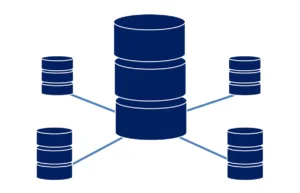
The foundation of ethical tailoring is the creation of a "Master Resume." This document is not intended for external distribution; rather, it serves as a comprehensive, living database of an individual’s professional existence. It should contain every role, project, tool, and quantifiable outcome that the candidate can verify with documentation or anecdotal evidence.
By maintaining a master document that can span several pages, a candidate establishes a strict boundary. If a specific skill or achievement is not documented in the master file, it is off-limits for any public-facing version of the resume. This practice eliminates the need for judgment calls during the application process. When a job description asks for a specific certification or software, the candidate can cross-reference the master resume immediately. If the evidence is present, it is integrated; if it is absent, it is excluded.
Step 2: Strategic Alignment as a Checklist
Recruiters and hiring managers often utilize specific keywords to filter candidates. To navigate this, the job description must be treated as a technical checklist. Experts recommend a three-tiered categorization of job postings:
- Hard Requirements: These are non-negotiable items, such as specific licenses, degrees, or mandatory software proficiency.
- Frequency Analysis: Terms that appear multiple times throughout a posting often signal the organization’s highest priorities.
- Actionable Verbs: Identifying verbs such as "reconcile," "build," or "own" provides insight into the day-to-day responsibilities of the role.
Once these elements are identified, the candidate must map them against the Master Resume. This process is inherently diagnostic. If a candidate finds that they meet 80% of the requirements but lack the remaining 20%, they can make an informed decision on whether to apply or to pursue further training. This approach replaces guesswork with a data-driven strategy that respects the employer’s time and the candidate’s integrity.
Step 3: The Mechanics of Honest Tailoring
Effective tailoring involves three distinct operations: choosing, ordering, and naming.
- Choosing: Eliminate bullet points that are irrelevant to the specific role. A resume is not an exhaustive autobiography; it is a targeted marketing document.
- Ordering: Recruiters typically scan resumes in seconds, focusing on the top third of the page. Place the most pertinent experience—regardless of chronology, provided it remains honest—at the top.
- Naming: Use the employer’s terminology. If a company uses the term "Customer Success" while the candidate’s previous title was "Account Manager," it is acceptable to describe the duties using the prospective employer’s language, provided the actual job title is clearly stated elsewhere.
The transition from "Before" to "After" should focus on specificity. Instead of claiming to have "led a project," which is vague, a candidate should describe the specific actions taken, such as "migrated 400 customer records and authored the training manual for the team." Specificity is the hallmark of truth; ambiguity is the hallmark of embellishment.
Step 4: The Ethics of Gaps and Skill Deficits
Honesty regarding skill gaps is not a weakness; it is a demonstration of professional maturity. When a job description requires a tool the candidate has not used, there are three professional paths:
- The Transferable Skill: If the candidate has used a similar system, they can highlight their experience with that system as evidence of their ability to adapt.
- The "In-Progress" Label: If a candidate is actively learning a skill, they should explicitly state that they are currently completing a certification or course.
- Strategic Withdrawal: If a requirement is core to the function of the role and the candidate has no relevant experience, it is often more strategic to avoid applying, saving both parties time.
The Role of AI as an Editor, Not an Author
The most effective way to utilize AI in this process is to strictly limit its role to editorial tasks. AI is excellent at reformatting, shortening, and clarifying, but it must never be allowed to generate the content of the career history.
Candidates should adopt a "Zero-Hallucination" prompt when using AI: "Reorder and reword this content using only the facts provided in my master resume. Do not add any skills, dates, or titles. If a fact cannot be supported, omit it." By maintaining this level of control, the candidate ensures that the output remains a reflection of their actual capabilities.
Broader Implications for the Labor Market
The shift toward AI-driven resume optimization is fundamentally changing the way talent is assessed. As companies respond with increasingly sophisticated AI-detection software, the importance of "verifiable experience" will only increase. Employers are beginning to shift their focus away from buzzword-heavy resumes toward project-based assessments and technical screenings that require candidates to prove their proficiency in real-time.
This evolution highlights a vital lesson: the resume is merely an entry point. It is a vehicle for securing an interview, not a substitute for the skills required to perform the job. As the labor market becomes more saturated with AI-assisted applications, candidates who provide clear, honest, and verifiable information will distinguish themselves as the most reliable hires.
In summary, ethical resume tailoring is a disciplined, repeatable process. By relying on a master source of truth, treating the job description as a technical requirement list, and keeping AI tools on a short leash, candidates can navigate the modern recruitment landscape with confidence. A resume that is honest is not just a safer bet—it is a stronger document, built on the solid ground of actual achievement rather than the shifting sands of invention.