Rethinking Workplace Inequality: Catalyst CEO Jennifer McCollum Challenges Traditional Diversity Paradigms on Leadership Biz Cafe

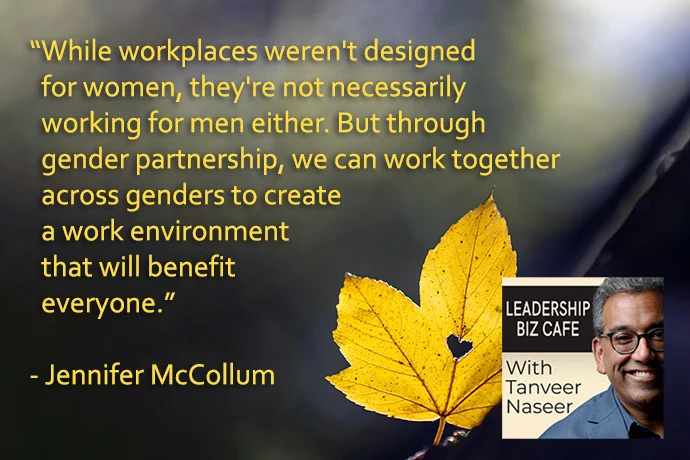
For decades, organizations worldwide have poured billions of dollars into various diversity, equity, and inclusion (DEI) initiatives aimed at dismantling systemic workplace inequality. Despite these sustained investments, empirical evidence suggests that many of these conventional programs have failed to generate lasting, systemic results. This persistent lack of progress has frequently fueled divisive rhetoric, casting men either as passive "allies" in need of mobilization or, more detrimentally, as the primary source of the problem that requires fixing.
However, a provocative new perspective suggests that these very framing mechanisms—and the polarizing narratives they create—may be the quiet catalysts stalling the exact progress organizations desperately seek to enhance overall productivity and corporate growth. Challenging foundational assumptions about gender dynamics in the modern corporate landscape, Jennifer McCollum, President and CEO of the global nonprofit Catalyst, recently appeared on the Leadership Biz Cafe podcast, hosted by leadership expert Tanveer Naseer. In an extensive interview, McCollum unpacks the findings of her new book, Men at Work: The Roadmap to Gender Partnership, offering a paradigm shift that moves away from adversarial frameworks and toward mutual collaboration.
The Evolution of Workplace Inequality Initiatives
To understand the current impasse in corporate diversity efforts, it is necessary to examine the historical trajectory of workplace equality programs. Beginning in the late 20th century, corporate America and global enterprises largely focused on compliance-driven initiatives, following the passage of equal employment legislation. These early phases were characterized by anti-discrimination policies, legal compliance, and basic representation metrics.
By the early 2000s, the paradigm shifted toward diversity management. Organizations began recognizing the business case for diversity, linking varied workforces to enhanced innovation and market reach. Unconscious bias training, employee resource groups (ERGs), and mentorship programs for women became standard operating procedures across Fortune 500 companies. Yet, despite these structural interventions, the upper echelons of corporate leadership remained stubbornly homogenous. According to data from Catalyst and various labor market analyses, women—particularly women of color—continue to be drastically underrepresented in C-suite positions and boardrooms, even though they frequently outpace men in graduating with higher education degrees.
Frustrated by the slow pace of change, the discourse in the 2010s pivoted heavily toward the concept of allyship. While well-intentioned, this framework often inadvertently positioned women as a disadvantaged group requiring rescue by enlightened male colleagues. More recently, cultural conversations around "toxic masculinity" have further polarized the workplace, often alienating the very demographic—men—whose active participation is required to institutionalize cultural change.
Uncovering Hidden Barriers for Men
McCollum’s latest research, spanning extensive empirical studies conducted across Canada, Europe, and the United States, reveals an overlooked dimension of the modern workplace: men, too, face significant structural and cultural barriers that hinder their professional efficacy and personal well-being.
While traditional narratives often assume men operate from a position of unmitigated privilege, Catalyst’s data points to a more complex reality. Many men report feeling increasingly constrained by rigid masculine stereotypes that penalize vulnerability, discourage work-life balance, and stigmatize caregiving responsibilities. When organizations focus exclusively on fixing women or treating men as adversaries, they alienate male employees, triggering defensive postures rather than constructive engagement.
This defensive posture has tangible economic consequences. According to organizational psychologists and labor economists, workplaces characterized by gender polarization suffer from decreased psychological safety, lower employee engagement, and stunted innovation. When collaboration is replaced by compliance-driven alienation, productivity naturally declines.
The Leadership Biz Cafe Discussion: Core Insights
During her conversation on Leadership Biz Cafe, McCollum argued that organizations must fundamentally abandon terminology that alienates and polarizes, specifically highlighting the phrase "toxic masculinity." She posits that such labels shut down open dialogue, replacing productive problem-solving with identity politics that hinder organizational cohesion.
Instead, McCollum advocates for a model of genuine gender partnership. Drawing from her extensive executive background—which includes serving as the first female CEO of Linkage before successfully guiding its acquisition by the Society for Human Resource Management (SHRM)—she emphasizes that leadership alignment is critical.
In her book, McCollum outlines the "5 B’s" of her gender partnership model, a practical framework designed to help organizations transition from superficial allyship to structural collaboration. While specific details of the framework are expounded in her publication, the underlying philosophy centers on shared accountability, mutual empathy, systemic transparency, inclusive talent development, and leadership modeling from the top down.
During the podcast episode, Naseer and McCollum discussed how prominent corporate leaders have successfully implemented similar inclusive strategies. Executives such as former Boeing and Ford CEO Alan Mulally, Chevron CEO Mike Wirth, and Sanofi CEO Paul Hudson have demonstrated that driving peak business performance is inextricably linked to cultivating an empowered, collaborative workplace where all employees feel valued, regardless of gender.
Industry Reactions and Broader Implications
The release of Men at Work and the subsequent discussions on platforms like Leadership Biz Cafe have elicited nuanced reactions from human resources professionals, corporate executives, and diversity practitioners.
Proponents of McCollum’s approach argue that a shift toward partnership is long overdue. For years, critics of traditional DEI programs have warned that adversarial training methods risk creating resentment and disengagement among majority groups. By reframing gender equity as a shared business imperative that benefits both men and women, organizations can foster broader coalitions for change. From this perspective, addressing the pressures men face—such as the stigma of paternity leave or mental health struggles—complements rather than detracts from the goal of advancing women.
Conversely, some traditional diversity advocates express caution, arguing that shifting the focus toward men’s challenges risks diluting the urgency of addressing systemic discrimination against women. These critics emphasize that historical imbalances in power, compensation, and promotion rates cannot be equated with the cultural pressures experienced by men. Maintaining a sharp focus on the unique barriers faced by underrepresented groups remains, in their view, an absolute necessity.
Despite these differing viewpoints, management consultants suggest that the most effective future strategies will likely integrate both approaches: maintaining rigorous accountability for demographic representation while adopting inclusive, partnership-based cultural frameworks that engage all employees as stakeholders in the process.
Fact-Based Analysis of Corporate Implications
Analyzing the implications of McCollum’s research reveals several critical takeaways for organizational leaders navigating the post-pandemic workplace:
- Language Matters: The polarization of workplace discourse through stigmatizing terminology creates compliance-driven cultures rather than commitment-driven cultures. Effective leaders must cultivate psychological safety by choosing language that invites participation rather than provoking defensiveness.
- The Business Case for Partnership: Data consistently shows that gender-balanced leadership teams outperform homogenous ones in profitability and return on equity. However, achieving this balance requires dismantling the barriers that prevent both women from advancing and men from embracing flexible, collaborative work styles.
- Executive Sponsorship: Real cultural transformation cannot occur solely through human resources initiatives; it requires active, visible modeling from C-suite executives who embed equity and partnership into the core strategic objectives of the firm.
Conclusion and Future Outlook
The conversation between Tanveer Naseer and Jennifer McCollum on Leadership Biz Cafe highlights a critical juncture in the evolution of workplace culture. As organizations grapple with shifting economic conditions, hybrid work models, and evolving employee expectations, the old playbooks for achieving equality are proving insufficient.
By challenging conventional assumptions and moving past polarizing rhetoric, leaders now have an opportunity to rewrite the roadmap for organizational success. Whether companies will successfully adopt models of genuine gender partnership remains to be seen, but the imperative for change is clearer than ever. By fostering environments that bring out the best in everyone, organizations can move beyond performative initiatives and build sustainable, high-performing workplaces for the future.