The Evolution of Digital Authority How Backlinks and Answer Engine Optimization Define the New Search Landscape

In an era where roughly 58% of consumers integrate AI answer engines into their weekly product research, the traditional playbook for search engine optimization is undergoing a fundamental transformation. As platforms like ChatGPT, Perplexity, and Google AI Overviews become the primary discovery surfaces for internet users, content and SEO teams are forced to confront a critical shift in how authority is measured and rewarded. While the foundational logic of off-page SEO has not been entirely discarded, the emergence of Answer Engine Optimization (AEO) has introduced a more nuanced hierarchy of signals where contextually relevant backlinks, unlinked brand mentions, and entity clarity now outweigh mere link volume.
The transition from traditional search to AI-driven discovery represents the most significant shift in digital marketing since the introduction of Google’s PageRank algorithm. For decades, a high-authority backlink profile was considered a sufficient condition for visibility. However, in the current landscape, AI systems do not simply rank pages; they synthesize answers. This synthesis requires sources that can reliably ground an answer in fact, a process that prioritizes semantic alignment over numerical link counts. Consequently, the value of a high-authority but low-relevance link has plummeted, while industry-specific citations and niche topical depth have become the new currency of digital trust.
The Chronological Shift From Keywords to Entities
The evolution of search can be traced through a clear chronology of technological milestones that have redefined the relationship between websites and discovery engines. In the late 1990s and early 2000s, search was purely algorithmic, relying heavily on anchor text and the quantity of inbound links. By the mid-2010s, Google’s introduction of RankBrain and the Knowledge Graph began moving the needle toward semantic understanding, though the interface remained a list of blue links.
The true disruption arrived in November 2022 with the public launch of ChatGPT, which demonstrated the ability of Large Language Models (LLMs) to provide direct answers without requiring users to click through to a website. By early 2023, Perplexity AI and Bing Chat (now Copilot) introduced a citation-based model, where AI responses were grounded in web-indexed sources. The final phase of this transition occurred in May 2024, when Google integrated AI Overviews into its primary search results, effectively mandating that brands optimize for both traditional rankings and AI-generated summaries.
Throughout this timeline, the objective of digital strategy has shifted from "ranking" to "answering." In the traditional SEO model, the goal was to appear in search results to earn a click. In the AEO model, the goal is to become the source that an AI system trusts enough to quote, paraphrase, or cite. This has necessitated a move away from individual keyword targeting toward the establishment of "Entity Authority," where a brand is recognized as a definitive expert within a specific topical cluster.
Analyzing the Impact of Backlinks on AEO Visibility
Despite the rise of AI, backlinks remain a primary authority signal, though their role has been redefined. Recent industry analysis suggests that while brands with strong backlink profiles are cited more frequently by AI engines, the nature of those links is under intense scrutiny. In the AEO environment, a link from a trusted industry publication or a niche blog with strong topical depth carries "semantic adjacency," which reinforces a brand’s standing as an entity.
Data indicates a stark contrast between how classic SEO and AEO interpret link types. For example, a high-domain authority (DA) link with low relevance—once a staple of SEO campaigns—now provides minimal influence in AI responses because it offers a weak semantic signal. Conversely, co-citations in expert roundups, even those without a direct hyperlink, are viewed as high-value signals. These citations position a brand alongside recognized authorities, signaling to AI systems that the brand belongs within a specific circle of expertise.
A critical finding in the current landscape is the "downstream effect" of AI mentions. According to Charlie Graham, founder of RivalSee, approximately 85% of brands mentioned in ChatGPT responses receive no direct citation link. Instead, users see the brand name, internalize the recommendation, and conduct follow-up searches later. This shift suggests that brand recall and "share of model" are becoming as important as click-through rates.
The Rise of Unlinked Mentions and Co-Citations
One of the most significant departures from traditional SEO is the weight AEO places on unlinked brand mentions. In the eyes of an LLM, a brand name appearing in a credible source without a hyperlink is still a potent signal. These mentions help AI systems map which brands are associated with specific topics. When a brand is frequently mentioned alongside a topic cluster across multiple authoritative sites, it builds "entity clarity."
Co-citations further strengthen this association. A co-citation occurs when two brands are referenced together in the same piece of content. For answer engines, this serves as a semantic shortcut; if a new brand is consistently mentioned in the same paragraph as established industry leaders, the AI infers that the new brand shares a similar level of authority. This tactic is currently considered one of the most underutilized strategies in digital marketing.
However, entity clarity can be undermined by "entity confusion." If a brand uses inconsistent terminology, lacks structured data, or fails to maintain a clear area of expertise across channels, AI systems may view the brand as an unreliable source. Industry experts, including Lars Lofgren of Perplexity, emphasize that AI engines are essentially mapping relationships between everything they can crawl. If the relationship between a brand and its core expertise is ambiguous, the AI will bypass it in favor of a more clearly defined competitor.
Structural Requirements for AI Extraction
To be cited by an AI engine, content must be technically accessible and structurally optimized for machine extraction. This has led to the adoption of the "FSA Framework," which focuses on Freshness, Structure, and Authority. AI systems prioritize content that is easy to parse and directly responsive to user queries.
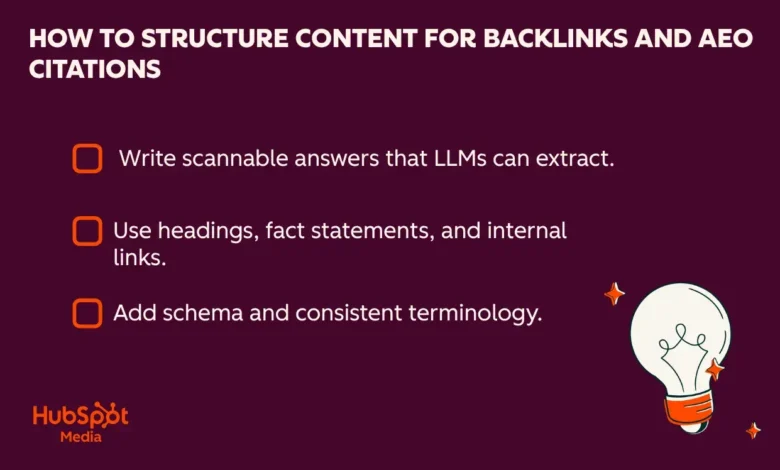
Professional content teams are now pivoting toward an "Answer First" structure. This involves leading a section with a direct, self-contained answer to a question, followed by supporting evidence, data, and context. This scannable format is significantly more likely to be extracted by an LLM than long-form narrative that buries the lead. Furthermore, the use of structured data—such as Organization, FAQ, and "sameAs" schema—provides machine-readable metadata that clarifies a page’s purpose.

The integration of specific content formats has also shown a higher correlation with AEO citations. Original research, proprietary data reports, and expert interviews are particularly valuable because they provide "grounding material" that AI engines cannot find elsewhere. When a brand publishes original statistics, it provides a unique "fact statement" that AI systems can use to satisfy a user’s request for data.
Official Responses and Market Adaptation
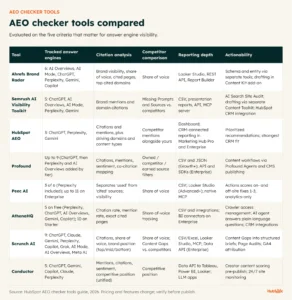
The marketing technology sector has responded rapidly to these shifts. HubSpot recently introduced "HubSpot AEO," a tool designed to help teams track brand visibility across AI answers and identify optimization gaps. This marks a significant move toward legitimizing AEO as a distinct discipline that requires its own set of KPIs, such as AI citation frequency and grounding query coverage.
Nathaniel Miller, Head of Marketing at Ashbrook Technologies, noted in recent discussions that the companies ranking highest across AI platforms are those that maintain both strong authority and semantic relevance. He cautioned that links failing to drive qualified traffic are essentially "logo slaps" with little value in the AI era. The consensus among digital strategists is that AEO does not replace SEO but rather extends it into a more complex, multi-modal environment.
Broader Impact and Future Implications
The shift toward AEO carries profound implications for the future of the open web and the digital economy. As AI answer engines become the gatekeepers of information, the "zero-click" trend is expected to accelerate. Brands that rely solely on organic traffic from search engine results pages (SERPs) may see a decline in visits, even as their brand awareness increases through AI citations.
This necessitates a change in how marketing success is measured. Traditional metrics like organic traffic and keyword rankings are being supplemented by "brand mention share" and "AI visibility scores." The long-term impact will likely see a consolidation of authority, where established entities with clear, structured, and highly cited content dominate the AI landscape, while low-quality, high-volume content producers are marginalized.
In conclusion, while backlinks still have a place in the modern authority infrastructure, they no longer tell the whole story. The brands that will succeed in 2025 and beyond are those that treat link building, digital PR, and content structure as a single, integrated effort to build entity authority. By prioritizing relevance, clarity, and scannable expertise, organizations can ensure they remain visible in the era of the answer engine.