Stack Overflow and Discourse Co-Founder Jeff Atwood Wagers $10,000 With Tech Icon John Carmack That Level 5 Autonomous Vehicles Won’t Arrive by 2030

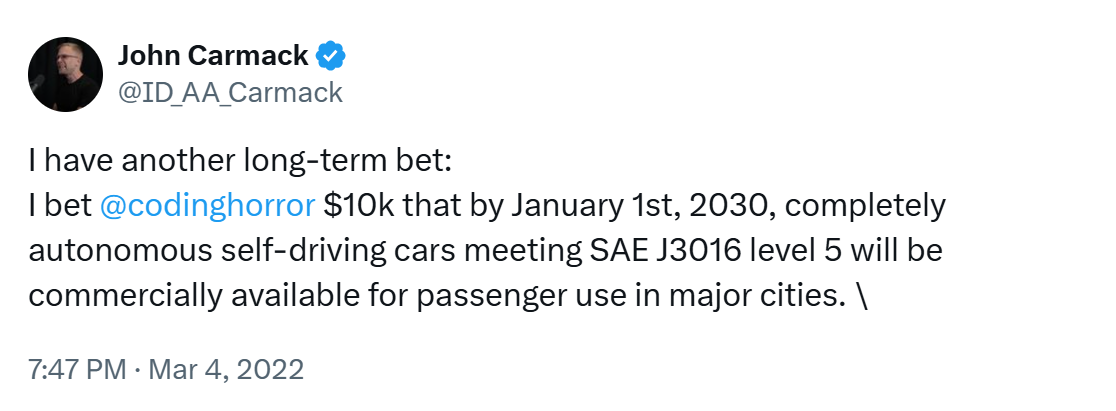
The intersection of software engineering, artificial intelligence, and public transportation has birthed a high-stakes, philanthropic wager between two prominent figures in the technology industry. Jeff Atwood, renowned software developer and co-founder of Stack Overflow and Discourse, has officially accepted a $10,000 challenge from legendary programmer and video game pioneer John Carmack. The subject of the bet centers on the commercial viability of fully autonomous, driverless passenger vehicles in major metropolitan areas by the turn of the decade.
According to the terms of the agreement, Carmack is wagering that completely autonomous self-driving cars meeting the Society of Automotive Engineers (SAE) Level 5 classification will be commercially available for general passenger use in any of the top ten most populous cities in the United States by January 1, 2030. Atwood, conversely, has taken the opposing side, betting that the ambitious milestone will not be reached within the stipulated timeframe. Regardless of who ultimately prevails, the $10,000 stake—subject to potential inflation adjustments as the deadline approaches—will be donated to a 501(c)(3) charitable organization of the winner’s choosing.
Defining Level 5 Autonomy
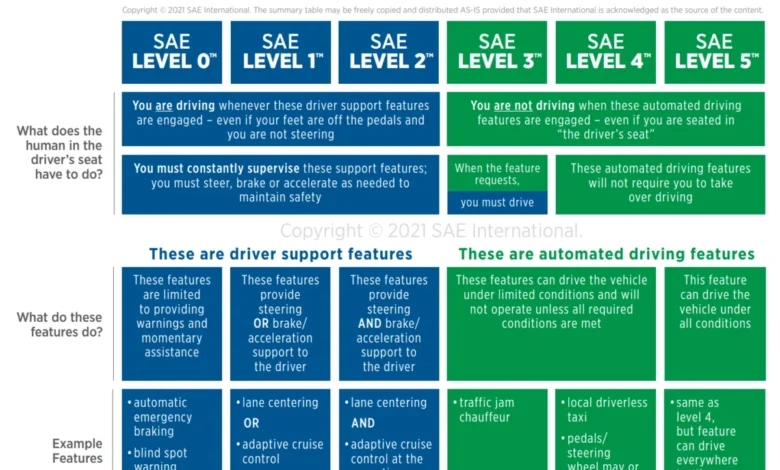
To understand the weight of the wager, one must examine the rigorous criteria established by the SAE International standard J3016, which outlines levels of driving automation ranging from Level 0 (no automation) to Level 5 (full automation).
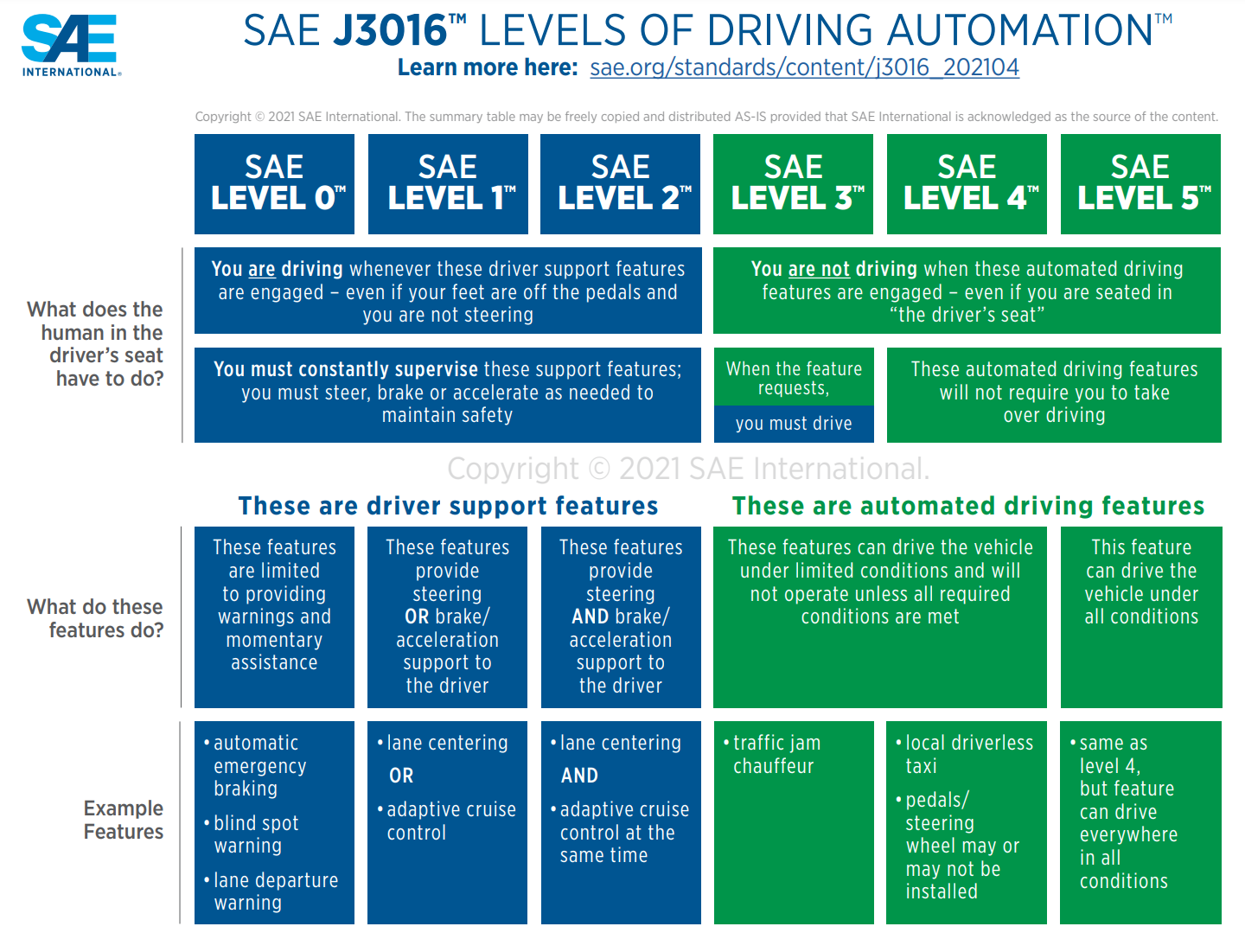
Under the SAE Level 5 definition, a vehicle must be capable of performing all dynamic driving tasks under all roadway and environmental conditions that can be managed by a human driver, excluding only extreme natural disasters or unforeseen major emergencies. The operational design domain is effectively global, meaning the vehicle can navigate anywhere without geographical restrictions.
For the purposes of Atwood and Carmack’s bet, the threshold requires that a human passenger enters the vehicle, inputs a destination, and requires zero human attention, intervention, or monitoring for the duration of the journey. Furthermore, the commercial availability must extend to everyday passengers within the top ten most populous cities in the United States, raising the bar significantly from geo-fenced robotaxis currently operating in limited, highly mapped municipal zones.
Context and Motivations Behind the Wager
The public challenge originated when Carmack, celebrated for his groundbreaking work on 3D graphics engines like Doom and Quake as well as his subsequent contributions to aerospace engineering and virtual reality, proposed the long-term bet to Atwood. Atwood publicized the challenge on his long-running software development blog, Coding Horror, clarifying his stance on the matter.
Atwood emphasized that his position as the skeptic—betting against the arrival of Level 5 autonomy by 2030—does not stem from an ideological opposition to autonomous transport. On the contrary, Atwood expressed enthusiasm for the potential quality-of-life improvements self-driving cars could offer society. He noted that he would gladly relinquish the steering wheel to spend transit time reading, consuming media, or communicating with family and friends.

Rather, Atwood’s skepticism is rooted in a sober assessment of the immense complexity inherent in computer vision, edge-case handling, and artificial intelligence safety validation. He framed the debate as a tribute to Carmack, whom he considers a lifelong hero, while issuing an open challenge to the broader engineering community to prove his pessimism wrong. Atwood added that if engineers successfully achieve Level 5 autonomy by the deadline, he will gladly celebrate the technological triumph alongside the victors.
The Broader Landscape of Autonomous Driving
The timeline proposed by Carmack—ending on January 1, 2030—places the industry under intense scrutiny. Over the past decade, autonomous vehicle (AV) development has experienced significant cycles of public hype, regulatory hurdles, technical breakthroughs, and sobering setbacks.
Companies such as Alphabet’s Waymo, Baidu, and various domestic and international startups have successfully deployed commercial robotaxi services in select urban centers, including San Francisco, Phoenix, Los Angeles, and Austin. However, these existing commercial deployments generally operate at SAE Level 4 automation. Level 4 systems are highly automated but are restricted to specific operational design domains, requiring human intervention or remote oversight when encountering unmapped construction zones, severe weather, or complex out-of-bounds environments.
Transitioning from Level 4 to Level 5 represents a monumental technological leap. While Level 4 systems rely heavily on exhaustive high-definition mapping of specific cities and pre-programmed routing, Level 5 demands generalized intelligence capable of navigating completely unfamiliar roads, handling unexpected hazards in adverse weather conditions without prior mapping, and replicating the nuanced decision-making of an expert human driver anywhere in the world.
Industry analysts and robotics experts remain deeply divided on whether this transition can be achieved within the current decade. Proponents of rapid AV adoption point to exponential increases in neural network training compute, improvements in sensor suite affordability (including LiDAR, radar, and high-resolution cameras), and the influx of billions of dollars in venture capital and corporate research and development.
Conversely, critics and safety researchers highlight the "long tail" problem of autonomous driving—the vast array of rare, unpredictable edge cases that occur infrequently in aggregate data but require immediate, sophisticated reasoning to resolve safely. Regulatory frameworks, liability questions, and public trust also present formidable barriers that extend well beyond raw software engineering capabilities.
Implications of the Bet
Beyond the philanthropic outcome, which guarantees a financial contribution to a recognized non-profit organization, the Atwood-Carmack wager highlights a recurring tradition among technologists: leveraging public bets to spark dialogue, encourage technical ambition, and draw attention to critical engineering challenges.
As the 2030 deadline approaches, the bet will serve as a fascinating benchmark for the progress of artificial intelligence and robotics. Whether autonomous vehicle fleets will gracefully navigate major American cities without human intervention by the start of the next decade remains to be seen. For now, the challenge has been laid down, the stakes have been formalized, and the global engineering community has been invited to rewrite the future of transportation.
Related posts: