Navigating the Digital Latchkey Era: How Remote-Working Parents Are Managing the After-School Gap

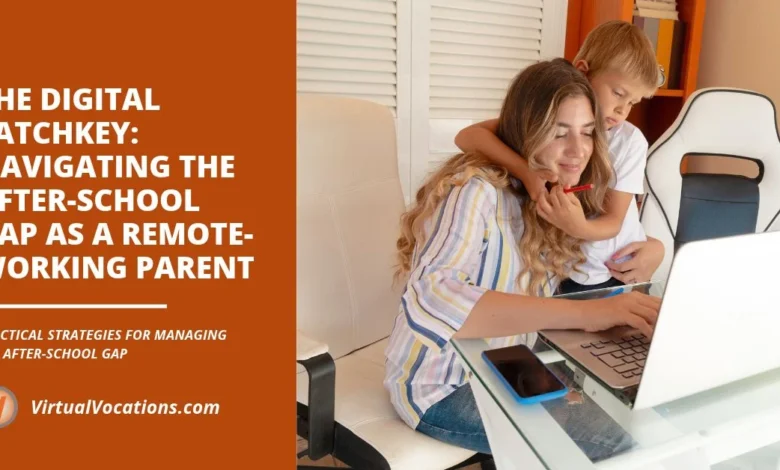
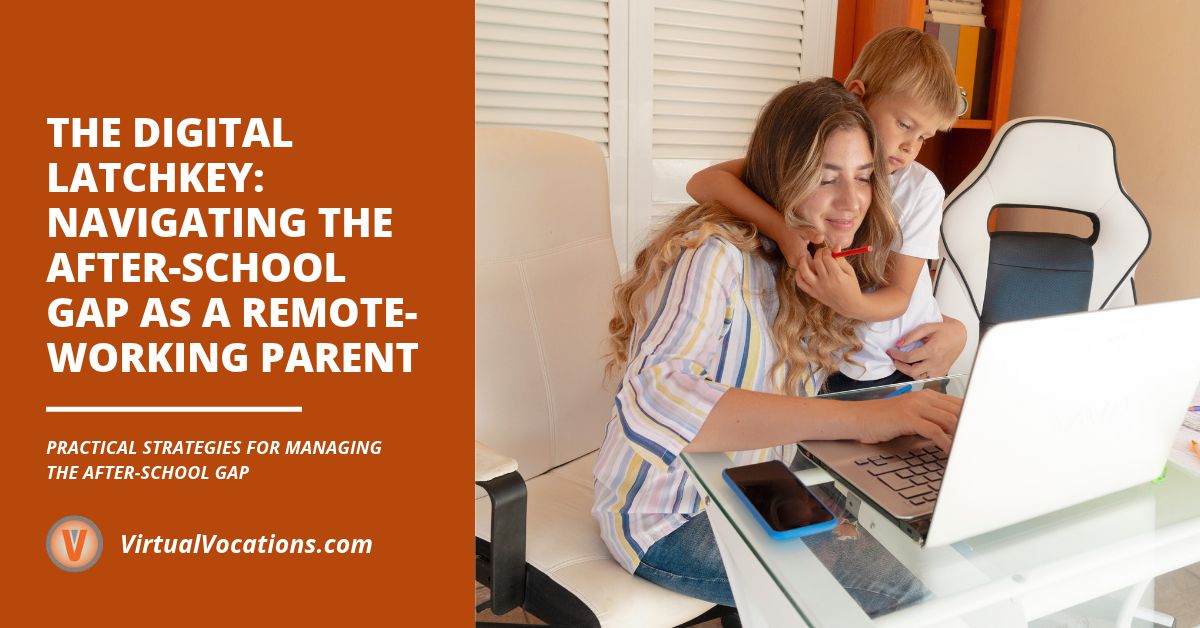
The modern American workforce has undergone a profound structural shift over the past decade, yet the daily rhythms of household and family life often remain tethered to an older, rigid era. For millions of remote-working parents, the afternoon transition brings a quiet, daily operational crisis: the phenomenon of the "digital latchkey" child. Unlike the traditional latchkey kids of the 1980s—who returned to empty homes with a key dangling from a lanyard—today’s children arrive home to a parent whose car is in the driveway, whose presence is physically felt, but whose professional responsibilities render them functionally unreachable behind a closed home-office door.
This invisible gap between the final school bell of the afternoon and the end of the corporate workday has created a complex balancing act. According to data from the U.S. Bureau of Labor Statistics (BLS), approximately 35 percent of employed individuals worked from home on days they worked in 2025, with remote-work participation rates reaching 38 percent for women and 31 percent for men. A substantial portion of this remote workforce consists of parents with school-age children. Because the standard American school day consistently concludes hours before corporate office hours wind down, families are left to bridge a persistent two-to-three-hour operational deficit every single weekday.
The Anatomy of Secondary Childcare and Workplace Expectations
To understand the pressure points of the digital latchkey dilemma, one must examine how time-use data reflects the realities of remote parenting. Federal metrics compiled by the BLS distinguish between "primary childcare," defined as care administered as the absolute main activity, and "secondary childcare," which involves having a child in one’s care while simultaneously performing another task, such as paid employment.
Adults living in households where the youngest child is between the ages of 6 and 17 spend an average of just 47 minutes a day on primary childcare. Conversely, adults living with at least one child under 13 log an average of 5.1 hours a day of secondary childcare. For remote professionals, the vast majority of afternoon parenting falls squarely into this secondary category. It is a state of perpetual split attention: being physically available to offer reassurance or intervene in an emergency while simultaneously trying to deliver high-level professional output on tight deadlines.
This dynamic introduces unique psychological and professional pressures. Employers see a remote employee working from home; schools see a guardian who is supposedly accessible all day; children see a parent just down the hall. Yet, the parent understands that a 2:30 p.m. to 4:00 p.m. block filled with back-to-back video conferences precludes any meaningful availability. Consequently, many remote-working parents navigate this period with a lingering anxiety, fearing that prioritizing family needs during these hours might signal a lack of commitment to their employers.
The Three-Hour Afternoon Problem and Its Trade-Offs
The sequence of events is familiar to nearly any household balancing remote work with K-12 education. At approximately 3:00 p.m., the front door opens. The child returns home—often hungry, understimulated, or carrying an unresolved social or academic problem from the school day. Meanwhile, the parent is live on camera or deep in a complex spreadsheet.
At that precise moment, the child is left with three suboptimal choices: interrupt the parent, wait until the workday concludes, or handle the situation independently. Each path carries distinct operational trade-offs:
- The Interruption Route: Pulls the parent out of professional focus at critical moments, potentially risking professional reputation or project continuity.
- The Waiting Route: Allows small frustrations, homework questions, or emotional needs to compound until 5:15 p.m., when both parent and child have depleted their stores of patience and energy.
- The Independent Route: Fosters a degree of self-reliance and confidence in the child, but depostits the parent of vital visibility into how the child’s afternoon unfolded.
Experts note that families rarely find a permanent, frictionless solution to this sequence. Instead, successful remote households intentionally design routines ahead of time, moving away from reactive firefighting toward structured afternoon frameworks. While back-to-school checklists routinely prioritize physical supplies, school bus logistics, and immunization records, the operational strategy for the post-school hours inside the home is frequently overlooked until the first week of classes is already underway.
The Tech Paradox: When Communication Tools Create More Work
In an effort to maintain lines of communication during these afternoon hours, many parents turn to personal technology. Pew Research Center data indicates that among parents whose children own smartphones, the vast majority cite the sheer ease of contact as a primary justification for providing the device.
However, standard consumer technology often introduces an unintended administrative burden. A traditional smartphone equipped with layered third-party parental controls requires an active administrator to function smoothly—and that administrator is invariably the working parent. Approving app download requests, resetting screen time limits that expired prematurely at 3:40 p.m., and manually adjusting content filters consume precious cognitive bandwidth. Because children frequently discover technological workarounds, this maintenance loop is continuous. In fact, Pew Research findings highlight that 42 percent of parents believe they could be doing a better job managing their children’s screen time, underscoring the fatigue of absorbing yet another administrative responsibility during a packed workday.
To mitigate this friction, industry analysts emphasize the importance of device-level restrictions rather than app-level oversight. When safety and usage parameters are hard-coded into the device architecture itself—eliminating open app stores to approve or unmonitored browsers to filter—the ongoing maintenance task is largely removed from the parent’s desk. This allows the technology to serve its fundamental purpose: enabling the child to reach the parent in an emergency without generating a steady stream of administrative decisions that require immediate adult intervention.

Establishing Clear Boundaries and Operational Communication
Mitigating the challenges of the digital latchkey era requires clear, explicit communication both inside the home and within the professional sphere. Children often interpret a closed office door as a reflection of parental mood rather than a functional boundary. Establishing predictable, visible signals can transform an abstract rule into a concrete system.
Many remote families utilize color-coded lighting systems, specific physical signs on doors, or dedicated physical pads on kitchen counters where non-urgent questions can be logged. By agreeing that emergencies—such as an injury, a fire, or an unexpected visitor—warrant immediate interruption, while everything else is documented on a notepad for discussion at 5:00 p.m., children learn to navigate independence with confidence. When parents consistently honor these systems by addressing the logged items when promised, children develop trust in the process.
Externally, managing employer expectations is equally critical. Remote workers frequently hesitate to discuss their afternoon scheduling realities due to lingering fears that flexibility will be viewed as a lack of dedication. However, framing family availability in operational terms often leads to productive corporate solutions. By front-loading deep-focus work and high-stakes meetings into the morning hours and designating the late-afternoon block for asynchronous tasks or slower response times on workplace communication platforms, employees can create a sustainable schedule that satisfies both managerial expectations and family needs.
Broader Implications for the Future of Work
The digital latchkey phenomenon is not a temporary inconvenience or a symptom of parental failure; it is a structural reality born from the friction between modern family life, rigid school schedules, and traditional corporate hours. As remote and hybrid work models continue to mature, organizations, policymakers, and families are increasingly forced to reevaluate how professional environments accommodate the realities of domestic life.
Efforts to close the afternoon gap cannot rely on the impossible expectation that a parent can be fully present in two places simultaneously. Instead, the path forward involves deliberate planning: establishing transparent household boundaries, fostering open communication with employers regarding flexible scheduling, and deploying communication tools that minimize administrative overhead. While the after-school hours will inevitably remain imperfect, adopting an intentional approach allows families to navigate the digital latchkey era with resilience, purpose, and clarity.
Related posts: