6 Roadmap Templates: The Comprehensive Guide to Strategic Planning and Project Management in 2024

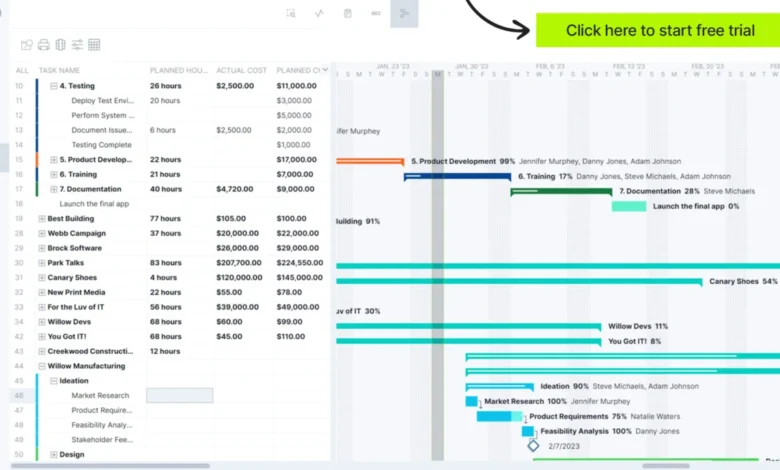
Creating and maintaining comprehensive roadmaps has become a fundamental operational requirement for modern organizations seeking to align cross-functional teams, establish clear strategic directions, and communicate shifting priorities across disparate departments. Whether an enterprise is orchestrating complex information technology initiatives, driving multi-phase product development lifecycles, or pursuing overarching corporate business objectives, identifying and deploying the correct roadmap template can drastically reduce administrative friction, save critical hours of planning, and ensure absolute operational clarity.

Historically, project management relied on disjointed communication channels and static documentation. Today, however, industry leaders across sectors demand dynamic frameworks that bridge the gap between high-level vision and granular, day-to-day execution. To address this demand, a diverse collection of specialized roadmap templates has emerged, catering to specific functional disciplines ranging from executive-level strategic overviews to highly technical IT programs and milestone-tracking charts.
The Evolution of Strategic Planning and the Utility of Templates
The primary objective of utilizing a structured roadmap template is to streamline the initial phases of project conceptualization and visual design. Rather than forcing project managers and team leads to construct strategic frameworks from scratch, standardized templates offer a reliable architecture that guarantees the inclusion of critical baseline metrics. These core elements typically encompass primary objectives, interim milestones, strict chronological timelines, and detailed resource allocations. By enforcing this structural consistency, organizations can significantly mitigate planning errors, reduce operational redundancy, and establish predictable workflows across multiple business units.

Furthermore, standardized roadmaps serve as powerful communication instruments. When organizational leaders present operational plans to executive boards, financial stakeholders, or front-line team members, a well-organized visual timeline eliminates ambiguity. It fosters organizational transparency by explicitly demonstrating how short-term tactical assignments feed into long-term strategic milestones. Industry research consistently indicates that companies utilizing formalized planning frameworks experience fewer scope-creep incidents and achieve higher rates of cross-departmental alignment.
Despite their widespread adoption, static document templates possess inherent limitations. Modern project environments are fluid, highly dynamic, and subject to rapid market fluctuations. Traditional spreadsheet-based templates lack the capacity to provide real-time data updates. Every modification, timeline shift, or resource reallocation must be executed manually, resulting in documentation that is perpetually lagging behind actual operational realities. Additionally, static templates function poorly as collaborative hubs, often leading to version control errors and communication silos. To overcome these barriers, organizations increasingly look toward automated project management solutions that retain the structured benefits of templates while introducing live data integration.
Essential Categories of Roadmap Templates
Navigating the complex landscape of corporate planning requires a diverse toolkit of specialized templates. Depending on the scale, industry, and strategic horizon of a given initiative, organizations typically rely on six distinct roadmap categories to maintain operational control.
1. The General Roadmap Template for Excel
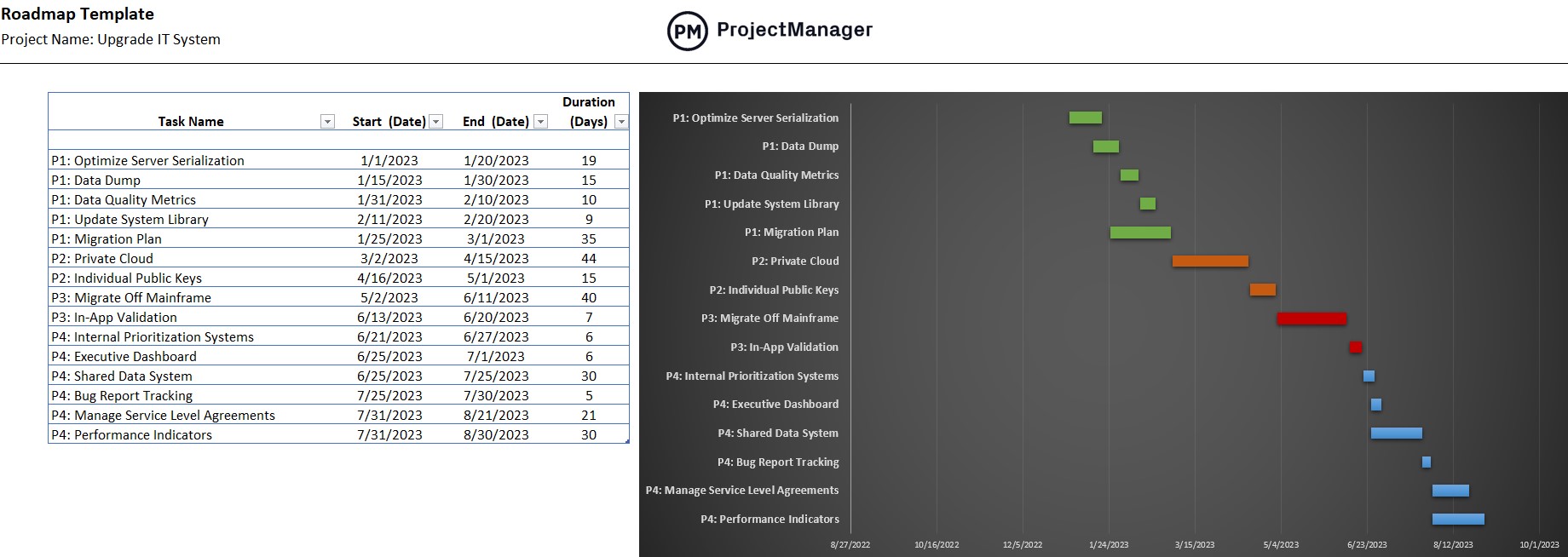
The general roadmap template remains a staple for administrative teams seeking a linear, highly accessible format to visualize overarching project goals. Typically structured with dedicated rows for specific tasks alongside corresponding start and end dates, this format allows users to map out project phases across a defined calendar period. Utilizing native spreadsheet features such as conditional formatting, custom color palettes, and cell merging, planners can easily categorize priorities and assign departmental responsibilities. While highly favored for its familiarity and zero deployment cost, the Excel-based roadmap remains bound by the constraints of manual data entry and limited concurrent collaboration.
2. The Product Roadmap Template
Product managers operate in environments where aligning engineering, marketing, sales, and customer success is paramount. A dedicated product roadmap template offers a strategic, time-segmented view—usually broken down by quarters or development sprints—that outlines product evolution, upcoming feature releases, and core strategic goals. Internally, this template keeps engineering squads focused on immediate deliverables without losing sight of the broader product vision. Externally, it provides executive leadership and key customers with a reliable preview of upcoming market capabilities, ensuring that development priorities strictly reflect overarching commercial objectives.
3. The Strategic Roadmap Template
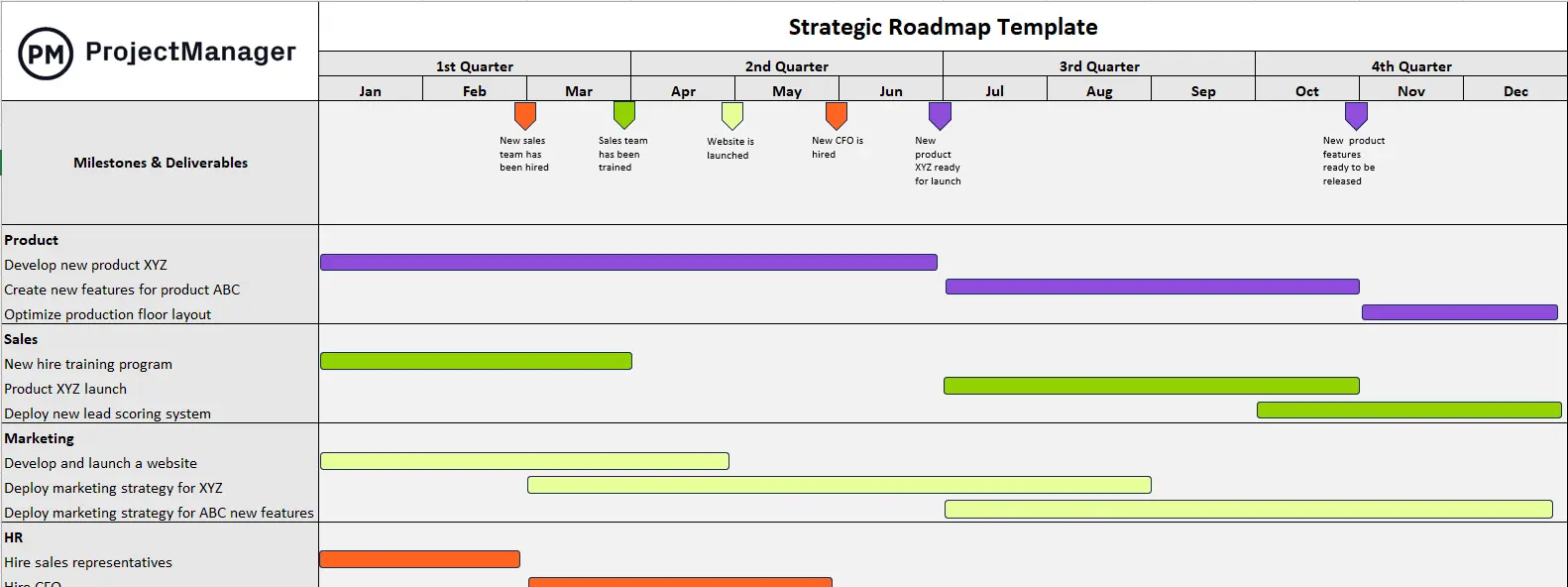
Moving beyond tactical deliverables, the strategic roadmap template addresses long-term organizational vision, often spanning multiple years. Divided into core operational categories such as financial growth, technological expansion, market penetration, and customer experience, this high-level instrument helps executive boards evaluate major business initiatives. By mapping corporate priorities across extended timelines, leadership teams can successfully navigate large-scale business transformations, annual budgeting cycles, and corporate restructuring without sacrificing clarity regarding ultimate organizational destinations.
4. The Program Roadmap Template
When an organization launches a massive corporate initiative comprising multiple interdependent projects, a program roadmap becomes indispensable. Unlike a standard project roadmap that governs a singular workflow, a program roadmap captures a macro-level perspective, coordinating dozens of workstreams under one strategic umbrella. Featuring month-by-month timelines and visual markers for critical phase gates, this template enables program managers to track resource distribution, identify inter-project dependencies, and mitigate systemic risks before they impact the broader organizational portfolio.
5. The IT Roadmap Template
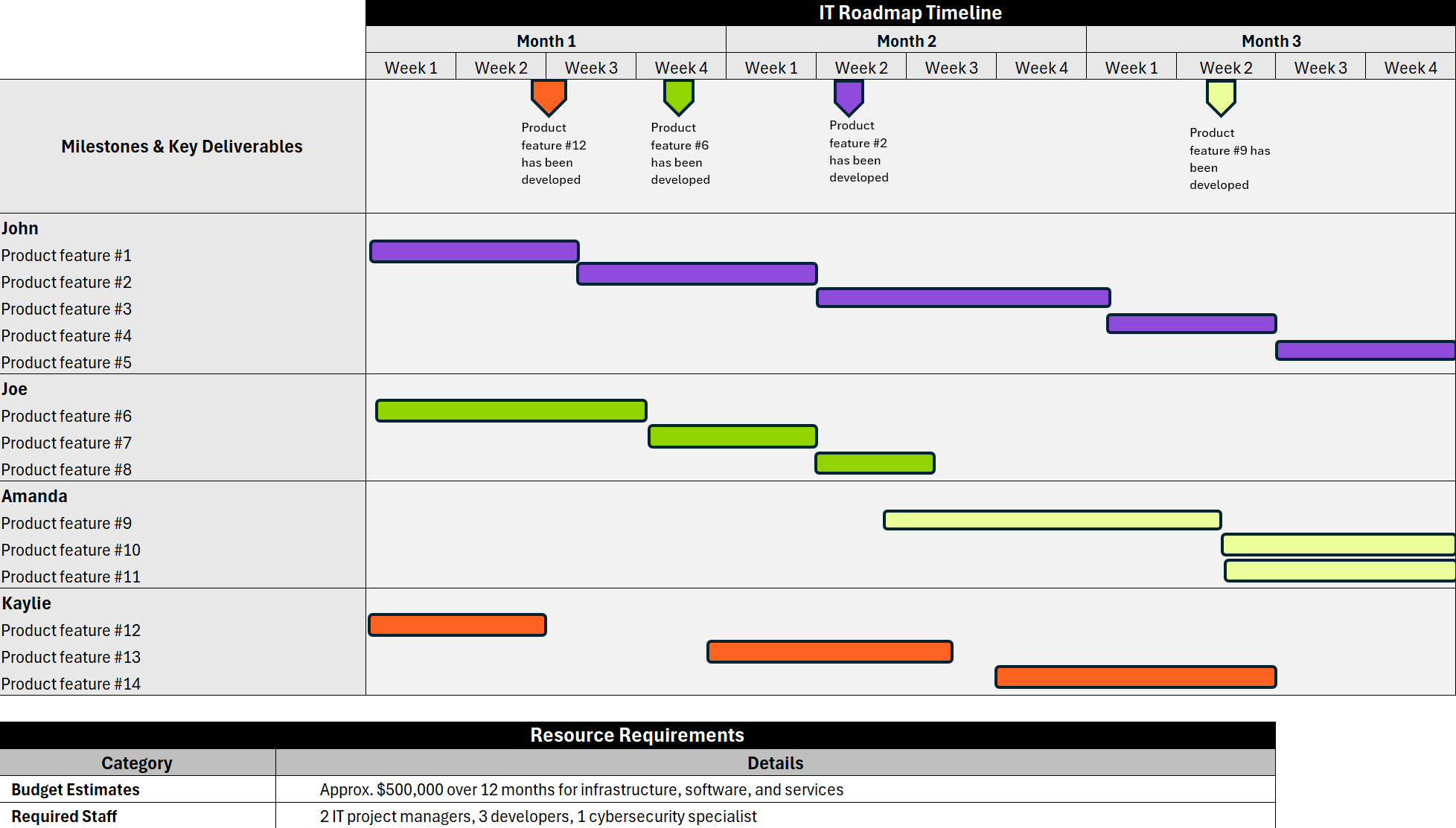
Information technology departments face immense pressure to modernize legacy infrastructure while maintaining robust cybersecurity postures and supporting digital transformation. An IT roadmap template provides a structured monthly timeline to visualize technology investments, cloud migrations, software rollouts, and infrastructure upgrades. By cataloging strategic objectives, budgetary constraints, and responsible technical leads, this template ensures that IT spending directly supports overarching business growth while preventing the duplication of technical efforts across departments.

6. The Milestone Chart Template
While comprehensive roadmaps establish the overarching trajectory of an initiative, milestone charts pinpoint the exact operational checkpoints that confirm a project remains on schedule. By plotting critical deliverables along a streamlined horizontal timeline, milestone charts offer executives and stakeholders a clean, date-anchored snapshot of project progress. This focused view eliminates the dense complexity of full Gantt charts, providing an easily digestible progress report suitable for high-level status briefings.
The Technological Leap: Moving Beyond Static Spreadsheets
While free downloadable templates provide an invaluable starting point for cash-strapped teams or early-stage projects, their utility rapidly diminishes as organizational complexity scales. Industry analysts emphasize that static documents cannot accommodate the dynamic realities of modern enterprise operations. Issues surrounding version control, manual update fatigue, and zero visibility into real-time team bandwidth frequently derail projects that rely exclusively on traditional spreadsheet roadmaps.
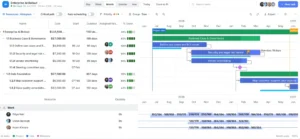
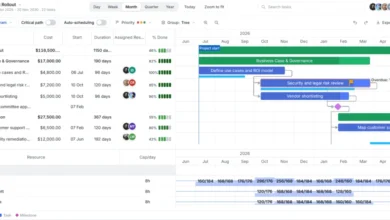
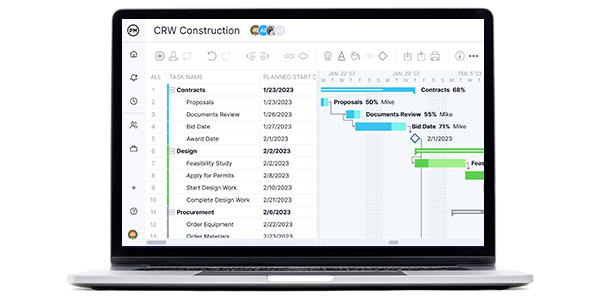
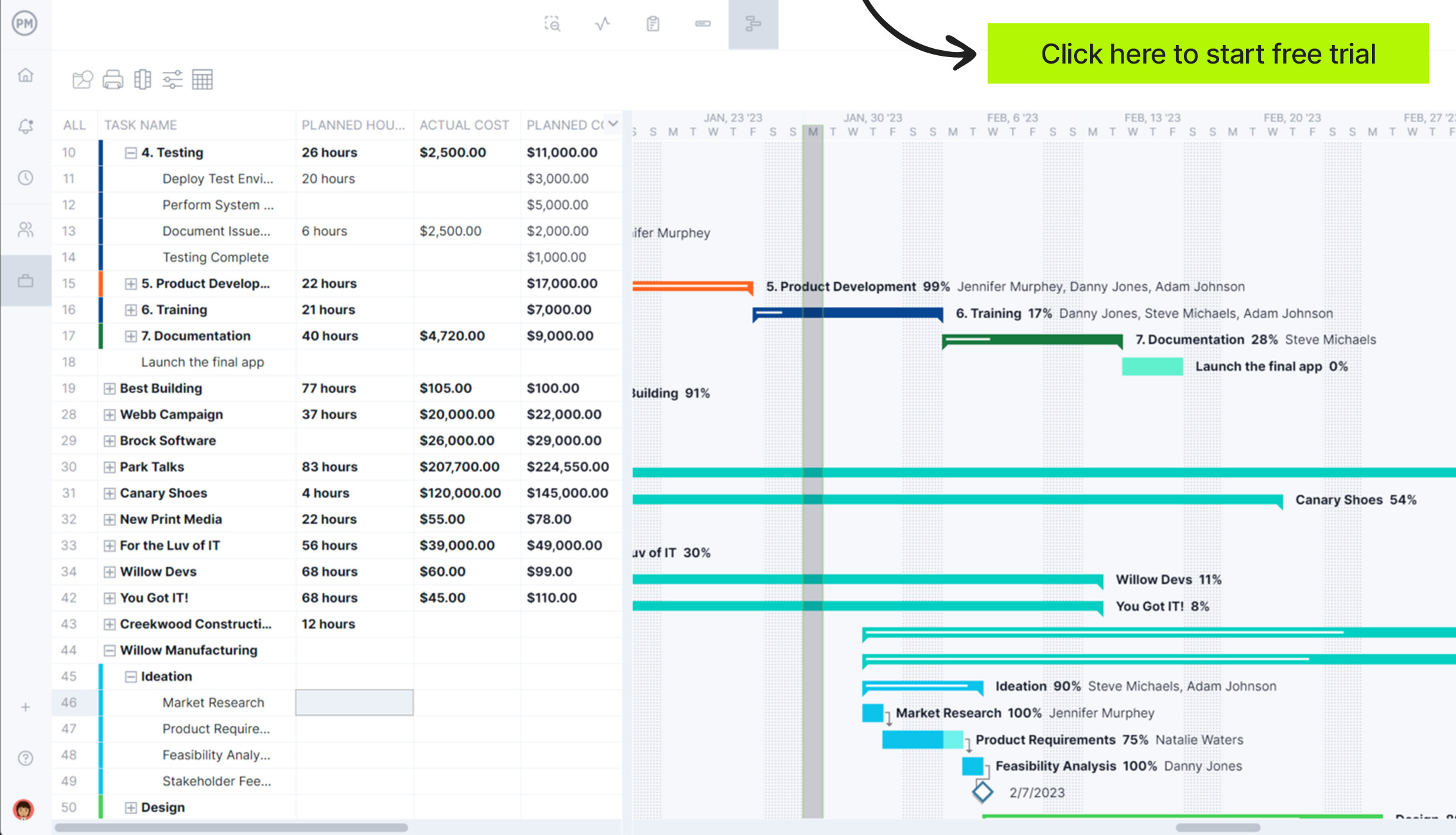
Recognizing these vulnerabilities, modern software ecosystems have evolved to offer automated, cloud-based project management platforms. Solutions such as ProjectManager replace static templates with live, interactive roadmaps featuring drag-and-drop editing capabilities, automated timeline adjustments, and seamless task integration. Unlike static files, advanced digital platforms can automatically calculate the critical path, identify resource bottlenecks, link task dependencies across all four standard relationship types, and establish live baselines to measure performance against initial projections in real time.
Advanced Resource Allocation and Workload Management
A critical vulnerability in traditional roadmap planning is the frequent oversight of team capacity and resource constraints. Unchecked task distribution often leads to severe employee burnout, missed deadlines, and catastrophic cost overruns. Advanced project management suites counteract this risk by integrating sophisticated resource planning and tracking mechanisms directly into the roadmap architecture.

Project managers begin by scheduling resources directly onto the master roadmap, mapping individual staff availability to ensure optimal allocation efficiency. Color-coded workload charts provide instant visual cues regarding team capacity, immediately identifying underutilized personnel or severely overallocated team members. Crucially, these imbalances can be resolved directly within the interface, allowing managers to reallocate tasks and adjust schedules without disrupting the underlying strategic plan. Furthermore, centralized team portals deliver comprehensive daily or weekly summaries of individual activities, filterable by progress status and task priority, thereby maintaining rigorous accountability across distributed workforces.
Real-Time Dashboards, Reporting, and Enterprise Integration
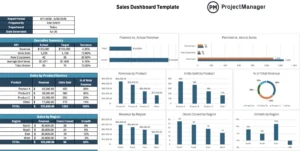
Beyond granular task and resource tracking, modern organizations demand instant visibility into overarching financial and operational health. Advanced project management platforms solve this requirement by deploying automated, real-time dashboards that require zero manual setup. These interfaces ingest live data from active roadmaps, translating complex project metrics into intuitive graphs and charts detailing budget expenditure, schedule variance, and milestone completion rates.
For deeper executive analysis, one-click reporting engines generate comprehensive operational summaries tailored for stakeholder review and board-level presentations. Integrated timesheet functionalities further enhance financial accuracy by streamlining payroll processing while simultaneously capturing precise labor costs to ensure projects remain strictly aligned with approved budgetary allocations. By bridging the gap between high-level strategic visualization and granular execution tracking, modern project management software empowers global enterprises—ranging from multinational manufacturing firms to agile technology developers—to deliver complex initiatives efficiently, predictably, and securely.