The Rise of Permissionless Pilots: How Modern Enterprise Startups Are Inverting the Traditional Sales Cycle

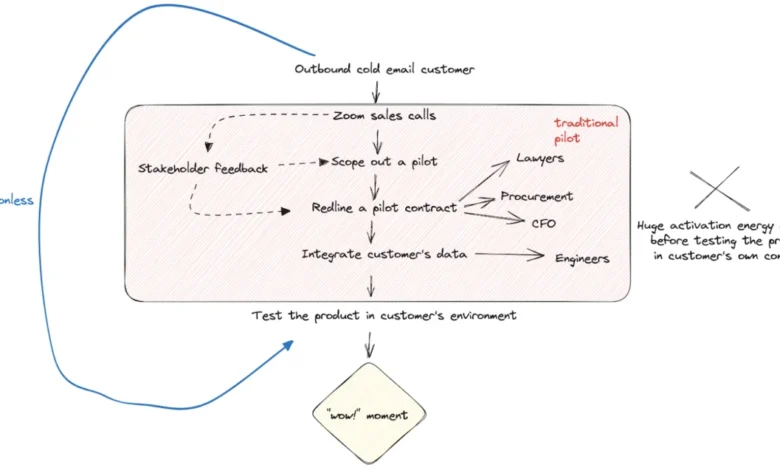
In the competitive landscape of B2B software and enterprise technology, the traditional sales cycle has long been characterized by a protracted sequence of introductory calls, procurement hurdles, legal negotiations, and complex technical integrations. For decades, software-as-a-service (SaaS) companies operated under the assumption that prospective buyers must endure this lengthy administrative slog before witnessing a product’s true utility. However, a growing cohort of early-stage startups and venture-backed enterprises are upending this paradigm by deploying what industry analysts call "permissionless pilots." This emerging commercial strategy shifts the buyer’s defining value realization moment—often referred to in the industry as the "Time to Wow!"—from the conclusion of the sales pipeline to the very initial point of contact.
The Traditional Enterprise Sales Bottleneck

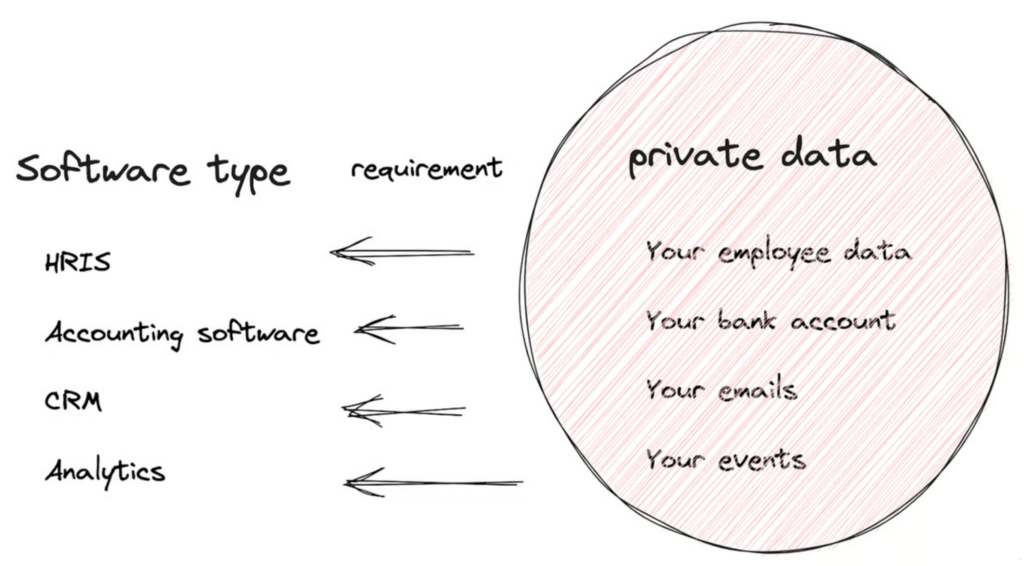
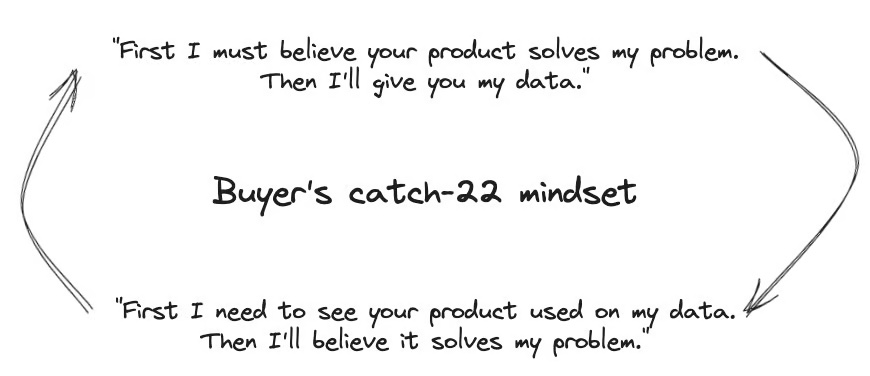
For years, software developers and sales executives alike recognized a fundamental catch-22 in enterprise sales: advanced enterprise products typically require proprietary customer data to function effectively, yet prospective buyers are historically reluctant to share sensitive corporate data or expend internal political capital until they are thoroughly convinced of a product’s efficacy. To navigate this impasse, traditional software vendors historically relied on standardized demonstrations utilizing synthetic dummy data. While functional, these theoretical previews frequently fail to resonate with prospective buyers who prefer evaluating software within their own operational context.
Getting internal green lights to integrate third-party solutions usually mandates navigating strict corporate governance frameworks, security reviews, and compliance checks. Consequently, enterprise sales cycles routinely stretch across months or even quarters. Industry observers note that this friction-heavy approach historically resulted in significant drop-off rates, making the successful closure of complex enterprise contracts a painstaking endeavor for early-stage founders.
The Mechanics of the Permissionless Pilot
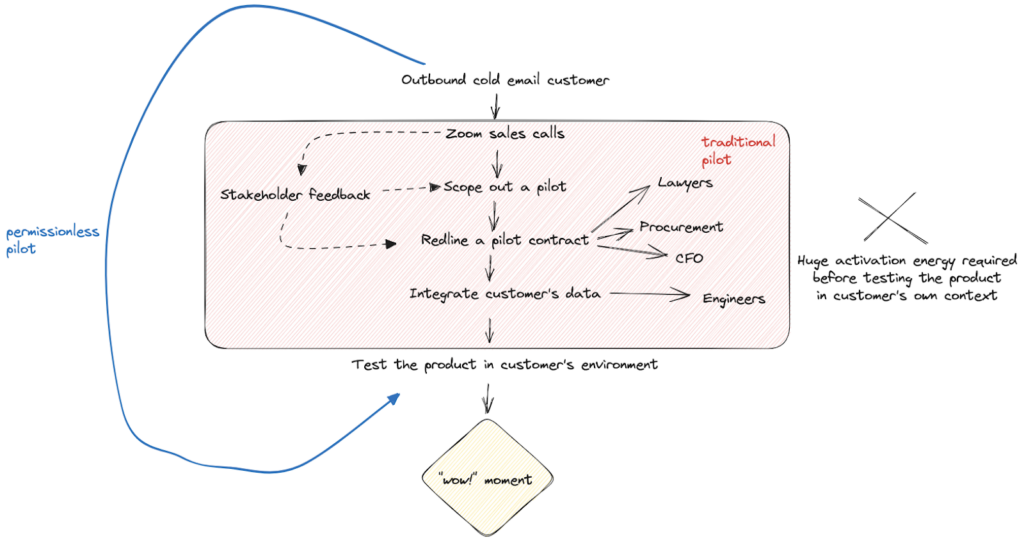
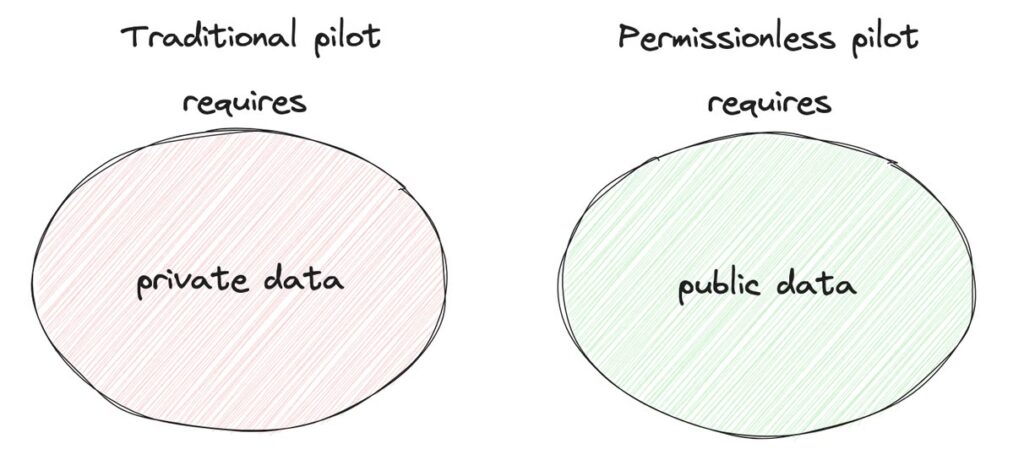
The permissionless pilot offers a structural workaround to this perennial enterprise sales challenge. By leveraging publicly accessible, customer-specific data, innovative startups can automatically generate customized product demonstrations without requiring prior authorization, system configurations, or data transfers from the prospect.
By eliminating administrative friction, this approach reduces a customer’s time-to-value metric to virtually zero. Instead of watching a generic walkthrough, a prospective buyer is immediately confronted with concrete, automated insights derived from their own publicly available digital footprint. This instant delivery of contextual value effectively captivates the target audience before formal commercial discussions even commence.
Real-World Implementation: The Emerge Tools Case Study
A prominent example of this strategy in practice is Emerge Tools, a mobile application performance management (APM) and optimization suite designed to help development teams reduce mobile app binaries and improve launch speeds. Founded to address the cumbersome process of application optimization, the company rapidly secured contracts with major technology enterprises—including DoorDash, Square, Airbnb, Duolingo, and Dropbox—without relying on traditional outbound sales teams.
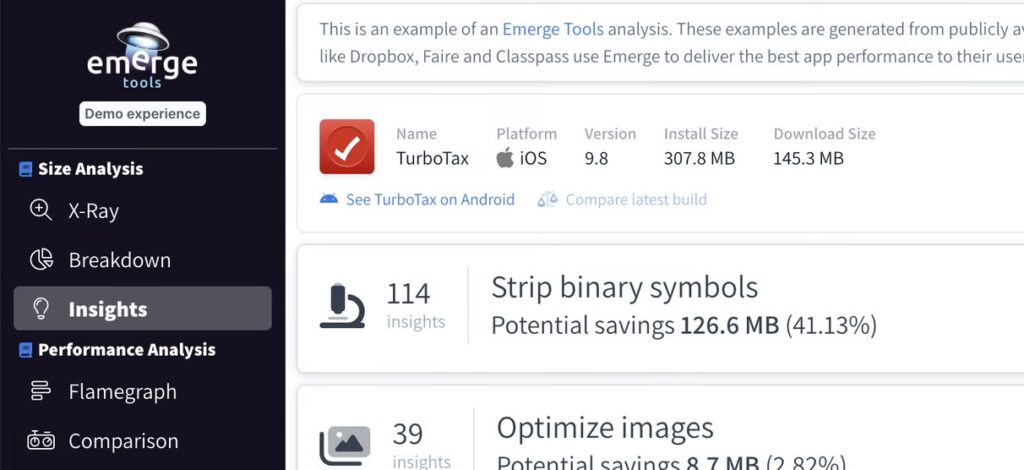
To circumvent the lengthy internal reviews typically associated with enterprise software adoption, the Emerge engineering team developed an automated system capable of reverse-engineering the publicly available binary code of native mobile applications found within the iOS and Android app stores. By looking up an application by name, mobile engineering teams can instantly view granular analyses highlighting potential optimizations.
For instance, automated evaluations of widely used consumer applications have successfully identified structural inefficiencies capable of reducing app sizes by over 40 percent. Crucially, these demonstrations are generated entirely autonomously, meaning multinational corporations do not need to disclose proprietary source code, redline complex software licensing agreements, or build internal political support merely to evaluate the software’s capabilities.
Scaling Content and Organic Acquisition
As automation capabilities advanced, Emerge scaled its analytical operations significantly. At the beginning of 2023, the startup systematically expanded its automated app analysis pipeline, increasing its catalog from approximately 500 analyzed applications to over 10,000 public apps on a regular monitoring cadence.
Each automated application analysis is published to a unique, publicly accessible URL, creating interactive digital artifacts that serve as organic marketing assets. Software engineers frequently discover these tailored insights via search engines or social media channels and subsequently share the findings internally with colleagues via workplace communication tools. According to company metrics, this content-driven distribution model generated a 400-percent increase in organic search impressions, keyword growth, and social media engagement throughout the year.
The resulting enterprise contracts materialized organically, driven by technical personnel who were able to examine verifiable, highly specific insights related directly to their own software products and implement recommended optimizations immediately.
Cross-Industry Applicability and Technological Catalysts
The viability of permissionless pilots is largely supported by the exponential growth of publicly available digital data over the past decade, combined with recent breakthroughs in artificial intelligence and machine learning. Advanced capabilities in computer vision and natural language processing, particularly through large language models (LLMs), have empowered developers to ingest, structure, and analyze vast quantities of unstructured public data with unprecedented speed.

Industry analysts have identified several potential application vectors across diverse vertical markets where permissionless pilots could similarly disrupt traditional sales methodologies:
- Search Engine Optimization (SEO): Platforms such as Conductor can evaluate enterprise web properties against public search index data to automatically suggest targeted optimization strategies.
- E-commerce Optimization: By cross-referencing millions of public retail listings, optimization tools can deliver immediate recommendations regarding pricing elasticity, visual assets, and copywriting enhancements to online merchants.
- Cybersecurity and Threat Detection: Bug bounty and vulnerability scanning platforms, following models similar to HackerOne, can perform initial non-invasive web application scans to demonstrate threat exposure without requiring prior administrative access.
- Financial Technology and Forensic Analysis: Platforms utilizing natural language processing, such as Bedrock AI, can analyze public regulatory filings to surface potential accounting anomalies and earnings quality concerns for institutional investors.
- Web-Based Marketing: Personalization software providers like Mutiny enable prospective clients to preview dynamic landing page modifications tailored to specific audience segments without requiring prior account creation or website tag integration.
Implications and Strategic Considerations for Founders
While permissionless pilots offer a compelling mechanism for accelerating enterprise acquisition cycles, technology strategists emphasize that their deployment requires careful execution. Because these demonstrations rely on public data sources, companies must ensure their analytical outputs maintain a high standard of accuracy and professionalism to build brand equity rather than alienate prospective clients.
As modern software markets become increasingly saturated, the ability to demonstrate immediate, tangible value without administrative overhead is emerging as a critical competitive differentiator. By rethinking how and when a prospective buyer experiences product value, early-stage technology companies are proving that the most effective enterprise sales pitch is one that requires no permission at all.