The Art of Velocity: How Strategic Decision-Making Defines Startup Survival and Scalability


Building a company in the modern digital economy is an exercise in predictive modeling under conditions of extreme uncertainty. Founders must navigate a market that shifts with rapid technological advancements, often relying on limited capital reserves and finite temporal windows to achieve product-market fit. In this high-stakes environment, the speed of decision-making is not merely a competitive advantage; it is the fundamental determinant of whether a startup survives or exhausts its runway before achieving viability.
The correlation between delayed decision-making and business failure is well-documented in venture capital data. Research from organizations such as the Startup Genome project suggests that premature scaling and a lack of focus on decision-making efficiency are among the leading causes of company collapse. When founders hesitate, they incur "decision debt"—the compounding cost of inaction, wasted engineering hours, and misallocated capital. To remain solvent, startups must transition from intuitive, reactive choices to a structured, framework-driven approach that prioritizes rapid iteration over perfection.

The Anatomy of the Decision Tree Framework
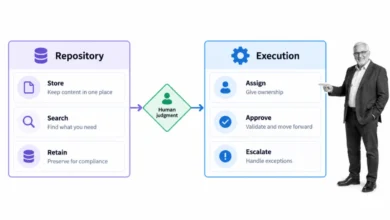
Efficiency in a startup environment is derived from reducing the cognitive load of routine choices. By implementing a "decision tree" system, founders can convert complex, abstract business problems into a series of automated inputs and outputs. This approach allows for the immediate conversion of theory into actionable data. Instead of pondering the theoretical correctness of a strategy, a startup that prioritizes speed treats every decision as an experiment designed to yield feedback.
This methodology relies on the principle that "any road" is better than a stagnant path when the destination is unknown. By establishing logical branches—if this input is true, then we take this action—teams can mitigate the paralysis that often accompanies resource-strapped environments. Crucially, these frameworks are designed to be fluid; as new information arrives, the decision tree is updated, allowing for pivots that are based on empirical evidence rather than gut instinct.
Chronology of Strategic Evolution: From Idea to Execution
The historical trajectory of successful ventures, such as KISSmetrics and Crazy Egg, provides a blueprint for this methodology. In the early stages, founders often fall into the trap of pursuing "cool" or novel ideas without grounding them in market reality.

For instance, early product development attempts at companies like KISSmetrics involved significant capital expenditure on disparate projects, such as podcast advertising networks and web hosting services, which ultimately failed to gain traction. The pivot occurred when the leadership shifted their analytical lens. Instead of asking what product they wanted to build, they began to analyze the prevailing industry gaps.
By identifying that Google Analytics dominated the market but failed to track individual user behavior over time, the team identified a massive, unmet need. This transition from "what can I build" to "what is the market missing" allowed the company to move from a state of aimless experimentation to purposeful product development. The resulting software solved a specific, persistent pain point for marketers, demonstrating that successful product design is often an iteration of an existing, imperfect solution rather than a total reinvention of the wheel.
Quantitative Impacts of Rapid Feedback Loops
The importance of rapid decision-making extends beyond product development into marketing and user acquisition. The case of Crazy Egg, founded in 2005, illustrates the power of aligning marketing channels with existing user behavior. At the time, competitors focused exclusively on enterprise-level analytics. By identifying that their target demographic—web designers—congregated on specific platforms like 9rules and Digg, the founders were able to bypass expensive paid acquisition models.

By leveraging these communities and providing heat map visualizations that catered to the specific visual needs of designers, they achieved an opt-in rate of 60–70% and secured over 23,000 early access sign-ups. This success was not the result of luck, but of a deliberate, data-backed decision to work backward from the customer’s habits to the marketing channel.
Similarly, at Hello Bar, the implementation of a rapid-feedback loop regarding customer installation issues led to a 40% increase in installation rates. By asking a single, targeted question—"What would have made it easier to install?"—the team identified a friction point in their deployment. Through subsequent testing of a dozen variations in their sign-up flow, they eventually achieved an 89% improvement in installation efficiency. These figures highlight the compounding effect of micro-decisions on overall Return on Investment (ROI).
Broader Implications for the Startup Ecosystem
The broader implication for modern entrepreneurs is the necessity of "front-loading" the proof of value. In the SaaS (Software as a Service) sector, where customer acquisition costs are often high and payback periods are long, the ability to demonstrate value quickly is the difference between sustainable growth and cash-flow insolvency.

The modern market rewards those who shorten the distance between the customer’s first interaction and the realization of value. When a company can prove its ROI rapidly, it decreases the payback period, effectively increasing its liquidity. This strategy moves the focus away from short-term, unsustainable hacks and toward long-term growth driven by user utility.
Analytical Summary: The Culture of Learning
Ultimately, the most successful startups are those that institutionalize a culture of learning. Each decision, whether successful or erroneous, serves as a data point that refines the company’s knowledge base. Founders must accept that not every hypothesis will be correct; however, the speed at which one can disprove an incorrect hypothesis is a competitive asset.
Key takeaways for founders looking to optimize their organizations include:

- Standardize Decision Processes: Establish criteria for when to pivot, when to double down, and when to abandon a project.
- Prioritize Customer-Centric Research: Always frame product development questions around what the market currently uses and how it can be improved, rather than what is theoretically interesting.
- Shorten the Feedback Cycle: Every feature or marketing campaign should be designed to yield data as quickly as possible. If a campaign cannot be measured, it cannot be optimized.
- Institutionalize Intellectual Honesty: Encourage teams to report negative results with the same vigor as positive ones. Failure is only fatal when the lesson is ignored.
In conclusion, the survival of an early-stage startup depends on the transition from "what-ifs" to "what-is." By adopting a rigid, data-driven decision-making framework, entrepreneurs can navigate the inherent instability of the startup landscape, ensuring that resources are focused on high-leverage activities that demonstrably move the needle toward long-term viability. As markets continue to accelerate, the companies that thrive will be those that can process information and iterate their strategies with the greatest precision and speed.