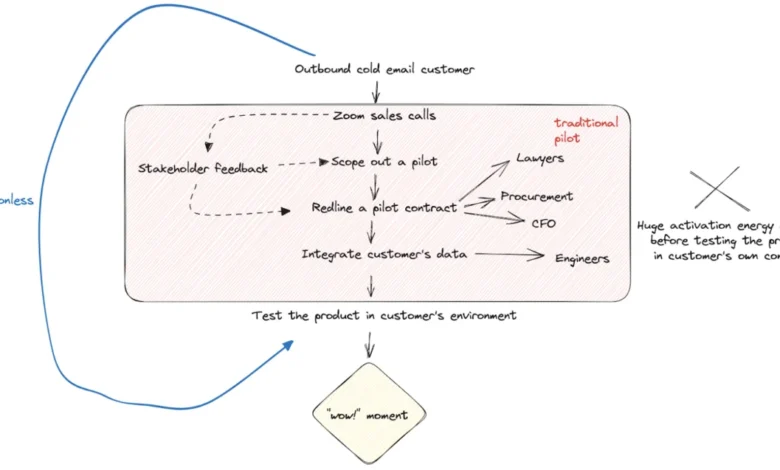
The modern enterprise software sales cycle has long been characterized by friction, administrative bloat, and prolonged timelines. Traditionally, enterprise software-as-a-service (SaaS) companies must navigate a grueling gauntlet of discovery calls, security reviews, legal negotiations, procurement hurdles, and technical integrations before a prospective buyer ever truly experiences the value of the software. This milestone—historically termed the "Time to Wow!" moment by SaaS experts a decade ago—has traditionally resided near the very end of a protracted procurement funnel. However, a growing cohort of agile startups is successfully inverting this paradigm through a strategy known as "permissionless pilots," radically compressing sales cycles and closing major contracts at unprecedented speeds.
The Fundamental Catch-22 of Enterprise Software Sales

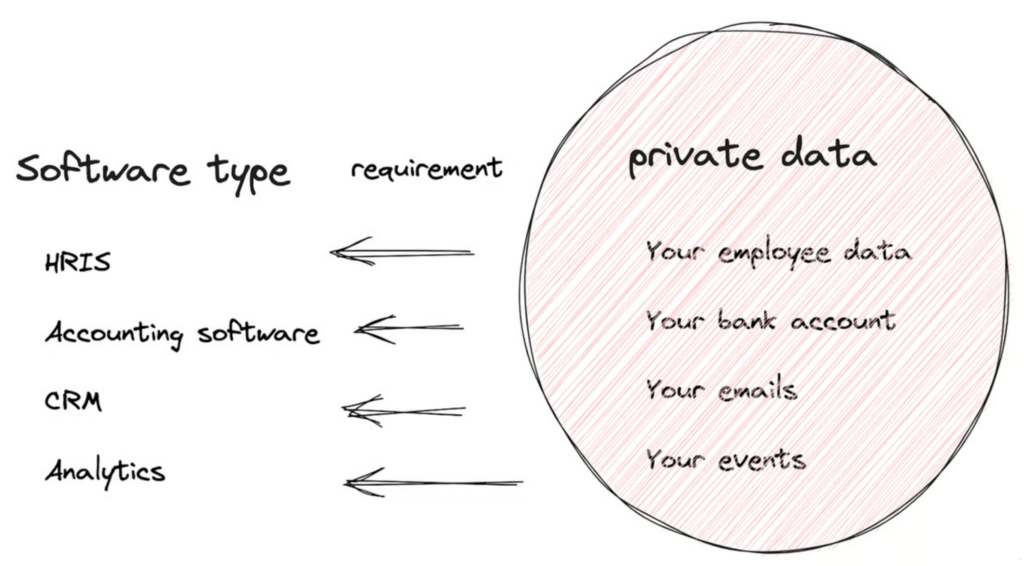
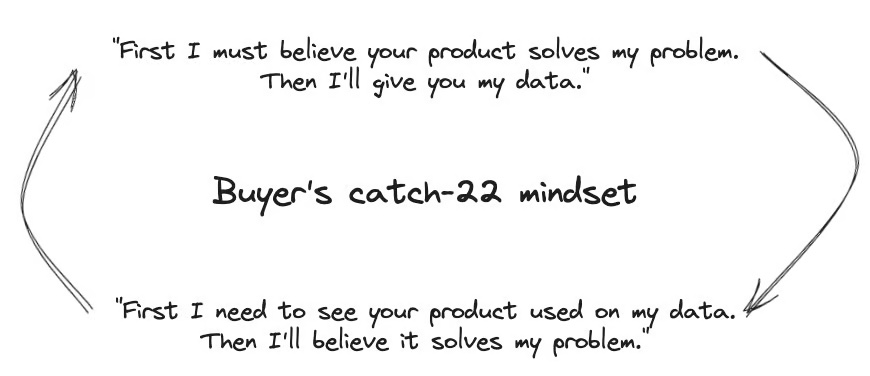
To understand the disruption caused by permissionless pilots, one must examine the fundamental catch-22 that has plagued enterprise software vendors for decades. Enterprise applications are fundamentally designed to ingest, process, and optimize proprietary customer data to deliver meaningful results. Historically, software vendors attempted to circumvent this requirement during sales demonstrations by utilizing synthetic or "dummy" data. Much like watching a car salesman drive a vehicle around a dealership lot, prospective buyers are rarely compelled by theoretical use cases applied to fictitious datasets.
True conviction occurs only when decision-makers witness a software product operating directly within their unique operational context using their own metrics. Yet, enterprises are notoriously protective of their internal data. Securing permission to share company data with a third-party vendor requires navigating complex internal hierarchies, expenditure of political capital, and rigorous compliance reviews. Consequently, software buyers are asked to commit time, resources, and social capital to a vendor before they have concrete proof that the product will yield a return on investment. This structural paradox makes it a statistical wonder that enterprise deals close at all.
Defining the Permissionless Pilot
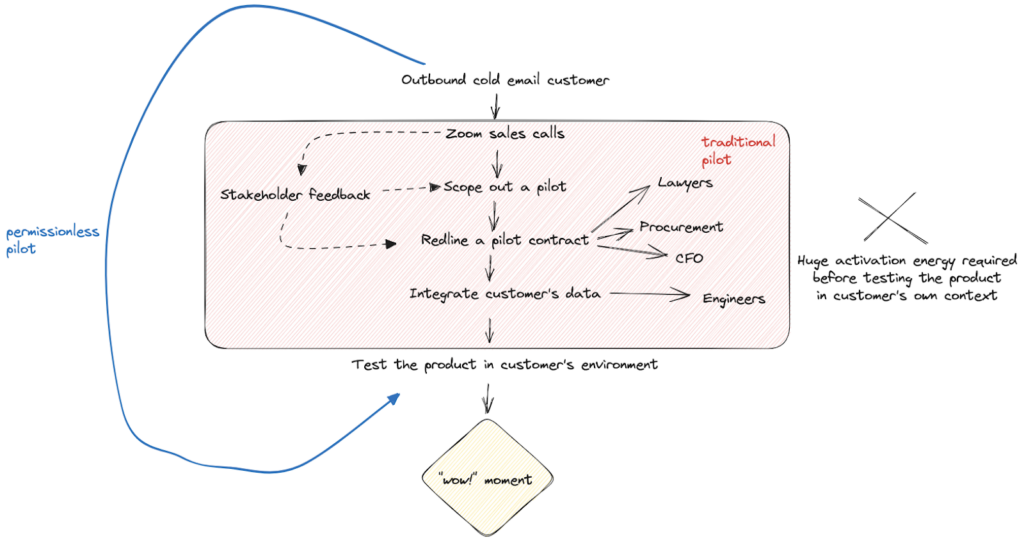
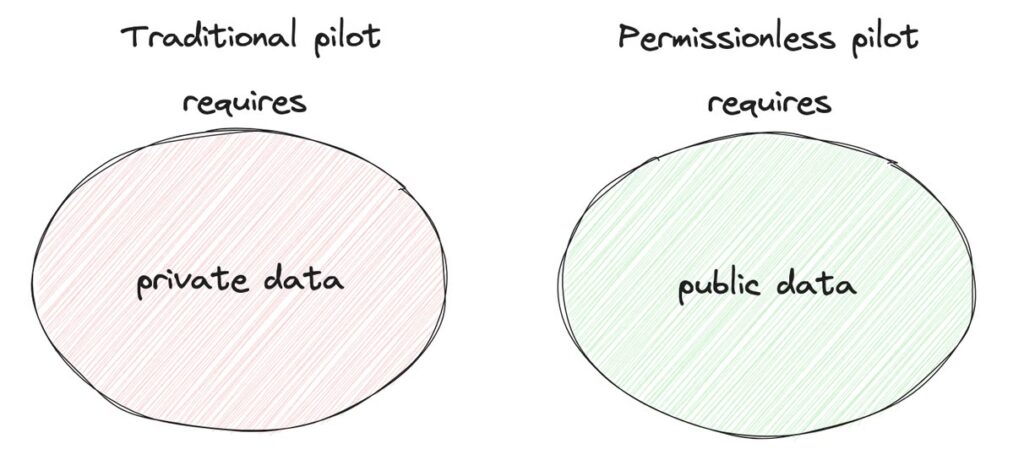
In response to this systemic inefficiency, forward-thinking startups have introduced the concept of the permissionless pilot. A permissionless pilot is a product demonstration that leverages publicly available, customer-specific data to instantly deliver the product’s value proposition without requiring any upfront configuration, data sharing, or administrative permission from the prospect.
By utilizing public datasets—ranging from app store binaries and search engine results to regulatory filings and e-commerce catalogs—companies can generate customized product demonstrations tailored to specific prospective clients before a single sales call takes place. This approach sets the customer’s time-to-value to zero, shifting the critical "Wow!" moment from the conclusion of a lengthy sales cycle to the initial point of contact.
Chronology and Market Evolution
The viability of permissionless pilots has not emerged in a vacuum; it is the direct result of a decade-long explosion in the availability of structured and unstructured public data, coupled with monumental leaps in machine learning technologies. Over the past ten years, global data creation has scaled exponentially, driven by widespread digitization across industries. Concurrently, advancements in natural language processing (NLP), large language models (LLMs), and computer vision have enabled software systems to rapidly ingest, parse, and structure massive volumes of unstructured public data with remarkable precision.
Startups recognizing this technological shift began moving away from static, generalized demos toward dynamic, automated analytical pipelines. Rather than waiting for inbound leads to request customized proofs of concept, these agile companies began proactively running automated analyses on thousands of prospective clients using entirely public information, transforming cold outreach into immediate, value-driven interactions.
Real-World Implementation: The Emerge Tools Case Study
A prime industry example of this strategy in practice is Emerge Tools, a mobile application performance management (APM) and optimization suite designed to help development teams reduce mobile app binary sizes, improve load times, and optimize overall performance. Despite offering a product that delivers immense utility, Emerge faced a traditional enterprise hurdle: convincing large engineering organizations to integrate third-party tooling requires multi-stakeholder buy-in and extensive security approvals.
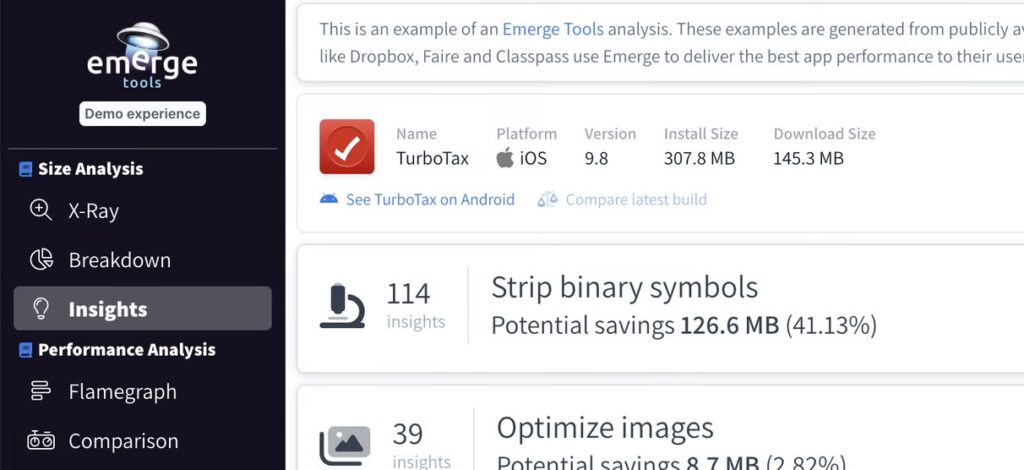
To dismantle this barrier, Emerge engineered an automated system capable of reverse-engineering the publicly available binary code of any native mobile application found within the iOS and Android app stores. By looking up a prospective company’s mobile application by name, Emerge’s software instantly generates a comprehensive optimization analysis—identifying concrete efficiencies that can reduce app size by tens of percentages—without requiring the target company to surrender proprietary source code or engage in formal procurement discussions.
Between the beginning and end of a recent operational cycle, Emerge scaled its automated analysis pipeline from approximately 500 public applications to over 10,000 regularly monitored apps. These automated insights are published on unique, public URLs, serving as shareable digital artifacts. When prospective developers or engineering managers discover these analyses via organic search or social channels, they frequently share the findings internally with colleagues via communication platforms like Slack.
This mechanism drove a 400% increase in organic search traffic, keyword visibility, and community engagement over the course of a single year. Consequently, Emerge has secured enterprise contracts with household-name technology leaders such as DoorDash, Square, Airbnb, Duolingo, and Dropbox—often without employing a traditional outbound sales force. The product’s ability to demonstrate immediate, verifiable utility short-circuited the traditional software evaluation timeline.
Cross-Industry Applications and Frameworks
While mobile application development offers a clear framework for binary-based public analysis, the underlying mechanics of permissionless pilots can be adapted across a wide spectrum of industries. Business-to-business (B2B) software companies across various sectors are beginning to evaluate how public data streams can be leveraged to power instantaneous, zero-friction demonstrations:

- Search Engine Optimization (SEO): Companies can utilize public search engine result pages to audit and suggest immediate performance improvements for prospective brands, similar to the operational models employed by firms like Conductor.
- E-commerce Optimization: By cross-referencing millions of public retail listings, optimization platforms can automatically generate conversion-driving recommendations regarding pricing, copywriting, and media assets for online merchants.
- Cybersecurity and Threat Detection: Cybersecurity vendors can perform non-intrusive, white-hat vulnerability scans of public web applications to instantly flag security exposure to prospective enterprise clients, following frameworks utilized by entities like HackerOne.
- Financial Intelligence: Financial technology platforms can deploy forensic intelligence models to scan public regulatory filings, such as SEC documents, to uncover potential accounting irregularities or earnings quality failures for hedge funds and institutional investors, akin to solutions offered by Bedrock AI.
- Web-Based Marketing: Personalization platforms can allow website operators to visualize dynamic landing page modifications based on visitor attributes without requiring upfront software installation or account creation, a methodology utilized by companies like Mutiny.
Strategic Implications and Best Practices
The proliferation of permissionless pilots signals a broader evolution in enterprise software go-to-market strategies. Buyers are increasingly fatigued by traditional sales methodologies characterized by gating, long-form demo requests, and protracted negotiation cycles. Products that can successfully demonstrate empirical value prior to human intervention possess a distinct competitive advantage in crowded marketplaces.
However, industry analysts and venture capital observers emphasize that the execution of permissionless pilots requires careful calibration. Because these demonstrations rely on public data without prior administrative consent, vendors must maintain rigorous standards of accuracy, professionalism, and respect for brand reputation. A poorly constructed pilot that yields inaccurate insights or utilizes an aggressive tone can alienate prospective clients rather than converting them.
Ultimately, the permissionless pilot framework encourages startup founders and product architects to fundamentally rethink their customer acquisition funnels. By asking the foundational question—"What valuable insights could our software deliver if we relied exclusively on public data sources without proprietary customer inputs?"—companies can bridge the gap between product capability and buyer skepticism, transforming the modern enterprise sales cycle from a bureaucratic hurdle into an immediate demonstration of utility.