Navigating Continuous Disruption: Why a Culture of Learning is the Ultimate Competitive Advantage for Modern Organizations

In the contemporary corporate landscape, executive leadership is constantly tested by the velocity of global markets, emerging technologies, and shifting consumer expectations. Today, one of the most critical challenges leaders face in guiding their organization is how to help their teams be responsive and adaptive to ongoing change. For decades, corporate strategy relied heavily on heavy capital investment in technological upgrades, streamlined supply chains, or disruptive product development to maintain a competitive edge. However, modern business realities have upended this traditional playbook. Addressing this challenge won’t come down to technological advances or cutting-edge strategies alone. Rather, long-term organizational resilience comes down to how well leaders can promote and support a culture of learning and growth that is integral to how the organization achieves its shared goals.
As digital transformation accelerates and market disruptions become the rule rather than the exception, corporate institutions are discovering that human adaptability is far more valuable than static proprietary software or temporary market monopolies. When an enterprise fosters an environment where continuous education, psychological safety, and iterative problem-solving are embedded into daily operations, it transforms from a rigid hierarchy into an agile ecosystem capable of weathering unforeseen economic shocks.
A Real-World Example: How Netflix Built a Learning Culture
To understand the tangible impact of a learning-centric corporate philosophy, industry analysts frequently point to the trajectory of Netflix. A good example of such a learning culture can be seen in how Reed Hastings guided Netflix through several transformations, from a DVD-by-mail service to a media streaming platform, and eventually to a dominant content producer. This evolution required pivoting from purchasing content from major studios to generating their own platform-exclusive films and TV shows.
The chronology of Netflix’s corporate evolution illustrates this paradigm shift in action. Founded in 1997 as a mail-order DVD rental company, Netflix disrupted the brick-and-mortar video rental industry, famously displacing giants like Blockbuster. By 2007, anticipating the maturation of broadband internet infrastructure, Hastings spearheaded the launch of the company’s video-on-demand streaming service. This early pivot required an entirely new set of technical competencies, infrastructure investments, and licensing strategies.
Furthermore, Netflix fundamentally transformed the way we consume content by releasing entire seasons at once, leading to the familiar habit of "binge-watching" a series. This distribution model broke decades of traditional television broadcasting norms, forcing legacy media companies to completely overhaul their own business and distribution models to compete.
Key to Netflix’s success in undergoing such dramatic and successful transformations was Hastings’s efforts to transform the organization’s approach to learning and innovation. Rather than relying on rigid top-down mandates, Hastings championed a decentralized operational model. Specifically, Hastings promoted Netflix’s “Freedom and Responsibility” culture, under which employees were granted significant autonomy to innovate, experiment, and take strategic risks while being open to owning up to their failures and participating in offering genuine and constructive feedback.
Under this cultural framework, employees were encouraged to treat failures not as punitive performance markers, but as essential data points in the broader process of corporate R&D. Hastings’s efforts to create a learning culture was critical to Netflix’s ability to not only adapt faster than their competitors to evolving customer needs, but to their ability to repeatedly treat disruption as opportunities for growth and continued success. By empowering engineers, product designers, and content executives to make high-stakes decisions without seeking layers of management approval, Netflix maintained the speed and agility of a startup long after scaling into a multinational enterprise.
3 Steps to Build a Learning Culture in Your Organization
For executives and organizational development professionals seeking to replicate this level of institutional agility, building a learning culture requires deliberate structural intervention rather than vague cultural aspirations. Taking inspiration from insights shared in keynote addresses and leadership forums on how leaders can foster a continuous learning culture, industry experts recommend three foundational steps for how you can foster a similar kind of learning culture in your organization.
- Create Formalized Knowledge-Sharing Structures
Ad-hoc communication is rarely sufficient to drive systemic organizational learning. For starters, it’s important that you create formalized structures to allow your employees to share their expertise and insights with regular frequency. When institutional knowledge remains siloed within specific departments or individual minds, the organization remains vulnerable to talent turnover and operational bottlenecks.
Some examples of such formalized structures include knowledge-sharing sessions, cross-functional debriefs, creative problem-solving forums, or dedicated digital platforms where ideas can be exchanged and ad hoc teams created to try out new initiatives. By instituting recurring touchpoints dedicated exclusively to peer-to-peer education, organizations can accelerate the cross-pollination of innovative ideas and break down traditional departmental silos.
- Invest in Aligned Skills Development
Professional development cannot be treated as a generic, check-the-box human resources initiative. Next, provide your employees with opportunities for skills development that is aligned with both the organization’s needs and employee professional development goals. When training programs are designed solely around immediate operational requirements without considering employee aspirations, engagement levels tend to stagnate.
Conversely, investing in your employees’ career aspirations so they become even more valued contributors to your shared purpose will strengthen employee commitment as well as retention. Modern knowledge workers increasingly prioritize career mobility and continuous upskilling. By aligning corporate training budgets with individual career trajectories, organizations create a symbiotic relationship where personal mastery directly drives business capability.
- Model the Learning Behaviors You Want to See
Cultural transformation always starts at the top. Employees closely observe the behavior, reactions, and daily habits of executive leadership to determine which values are genuinely prioritized. And finally, it’s important that you model the behaviors you want your employees to adopt.
There’s no better way to promote and encourage a learning culture than for your employees to see you actively pursuing opportunities to learn—such as reading industry literature, attending professional development seminars, seeking out constructive feedback from junior staff, and transparently applying new insights to the way you lead. When leaders openly admit gaps in their own knowledge and demonstrate intellectual curiosity, they grant psychological permission for their teams to do the same, effectively dismantling the fear of failure that often stifles corporate innovation.
Background Context and Economic Implications
The imperative for continuous organizational learning is underscored by broader macroeconomic and labor market trends. According to recent workforce studies conducted by global human capital advisory firms, the half-life of professional skills is shrinking rapidly due to advancements in automation, artificial intelligence, and global market integration. Skills that guaranteed career longevity a decade ago are frequently rendered obsolete within a few years. Consequently, organizations that fail to embed continuous learning into their operational DNA face mounting risks of obsolescence, declining employee engagement, and high attrition rates among top-tier talent.
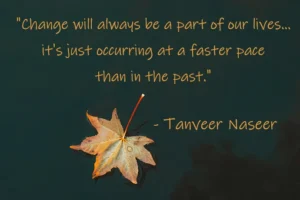
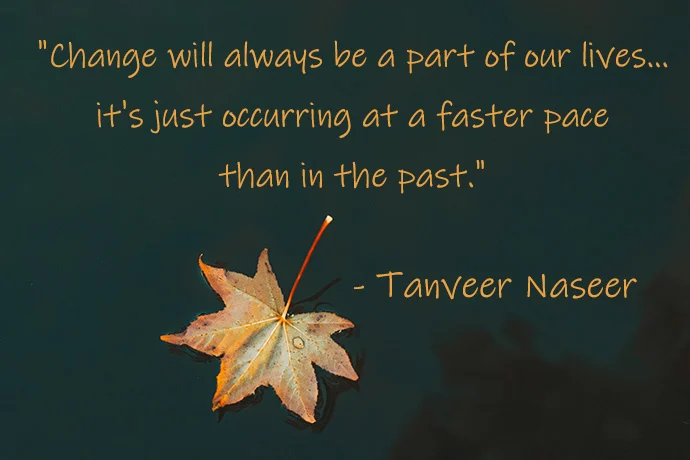
Furthermore, economic analysts and organizational psychologists emphasize that traditional change management models—which treat change as a discrete, finite event with a clear beginning and end—are no longer effective. The fact is change will always be a part of our lives—it’s just occurring at a faster pace than in the past. Global supply chain vulnerabilities, geopolitical shifts, regulatory evolutions, and rapid technological breakthroughs mean that organizations are operating in an environment of perpetual transition. And that’s why your ability to promote a learning culture is increasingly critical to your organization’s ability to succeed and thrive.
Statements and Reactions from Industry Experts
Management consultants and organizational behavior specialists widely endorse the shift toward learning-centric leadership models. Commenting on the shifting dynamics of modern corporate governance, leadership strategists note that the traditional command-and-control leadership paradigm is fundamentally incompatible with the demands of the modern knowledge economy.
"In an era defined by constant ambiguity, leaders cannot possibly possess all the answers," notes a leading organizational change researcher. "The role of the executive has fundamentally shifted from being the chief problem-solver to becoming the architect of an environment where the entire team can solve problems collaboratively, iterate rapidly, and learn from every setback. Organizations that master this cultural shift do not merely survive disruption—they leverage it to outpace their competitors."
Broader Impact and Future Outlook
As the global economy continues to navigate technological disruption and economic uncertainty, the distinction between high-performing organizations and struggling enterprises will increasingly be determined by human adaptability. Technology, capital, and market access can be replicated or acquired by competitors; however, a deeply embedded culture of continuous learning, psychological safety, and collective accountability represents an inimitable competitive advantage.
Leaders who take deliberate steps to formalize knowledge sharing, invest strategically in aligned skills development, and authentically model intellectual curiosity will position their organizations to thrive amidst ongoing change. By transforming disruption from a threat into an institutional catalyst for growth, forward-thinking enterprises can secure long-term viability and market leadership in an increasingly complex world.
Related posts: