The Value of Human Capital: Lessons in Development from the Story of Washington Woodward


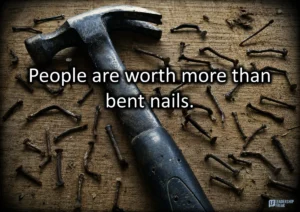
In the literary memoir String Too Short to be Saved, author Donald Hall recounts the life of an enigmatic figure named Washington Woodward, a man whose seemingly eccentric habit of straightening discarded, bent nails serves as a profound metaphor for organizational management and human development. Woodward’s practice—methodically retrieving damaged nails from boards found in roadside ditches, hammering them flat, and cataloging them for future use—resulted in a collection of over 100,000 reclaimed items by the time of his passing. While the endeavor might appear trivial to a casual observer, it reflects a foundational philosophy regarding the utility of materials and, by extension, the inherent value of human talent within a professional ecosystem.
The Philosophical Underpinnings of Resource Reclamation
The narrative of Washington Woodward is rooted in a post-industrial, pre-throwaway culture that prioritized the preservation of resources. In the context of modern leadership, this approach suggests that what is often perceived as "waste"—be it a failing project, a missed deadline, or an employee struggling with performance—is frequently nothing more than untapped potential.
From an organizational behavior perspective, the "bent nail" syndrome describes the tendency of managers to categorize employees as either high-performers or liabilities. When an individual encounters professional adversity or commits a significant error, the path of least resistance is often to "discard" the individual through termination or marginalization. However, just as a bent nail retains its chemical integrity and structural purpose after being straightened, employees often possess latent skills and institutional knowledge that, with the right intervention, can be restored to full productivity.
Chronology of Human Capital Development
To understand the application of this philosophy, one must examine the lifecycle of talent management within a high-performing organization.

- The Discovery Phase: Identification of talent, including those who may have experienced initial failure or "bending" in their career trajectory.
- The Assessment Phase: Determining the root cause of the "bend." Is the issue a lack of skill, a mismatch in role, or an environmental factor?
- The Restoration Phase: The application of mentorship, coaching, or role realignment. Unlike physical nails, humans cannot be "hammered" into shape; they require autonomy and the right conditions for self-correction.
- The Integration Phase: Re-integrating the restored asset into the workflow, ensuring that the lessons learned from their period of adversity contribute to the team’s collective resilience.
Data and The Cost of Turnover
The economic implications of treating people as "disposable" are significant. According to data from the Society for Human Resource Management (SHRM), the average cost to replace an employee can range from 50% to 200% of the individual’s annual salary. This figure accounts for recruitment costs, onboarding, training, and the loss of productivity during the vacancy period.
Furthermore, studies in organizational psychology indicate that high turnover rates correlate with decreased morale among remaining staff. When an organization adopts a "fire-and-replace" mentality, it inadvertently fosters a culture of fear. Employees begin to build "self-protective walls," prioritizing risk aversion over innovation to avoid the perception of being a "bent nail." Consequently, the organization loses the very creativity and risk-taking capability required for long-term success.
Psychological Implications of Management Styles
Leadership styles that prioritize development over disposal have been shown to correlate with higher levels of employee engagement. A report by Gallup on the state of the global workplace suggests that employees who feel their managers are invested in their long-term growth are significantly less likely to report burnout.
When a leader chooses to invest in a struggling employee, they are signaling a belief in the inherent value of the individual. This "investment effect" often triggers a psychological phenomenon known as the Pygmalion Effect, where high expectations lead to improved performance. By refusing to label a struggling team member as "useless," the leader creates an environment where improvement is not only possible but expected.
Strategic Application: Beyond the Metaphor
Implementing a "straightening" culture requires a departure from traditional, rigid performance reviews toward a model of continuous development. This involves:

- Radical Transparency: Providing immediate, constructive feedback that identifies the "bend" without labeling the person.
- Resource Allocation: Reallocating time and budget toward internal coaching rather than solely focusing on external acquisition.
- Cultural Buy-in: Modeling behaviors that prioritize learning from mistakes. If the leadership team demonstrates that they value the process of improvement, the entire organizational culture will shift toward a growth-oriented mindset.
Critical Analysis: The Limits of Reclamation
While the principle of developing talent is sound, it is essential to distinguish between a "bent nail" that can be salvaged and systemic issues that require separation. Critics of a hyper-developmental approach argue that time spent rehabilitating chronically disengaged or toxic employees is a cost that the organization cannot always bear.
An objective analysis suggests that the "straightening" approach is most effective when applied to employees who demonstrate a willingness to grow but are struggling due to technical gaps or circumstantial challenges. For those who lack the alignment or interest in the organization’s mission, the "disposable" label is a misnomer; rather, the situation is one of misplacement. In such instances, "straightening" may involve helping the individual transition to an environment where their specific talents are better suited, which is a form of development in its own right.
Conclusion: The Legacy of Intentional Work
Washington Woodward’s collection of straightened nails was a testament to his belief that waste was a moral failing. In the modern corporate world, this belief translates into a responsibility to view human talent as a precious, non-renewable resource. Every meeting, every performance review, and every interaction serves as a reflection of how an organization values its people.
The ultimate implication for leadership is clear: the most efficient way to build a resilient workforce is to invest in the individuals already present. By fostering an environment that prioritizes development, mentorship, and the reclamation of talent, organizations do more than just improve their bottom line—they create a sustainable culture where individuals are valued for their potential rather than discarded for their temporary defects. As the story of the bent nails illustrates, the difference between an asset and a liability is often merely the willingness of a leader to put in the work.