Navigating Market Volatility: Assessing the Impact of Freight Cost Fluctuations on Middle-Market Industrial M&A

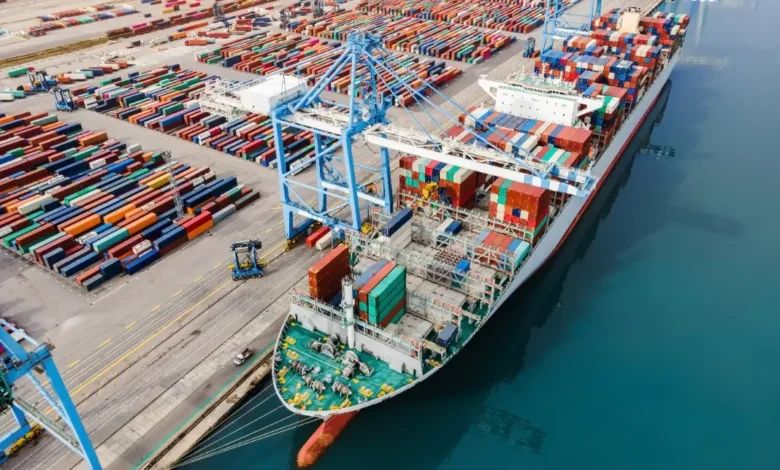
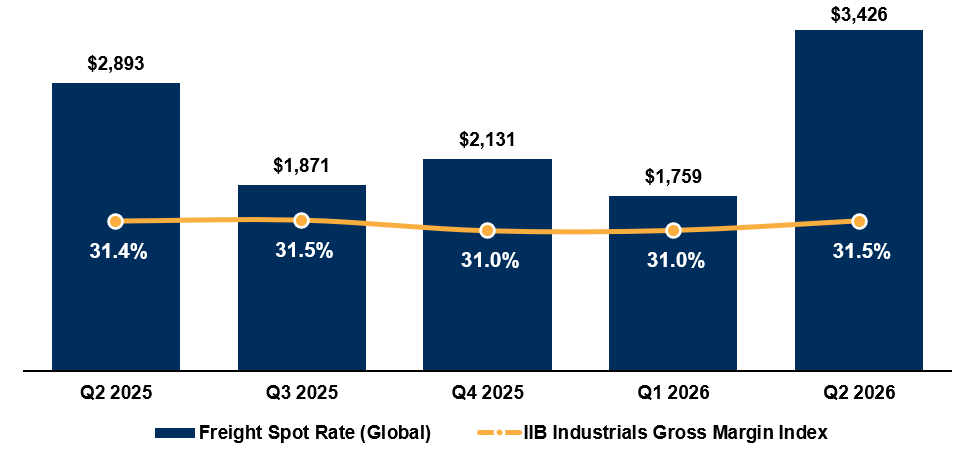
The landscape of global logistics and industrial finance underwent a significant transformation throughout 2026, characterized by a sharp resurgence in freight spot rates that challenged the operational stability of middle-market enterprises. According to the latest market analysis from Intrepid Investment Bankers, global freight spot rates experienced a dramatic upward trajectory beginning in the second quarter of 2026, rising from $1,759 in the first quarter to a peak of $3,426 by the second quarter. This volatility has forced a recalibration of how investors, private equity firms, and corporate buyers evaluate the long-term health and valuation of industrial businesses.
While freight costs remained elevated through the summer months, industrial production growth displayed a resilient, albeit modest, upward trend toward the end of the third quarter. This divergence between surging input costs and relatively stable industrial margins creates a complex environment for stakeholders. As firms attempt to navigate this period of uncertainty, the ability to demonstrate pricing power and operational flexibility has become the primary metric by which capital providers distinguish high-performing assets from those vulnerable to macroeconomic shocks.
Chronology of a Freight Resurgence
The trajectory of logistics costs in 2026 was marked by a distinct shift from the relative dormancy observed in late 2025. Following a period of subdued activity, the logistics market experienced an abrupt tightening of capacity and subsequent pricing surges in early April 2026.
By April 2026, global freight spot rates were recorded at $1,889. The ensuing months saw a consistent escalation in costs, driven by a combination of global supply chain pressures, shifts in trade routes, and increased industrial output demand. By July 2026, these rates hit a seasonal zenith of $3,627. This rapid increase represented a significant budgetary hurdle for manufacturers and distributors, many of whom were simultaneously grappling with inflationary pressures on labor and raw materials.
Following the July peak, the market witnessed a gradual cooling. Rates moderated to $3,380 by September 2026, signaling a slight easing of the extreme pressure seen during the mid-year months. Concurrently, industrial production data provided by the Federal Reserve indicated that the broader economy was not entering a contraction phase. Instead, industrial production growth rose to 0.7 percent in September, a marked improvement over the 0.1 percent growth recorded in August. This suggests that while transportation costs remained historically elevated compared to the beginning of the year, the demand for industrial goods remained sufficiently robust to sustain production levels.
Data Analysis: The Margin Paradox
A central finding in the Intrepid Investment Bankers’ market update is the surprising stability of industrial margins during this period of high freight cost volatility. An analysis of an index tracking 150 publicly traded companies across the industrial value chain revealed that gross margins remained anchored in a narrow range of 31.0 percent to 31.5 percent from the second quarter of 2025 through the second quarter of 2026.
This stability presents a "margin paradox." In theory, a sharp increase in a major operating input like freight should lead to a corresponding compression in gross margins unless the company has the leverage to pass those costs on to the end customer. The fact that margins remained flat suggests that the industrial sector effectively employed three primary strategies: cost-recovery initiatives, improved internal efficiencies, and the utilization of existing contracts that buffered firms against immediate spot-rate spikes.
However, financial analysts caution that this stability may be nearing a ceiling. If freight costs remain at their elevated post-summer levels without further improvements in productivity, the window for maintaining these margins may narrow. For middle-market companies, this underscores the necessity of moving beyond temporary cost-mitigation strategies toward structural operational improvements.
Implications for Mergers and Acquisitions
The volatility observed in 2026 has fundamentally altered the due diligence process for M&A transactions. In a more stable economic climate, buyers often focus on historical EBITDA as the primary indicator of future performance. In the current environment, however, "normalized earnings" have become the subject of intense scrutiny.
Acquirers are now tasked with discerning whether a target company’s margins are a result of genuine competitive advantage or merely the result of a temporary lag in cost recognition. Investment bankers report that the "quality of earnings" reports are increasingly focusing on the sensitivity of a company’s cost structure to external logistics benchmarks. Businesses that can provide clear, granular data on their ability to manage freight volatility are currently commanding premium valuations, while those that appear exposed to spot-rate fluctuations are facing more rigorous scrutiny during the valuation phase.
Furthermore, the concept of "pricing power" has transitioned from a theoretical concept to a critical valuation driver. Companies that have successfully implemented dynamic pricing models—allowing them to adjust to fluctuations in input costs in real-time—are being viewed as lower-risk assets. Conversely, firms locked into long-term, fixed-price supply agreements without corresponding cost-escalation clauses are finding it more difficult to justify their valuation multiples to prospective buyers.
Strategic Positioning for Owners and Executives
For business owners considering a sale or capital raise in the near term, the current environment necessitates a proactive communication strategy. Potential acquirers are looking for evidence of "operational flexibility." This includes:
- Supplier Diversification: Reducing reliance on single-source logistics providers or vendors to mitigate the impact of localized regional disruptions.
- Cost Structure Flexibility: Demonstrating the ability to pivot between different transportation modes or distribution hubs depending on cost signals.
- Pricing Discipline: Clearly articulating how the business monitors input costs and at what thresholds it triggers customer-facing price adjustments.
"Owners must be prepared to deconstruct their profitability," suggests the analysis from Intrepid Investment Bankers. It is no longer sufficient to present top-line and bottom-line growth; sellers must provide a detailed narrative that explains how the business navigated the 2026 freight surge and why the current margin profile is sustainable. By clearly distinguishing between the temporary, exogenous impacts of global freight volatility and the underlying organic performance of the company, sellers can provide the clarity that institutional buyers require to close a deal in a high-interest-rate, high-volatility environment.
Future Outlook and Economic Context
Looking forward, the persistence of elevated freight rates into the final quarter of 2026 suggests that the market may have reached a "new normal." While the extreme spikes of mid-year 2026 have moderated, the baseline costs for global shipping remain significantly higher than pre-2026 levels.
This environment favors larger, more integrated firms that have the scale to negotiate favorable terms with carriers and the technology to optimize their supply chain networks. For the middle market, the challenge is distinct. Smaller and mid-sized enterprises often lack the leverage of their larger counterparts, making them more susceptible to the "bullwhip effect" of global supply chain volatility. However, the agility inherent in middle-market firms—the ability to make rapid operational decisions and pivot strategies—remains a powerful asset if leveraged correctly.
The broader takeaway for the industrial sector is clear: the integration of logistics management into core corporate strategy is now a prerequisite for success. As we move into 2027, the M&A market will likely continue to reward those companies that view logistics not as a back-office expense, but as a strategic lever that can be managed to protect margins and drive competitive differentiation.
Ultimately, the data from 2026 serves as a case study in resilience. The fact that the industrial sector managed to maintain stable margins despite a doubling of certain freight spot rates speaks to the underlying strength and adaptability of the mid-market industrial base. As long as industrial production continues to grow—even at the modest rates seen in the late third quarter—the outlook for M&A activity remains cautiously optimistic, provided that firms continue to prioritize transparency, cost-recovery agility, and the strategic management of their supply chain ecosystems.
For those in the position of advising or leading these companies, the mandate for the coming year is to ensure that every layer of the business is stress-tested against the volatility of the global trade environment. By institutionalizing these lessons, middle-market companies can ensure they remain attractive targets for acquisition and well-positioned for long-term growth, regardless of the fluctuations in global spot rates.