Google Faces Strategic Reckoning as Heavy AI Capital Expenditure Fails to Secure Market Dominance


The recent quarterly earnings report from Alphabet Inc., Google’s parent company, has triggered a significant market correction, with shares plummeting 12% following revelations of aggressive capital expenditure and stagnant progress in the generative AI sector. Despite allocating $200 billion in capital expenditures (CAPEX) over the trailing twelve months, the company’s financial performance has been marred by a negative free cash flow of $9 billion for the quarter. This shift in fiscal health has prompted analysts and institutional shareholders to question whether the tech giant is successfully pivoting to a post-search-monopoly landscape or if its core business model is being eroded by the very technology it helped pioneer.
A Chronology of the AI Arms Race
Google’s current predicament is paradoxical given its historical trajectory. The company’s researchers authored the seminal 2017 paper, "Attention Is All You Need," which introduced the "Transformer" architecture—the foundational technology powering modern Large Language Models (LLMs) like ChatGPT and Claude. Despite this technological head start, the company has struggled to translate its research superiority into a dominant consumer-facing product.
The timeline of Google’s AI integration has been marked by a series of reactive, rather than proactive, maneuvers. In late 2022, following the release of OpenAI’s ChatGPT, Google declared a "Code Red" internally to accelerate the development of its own conversational AI, Bard (subsequently rebranded to Gemini). By 2024, the company began aggressively embedding AI Overviews into its flagship Search product. While intended to maintain its relevance in an AI-first world, these changes have introduced significant friction between the company and its long-standing ecosystem of digital publishers, who argue that their original content is being scraped and summarized without adequate traffic attribution.
Financial Analysis: The Cost of Catching Up
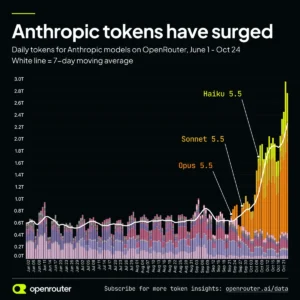
The $200 billion expenditure figure represents a historic commitment to infrastructure, primarily directed toward the procurement of high-end GPUs and the construction of massive data centers required to train and deploy advanced AI models. However, the return on this investment remains elusive. Market observers note that Google is effectively competing against a diverse landscape of well-funded rivals. OpenAI, backed by Microsoft’s multi-billion dollar investment, and Anthropic, which maintains significant capital support from Amazon and others, have successfully captured a large portion of the developer community.
The disparity in efficiency is becoming a point of contention. While Google has traditionally relied on its monopoly-like control over Search and its vast distribution network—including Android, Chrome, and the multi-billion dollar default search agreements with device manufacturers—the current landscape favors agile, specialized AI firms. Data suggests that developers are increasingly opting for alternative APIs and models, citing better performance and integration capabilities compared to the Gemini ecosystem.
Corporate Culture and the "Rest and Vest" Phenomenon
Wall Street analysts have increasingly scrutinized the internal culture at Google, often pointing to the "rest and vest" phenomenon—a colloquialism referring to high-compensation roles that lack significant output requirements. While the company has long been a destination for top-tier engineering talent, the current economic climate is forcing a shift in internal priorities.

Management has begun to signal that the period of unchecked expansion is concluding. Reports of ongoing workforce adjustments and a mandate for a more rigorous five-day-a-week in-office presence suggest that leadership is attempting to move from a "peacetime" growth mindset to a "wartime" efficiency strategy. This transition is critical, as the company faces the dual challenge of protecting its search ad revenue—which remains its primary profit engine—while simultaneously cannibalizing its own traffic through the deployment of AI-generated search summaries.
The Publisher Conflict and Legal Pressures
The broader implications of Google’s AI pivot extend into the legal and ethical realms. For two decades, Google acted as a traffic conduit, organizing the web’s information and directing users to third-party publishers. The shift toward AI Overviews represents a fundamental change in this social contract. Publishers, who rely on organic search traffic to sustain their operations, have become increasingly vocal about the potential for "search cannibalization."
Furthermore, the legal landscape surrounding data training is evolving. Copyright litigation involving AI companies is currently winding through the courts, and Google’s role as both a primary search engine and a massive AI trainer puts it in a unique position of liability. If courts rule that training models on proprietary content constitutes infringement, the company’s existing AI infrastructure could face significant regulatory and financial hurdles.
Strategic Outlook and Industry Implications
The broader tech sector is watching Google’s struggle as a bellwether for the sustainability of current AI spending. If a company with the resources, talent, and data advantage of Google cannot achieve undisputed leadership in the AI space, it raises questions about the long-term ROI for the rest of the industry.
Industry experts suggest that for Google to recover its momentum, it must achieve three primary objectives:
- Model Efficacy: Gemini must demonstrate clear superiority over competitor models to win back developer trust and increase API usage.
- Monetization of AI: The company must bridge the gap between expensive compute costs and the revenue generated by AI-infused search and cloud services.
- Ecosystem Harmonization: Establishing a sustainable relationship with the content creators who populate its search results is vital for the long-term integrity of the information Google provides.
The current market volatility suggests that investors are no longer content with the promise of future AI dominance; they are demanding fiscal discipline and tangible product differentiation. As the company moves into the next phase of its evolution, the primary challenge will be to reconcile its heritage as a search monopoly with the requirements of a high-stakes, competitive AI market. The "trust fund" era of the company—characterized by high margins, low competition, and near-universal dominance—appears to be closing, replaced by an era that demands rapid innovation and extreme operational efficiency.
Ultimately, Google’s ability to navigate this transition will likely hinge on whether it can foster a culture that prizes agility and competitive output over the structural advantages it has enjoyed for the past two decades. With $200 billion already committed, the company has effectively "doubled down." Whether this represents a strategic masterstroke or an expensive miscalculation remains the most significant question in the technology sector today.
Related posts: