Buffer vs Later: A Comprehensive 2026 Comparison of Leading Social Media Management Tools

Choosing the right social media management platform has become an increasingly critical operational decision for modern enterprises, digital marketing agencies, and independent creators alike. As digital landscapes grow more fragmented and platform algorithms demand consistent, high-frequency posting, organizations require centralized home bases to maintain brand cohesion. Two prominent solutions in this competitive landscape are Buffer and Later. Each platform offers distinct structural philosophies, pricing models, and feature sets designed to streamline multi-channel scheduling, audience engagement, and performance analytics. Evaluating these platforms requires a granular examination of their capabilities, cost structures, and operational frameworks to determine which tool aligns best with specific organizational objectives.
Structural Evolution and Core Philosophies
The market for social media management tools has matured significantly over the past decade. Platforms have evolved from simple queuing mechanisms into comprehensive operational hubs equipped with artificial intelligence, cross-platform community management, and advanced link-in-bio website builders.
Buffer has traditionally positioned itself as a streamlined, highly flexible tool centered around channel independence and predictable pricing. Its architecture accommodates a wide array of networks, emphasizing ease of use, fast deployment, and scalable team administration without unexpected financial overhead.
Conversely, Later entered the market with a distinct visual-first orientation, establishing its reputation as an indispensable utility for Instagram-heavy creators and brands that rely heavily on aesthetic grid planning, media asset management, and TikTok workflows. Over time, both platforms have expanded their features to capture overlapping market segments, yet their foundational design principles remain distinct.
Pricing Models and Cost Structures
Financial predictability is frequently the deciding factor for businesses investing in marketing software. Buffer and Later approach monetization through fundamentally different paradigms, which heavily impacts long-term expenditures as teams scale.
Buffer utilizes a modular, channel-specific pricing architecture. Users can select exact social media channels and pay strictly for what they utilize, preventing organizations from being billed for unused network slots. Furthermore, Buffer’s pricing includes unlimited user seats on its Team plan, ensuring that expanding marketing departments or bringing in external consultants does not trigger escalating software costs. Paid plans begin at an accessible entry point of $6 per month per channel, while a robust free tier accommodates up to three social channels with basic scheduling and analytics features.
Later adopts a bundled approach structured around "social sets." A social set bundles one account from each supported platform into a single package. Consequently, users cannot cherry-pick individual channels ala carte; connecting a Facebook Page and a LinkedIn profile still requires purchasing a full set. Additionally, if an organization requires multiple accounts on a single platform—such as two distinct Instagram profiles—additional social sets must be purchased. Later’s paid plans start at $25 per month, with user seats tightly controlled by plan tier. Starter plans include a single user, while Growth and Scale plans cap users at two and four seats, respectively, with additional seats incurring incremental monthly fees.
Supported Platforms and Channel Integration
Platform compatibility dictates an organization’s reach and ability to execute unified cross-channel campaigns. A comprehensive evaluation of supported channels reveals notable divergence between the two competitors.
Buffer offers expansive platform support, connecting to 11 distinct networks: Instagram (Creator, Business, and Personal profiles), Facebook (Pages and Groups), X (formerly Twitter), LinkedIn, TikTok, Pinterest, Google Business Profiles, Mastodon, YouTube Shorts, Threads, and Bluesky. This wide coverage makes Buffer exceptionally attractive to brands maintaining a diverse digital footprint across emerging decentralized networks alongside legacy platforms.
Later supports eight platforms: Instagram (Business and Creator profiles only), Facebook Pages, Threads, Pinterest, TikTok, LinkedIn, YouTube Shorts, and Snapchat. Notably, Later excludes support for X, Bluesky, Mastodon, and Google Business Profiles, while remaining the only option of the two to support Snapchat integration. Furthermore, Later does not support personal Instagram profiles, requiring automated publishing workflows to be tied strictly to professional account classifications.
Content Creation, Scheduling, and Workflow Efficiency
Streamlining the publishing workflow is the primary utility of any social media management tool. Both Buffer and Later provide centralized dashboards to draft, customize, and queue content across multiple destinations simultaneously.
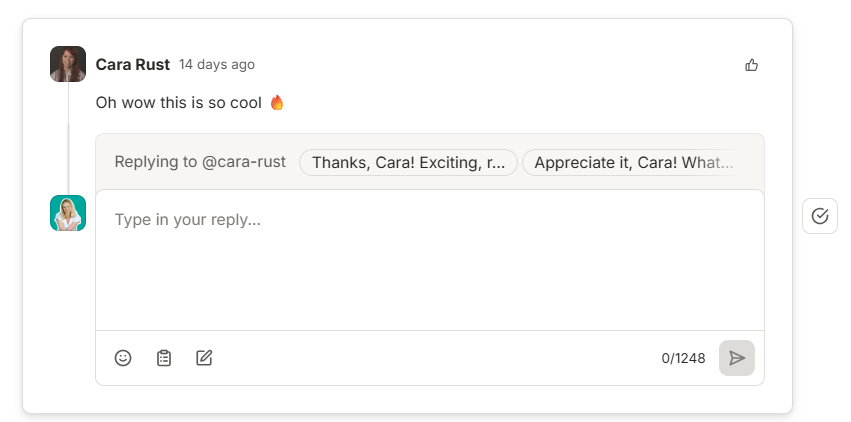
When executing high-volume campaigns, operational mechanics differ. Buffer supports bulk scheduling of up to 100 posts at a time via CSV uploads on paid tiers, enabling marketing teams to import entire content calendars within minutes. Later currently lacks native CSV bulk-scheduling capabilities, necessitating a more manual approach for large-scale campaign deployments.
For hashtag management and caption optimization, Buffer features a dedicated hashtag manager allowing users to save and organize custom groups for rapid deployment, alongside a universally accessible free Instagram hashtag generator. Later provides similar functionality through saved captions and automated hashtag suggestions generated dynamically from post text.
Visual planning remains a hallmark of Later’s ecosystem. Its drag-and-drop calendar enables users to preview grid aesthetics for Instagram and Pinterest prior to publication, supported by a shared media library where team members can apply labels, notes, and alt text. Buffer offers an Instagram grid preview feature across all plans, though it lacks direct drag-and-drop functionality onto the core calendar interface.
Artificial Intelligence Integration
Artificial intelligence has become a standard inclusion in modern marketing software, designed to accelerate ideation, copywriting, and content repurposing. The implementation models between Buffer and Later diverge starkly in terms of access limits and cost structures.
Buffer provides unlimited AI Assistant usage across all plan tiers, including its permanent free tier. Users can generate fresh concepts, draft or refine captions, and repurpose text across networks without incurring usage caps or purchasing token top-ups. This removes financial friction during intensive campaign development cycles.
Later restricts its AI-powered Ideas tool to paid subscriptions, operating under a credit-based consumption model. Credits are allotted monthly based on the specific plan tier, with individual actions—such as generating a caption or three content ideas—depleting available balances. Once monthly credits are exhausted, users must either wait for the billing cycle to reset or purchase supplementary token add-ons.
Community Engagement and Social Inbox Functionality
Audience retention and active engagement require robust monitoring tools. Both platforms aggregate interactions, but their feature availability and depth vary.
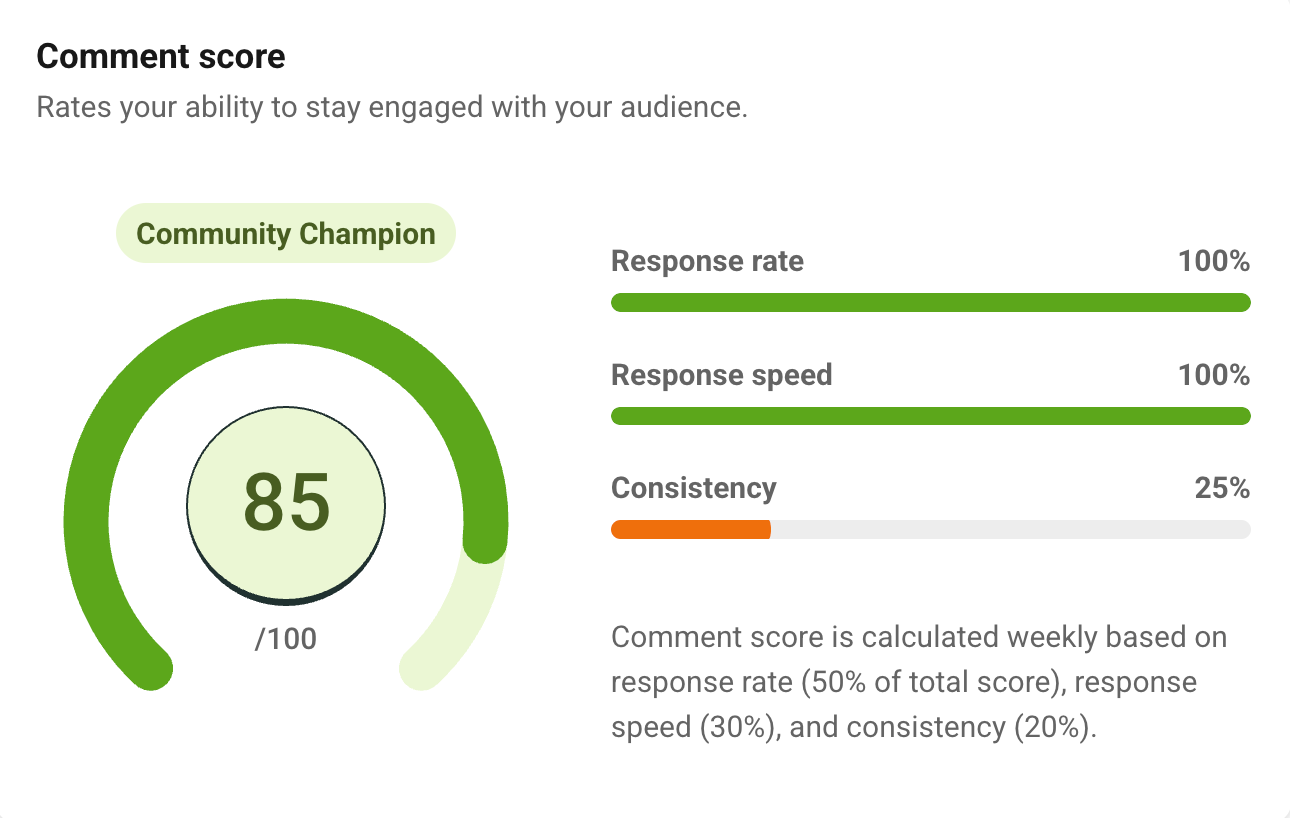
Buffer offers its Community inbox across all plans, including the free tier. It supports engagement across Instagram, Facebook, Threads, Bluesky, LinkedIn, X, Google Business Profiles, TikTok, YouTube, and Mastodon. A standout differentiator is Buffer’s comment score metric, which tracks response speed and consistency across channels to highlight operational bottlenecks. Additionally, AI-assisted response suggestions and saved replies expedite FAQ management.
Later restricts its social inbox—which aggregates Instagram DMs, Facebook comments, and TikTok comments—to team-tier plans. Solo users on free or starter tiers cannot manage conversations natively within the platform. However, Later provides advanced moderation tools, such as the ability to hide inappropriate comments directly from the dashboard so they vanish from the native platform. Additionally, Later offers an advanced social listening add-on for Scale plan users, providing sentiment analysis, brand mention tracking, and competitive benchmarking at an additional cost.
Analytics, Insights, and Performance Reporting
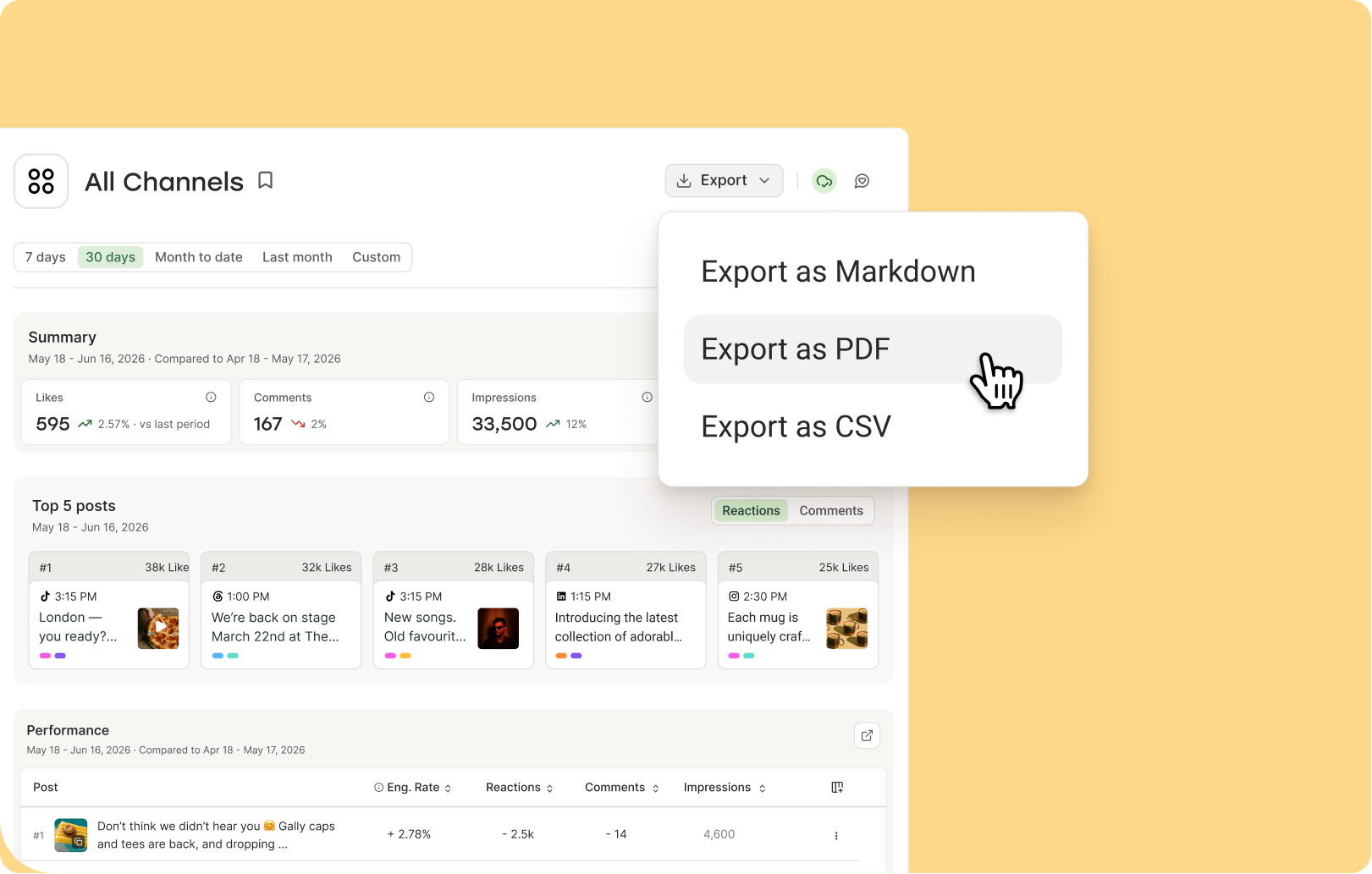
Measuring return on investment necessitates reliable analytics infrastructure. Buffer incorporates insights across all subscription tiers, with advanced historical data and custom reporting unlocked on paid plans. Its AI-powered "Takeaways" feature analyzes performance metrics autonomously, translating raw charts into actionable strategic recommendations. Reports can be exported seamlessly as PDF or CSV files.
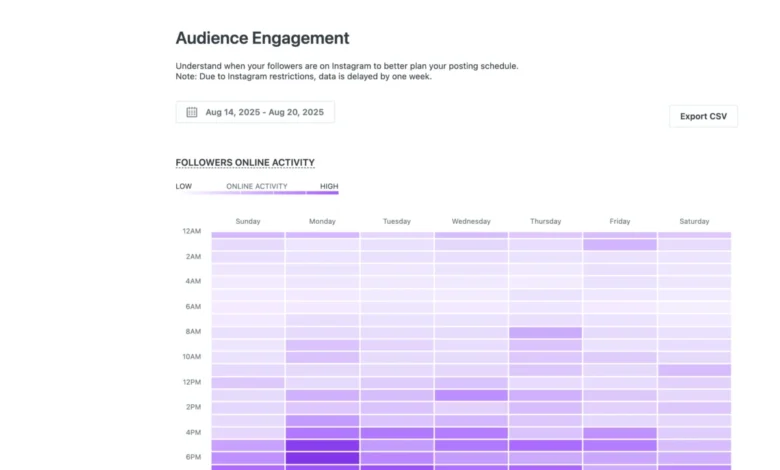
Later provides deep channel-specific analytics for Instagram, Facebook, TikTok, Threads, and Pinterest, including detailed audience demographic breakdowns (age, gender, location) and active-follower heatmaps that identify optimal publishing windows. However, multi-account consolidated views are restricted to top-tier enterprise plans, and native PDF report generation is omitted in favor of CSV data downloads, alongside a shareable 90-day Instagram performance report link.
Link-in-Bio Solutions and Commerce Integration
Both platforms provide auxiliary link-in-bio website tools to maximize profile conversion efficiency. Buffer’s Start Page allows users to build customizable landing pages using modular blocks—such as text, links, image grids, and email signup forms—with no restrictions on block repetition. Users can also incorporate affiliate links manually.
Later’s Linkin.bio tool emphasizes commerce integration. It features an image banner carousel and native integrations with the Mavely affiliate marketing platform and Shopify. This enables brands to tag specific products directly within posts and track conversion metrics, making Later particularly potent for e-commerce-driven brands.
Broader Industry Implications and Strategic Recommendations
The choice between Buffer and Later ultimately reflects an organization’s specific operational focus. Buffer emerges as the optimal solution for budget-conscious creators, solopreneurs, and agencies requiring channel-based pricing flexibility, unlimited AI access, comprehensive platform coverage including X and Bluesky, and predictable team scaling.
Conversely, Later aligns best with visually driven consumer brands, e-commerce entities reliant on Shopify integrations, and Instagram- or TikTok-centric marketing teams that benefit from robust grid planning, visual asset management libraries, and specialized influencer marketing add-ons.
As digital marketing budgets face tightening scrutiny across global enterprises, software procurement decisions increasingly favor transparent pricing, modular scalability, and measurable workflow efficiency. Evaluating these competing tools against immediate operational demands and long-term growth trajectories ensures sustainable social media management strategies.
Related posts: