Workflow improvement is the systematic practice of executing repeatable processes with high consistency, meticulously comparing performance data, and refining individual process steps rather than relying on intuitive guesswork. While often associated with rigid industrial engineering or complex software development, the core tenets of process optimization are increasingly being applied to organizational management by drawing parallels between structured training models and corporate operational efficiency.
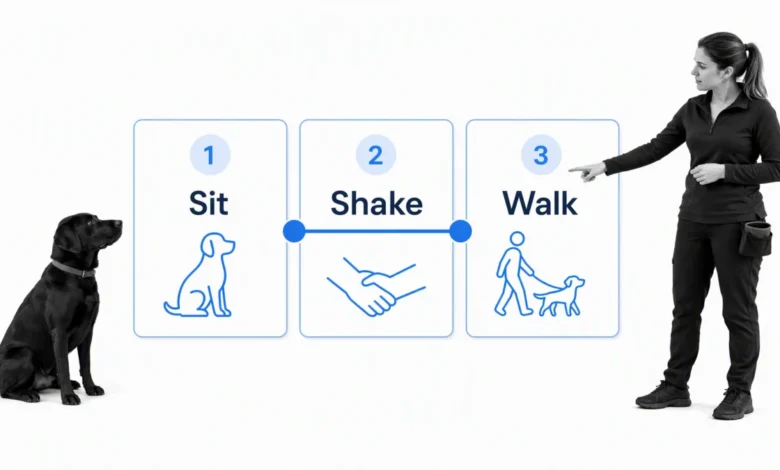
The integration of structured, repeatable processes into professional workflows is not merely a method for organization; it is a fundamental requirement for measurable growth. When an enterprise fails to standardize its internal procedures, it inadvertently introduces variables that make performance analysis impossible. Much like the behavioral conditioning of a pet, where consistent cues lead to predictable outcomes, professional workflows require standardized inputs to produce reliable, data-driven outputs.
The Foundation of Process Standardization
At the heart of operational excellence lies the concept of procedural consistency. In a business context, when every run of a workflow is improvised or subject to individual interpretation, the resulting data becomes fragmented and incomparable. This lack of uniformity obscures the root cause of both success and failure.
Data from the Project Management Institute suggests that organizations with high process maturity are 33% more successful in achieving project goals than those with low maturity. This is because consistent execution creates a reliable baseline. When a process is executed in an identical manner over a significant sample size, any deviation in the outcome can be traced back to specific, isolated variables. If the underlying methodology shifts with every iteration, leadership cannot determine whether a change in performance is the result of a deliberate optimization or merely the byproduct of inconsistent execution.
Chronology of a Workflow Audit
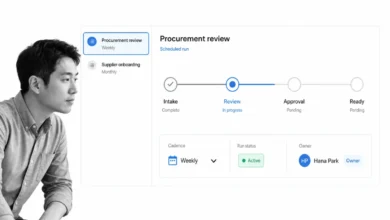
The path to process maturity typically follows a structured timeline. Initially, teams must audit existing workflows to identify the "wild west" scenarios—processes that currently rely on the individual expertise or "gut feeling" of staff members.
- Phase 1: Observation and Baseline (Weeks 1–2): During this period, teams document the "as-is" state of a process. No changes are implemented. The objective is to record completion times, resource allocation, and specific points of friction.
- Phase 2: Standardization (Weeks 3–4): The workflow is formalized into a standardized operating procedure (SOP). Every team member is required to adhere to this version, removing individual improvisation.
- Phase 3: Analysis and Refinement (Weeks 5–8): With a stable baseline, leadership evaluates the data. If a specific step in the workflow consistently results in bottlenecks—such as a failure in sales qualification or a delay in project handoff—that specific step is isolated, modified, and tested again.
- Phase 4: Optimization and Scale: Once the process is refined, it is codified into the organizational technology stack, such as a Customer Relationship Management (CRM) system or an automated workflow platform, to ensure long-term compliance.
Bridging the Gap Between Behavior and Efficiency
The comparison between behavioral training and professional workflow management is rooted in the "cue-response-reward" loop. In a corporate environment, the "cue" is the trigger for a task, the "response" is the execution of the workflow step, and the "reward" is the measurable outcome—such as a converted lead or a successfully completed project.
When businesses allow "exceptions" to become the norm, they experience what operations experts call "process drift." This occurs when employees bypass established protocols to save time or because they believe their personal method is superior. While this may provide a temporary gain in speed, it is unsustainable. Without a unified process, institutional knowledge remains trapped in the heads of individual employees rather than being embedded in the organization’s infrastructure.
Data-Driven Case Study: Sales Qualification
A pertinent example of this transition can be observed in sales pipeline management. Many sales teams rely on unstructured discovery calls, leading to inconsistent lead qualification. By implementing a standardized framework—such as the BANT (Budget, Authority, Need, Timing) methodology—organizations can drastically improve their forecasting accuracy.
In a controlled study of this transition, teams that shifted from unstructured qualification to a rigid, template-based workflow saw an average increase of 25% in lead-to-opportunity conversion rates. The benefit was twofold: first, the process revealed which questions were failing to elicit useful information; second, it allowed management to identify exactly where a lead was being lost in the funnel. By standardizing the questions asked, the team transformed their pipeline from a collection of "loose" prospects into a quantifiable set of qualified opportunities.

The Role of Technology in Workflow Enforcement
Modern enterprise software, including CRMs and automated workflow platforms, serves as the digital infrastructure for this standardization. These tools do not merely store records; they act as the "guardrails" for the workflow. By embedding required fields and sequential logic into the digital interface, companies can prevent users from skipping critical steps.
However, technology alone cannot solve the problem. The failure of many digital transformations is not a failure of the software, but a failure of the process logic. If a business digitizes a broken, inconsistent process, it simply achieves a faster way to perform a faulty task. The objective of digital implementation must always be the codification of an already optimized, consistent routine.
Expert Analysis and Organizational Implications
Industry analysts frequently note that the primary barrier to workflow improvement is cultural resistance. Employees often perceive standardized processes as a restriction on their professional autonomy. To mitigate this, leadership must frame the implementation of workflows not as a way to control the individual, but as a method to reduce the cognitive load of the workforce.
When a process is clearly defined, employees spend less time wondering "how" to do a task and more time focusing on the "what"—the actual output of their work. This shift minimizes decision fatigue and ensures that the organization’s performance is resilient, regardless of personnel turnover.
The broader implication is that companies that master the art of the repeatable process are significantly more agile. When they decide to pivot, they have a clear understanding of their current baseline, allowing them to adjust their operations with surgical precision rather than sweeping, uncalculated changes.
Frequently Asked Questions
What is the foundational requirement for initiating a workflow improvement project?
The prerequisite is the selection of a single, recurring workflow. This process must be performed in an identical manner across multiple iterations to generate a reliable dataset. Before attempting to optimize, one must record metrics such as total completion time, common failure points, and final outcomes.
Why does consistent execution improve the ability to measure success?
Consistency eliminates environmental and procedural variables. When the process remains constant, the only variable that changes is the quality of the execution or the external environment. This makes it possible to perform a "post-mortem" analysis that directly links a specific input to a specific output, allowing for evidence-based decision-making.
How does one distinguish between a process that needs improvement and one that needs automation?
Automation should only be applied to a process that has already been standardized and verified as efficient. Automating an unrefined process merely scales the inefficiencies. If a process is inconsistent or poorly defined, it requires human intervention and logical redesign before it is ready for automation.
Can small-scale businesses benefit from these methodologies?
Yes. While large enterprises rely on these methods for scale, small-to-medium businesses benefit from the reduction in operational waste. For a smaller team, the ability to replicate a successful outcome consistently can be the difference between growth and stagnation.
What is the most common mistake made during workflow implementation?
The most common error is the failure to account for "exceptions." Organizations often design a process for the ideal scenario and fail to plan for the common edge cases. A robust workflow must include clear, standardized procedures for how to handle deviations, ensuring that even the "exception" is handled in a predictable, repeatable manner.