Workflow improvement is defined as the systematic practice of executing a repeatable process with high consistency, meticulously monitoring the resulting data, and refining individual process components based on empirical evidence rather than subjective guesswork. While often viewed through the lens of industrial engineering or software development, the core principles of process optimization are increasingly being applied to organizational management to eliminate operational friction and improve the predictability of outcomes.
The Foundation of Process Consistency
At its core, a workflow is a series of activities necessary to complete a business task. When these activities are performed inconsistently, the organization suffers from "process drift," where the lack of a standardized baseline makes it impossible to conduct a valid performance analysis. For any organization, the ability to improve depends entirely on the ability to measure. If a sales team, for instance, approaches lead qualification differently during every interaction, the resulting data is anecdotal. It provides no reliable insight into which specific step in the sales funnel is causing drop-offs or which questions are yielding the highest conversion rates.
Consistency is the prerequisite for data-driven decision-making. By standardizing a procedure, organizations create a control group of sorts. When the methodology remains stable, any variance in the final output can be directly attributed to the process itself rather than the variables introduced by human improvisation.
Chronology of Workflow Optimization
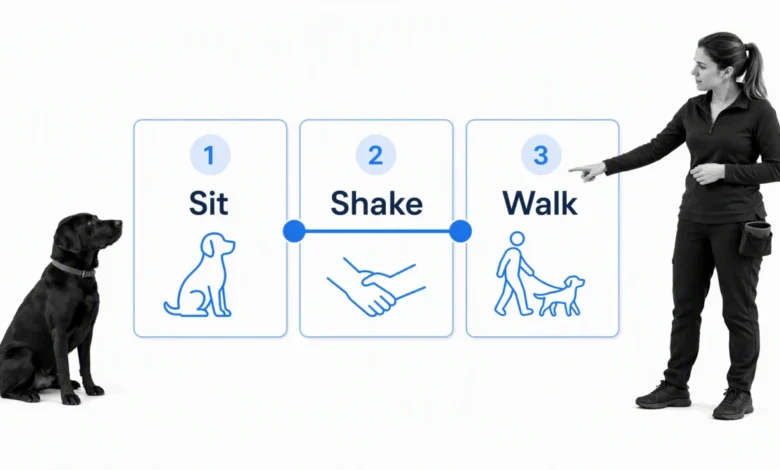
The transition toward structured process management typically follows a three-stage chronology within high-performing organizations:
- Standardization (Weeks 1-4): During this initial phase, team members are required to follow a documented procedure without deviation. This phase is designed to identify the "as-is" state of the operation. It is common during this period for staff to report initial resistance, as strict adherence to a template often feels restrictive compared to intuitive workflows.
- Measurement and Audit (Weeks 5-8): Once a sufficient sample size of data has been collected, management performs an audit. By comparing the results of standardized runs, analysts can pinpoint specific bottlenecks. For example, if a team consistently struggles with contract finalization, the data will show a clustering of delays at that exact stage, signaling the need for an adjustment in that specific sub-process.
- Iterative Refinement (Ongoing): With a stable baseline established, teams can begin testing incremental changes. By modifying one variable at a time—such as the wording of an outreach email or the timing of a follow-up—the organization can measure the impact of that change against the previous baseline, ensuring that improvements are based on verifiable outcomes.
Supporting Data and Empirical Analysis
Industry reports from organizations such as the Project Management Institute (PMI) indicate that firms with highly mature process management practices achieve significantly higher project success rates. Data suggests that organizations that formalize their workflows reduce the time spent on "work about work"—the manual administrative tasks that contribute to inefficiency—by an average of 30% to 40%.
Furthermore, a study by McKinsey & Company highlights that process transparency is a key driver of employee satisfaction. When employees operate within a defined framework, the cognitive load required to make routine decisions is reduced. This allows team members to dedicate their intellectual energy to high-value tasks, such as strategy and complex problem-solving, rather than navigating the ambiguity of ill-defined internal workflows.
The Role of CRM and Automation
Modern sales management tools have accelerated the transition toward process-driven environments. A Customer Relationship Management (CRM) platform serves as the repository for process data, but the workflow engine acts as the governance layer. By embedding qualification criteria—such as the BANT framework (Budget, Authority, Need, and Timeline)—directly into the workflow, companies remove the subjectivity that often plagues lead scoring.
The implication for management is profound: if a sales representative fails to qualify a lead, the process data shows exactly where the conversation stalled. Was it a budget issue? Was the prospect not the decision-maker? When the process is rigid, these questions are answered by the data. When the process is loose, these questions remain unanswered, leading to wasted marketing spend and lower overall conversion rates.

Industry Perspectives on Process Governance
Operational experts argue that the primary barrier to effective workflow improvement is the human tendency to prioritize speed over structure. In many corporate environments, "getting it done" is rewarded over "getting it right." However, leaders in operational efficiency argue that this is a false dichotomy.
"The most effective organizations treat their workflows as living documents," says one industry consultant specializing in organizational design. "By demanding consistency, they aren’t suppressing creativity; they are creating a platform where creativity can be measured and scaled. If you don’t have a repeatable process, you don’t have a business—you have a collection of individuals guessing their way through their day."
Strategic Implications and Long-Term Impact
The impact of implementing rigorous workflow management extends beyond immediate efficiency gains. It creates institutional knowledge that is not dependent on the tenure or "natural ability" of individual employees. When a process is documented and consistently applied, the organization becomes resilient to turnover. New team members can be onboarded into a proven system, ensuring that the standard of performance remains high regardless of personnel changes.
Moreover, in an era of rapid digital transformation, the ability to pivot is essential. Organizations that have mastered the art of workflow measurement can integrate new tools and technologies much faster than their competitors. Because they have a clear understanding of their current process, they can accurately predict how a new tool will integrate and what outcomes it is expected to deliver.
Addressing Common Implementation Hurdles
A frequent point of friction during the implementation of process-driven workflows is the "exception trap." Employees often feel that unique client requirements justify bypassing standard procedures. While exceptions are inevitable in complex business environments, experts suggest that exceptions should be treated as data points themselves. If a process requires an exception for more than 5% of cases, the underlying process is likely flawed and requires an update rather than a workaround.
By shifting the culture from "improvisation as a virtue" to "consistency as a baseline," companies foster an environment of continuous improvement. This requires leadership to champion the documentation of work and, more importantly, to support the analysis of that work.
Conclusion: The Future of Operational Excellence
As businesses face increasing pressure to scale efficiently, the reliance on intuition will continue to decline. The future of operations lies in the marriage of human expertise and standardized, repeatable processes. By adopting a mindset where consistency is the primary tool for measurement, organizations can systematically strip away inefficiency, improve the quality of their output, and build a sustainable framework for long-term growth.
The evidence is clear: the path to organizational improvement is rarely found in grand, disruptive changes. Instead, it is found in the disciplined, iterative process of executing a routine, gathering the resulting evidence, and making small, informed adjustments that compound over time. Consistent execution, therefore, is not merely a management preference—it is a competitive necessity.