The Continuous Evolution of Agentic AI: Post-Training Emerges as the Core of Intelligence per Dollar

The landscape of artificial intelligence is undergoing a profound transformation, moving beyond static, prompt-response models to dynamic, adaptive "agentic" AI systems. This shift necessitates a fundamental rethinking of the AI development lifecycle, with post-training emerging not as a final polish, but as a continuous, iterative process crucial for maximizing intelligence and efficiency. This evolving paradigm is driven by the need for AI agents to constantly learn, adapt to changing environments, and effectively utilize an expanding toolkit, mirroring the dedication of elite athletes who refine their skills between competitions.
At its core, agentic AI is defined by its goal-oriented nature. Unlike generative models that simply respond to a given prompt, these advanced systems are tasked with achieving objectives. This requires them to possess a capacity for planning, problem-solving, tool utilization, and crucially, the ability to recover from unforeseen challenges encountered during operation. This inherent adaptability means that the process of refining these models after their initial foundational training – known as post-training – can no longer be a one-time event. The operational environments for agentic AI are characterized by rapid shifts, the emergence of novel edge cases not accounted for in initial datasets, and a constantly evolving array of available tools. Each deployment introduces unique complexities, including specific codebases, organizational policies, and environmental configurations, all of which demand ongoing model adjustment.
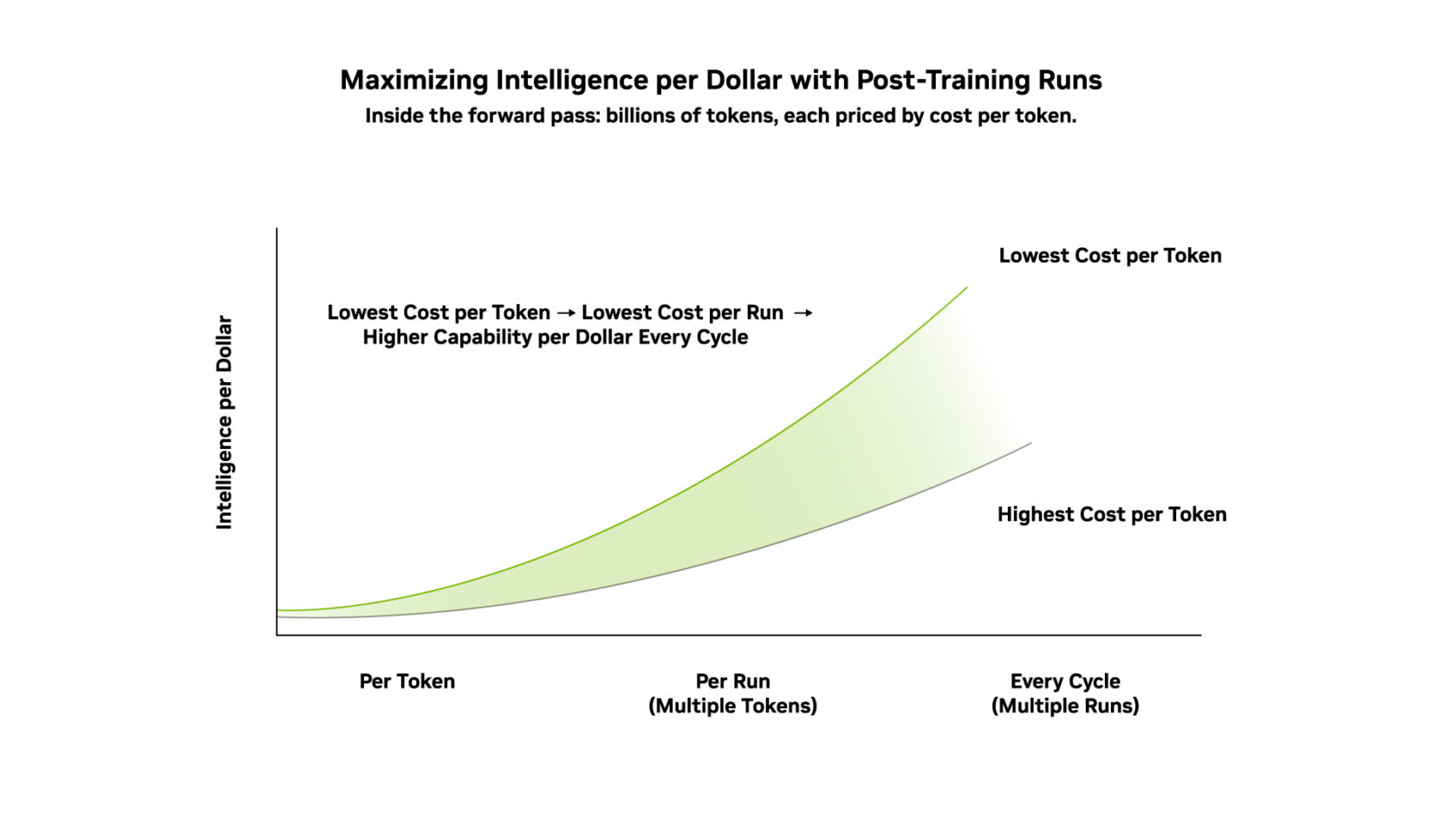
The computational footprint of agentic AI is thus characterized by continuous post-training loops. These cycles are initiated by feedback from production environments, where new problems and opportunities for improvement are identified. The increased compute usage doesn’t stem from larger individual training runs, but rather from the perpetual nature of these refinement processes. This continuous post-training represents a new computational pattern, positioning it as the central workload of the agentic era and the primary driver for achieving greater intelligence per dollar invested. The ultimate objective of this relentless refinement is to maximize the "intelligence per dollar" by optimizing the output of every computational step within the continuous learning cycle. The forward pass, or inference, is traditionally measured by cost per token. However, in the context of agentic AI, improvements in cost per token directly translate into enhanced intelligence per dollar, as more sophisticated and capable models can deliver greater value with each processed unit of information.
Demystifying Agentic Post-Training: Building True Intelligence
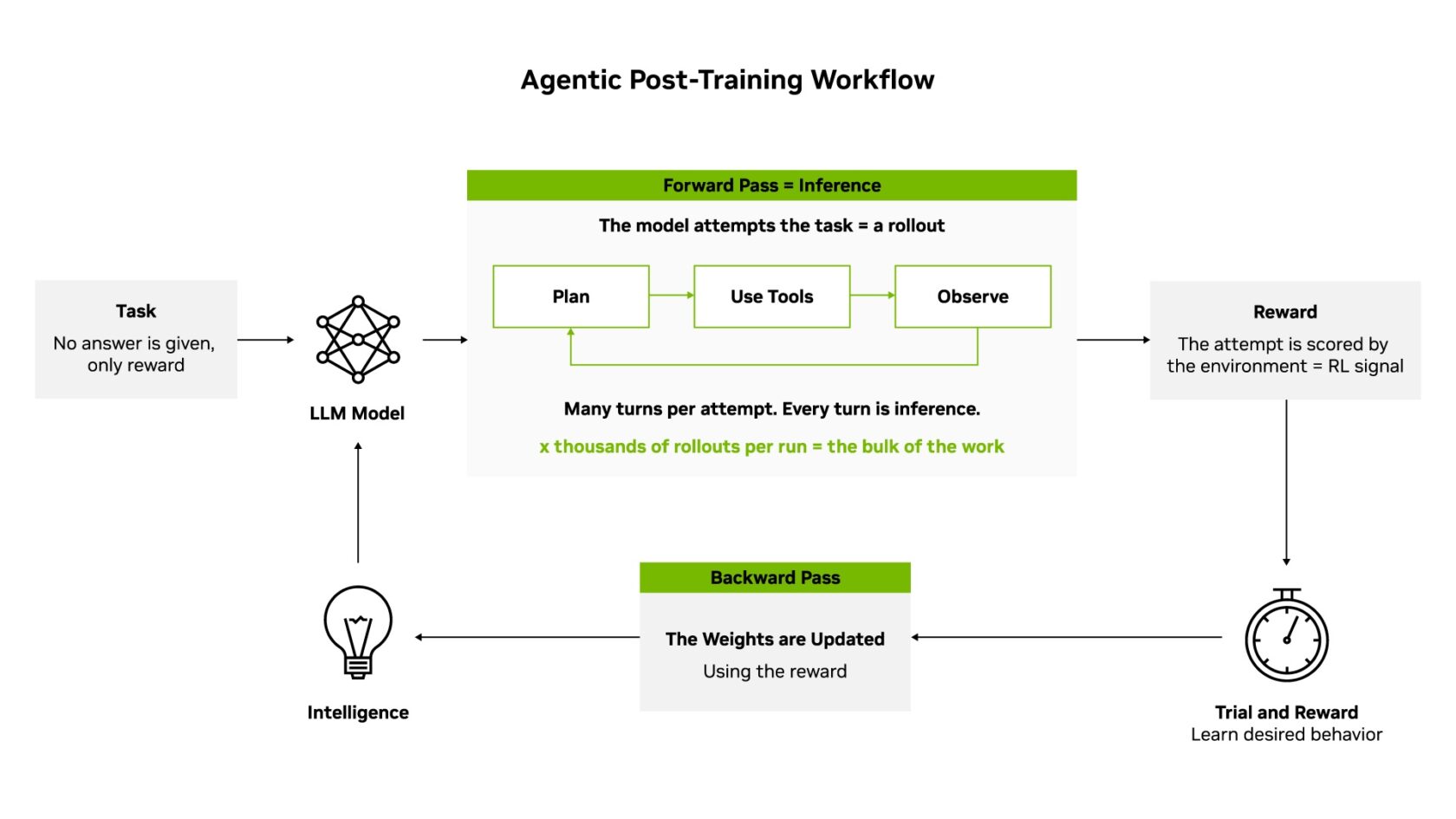
The distinction between pre-training and post-training is critical to understanding the development of truly intelligent AI. Pre-training, while essential for imbuing models with fluency and a broad understanding of language and concepts, primarily focuses on predicting the next token in a sequence. This process, while computationally intensive, lays the groundwork for comprehension but does not inherently confer practical intelligence. It is in the post-training phase that AI models acquire the skills necessary for complex tasks, such as writing code, devising multi-step plans, effectively employing external tools like search engines, and crucially, learning to recover from errors. Inference, the subsequent stage, represents the model performing its operational duties, with its cost typically quantified on a per-token basis.
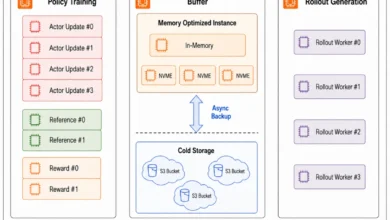
Since there is no single, definitive "answer key" for complex tasks, agentic models learn through techniques such as reinforcement learning (RL). In this process, when presented with a task, the model generates an attempt – the forward pass, analogous to its operational work. This attempt is then evaluated, and a reward signal is generated. This feedback is used to update the model’s internal weights – the backward pass – allowing it to learn from its successes and failures. Over millions of such iterative attempts, the model’s intelligence progressively grows.
Each step in this reinforcement learning loop is computationally demanding. Scaling this process efficiently requires sophisticated orchestration. Thousands of simulated environments must generate "rollouts" (attempts and their outcomes) in parallel. The rewards generated from these rollouts need to be verified and aggregated, and the updated weights must be fed back into the training process, ensuring that computational accelerators are fully utilized. To address this complexity, NVIDIA has developed open libraries like NeMo Gym for creating training environments and NeMo RL for distributed post-training. These tools aim to transform post-training from a bespoke, research-intensive undertaking into a repeatable and scalable infrastructure component.
The Synergy of Intelligence per Dollar and Cost per Token
The relationship between cost per token and intelligence per dollar is not one of competition, but of synergy. Inference, the process of delivering AI-generated output, can be considered the revenue engine of an AI system. Post-training, on the other hand, acts as a powerful multiplier for this engine. The more capable and intelligent a model becomes through effective post-training, the higher the value derived from every token it serves.
Cost per token is a fundamental metric for the "inference factory," representing the all-in cost to deliver a million tokens. Intelligence per dollar operates at a higher strategic level, asking a more encompassing question: what is the cost to develop a model that is truly valuable to deploy, and how can we ensure it remains valuable as its operational context evolves?
These two metrics are nested. Advances in AI infrastructure that reduce the cost per token also simultaneously decrease the cost associated with building each unit of intelligence into the model. Conversely, every increment of intelligence embedded into a model through sophisticated post-training directly enhances the value proposition of every token processed by the inference factory. In essence, cost per token measures operational efficiency, while intelligence per dollar assesses the return on investment in developing and maintaining model intelligence.
Maximizing Intelligence per Dollar: The Case of Nemotron 3 Ultra and Next-Generation Platforms
NVIDIA Nemotron 3 Ultra, a powerful open-weight, 550-billion-parameter mixture-of-experts (MoE) model, exemplifies the advancements in agentic AI. It boasts verifiable benchmarks and a transparent post-training methodology executed on the NeMo RL framework. Notably, Nemotron 3 Ultra achieved a score of 71.7% on SWE-bench, a standard real-world coding benchmark. This indicates its ability to produce working fixes for approximately seven out of every ten real software bugs identified in open-source projects, with each fix rigorously validated against the project’s own test suites. This level of verifiable performance underscores the efficacy of its continuous post-training regimen.
The NVIDIA Blackwell platform plays a pivotal role in making the demanding post-training requirements of the agentic era economically feasible. By reducing the cost per run, Blackwell enables the frequent and iterative refinement cycles necessary for agentic AI. The intelligence gained through this continuous process is then realized across every token served by the deployed models.

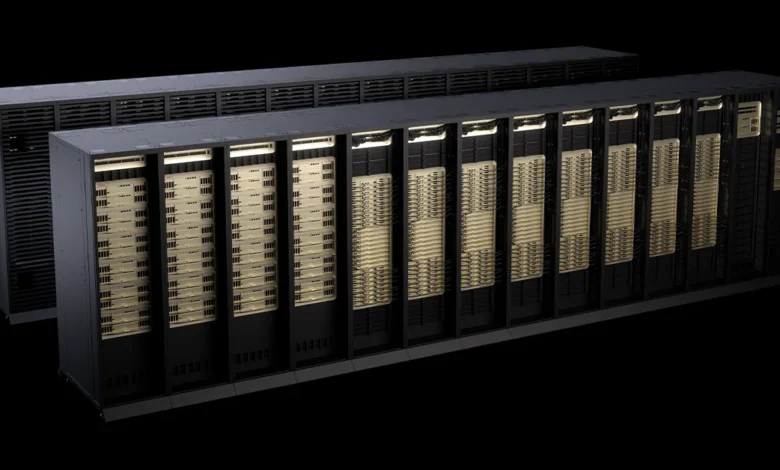
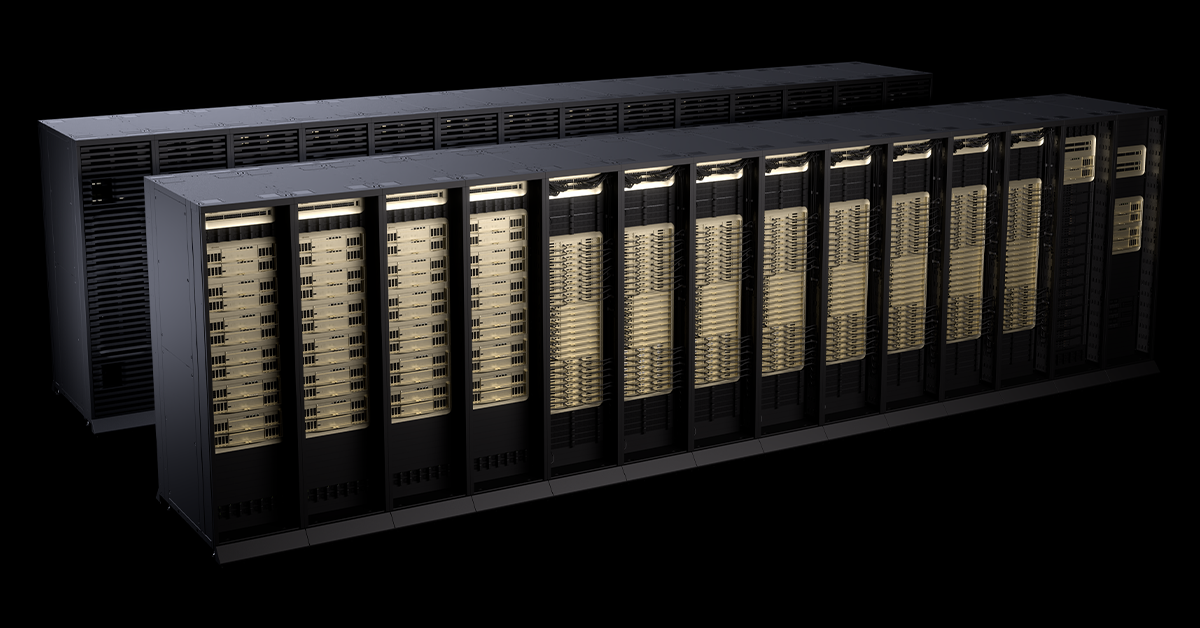
Pushing this trajectory further is the NVIDIA Vera Rubin platform. Designed from the ground up for the specific demands of agentic AI, it is engineered to maximize intelligence per dollar for post-training workloads. Vera Rubin facilitates the training of even larger models, requiring significantly fewer GPUs compared to the previous Blackwell generation. Its architecture supports more rollouts per run, a greater number of concurrent environments, and sustains the continuous post-training cycles that define the agentic era. This focus on end-to-end optimization for agentic AI workloads positions Vera Rubin as a key enabler for the next wave of intelligent systems.
Real-World Implementations: Post-Training Workflows in Action
The practical application of these advanced post-training techniques is already demonstrating significant impact across various organizations. Prime Intellect’s Lab, for instance, is continuously post-training frontier open models on NVIDIA Blackwell. They leverage NVIDIA Dynamo for inference orchestration and plan to scale their reinforcement learning environments with Vera Rubin, aiming to generate more rollouts per run and accelerate the iteration loop between training and inference. This strategy is designed to maximize intelligence per dollar for their business clients. Prime Intellect has further optimized its sandbox infrastructure to integrate with NVIDIA Vera CPUs, achieving low-latency and energy-efficient reinforcement learning. Their adoption of open-source tools like NVIDIA Nemotron and NeMo Gym, coupled with Vera CPUs, has resulted in an average throughput increase of 30% per CPU compared to alternative x86 architectures for realistic RL sandbox workloads.
Perplexity.ai’s approach to RL post-training is characterized by its asynchronous operation across hundreds of NVIDIA GPUs. They have implemented an RDMA-based weight transfer engine that synchronizes trillion-parameter models in under two seconds between training and inference compute nodes. The resulting post-trained Qwen3 235B models are then efficiently served on NVIDIA GB200 NVL72 systems, demonstrating a seamless integration of continuous training and high-throughput inference.
Together AI provides post-training as a comprehensive service, encompassing supervised fine-tuning, reinforcement learning, and direct preference optimization. Their service is delivered via a feature-rich API and SDK, supporting the full spectrum of post-training capabilities on their AI Native Cloud platform. Having already optimized their workflows on NVIDIA’s platform and its specialized kernel libraries, they are now looking to harness the capabilities of the Vera Rubin platform to further enhance their offerings.
These real-world examples highlight a clear industry trend: the continuous refinement of AI models through post-training is becoming not just a best practice, but a fundamental requirement for developing truly intelligent and adaptable agentic AI systems. As these platforms and methodologies mature, the pursuit of maximizing intelligence per dollar will continue to drive innovation in AI development and deployment.
The development of agentic AI represents a paradigm shift, moving from static intelligence to dynamic, adaptive systems. This evolution places continuous post-training at the forefront of AI development, transforming it from a final step into the central engine for driving intelligence and efficiency. The ongoing advancements in platforms like NVIDIA Blackwell and Vera Rubin are critical enablers, making these computationally intensive but essential processes economically viable and paving the way for more sophisticated and capable AI agents. The ultimate goal remains clear: to unlock greater value from every computational resource by continuously enhancing the intelligence of AI models.