The Idiocracy Agricultural Initiative: A Sanity-Powered Case Study in Automated Content Governance

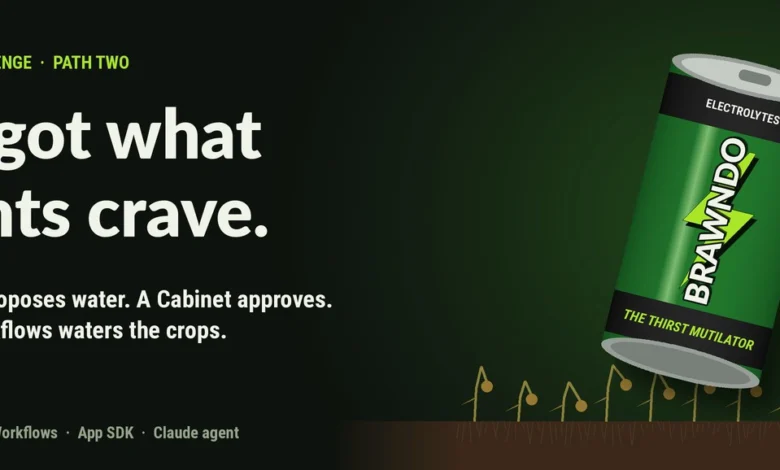
The Department of Agriculture from the 2006 satirical film Idiocracy serves as the unlikely blueprint for a modern experiment in content management and workflow automation. In the film, a dystopian society faces total crop failure because they insist on irrigating fields with "Brawndo," a sports drink, under the misguided notion that its electrolytes are superior to water. This project, submitted for the Sanity Challenge, reconstructs that dysfunctional agricultural department using the Sanity platform to test whether advanced workflow automation and simplified user interfaces can bridge the gap between complex data management and non-technical decision-making.
The Architecture of the Brawndo Project
The project, hosted on Sanity (project ID: ukyhb6bu), utilizes a sophisticated technical stack to simulate a bureaucratic process. The core system relies on Sanity Studio 6, which deploys two distinct workspaces from a single schema: the "Kiosk" and the "Stock" studio. The Kiosk is designed for non-technical users, featuring large, simplified picture-button inputs, while the Stock studio offers the standard, full-featured administrative interface.
At the heart of the governance model is "Joe’s Plan," a workflow implementation using the early-access @sanity/workflow-* package (v0.33.0). This framework manages the lifecycle of agricultural proposals, ensuring that every action—from submission by an AI agent (Claude-opus-5) to approval by a human Cabinet—is logged, validated, and executed. The public-facing component, brawndo.gov, is built on Next.js 16 and hosted on Google Cloud Run, providing citizens with a real-time, interactive dashboard where they can vote on irrigation strategies.
A Chronology of Automated Governance
The experiment was conducted in a single, continuous development session. The timeline of the project’s lifecycle highlights the efficiency of using an in-memory test bench before production deployment:
- Schema Definition: The team defined a unified schema that could be toggled between the Kiosk interface and the Stock interface via a build-time flag.
- Workflow Logic: The team established a deterministic state machine for agricultural decisions: Petition → Submit → Cabinet Approval → Irrigation → Growth (with a specific harvest timestamp) → Harvest. Rejections lead to a "dust bowl" status, simulating the consequences seen in the film.
- Testing and Validation: The system underwent eight distinct tests to ensure strict adherence to protocol, such as preventing the Secretary from self-approving proposals and ensuring the system waits for the
harvestAttrigger before completing the cycle. - Deployment: Once validated, the system was moved to a live environment where an AI agent submitted proposals, which were then manually approved via the Kiosk interface, triggering automated backend processes.
Data-Driven Performance Metrics
To assess the effectiveness of the interfaces, the researchers conducted a comparative study timing the performance of an AI agent performing three specific tasks across three different surfaces: the Kiosk, the Stock Studio, and a GitHub-based Markdown repository.
The results, measured in median seconds over three runs, provided clear insights into how interface design impacts task completion time:
| Surface | Water a Field | Add a Citizen | Amend a Proposal | Success Rate |
|---|---|---|---|---|
| Stock Studio | 24.8s | 16.8s | 37.6s | 100% |
| Kiosk | 26.4s | 25.6s | 41.4s | 100% |
| GitHub (Markdown) | 37.2s | 41.2s | 46.2s | 100% |
The data indicates that the Stock Studio is the most efficient interface for an AI agent, largely because it provides direct access to the underlying data structure. However, the Kiosk, despite being slower for the agent, serves its intended purpose of accessibility. The GitHub interface proved the most cumbersome, requiring manual manipulation of YAML frontmatter, which introduces higher risks of syntax errors in real-world scenarios.
Implications of Advisory Governance
A critical finding of this project involves the nature of "advisory" workflows within the Sanity ecosystem. The project confirmed that while the workflow engine facilitates decision-making, the ultimate authority rests within the Content Lake’s access control layer.
In the experiment, the "Cabinet" role was restricted by the system’s role-based access controls. Because an AI agent cannot be granted an "administrator" role in the current Sanity trial environment, the Cabinet’s role is purely performative. This mirrors the political satire of the source material: the decision-makers have the appearance of power, but the actual execution is governed by automated, pre-defined rules. This creates a fascinating model for organizations looking to implement "human-in-the-loop" systems, where human input is required for compliance, even if the underlying logic is algorithmically determined.
Broader Impact on CMS Accessibility
The success of the "Kiosk" interface suggests that enterprise CMS platforms can be made significantly more accessible to non-technical staff by stripping away the complexity of traditional database management. By focusing on intent-based actions—such as "Water the Crops" represented by a single, large button—rather than abstract data fields, organizations can reduce the training overhead for staff who are not comfortable with Git or traditional content editors.
Furthermore, the integration of GROQ-based server-side calculations ensures that data integrity is maintained at the database level. By using count() queries within the Content Lake to tally votes, the system eliminates the need for complex state management in the frontend, preventing the discrepancies that often occur when clients attempt to perform arithmetic on large datasets.
Future Directions and Conclusion
The Idiocracy Agricultural Initiative demonstrates that when content management is treated as a programmatic workflow rather than a static document repository, the potential for automation is vast. By moving the logic of "growing" and "harvesting" into the workflow engine, the system ensures that the state of the digital "crop" is always consistent with the business logic.
The project concludes that while the Stock Studio remains the optimal choice for power users and AI agents, the Kiosk provides a viable, user-friendly alternative for non-technical stakeholders. As organizations continue to grapple with the complexities of managing digital content, the shift toward purpose-built interfaces—informed by the rigid, yet reliable, constraints of workflow engines—is likely to become a standard practice.
The project’s repository remains open for review, serving as a technical reference for those looking to implement similar, highly-structured governance models. The results underscore that in both film and reality, the success of a system depends not just on the tools available, but on the clarity and efficiency of the processes that govern them. Whether the goal is to save the crops or manage enterprise content, the path forward is one of automation, validation, and intentional design.