In the modern digital economy, the sheer volume of marketing channels available to organizations—from programmatic advertising and social media to influencer partnerships and search engine optimization—often leads to a phenomenon known as "strategic fragmentation." Marketing teams frequently attempt to manage dozens of disparate tactics simultaneously, resulting in diluted focus and diminished returns. To combat this, industry leaders are increasingly returning to the foundational principles of customer acquisition: optimizing the relationship between raw traffic and conversion rates. At its core, the growth of any digital storefront can be distilled into a singular, immutable equation: New Signups equal total Traffic multiplied by the Conversion Rate. By evaluating every marketing channel through this binary lens, businesses can move away from reactive, scattershot tactics toward a more disciplined, high-impact growth strategy.
The Evolution of Marketing Analytics
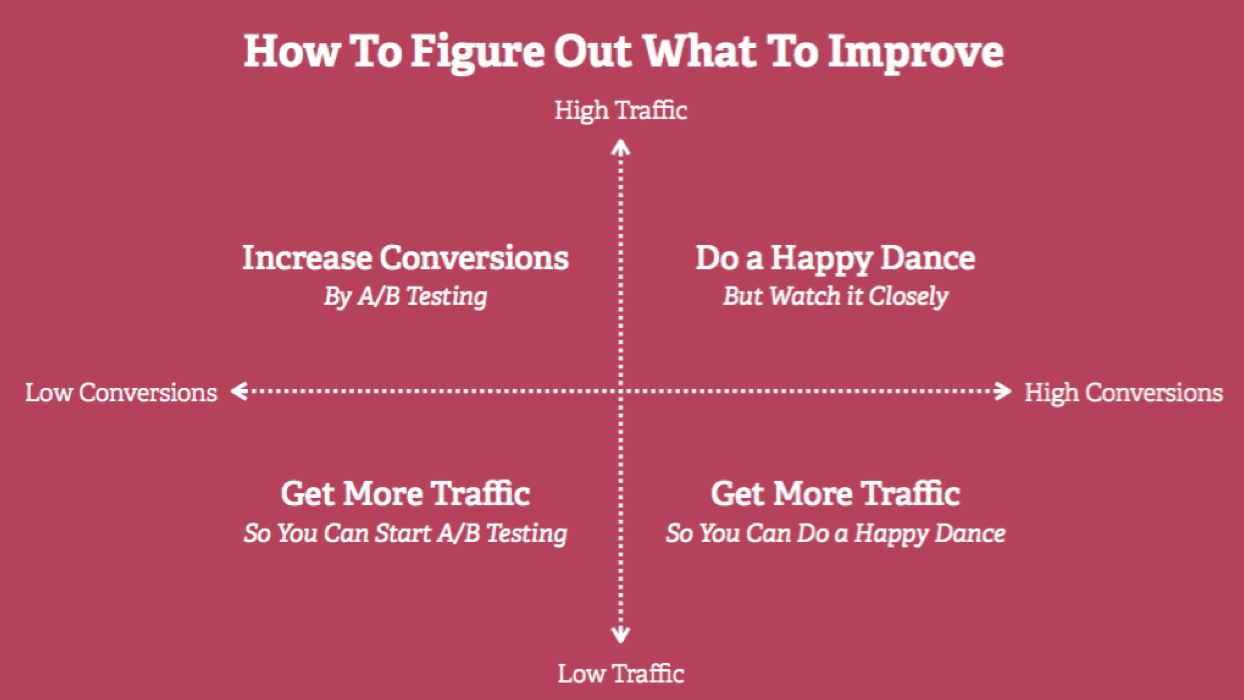
The shift toward data-driven conversion mapping represents a departure from the "spray and pray" marketing models that dominated the early 2000s. In the decade between 2005 and 2015, the proliferation of SaaS (Software as a Service) platforms forced a reckoning regarding customer acquisition costs (CAC). As competition for digital real estate intensified, the cost of traditional advertising channels, such as Google AdWords, surged, often exceeding hundreds of dollars per acquisition. This economic pressure catalyzed the development of the "Conversion Map," a strategic framework designed to categorize marketing assets into four distinct quadrants based on traffic volume and conversion efficacy. This transition marked a move toward prioritizing sustainable, long-term growth over volatile, short-term promotional bursts.
Quadrant Analysis: Categorizing Marketing Assets
To implement this framework effectively, marketing teams must conduct a comprehensive audit of their digital ecosystem. Each landing page, blog post, email campaign, and social channel must be plotted onto a matrix where the x-axis represents traffic volume and the y-axis represents the percentage of visitors who complete a desired action.

- High Traffic, Low Conversion (The Optimization Goldmine): This quadrant is the most significant opportunity for immediate revenue growth. When a page receives substantial traffic but fails to convert, the issue is typically not the reach, but the friction within the user journey. By employing A/B testing—the scientific process of comparing two versions of a webpage to determine which performs better—organizations can systematically remove obstacles, refine call-to-action (CTA) buttons, and better align content with user intent.
- Low Traffic, High Conversion (The Scalability Opportunity): These pages often contain high-value, niche content that resonates deeply with a specific audience but lacks broad distribution. The objective here is not to alter the content, but to amplify its reach. By repurposing this content for broader channels or utilizing paid distribution, marketers can scale these assets into the high-traffic territory.
- Low Traffic, Low Conversion (The Strategic Review): These assets represent the "dead weight" of a marketing strategy. They contribute little to the bottom line and consume valuable resources. Organizations should either sunset these pages, redirect them to higher-performing assets, or fundamentally overhaul their value proposition to align with broader market needs.
- High Traffic, High Conversion (The Operational Anchor): These are the "cash cows" of the organization. They do not require aggressive experimentation but rather consistent, maintenance-level monitoring. The goal here is to protect these assets, ensuring their relevance remains intact while utilizing the surplus revenue they generate to fund growth experiments in other quadrants.
Data-Driven Prioritization and Execution
The chronological execution of these strategies is critical to organizational success. Analysts generally advise a prioritized approach: first, maximize the potential of the high-traffic, low-conversion quadrant; second, scale the low-traffic, high-conversion assets; and third, focus on building the foundational infrastructure for the low-traffic, low-conversion segments.
The importance of this sequencing cannot be overstated. According to industry reports from firms like HubSpot and various performance marketing consultancies, organizations that prioritize A/B testing on high-traffic pages report a 20% to 30% increase in signups within the first quarter of implementation. This incremental growth is far more sustainable than the volatile gains seen from one-off, high-budget marketing campaigns.

Case Study: The KISSmetrics Model
The efficacy of this framework was famously demonstrated during the growth phase of the analytics platform KISSmetrics. By pivoting away from a reliance on expensive Google AdWords campaigns—which carried a high cost-per-acquisition—the company shifted its focus toward organic content marketing. By meticulously mapping its blog posts and landing pages, the team identified which content drove high-intent traffic and optimized those specific pages for conversion.
The result was a drastic reduction in customer acquisition costs, dropping to approximately $3 per trial signup. This was achieved not by increasing the total budget, but by increasing the efficiency of the existing traffic. This case study underscores a critical lesson for modern marketers: growth is not solely about acquiring more visitors; it is about extracting more value from the visitors already entering the digital funnel.

The Long-Term Implications of Content Strategy
The "Long Game" in marketing refers to the transition from building temporary, isolated islands of content to creating a cohesive, interconnected "continent" of digital authority. This process takes time, often spanning years of iterative improvement. As organizations load their domains with high-quality, relevant, and high-converting content, they build a cumulative advantage.
Search engines, particularly Google, reward this depth of expertise. As the site’s authority grows, the baseline traffic increases, which in turn provides a larger sample size for A/B testing and conversion rate optimization (CRO). This creates a virtuous cycle where traffic growth feeds conversion optimization, and optimized conversion pathways incentivize further traffic investment.

Addressing the "Peak SaaS" Narrative
Industry discourse has frequently speculated on the "Peak SaaS" theory, suggesting that the market for subscription software is reaching a saturation point. While competition is undeniably fiercer than it was in 2014, the conversion map framework suggests that the ceiling for growth is often self-imposed. When firms view their marketing as a rigid, linear process rather than an iterative, data-backed map, they miss the latent opportunities existing within their current infrastructure.
Strategic Recommendations for Modern Teams
For businesses seeking to implement this, the following steps are essential:

- Audit and Segment: Use analytics tools to categorize every page of your website into one of the four quadrants defined above.
- Establish Baselines: Before making changes, define what constitutes "high" or "low" traffic and conversion for your specific industry. A 2% conversion rate may be stellar in one industry and sub-par in another.
- Test for Intent: Utilize tools like exit-intent surveys and heatmaps to understand why users are not converting on high-traffic pages.
- Document the Process: The most successful teams maintain a "Conversion Registry," a log of all tests performed, the data collected, and the resulting insights. This ensures that the organization learns from its failures and codifies its successes.
Conclusion: The Discipline of Growth
The shift toward a conversion-centric mindset is more than a technical adjustment; it is a cultural change within the marketing department. It requires moving away from the vanity metrics—like page views and social media likes—that provide little correlation to revenue, and focusing instead on the metrics that define business health. By embracing the discipline of the conversion map, organizations can achieve a more stable, predictable, and scalable growth trajectory. In an era where digital noise is at an all-time high, the competitive advantage belongs to those who prioritize clarity, focus, and the rigorous optimization of their existing assets. This is not merely a tactic for early-stage startups; it is the blueprint for any organization looking to thrive in a mature and crowded digital landscape.
Related posts: