Inside ChartMogul’s Global PLG Growth Lab: A Comprehensive Exploration of Modern Product-Led Strategies

The modern software-as-a-service (SaaS) landscape is undergoing a profound structural evolution, driven by shifting buyer behaviors, the rapid integration of artificial intelligence, and the maturation of product-led growth (PLG) frameworks. To address the complexities of this transition, ChartMogul, a leading subscription analytics and revenue management platform, launched an international series known as the PLG Growth Lab roadshow. Spanning seven major global hubs—San Francisco, Šibenik, Paris, London, Warsaw, Utrecht, and New York—the initiative brought together founders, revenue officers, product leaders, and operators to dissect the operational realities of scaling software companies today.
Spearheaded by Sara Archer, Chief Revenue Officer at ChartMogul, the roadshow was conceived out of a desire to move past high-level unicorn narratives and instead engage directly with practitioners grappling with day-to-day challenges. These challenges range from navigating enterprise sales motions and adapting product marketing for AI-driven ecosystems to structuring sales compensation around usage-based pricing models. Rather than relying on theoretical abstractions, the series prioritized operational transparency, offering a localized view of how different international tech communities approach growth, retention, and monetization.
San Francisco Kickoff: Bridging the Gap from Individual Users to Enterprise Teams
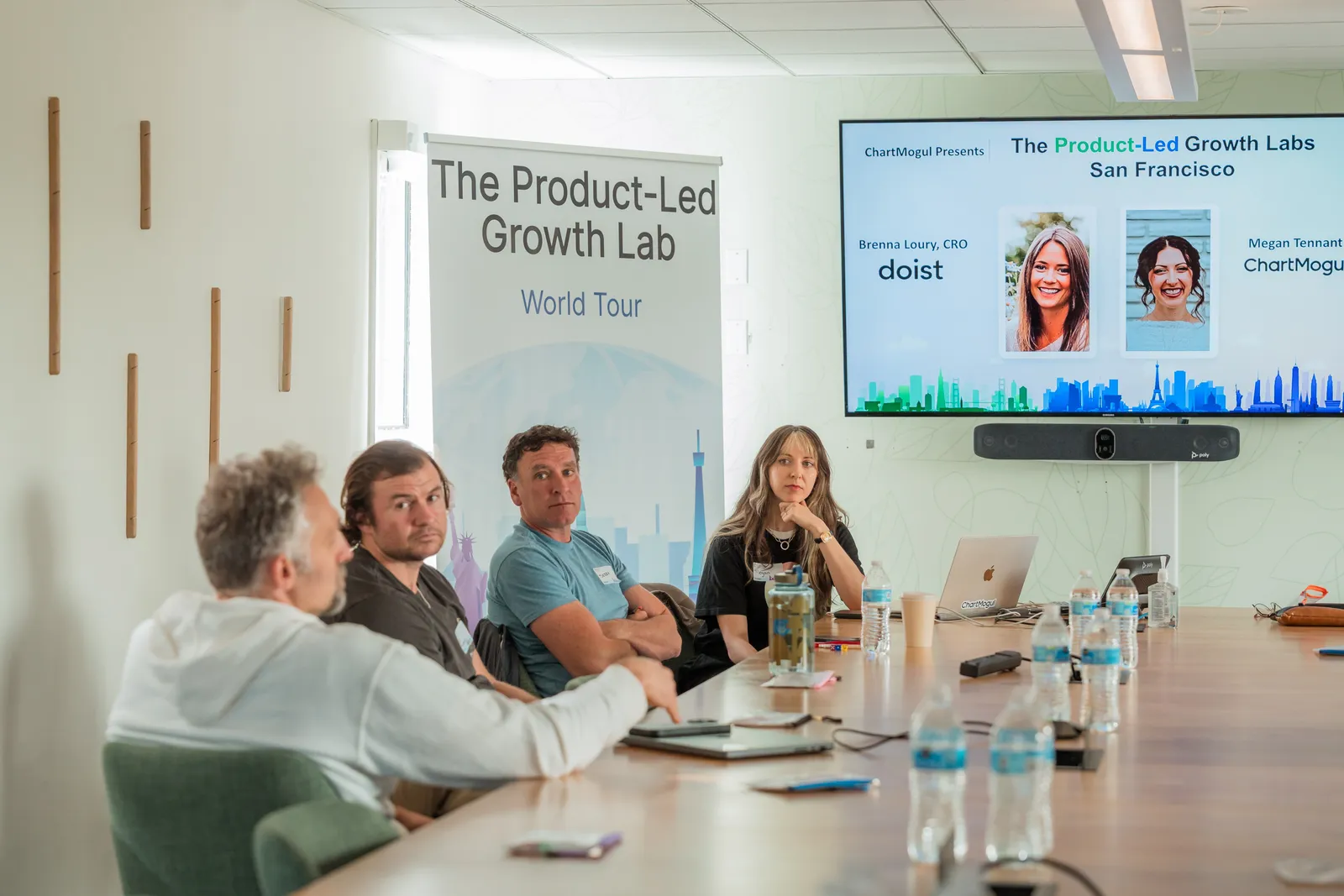
The global roadshow officially commenced in San Francisco during the high-profile Stripe Sessions conference. Partnering with Brenna Loury, Chief Revenue Officer of productivity software giant Doist, ChartMogul hosted an exclusive boardroom workshop focused on the intricacies of moving upmarket.
A central tension in product-led growth is the transition from bottom-up adoption—where an individual user signs up for an entry-level plan—to top-down enterprise procurement. While acquiring individual users validates product-market fit, turning that initial footprint into a broad organizational deployment requires deliberate cross-functional orchestration. Discussions centered on identifying the optimal juncture to introduce sales personnel, equipping internal champions with the necessary resources to advocate for the product internally, and structuring enterprise-ready closing teams. Participants engaged in rigorous peer-to-peer problem-solving, exploring how early-stage signals of engagement can be systematically cultivated into high-value contracts.

The Šibenik Sessions: Operational Mechanics and Technical Growth Levers
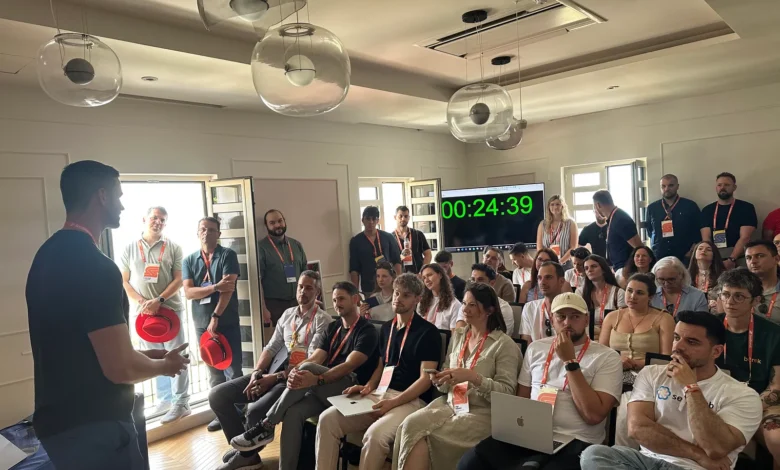
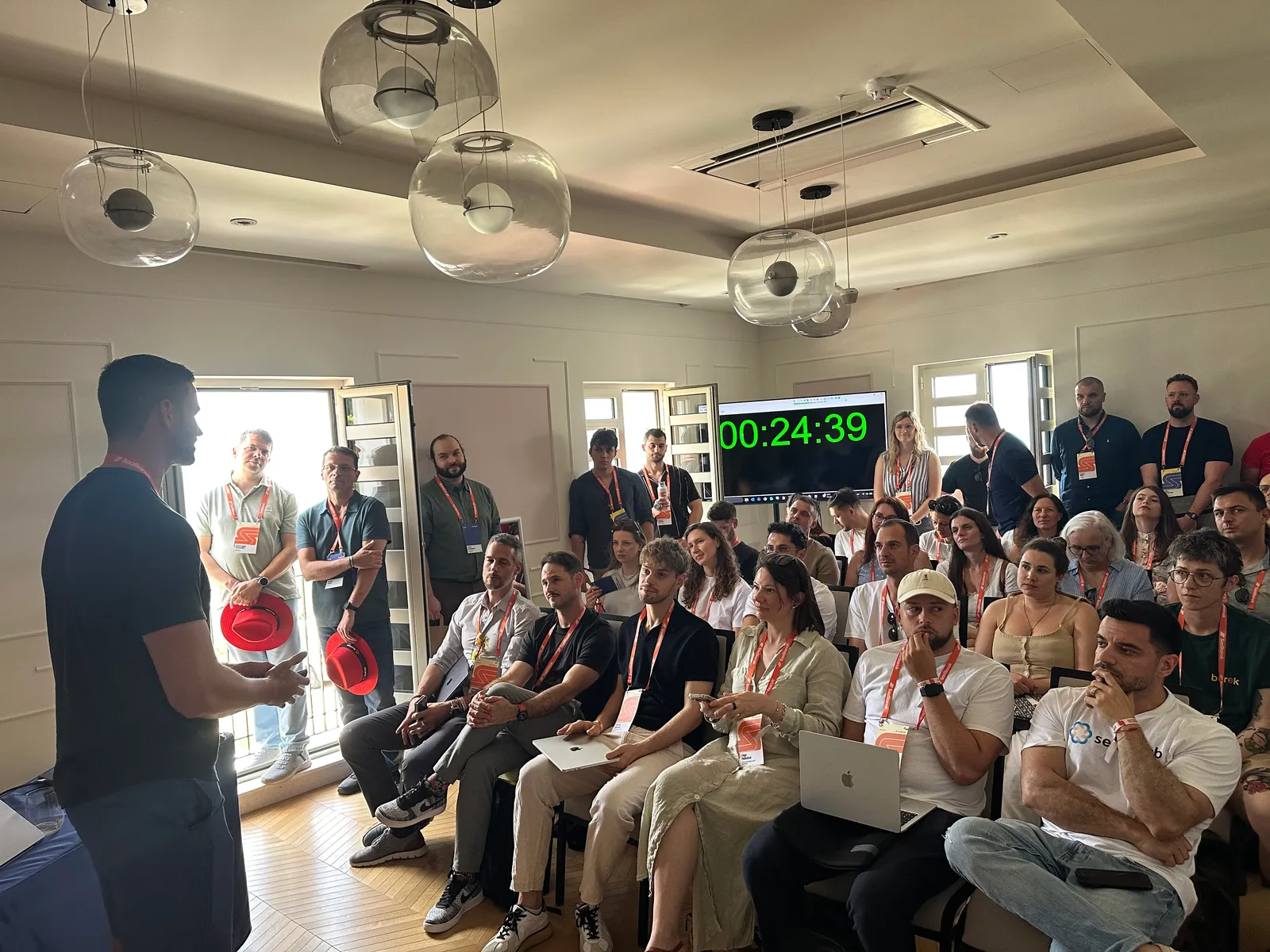
Moving to the Croatian coast, the roadshow partnered with regional community platform SaaStanak for a two-day deep dive into the operational mechanics of PLG. Despite a severe regional heat wave, the sessions drew standing-room-only crowds, reflecting a high demand for granular, execution-focused insights.
The Šibenik stop marked the most technically rigorous phase of the tour. Tom Andrews demonstrated the architectural requirements underpinning automated upsells, illustrating how organizations must synchronize product telemetry, customer data platforms, and live billing infrastructure. Complementing this, Aleksandra Korczyńska addressed the limitations inherent in behavioral data alone. She noted that monitoring user metrics—such as the failure to upgrade—fails to capture qualitative intent, such as whether a user is constrained by budgetary approvals, lacking specific feature sets, or simply experiencing onboarding friction.
Product activation was examined from multiple theoretical and practical viewpoints. Growth expert Wes Bush challenged attendees to rethink user onboarding by advocating for immediate value delivery before forcing users to learn complex interfaces. Concurrently, Paulina Spaccarotella emphasized the psychological dimension of user experience, stressing that users must feel confident and adequately supported to sustain long-term product engagement.
In a joint workshop, Kyle Poyar and Sara Archer analyzed key growth levers necessary for companies scaling from $1 million to $20 million in Annual Recurring Revenue (ARR). The session provided structured frameworks for optimizing retention, adjusting pricing architecture, and scaling internal operations to match accelerated revenue generation.
Parisian Perspectives: The Friction Between PLG Theory and Enterprise Reality
In Paris, hosted by Guideflow with a backdrop overlooking the Eiffel Tower, the roadshow addressed the often messy reality of executing PLG strategies in practice. Archer was joined by Benjamin Cahen, CEO of Wisepops, and Lisa Heiss to explore activation hurdles, monetization strategies, and the disruptive impact of AI on user experiences.
Cahen offered a candid case study regarding Wisepops’ deliberate experiment to transition certain segments from self-serve models to fully sales-led motions. Halting freemium signups and free trials—the primary inbound lead sources for sales teams—presents significant internal and external friction. However, Cahen argued that calculated strategic bets, executed by cohesive teams with aligned motivations, are essential for unlocking the next phase of corporate growth.
Shifting the discourse to artificial intelligence, Heiss analyzed the imperatives of speed, trust, and expertise in AI-driven software. As automation assumes a greater share of routine computational tasks, software providers must ensure that users retain visibility into and confidence in algorithmic outputs. In an environment characterized by low barriers to entry and intense market noise, establishing absolute user trust has become a primary competitive differentiator.
London and the Evolution of Buyer Intent
London’s convening gathered an elite cohort of founders and revenue leaders from prominent European technology firms, including Intruder, Physitrack, CharlieHR, and Utility. The dialogue quickly centered on the modernization of customer onboarding and evaluation pathways.
Traditional onboarding workflows typically follow a linear trajectory: a user registers for a trial, inputs basic corporate demographics via dropdown menus, and receives automated educational sequences. However, this one-size-fits-all approach ignores the diverse ways modern buyers prefer to evaluate software. While some segments favor autonomous exploration, high-intent buyers frequently demand immediate human interaction to accelerate procurement decisions.

The discussion highlighted an emerging opportunity for artificial intelligence to bridge this gap. By capturing granular intent data at the point of registration—allowing users to explicitly state their operational goals and preferred engagement channels—vendors can dynamically tailor the onboarding experience. Harmonizing software capabilities with individual buyer preferences promises to significantly reduce friction throughout the evaluation lifecycle.
Warsaw: Quantifying and Monetizing Artificial Intelligence
Hosted in an unconventional venue—an operational historic cinema complete with popcorn—the Warsaw stop addressed one of the most pressing questions facing modern software developers: how to accurately measure and monetize artificial intelligence features. Supported by Olga Padulosi and the Survicate team, local industry leaders including Piotr Cygan, Krzysztof Szyszkiewicz, Daniel Korczynski, and Wojtek Strzałkowski debated the efficacy of AI integration.
The panel agreed that relying solely on feature usage metrics is insufficient for determining whether an AI implementation delivers genuine utility. True validation requires qualitative investigation, including auditing AI outputs, soliciting direct customer feedback, and conducting qualitative user research.
Furthermore, the Warsaw discussions emphasized the enduring importance of product intuition. While accessible machine learning tooling has democratized software development, enduring market differentiation relies on structural architecture, cost-effective value delivery, and the nuanced judgment of experienced product teams. Access to identical underlying technology does not guarantee parity in product execution.
Utrecht: Category Creation and Attribution Realities
Amid severe regional rainfall, the Trengo team hosted the Utrecht leg, where Wolter Rebergen and Claudiu Murariu joined Archer to examine attribution modeling and the distinct challenges of marketing nascent product categories.
Marketing an innovative software category presents unique hurdles, primarily because prospective buyers lack an established vocabulary to describe their pain points. Consequently, foundational positioning often requires extensive market education before traditional demand generation can take root.
Regarding attribution, Murariu offered a pragmatic perspective, asserting that modern tooling makes it easier and more cost-effective than ever to correlate marketing expenditures with actual product telemetry and revenue realization. He cautioned against diminishing returns, noting that protracted internal debates over first-touch versus last-touch attribution models are frequently an inefficient allocation of resources compared to active market execution. Murariu commended the roadshow’s design, noting that applying product-led principles—optimizing specifically for the attendee’s time and value—exemplified the core ethos of modern community engagement.
New York: Concluding Insights and Core Financial Metrics
The global initiative concluded in New York during the Pavilion GTM Summit, bringing together 18 founders and revenue executives for an intimate executive dinner. Ingmar Zahorsky, ChartMogul’s VP of Customer Success, participated alongside Archer to synthesize the operational learnings gathered across the seven-city tour.
Archer’s presentation at the summit focused on macroeconomic visibility for scaling organizations, emphasizing three foundational financial health indicators: Monthly Recurring Revenue (MRR) growth rate, Net Revenue Retention (NRR), and Customer Acquisition Cost (CAC) payback periods. The core thesis resonated strongly with the assembled leadership: internal teams frequently achieve localized performance targets while the overarching business stalls. Providing transparent, unified visibility into growth dynamics, retention efficiencies, and acquisition costs empowers operators to align departmental execution with macro-level corporate expansion.

Broader Implications for the SaaS Industry
ChartMogul’s PLG Growth Lab roadshow highlights a critical maturation phase within the global technology sector. As venture capital markets prioritize sustainable unit economics over unconstrained top-line growth, software companies are forced to adopt rigorous, data-driven, and customer-centric operational strategies.
The insights harvested across San Francisco, Šibenik, Paris, London, Warsaw, Utrecht, and New York demonstrate that modern product-led growth is no longer a rigid playbook restricted to self-serve motions. Instead, it has evolved into a hybrid discipline requiring sophisticated cross-functional collaboration, nuanced monetization of artificial intelligence, flexible enterprise sales integration, and deep qualitative engagement with user communities. By facilitating direct dialogue among practitioners actively navigating these transitions, initiatives like the PLG Growth Lab provide vital navigational markers for the next generation of software enterprises.