The Permissionless Pilot: A New Frontier in Enterprise Sales Accelerating the "Wow" Moment for Faster Deal Closures

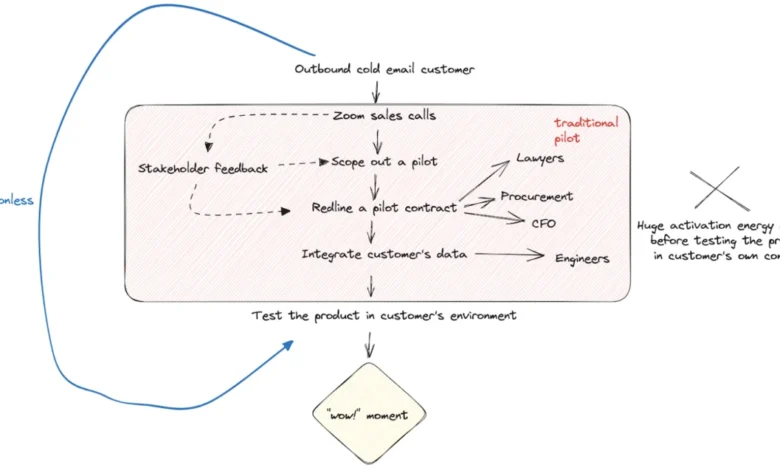
A decade ago, David Skok, a noted SaaS industry veteran, introduced the concept of the "Time to Wow!" This framework highlighted the profound impact of a customer experiencing a significant "Wow!" moment, where the true value of a product is immediately and powerfully understood. The original discussion explored strategies to expedite this crucial realization. Today, a new and increasingly prevalent pattern is emerging in the startup landscape, enabling companies to secure substantial enterprise contracts at an unprecedented pace. Founders and early-stage employees are adeptly inverting the traditional, often protracted, enterprise sales cycle by strategically positioning the customer’s "Wow!" moment not at the conclusion of the sales process, but at its very inception. This innovative approach is best exemplified by the advent of "permissionless" pilots.
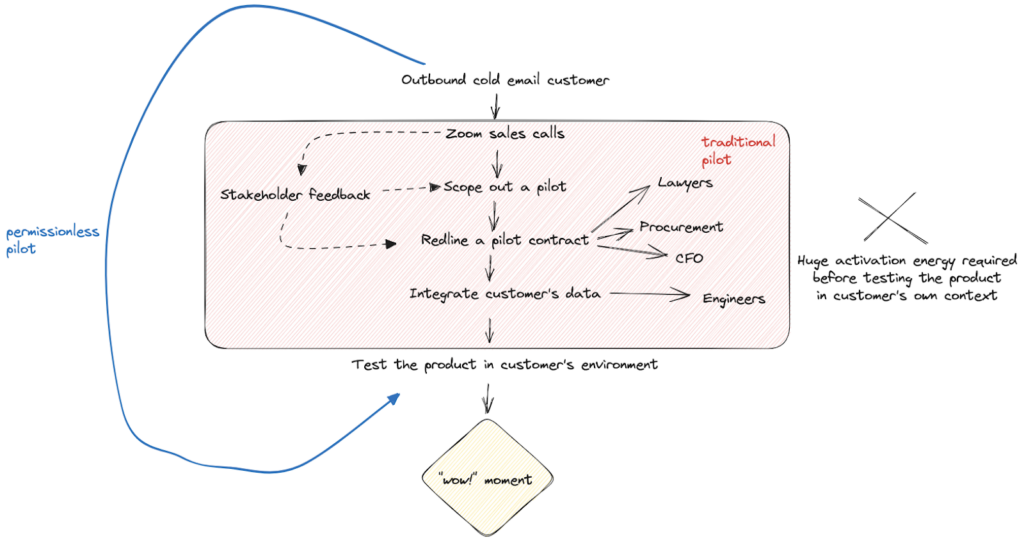
The general consensus in product development and sales is that the faster a product can elicit that "wow" feeling from customers, the more successful it is likely to be. However, a significant number of modern products struggle to deliver this impactful experience in a timely manner. Enterprise sales, by their very nature, are characterized by a lengthy and often arduous journey involving numerous sales calls, complex procurement processes, intricate contract negotiations, and substantial technical integration efforts. It is only after navigating these hurdles that a prospect can truly experience the product’s value proposition and gain the confidence that it will effectively address their specific use cases. Frankly, given this extensive gauntlet, it often seems remarkable that any enterprise sales are closed at all.

The Catch-22: A Data Dilemma in the Sales Cycle
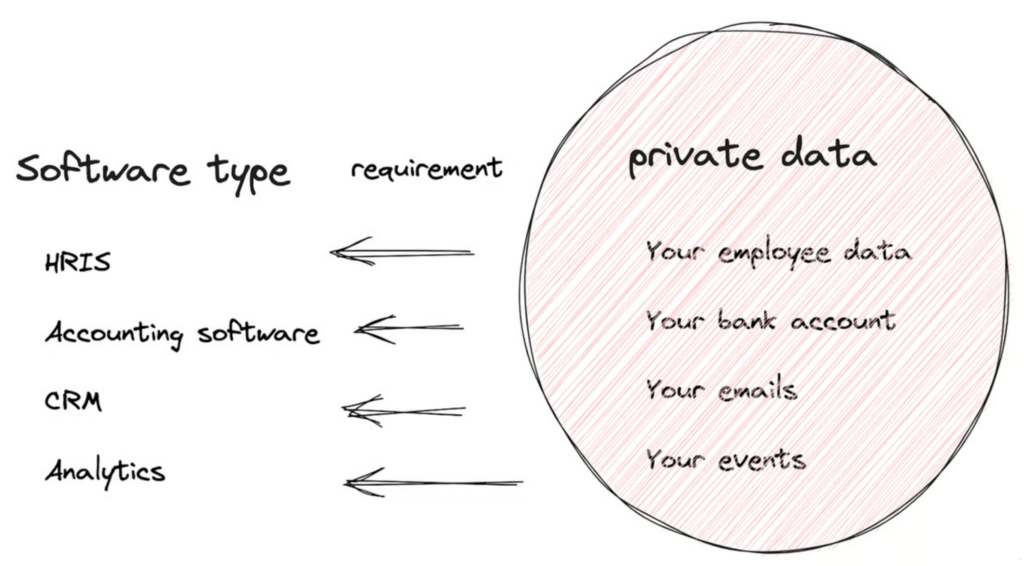
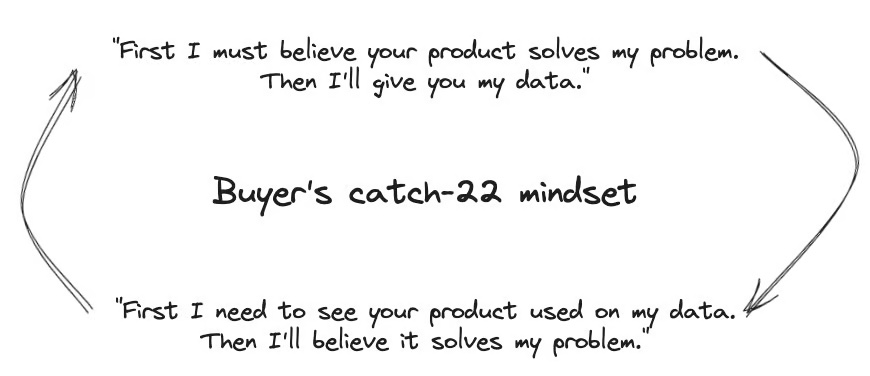
A fundamental reason for this inherent delay lies in a classic Catch-22 situation: "I’ll provide my data once I know it works with my data." Enterprise software solutions typically require access to a client’s proprietary data to function optimally and demonstrate their full capabilities. To circumvent this obstacle, many product demonstrations rely on simulated dummy data, offering a theoretical glimpse into the user experience. This approach, however, is akin to watching a car salesperson drive a vehicle around the lot; it lacks the visceral impact of a genuine test drive. The true excitement and conviction stem from experiencing the product firsthand, interacting with one’s own information.
Most potential clients are understandably reluctant to share sensitive company data until they are thoroughly convinced of a product’s efficacy and potential return on investment. Gaining authorization to share or integrate confidential company data with a third-party vendor involves navigating a labyrinth of internal processes. Prospects must expend significant social capital, first to garner internal political support and then to secure formal approvals. Conversely, customers rarely achieve a profound "wow" moment until they witness the product performing within their specific operational context, utilizing their actual data. This creates a paradoxical loop that significantly slows down the sales cycle.
Imagine, however, a scenario where a product could immediately showcase precisely how it would function and what its impact would be when used with a prospect’s own data, within their unique environment, and before any time was invested in sales calls, procurement procedures, legal reviews, or integration planning. Such a capability would fundamentally alter the entire sales dynamic.
Enter the Permissionless Pilot: Zeroing in on Time-to-Value
This is precisely where the concept of the "permissionless pilot" enters the arena. It serves as a powerful shortcut, effectively reducing a customer’s time-to-value to zero. This innovative tool is designed to overcome customer skepticism swiftly and decisively. With a permissionless pilot, the crucial "wow" moment is shifted from the conclusion of the sales process to its very beginning, occurring the instant a prospect first encounters the product. The "permissionless" aspect signifies that no prior agreement, configuration, or data sharing is required for the demonstration to function seamlessly.
At its core, a permissionless pilot is a product demonstration that leverages publicly available, customer-specific data to deliver an immediate and impactful "wow" moment.
Crafting a Permissionless Pilot: A Three-Step Framework
The creation of a permissionless pilot generally involves three fundamental steps:
-
Identify Public Data Sources: The initial and perhaps most critical step is to pinpoint publicly accessible data sets that are directly relevant to your target customers and the problems your product solves. This data can range from publicly available financial reports and government databases to social media feeds, open-source code repositories, and industry-specific online listings. The proliferation of data over the past decade has created a rich tapestry of potential sources.
-
Develop a "Cool" Demo Experience: The next phase involves building a demonstration that can ingest and process these public data sources to showcase your product’s core functionality and value proposition in a compelling way. This demo should be designed to be inherently engaging and demonstrably valuable, even without access to proprietary customer information. The emphasis here is on creating an experience that is not necessarily a fully polished, billable service, but rather something that is demonstrably "cool" and sparks curiosity and interest.
-
Enable Instant Access: Finally, the permissionless pilot must be made instantly accessible to prospects. This means creating a mechanism whereby a potential customer can input a minimal amount of identifying information (such as their company name or a specific public URL) and immediately receive a personalized demonstration powered by the relevant public data. This could be through a web-based portal, an interactive application, or a dynamic report generation tool.
While not every company or product is an ideal candidate for permissionless pilots, the continuous expansion of publicly available data, coupled with advancements in machine learning (ML) techniques like computer vision and natural language processing (NLP) with Large Language Models (LLMs), is opening up new avenues for these types of "wow" moment demonstrations. These technologies are increasingly adept at structuring vast amounts of unstructured data, thereby creating more opportunities for permissionless pilot implementation.
A Real-World Success Story: Emerge Tools and the Power of Reverse Engineering
Permissionless pilots are not merely theoretical concepts; they are actively being deployed in the market to accelerate deal closures with significant enterprise clients. A compelling example comes from Emerge Tools, a portfolio company that ingeniously leverages a unique type of public data: the binary code of every mobile application available in the iOS and Android app stores.
Emerge Tools offers a mobile application performance management (APM) and optimization suite that specializes in reducing the size of mobile applications. Smaller app sizes translate to reduced storage requirements on user devices, lower data consumption, faster download times, and quicker initial load speeds. In less than three years, Emerge has secured major clients such as DoorDash, Square, Airbnb, Duolingo, Dropbox, Classpass, Bumble, and Faire, among other prominent names that cannot yet be publicly disclosed. Remarkably, this growth has been achieved largely without the traditional reliance on a dedicated sales force.
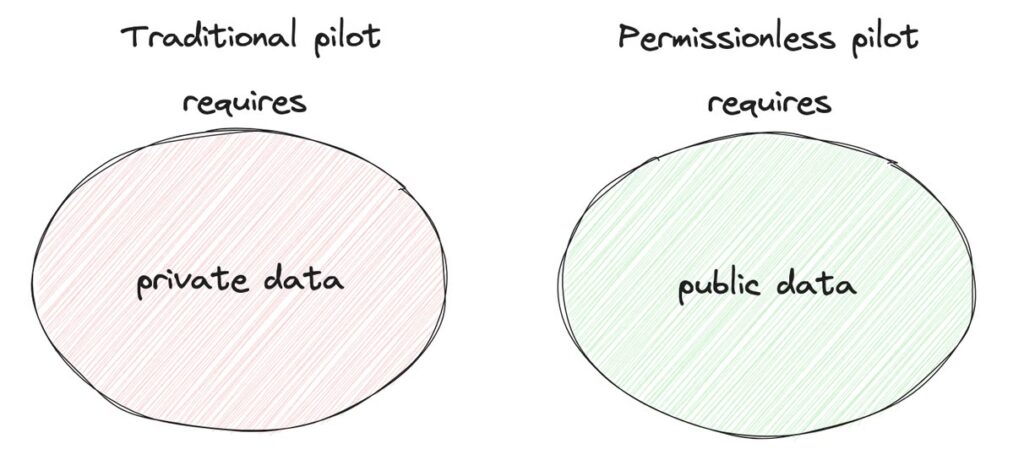
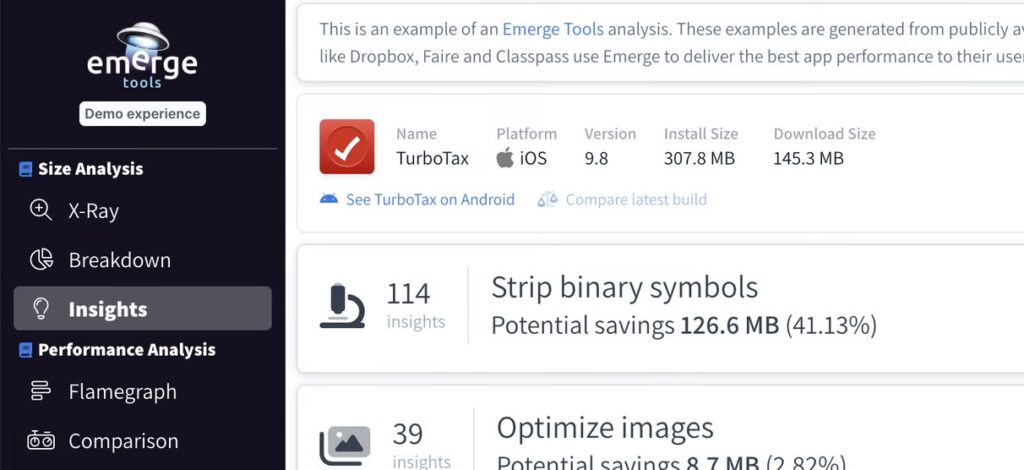
Understanding how permissionless pilots contributed to this success is key. While Emerge’s full product integrates deeply into a mobile engineering team’s development workflow, this integration process can involve numerous stakeholders and lead to extended sales cycles. To shorten the time-to-wow, the Emerge team developed a system capable of providing instant analysis demonstrations for any prospect by reverse-engineering the publicly available versions of native mobile apps. This innovative approach allows Emerge to demonstrate its product’s value by simply looking up an app by its name, eliminating the need for any integration prior to the initial demonstration.
For instance, Emerge provides an example showcasing the latest TurboTax iOS app. Their automated insights identified potential optimizations that could reduce the app’s size by over 40%. Crucially, at no point during the generation of this public TurboTax demo did Intuit, the $136 billion company that owns TurboTax, need to share proprietary data, negotiate contracts, or invest in building internal political capital to consider a new vendor.
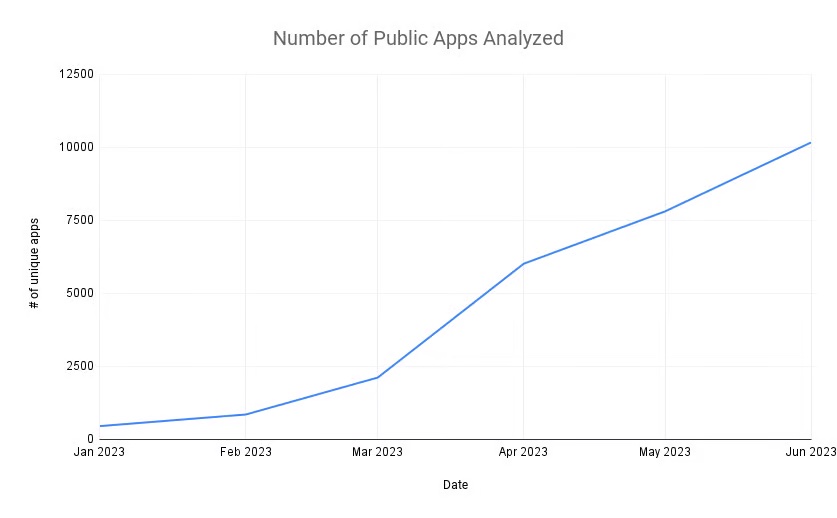
Early in 2023, Emerge began automating its analysis of thousands of apps on a regular basis, creating dedicated web pages for each. This initiative saw them scale from analyzing approximately 500 apps at the beginning of the year to over 10,000 public apps on a consistent cadence. This proactive analysis allows Emerge to generate original content, including blog posts, in-depth articles, and engaging social media threads. Because each app analysis resides on a unique, public URL, these miniature pilots become shareable artifacts that prospects readily examine and often distribute internally among colleagues. Since the start of the year, this engagement strategy has resulted in a 400% surge in Twitter followers, a significant increase in organic search clicks, and heightened impressions.

The substantial enterprise contracts followed not as a result of a fleeting marketing tactic, but because the target customer persona—mobile developers—could rapidly access specific insights directly pertaining to their own applications and immediately implement the recommended optimizations. For the vast majority of these developers, this hands-on, immediate experience is demonstrably more valuable than engaging in traditional sales conversations.
Exploring New Horizons: The Broad Applicability of Permissionless Pilots
The potential applications of permissionless pilots extend far beyond the mobile app optimization space. The underlying framework can be adapted across numerous industries by identifying relevant public data sources and developing compelling demonstration experiences.
Consider the Search Engine Optimization (SEO) industry. Companies could offer insights into a prospect’s current SEO implementation based on publicly available Google search data, similar to the approach taken by platforms like Conductor. This would allow potential clients to see actionable recommendations for improving their search engine rankings without sharing sensitive website analytics.
In the realm of e-commerce optimization, a product could cross-reference millions of online listings to suggest conversion-driving improvements for copy, imagery, video content, and pricing strategies. A platform like Salsify, a former Matrix portfolio company, has explored this avenue, demonstrating how permissionless pilots can be instrumental in this sector. Prospects could preview how their product listings might perform better based on data from successful competitors.
The cybersecurity sector also presents fertile ground. White-hat vulnerability and threat detection scanning services, akin to those offered by HackerOne, could be powered by analyzing publicly accessible web applications. This would allow security teams to identify potential weaknesses in their online presence without needing to grant external access to their internal systems.
For hedge funds and financial institutions, forensic intelligence tools could analyze publicly available SEC filings to detect potential fraud or earnings quality issues. Companies like Bedrock AI, which focuses on extracting insights from complex legal and financial documents, could leverage this approach to offer immediate analyses of publicly traded companies’ filings, highlighting areas of concern or opportunity.
In web-based marketing, platforms like Mutiny already allow prospects to visualize how their software can personalize landing pages for different audience segments without requiring account creation or access to proprietary website data. This immediate visualization of personalization benefits can be a powerful catalyst for engagement.
Beyond these specific examples, the world of public data is vast. From GitHub’s open-source repositories and rental listing platforms to YouTube video metadata and publicly posted job descriptions, opportunities abound. To begin identifying potential applications, one can start by listing all publicly available data sources relevant to their product or industry. The next step is to ask: "What valuable or intriguing demonstration could my product offer if it could only access these public data sources, without any proprietary customer data?" The aim is to conceptualize a demo that achieves something demonstrably "cool"—an adjective that often resonates with product builders when envisioning such capabilities. This "cool factor" serves as an excellent starting point, even if the initial iteration isn’t a fully polished, billable service.
In conclusion, permissionless pilots represent a potent strategic tool for accelerating enterprise sales cycles. It is imperative, however, to deploy these pilots in a manner that consistently builds and reinforces brand reputation. Careful consideration should be given to the tone and overall impression intended for prospects when they engage with these demonstrations. By thoughtfully integrating this innovative approach, companies can unlock new levels of efficiency and effectiveness in their sales processes, fostering deeper customer engagement and driving faster revenue growth.
Related posts: