ChartMogul Releases Comprehensive Operator Playbooks and Presentation Decks from Global Product-Led Growth Lab Series

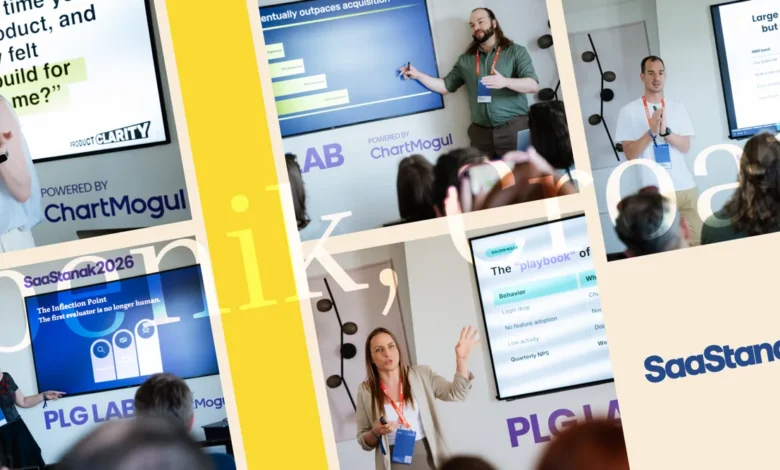
The modern Software-as-a-Service landscape is experiencing a fundamental structural shift away from traditional, enterprise-heavy sales models toward complex, opinionated Product-Led Growth (PLG) strategies. Rather than relying on massive pools of capital, armies of enterprise account executives, and lengthy six-figure contract negotiations, many of today’s most ambitious SaaS organizations are scaling through efficient, self-serve digital products. However, as these companies mature, founders and operators frequently find themselves grappling with the intricate operational challenges of PLG complexity. To address these hurdles head-on, ChartMogul Chief Revenue Officer Sara Archer spearheaded the launch of the Product-Led Growth Lab series, an intimate, city-based meetup initiative designed to dissect the messy, real-world mechanics of building and scaling hybrid go-to-market engines. Following high-attendance events in San Francisco and along the Croatian coast, ChartMogul has officially published a comprehensive digital repository containing executive presentations, operator frameworks, and data-driven insights from the entire speaker lineup.
Background Context of the PLG Lab Series and Global Itinerary
The inception of the Product-Led Growth Lab series stemmed from years of recurring conversations between ChartMogul leadership and early-stage SaaS founders navigating the operational weeds of business expansion. Industry stakeholders routinely cited systemic friction points, ranging from broken automation workflows and misaligned hybrid go-to-market compensation plans to activation pathways that look pristine on internal dashboards but deteriorate rapidly when exposed to real-world user behavior.
To tackle these challenges without corporate posturing, ChartMogul curated a series of focused, discussion-driven meetups. The inaugural event was hosted in San Francisco during the bustling week of Stripe Sessions. Brenna Loury, Chief Revenue Officer of productivity software giant Doist, delivered a candid keynote addressing the multifaceted strategic and cultural challenges of moving upmarket within a natively PLG business framework. The session generated such intense audience engagement that discussions spilled organically over the conference room threshold, continuing onto a nearby rooftop where attendees debated hybrid pricing models, user retention signals, and scaling bottlenecks over refreshments.
Building on the momentum in California, the PLG Lab series crossed the Atlantic for a strategic partnership with SaaStanak, a prominent regional technology conference. Over two intensive afternoons overlooking the Mediterranean Sea, industry operators gathered for standing-room-only sessions despite severe regional heat waves. Participants engaged in rigorous Q&A exchanges, dissected shared operational failures, and forged cross-company alliances. Recognizing the high density of actionable, operator-level knowledge shared during these sessions, ChartMogul committed to documenting and publishing the complete curriculum to ensure accessibility for the broader global SaaS community.
Core Presentations and Strategic Frameworks
The newly released archive spans eight distinct masterclasses and workshops, each targeting a specific operational bottleneck within modern software scaling. The presentations incorporate proprietary dataset analysis, behavioral psychology frameworks, and structural systems design.
The Expansion Engine: Architecting a Scalable PLG Stack for Automated Upsells
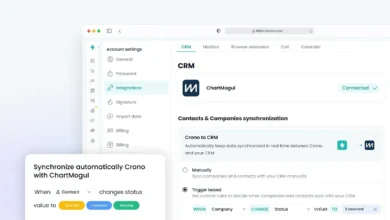
Led by industry infrastructure experts, this session reframed the traditional view of software expansion as a purely sales-driven execution task. Historically, companies have treated upselling as a manual challenge of timing emails and structuring discounts. However, the presentation demonstrated that scalable expansion is fundamentally an infrastructure and data architecture problem. When unified behavioral and usage data streams flow seamlessly into automated customer workflows, upselling mechanisms become naturally contextual, hyper-relevant, and systematically repeatable.
When Automations Guess Wrong: Behavior Shows What Happened, Users Tell You Why
Focusing on the limitations of modern marketing automation platforms, this session addressed the common phenomenon where lifecycle messaging technically functions from a technical standpoint yet feels transactional and generic to the recipient. The core takeaway emphasized that while product analytics data reveals explicit user behavior patterns—highlighting what transpired within the platform—it fails to explain underlying motivations. Operators were advised to pair quantitative tracking with qualitative user feedback loops to determine precise product and lifecycle adjustments.
From Traditional SaaS to AI-Native in 5 Days: Three Case Studies
This operational workshop democratized the industry buzzword "AI-native," transforming it from an ambiguous marketing strategy into a pragmatic engineering and product exercise. The presenters outlined a repeatable framework for legacy software platforms: identify the primary valuable outcome desired by the user, eliminate unnecessary operational overhead, preserve the critical interaction that fosters institutional trust, and architect the user experience backward from that foundation. The session provided teams with concrete evaluative prompts, such as determining what actions a product can execute proactively before forcing a user through a steep learning curve.
LTV Has a Blind Spot: Findings from 3,700 SaaS Businesses Over Six Years
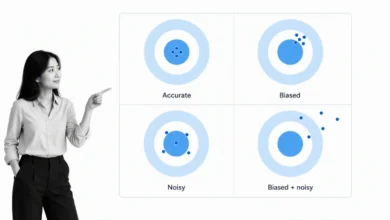
Drawing upon newly released proprietary data compiled by ChartMogul’s internal insights division over a six-year period, this presentation examined the structural vulnerabilities of Lifetime Value (LTV) calculations. While LTV remains a vital metric for determining customer acquisition costs (CAC), payback periods, and segment-specific capital allocation, the data proves that standard formulas frequently break down when confronted with modern, non-linear expansion and churn behaviors. Operators were urged to cross-reference theoretical LTV projections against actual empirical customer monetization trajectories.
People-Led Growth: Fixing Your Product’s First Impression and Path to Activation
Shifting focus toward user onboarding psychology, this presentation challenged the conventional software strategy of treating initial user setup as a static, "set-and-forget" marketing funnel. Led by Paulina [Last Name], the session introduced a continuous audit framework encouraging product teams to evaluate the activation journey strictly through the end user’s perspective. By regularly identifying precise points where trust degrades or momentum halts, companies can isolate and resolve the micro-friction points that accelerate time-to-value.
Invisible PLG: Preparing Software for Autonomous AI Agents
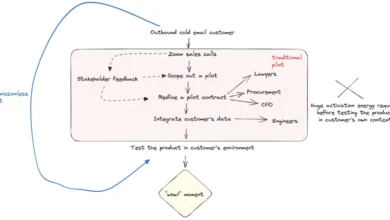
Looking toward the future of enterprise software procurement, this forward-looking session established a critical diagnostic test for software architects: could an autonomous AI agent independently discover, evaluate, test, price, and integrate your software product without human intervention? The findings suggest that as procurement shifts toward autonomous digital agents, software platforms that rely exclusively on human-facing interfaces risk becoming entirely invisible to the algorithmic systems governing modern enterprise software discovery.
From $1M to $20M ARR: Growth Levers and New Signals for Success
Designed as an intensive scaling workshop, this session dismantled the elusive pursuit of a single growth "silver bullet" for mid-stage startups. Instead, the curriculum modeled ARR growth as the result of compounding operational improvements across Average Revenue Per Account (ARPA), net revenue retention, expansion velocity, and strategic focus. These metrics must be supported by rigorous leadership execution standards to prevent organizational drift during rapid scaling phases.
Where PLG Meets Sales: Building a Hybrid Growth Engine in Practice
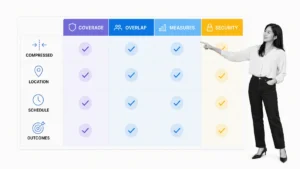
Addressing the organizational friction inherent in hybrid go-to-market strategies, this presentation underscored that combining self-serve funnels with direct sales outreach requires deep structural alignment. Effective hybrid models extend far beyond merely bolting a sales team onto a product-led acquisition funnel; they demand precise account routing protocols, clearly defined revenue ownership boundaries, balanced incentive compensation structures, and adaptable product parameters that accommodate diverse buyer personas.
The Launch to Adoption Gap: Why Fast Shipping Doesn’t Equal Product Growth
Addressing a pervasive pain point in modern product marketing, Natalija [Last Name] analyzed the phenomenon of software development velocity outpacing human absorption capacity. The session redefined product marketing from a reactive engine of feature announcements into a proactive discipline centered on adoption design. In an era where development teams deploy updates continuously, competitive advantage belongs to organizations capable of segmenting market attention, targeting precise user segments, and translating software releases into permanent behavioral changes.
Industry Implications and the Future of Product-Led Growth
The release of the PLG Lab archive underscores a broader maturation phase across the global technology sector. Industry analysts observe that Product-Led Growth is no longer defined merely by the deliberate removal of sales representatives from the initial purchasing journey. Rather, contemporary PLG has evolved into a highly technical, multidisciplinary orchestration of data pipelines, behavioral psychology, automated infrastructure, hybrid go-to-market design, and agent-readable architecture.
As software markets become increasingly saturated, the operational margin for error narrows significantly. Organizations that successfully bridge the gap between automated systems and human-centric product value will likely capture outsized market share. By open-sourcing these rigorous operator frameworks, ChartMogul’s PLG Lab initiative provides foundational infrastructure for the next generation of global SaaS enterprises seeking sustainable, data-backed expansion.