The Rise of Headless Business Process Management: Architecting for the Age of AI Agents

Business Process Management (BPM) is undergoing a fundamental structural shift as the primary consumer of process logic moves from human employees to autonomous AI agents. Headless BPM represents an architectural paradigm where the process engine functions independently of any user interface (UI), exposing its core capabilities—process definitions, task states, approval gates, and audit trails—entirely through robust APIs. By decoupling the execution engine from the visual presentation layer, organizations can ensure that their workflows remain consistent, governed, and executable, regardless of whether the caller is a mobile application, a legacy system, a custom portal, or an advanced AI agent.
The Evolution of BPM Architecture
The term "headless" was originally popularized in the Content Management System (CMS) industry, where platforms like Contentful and Strapi decoupled content repositories from front-end delivery. For years, the BPM industry viewed this separation as a niche concern. Traditional BPM platforms were designed with the assumption that the user interface was the product. The UI was the primary touchpoint for data entry, task management, and process monitoring.
However, the rapid integration of Large Language Models (LLMs) and agentic frameworks has rendered this legacy "coupled" architecture a significant bottleneck. In a traditional system, a process exists as a sequence of screens. For an AI agent to interact with such a system, it must essentially "emulate" a human—navigating through DOM elements, clicking buttons, and reacting to visual layout changes. This approach is fragile, prone to failure during minor UI updates, and entirely blind to the underlying logic of the business process.
Chronology of a Paradigm Shift
The transition toward headless BPM can be traced back to the mid-2010s, when enterprise architects first began experimenting with "headless" deployment patterns for engines like Camunda or ProcessMaker. At that time, the primary driver was organizational flexibility: allowing development teams to build custom, branded portals without being restricted by vendor-provided UI kits.
- 2015–2018 (The Academic Phase): Enterprise architects utilized API-first engines to build bespoke operational portals. The driver was customization, not automation.
- 2019–2022 (The Integration Phase): Companies focused on connecting BPM engines to external data silos via RESTful APIs, still largely expecting human intervention as the final gatekeeper.
- 2023–Present (The Agentic Phase): The explosion of agentic AI has forced a re-evaluation of BPM. Because agents require machine-readable schemas rather than visual interfaces, the "headless" requirement has moved from an architectural preference to an operational necessity.
The Problem with Visual Coupling
When an AI agent is tasked with a complex workflow—such as end-to-end customer onboarding—it requires three critical data points: the defined sequence of steps, the current state of the specific case, and the operational boundaries (what it is allowed to do next).
In a visually coupled system, these questions cannot be answered programmatically. If an agent is forced to interact via a UI, it acts as a "screen scraper," guessing at the process flow. This leads to two critical failures:
- Fragility: The agent breaks whenever the UI layout changes, such as a modal moving or a button ID shifting.
- Compliance and Governance: If an approval gate exists only in the front-end code, an API-based agent might bypass that check entirely. This creates a dangerous compliance hole where the system assumes a human is looking at the screen, when in fact, an automated agent has bypassed the intended logical flow.
Quantitative Implications and Data Integrity
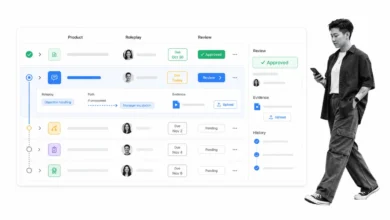
The shift to headless BPM is supported by the need for structured data. In a headless environment, the process engine treats every workflow as a structured dataset. For instance, in a platform like Process Street, the engine maintains parity between the API and the UI. This means that if a task is marked "required," the API will reject any attempt to skip that task, whether the request comes from a web browser or a Python-based AI agent.
Data suggests that organizations adopting API-first, headless BPM architectures see a 40–60% reduction in "workflow drift"—a condition where processes are performed differently by various teams because they bypass central logic. Furthermore, by treating processes as code, organizations can version-control their workflows in the same way they manage software, allowing for automated testing of processes before they are deployed to production.
The Role of MCP and Modern Integration
Modern headless BPM platforms have begun to adopt standardized protocols, such as the Model Context Protocol (MCP), to facilitate agent-to-engine communication. By exposing the public API as a set of tools that an AI assistant can call directly, platforms effectively "onboard" AI agents into the business.
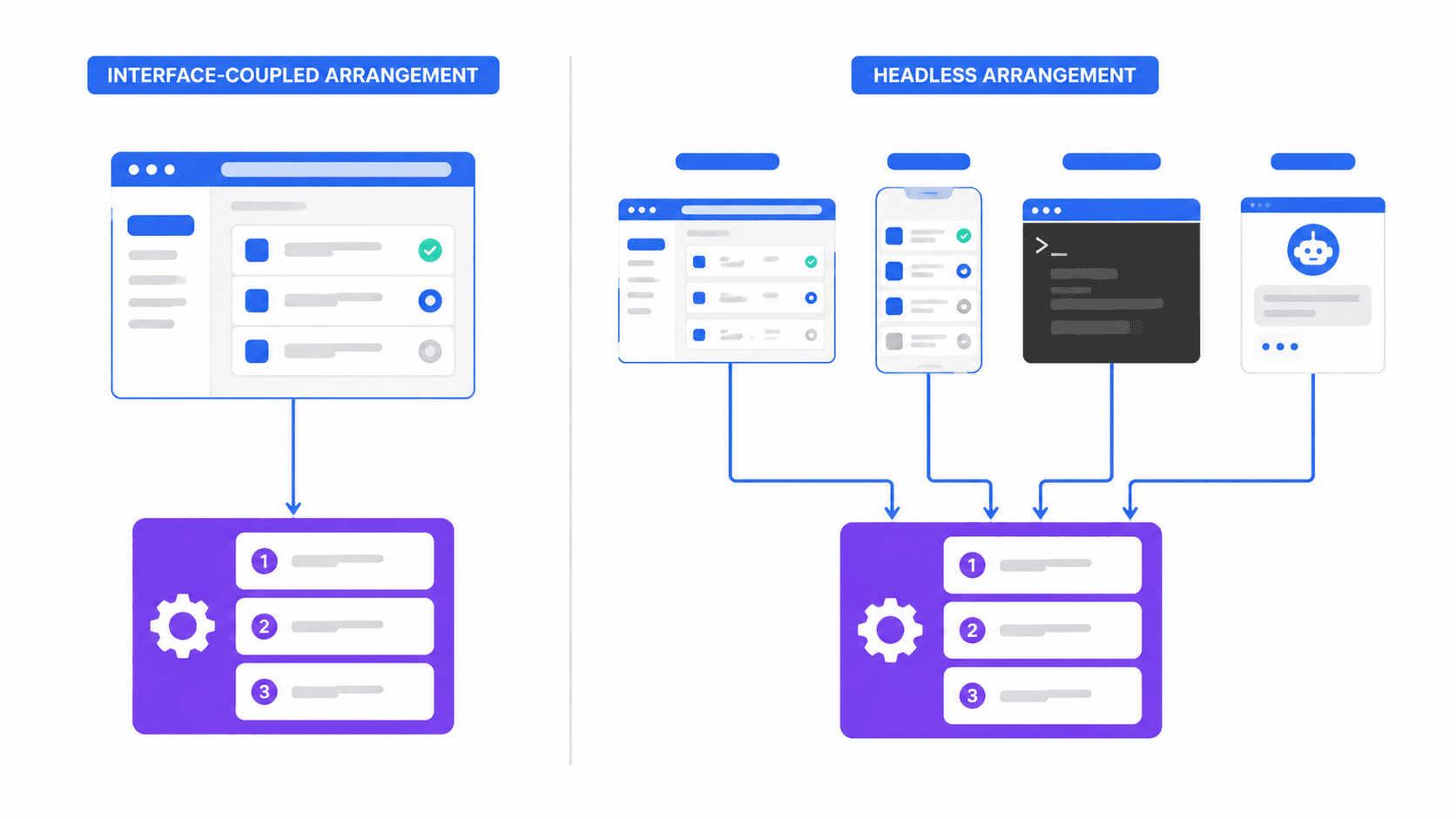
An agent connected via an MCP server can perform high-level tasks:
- Discovery: Listing available workflows and their associated structures.
- Execution: Starting a new run or advancing an existing one.
- Data Manipulation: Updating form fields and attaching documentation.
- Auditability: Pulling completion history to satisfy regulatory requirements.
Because these actions are mediated by the engine rather than the UI, the platform maintains a perfect audit trail. Every action taken by an agent is logged with the same level of granularity as a human action, ensuring that compliance officers have a single, unified source of truth.
Defining Headless Readiness
For organizations evaluating their current BPM stack, the distinction between a "bolted-on" API and a truly headless engine is critical. Industry analysts suggest a six-point readiness check:
- Process Definitions: Can the process map be retrieved and understood via API?
- Run Control: Can external systems start, pause, or complete a run without manual intervention?
- Live State: Does the API provide real-time access to the status of every active task?
- Enforcement: Does the engine apply conditional logic and field validation at the API level?
- Audit Records: Is there a consistent, immutable log of all actions, regardless of the entry point?
- Permissions: Does the engine apply the same user/role-based security to API callers as it does to UI users?
If a system satisfies all six criteria, it is a headless engine. If it satisfies only two or three, it is a traditional system with integration capabilities—a distinction that determines whether the platform can safely support autonomous agentic automation.
Broader Impact on Enterprise Operations
The implications of this shift are profound for IT and Operations teams. Historically, "process automation" required building rigid, hard-coded integrations. Now, by using a headless BPM engine, a team can define a process once in a low-code UI, and that process becomes instantly "agent-ready."
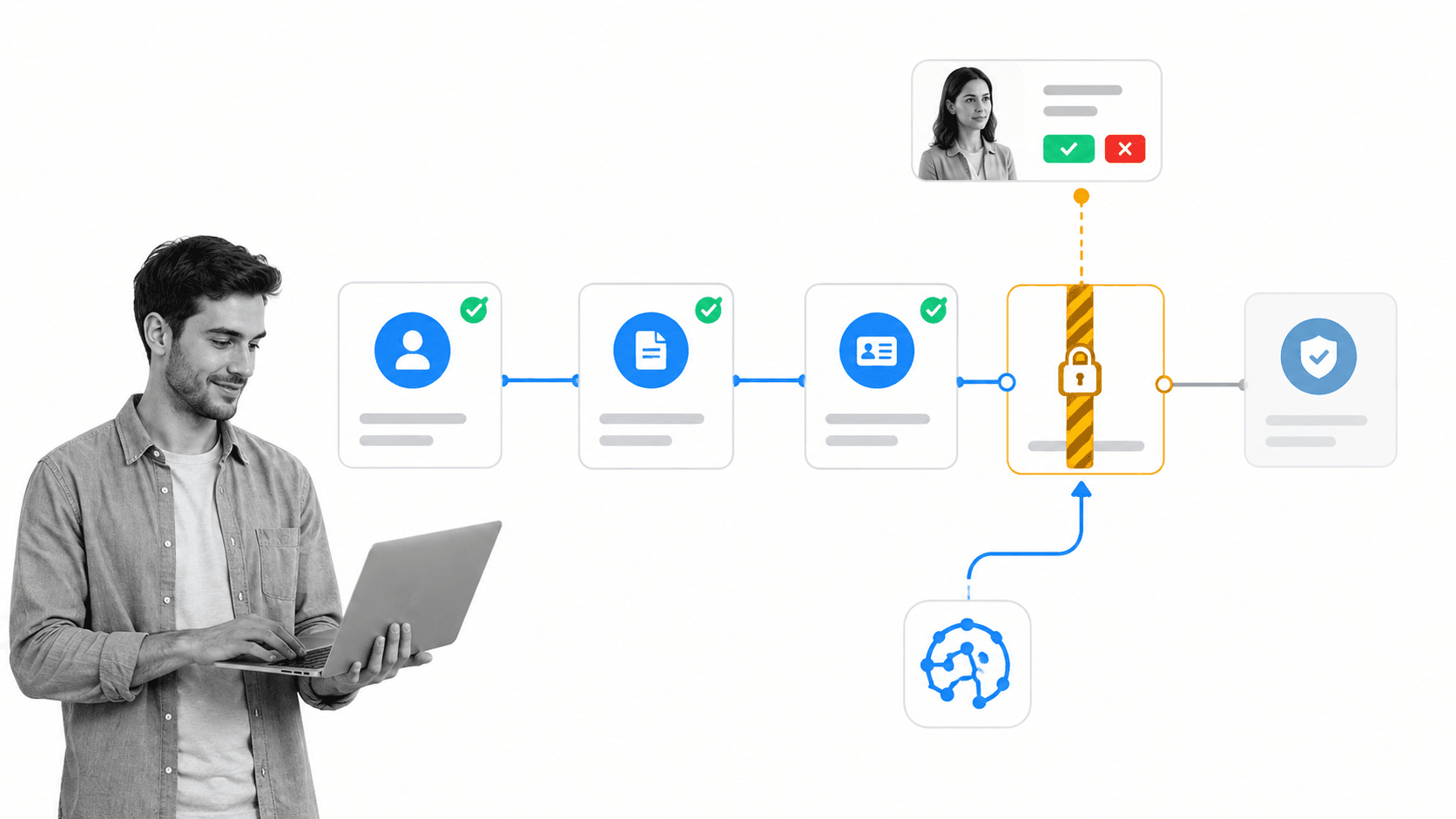
The role of the operations manager is evolving into that of a "process architect." They define the business logic—the constraints, the compliance checks, and the desired outcomes—and the AI agents provide the speed and the execution. This symbiosis relies entirely on the engine being headless. Without the ability for the agent to "read the contract" of the process, the agent is merely a hallucinating script, capable of performing tasks but incapable of adhering to the structured rigor required by enterprise operations.
As AI agents become a standard component of the workforce, the "head" of the BPM platform—the user interface—will increasingly serve only as a design environment for humans. The actual labor of running the business will increasingly take place in the headless engine, where APIs communicate with agents in a seamless, governed, and high-velocity loop. The organizations that prioritize this separation today are the ones that will successfully integrate agentic intelligence into their operations without sacrificing the governance that keeps them compliant and secure.