In the high-stakes environment of commercial and residential construction, general contractors face a constant battle to safeguard their profit margins against volatile material costs, labor shortages, and shifting project timelines. Ensuring that an ongoing build progresses precisely as scheduled and within budget requires meticulous financial oversight. Among the array of instruments available to construction accountants and project managers, the Work in Progress (WIP) report stands out as an indispensable cornerstone for tracking financial health, monitoring budgetary constraints, and forecasting final project outcomes long before construction concludes.
Understanding the Mechanics of Work in Progress in Construction
Work in progress is a specialized accounting methodology that evaluates the true financial value of construction labor, materials, and overhead that have been successfully deployed and completed on a job site, but which have not yet been formally billed to the client. Within the construction industry, WIP is exceptionally critical because project lifecycles often span many months or even years. During this prolonged period, unexpected delays, supply chain disruptions, and fluctuating labor productivity can severely distort a contractor’s perception of actual profitability.

By systematically calculating the percentage of physical completion against financial expenditures, general contractors gain an immediate, data-driven window into whether a project is generating revenue or draining resources. For example, if a WIP report indicates that a multi-story commercial building is precisely fifty percent complete, yet seventy-five percent of the total allocated budget has already been exhausted, stakeholders are immediately alerted to an impending cost overrun. Armed with this critical foresight while the project is still actively underway, project executives can implement corrective measures—such as renegotiating supplier contracts, optimizing labor allocation, or adjusting project scopes—to protect their bottom line.
Defining the WIP Report and Its Essential Financial Functions
A WIP report is a comprehensive financial document utilized by contractors, project managers, and financial controllers to closely monitor project costs relative to total contract values. Beyond serving as an internal compass for budget adherence, this financial instrument is frequently requested by commercial lenders, bonding companies, and financial institutions to assess the overall stability and operational capacity of a construction firm. One of the most vital functions of a WIP report is its ability to track two opposing yet common accounting phenomena: overbilling and underbilling.
Overbilling occurs when a contractor collects more revenue from a client for work completed than has actually been earned up to that specific date. While overbilling can temporarily boost a company’s cash flow and provide a financial cushion, it must be carefully managed to avoid future liabilities. Conversely, underbilling happens when contractors perform work, incur labor and material expenses, but bill the client for less than the earned value. Underbilling directly harms near-term cash flow, creating liquidity pressures that can stall ongoing operations across other active job sites. Regular analysis of WIP data ensures that billing schedules remain harmonized with actual physical progress on the ground.
Chronology and Frequency: When and How Often to Generate WIP Reports
Establishing a disciplined schedule for generating and reviewing WIP reports is vital for modern construction management. Typically, the process begins during the pre-construction and bidding phase, where initial estimates establish the baseline financial requirements of the contract. However, relying on a static, one-time assessment is a perilous strategy in a fast-moving industry where site conditions change daily.
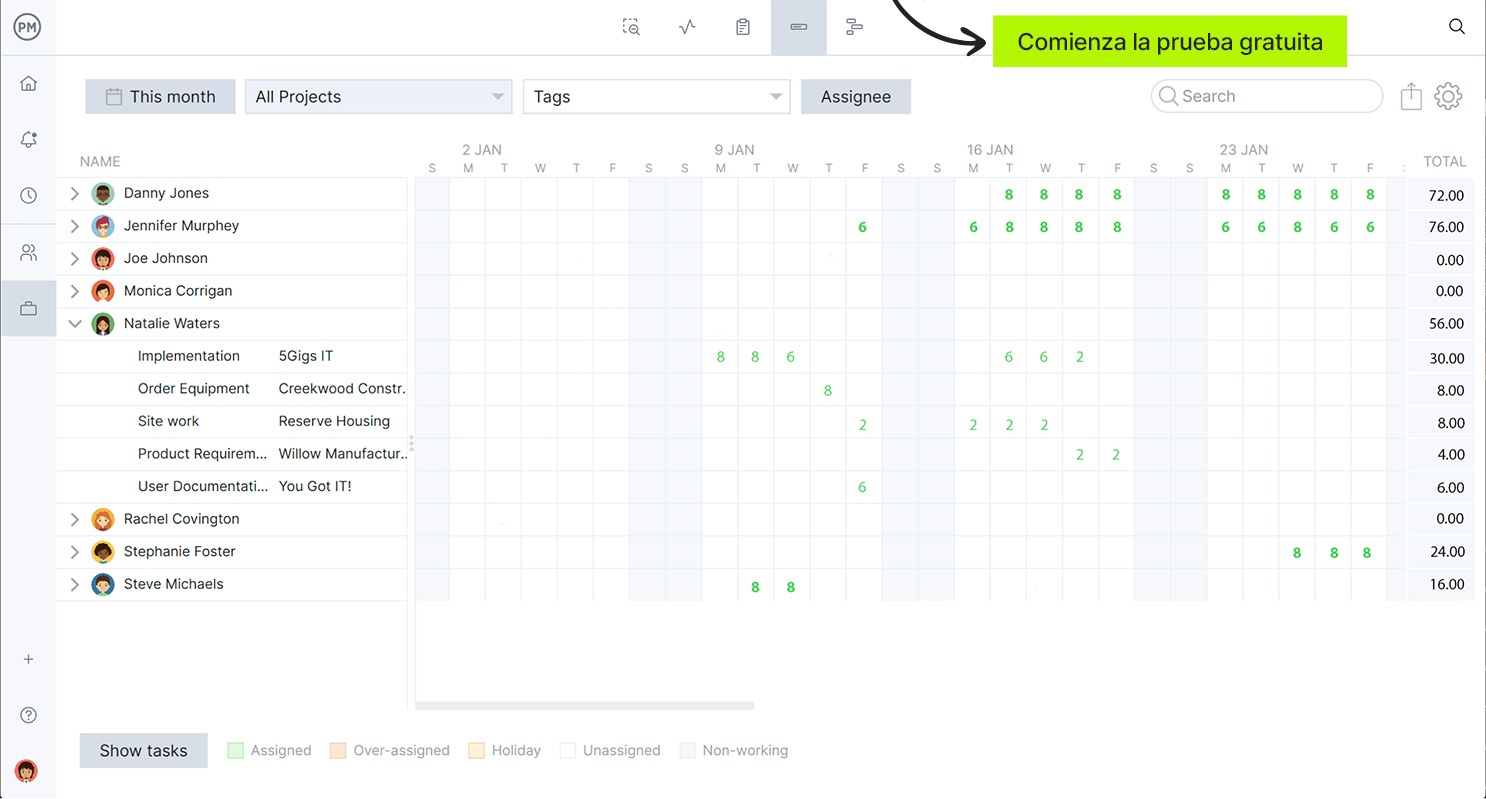
Industry best practices dictate that WIP reports should be updated and analyzed at the close of every financial reporting period, usually monthly. This regular cadence allows project teams to catch minor variances before they compound into catastrophic budget failures. To maintain this level of fiscal vigilance, many modern construction firms have transitioned away from manual spreadsheets and toward integrated project management software. Platforms such as ProjectManager offer advanced time-tracking capabilities, secure digital timesheets, and real-time labor cost visibility. By empowering field crews to log hours directly from the job site, general contractors ensure that their WIP calculations are always fueled by the most current, accurate labor data available.
Core Components of an Effective Construction WIP Report
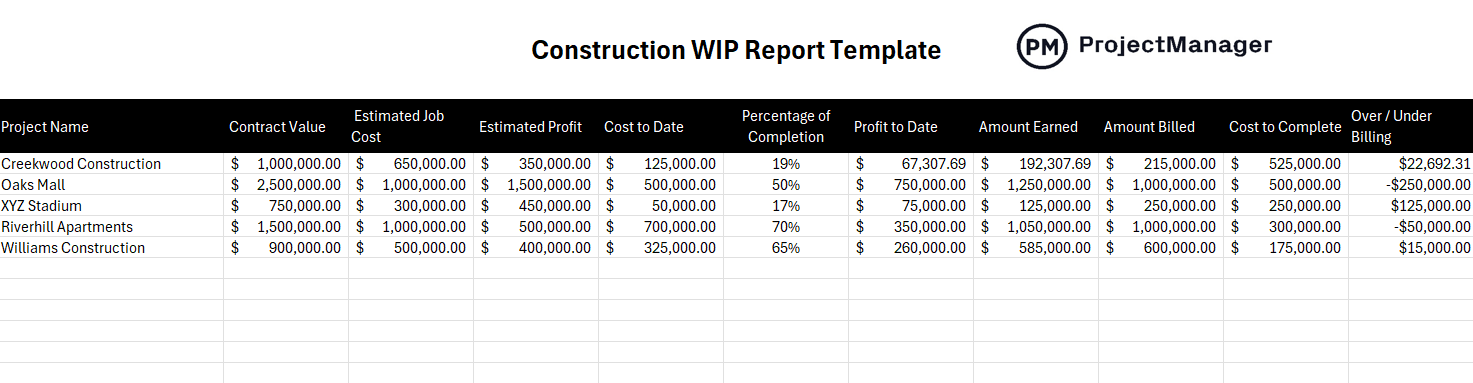
To deliver accurate financial transparency, a well-structured WIP report must incorporate several mandatory data points. While specific layouts can vary depending on company size and accounting preferences, a robust WIP report generally includes:
- Contract Number and Project Name: Clear identification of each distinct job within the contractor’s portfolio.
- Estimated Total Contract Price: The finalized, agreed-upon revenue value of the construction project, including approved change orders.
- Revised Budgeted Costs: The most up-to-date projection of total expenses required to complete the build.
- Costs Incurred to Date: Actual expenditures, including labor, materials, and subcontractor fees, spent from project inception up to the current reporting period.
- Percentage of Completion: Calculated mathematically by dividing costs incurred to date by the total estimated costs.
- Earned Revenue: The total revenue the contractor is legally entitled to recognize based on the current percentage of completion.
- Billed-to-Date: The actual cumulative amount invoiced to the client so far.
- Overbilling and Underbilling Balances: The comparative financial variance indicating whether the project is ahead of or behind its billing schedule.
The Broader Industry Benefits of Implementing WIP Reporting
The implementation of rigorous WIP reporting yields wide-ranging operational and strategic advantages for general contractors navigating today’s competitive landscape. Foremost among these benefits is absolute financial accuracy. By standardizing the tracking of revenues and expenditures, firms can adhere strictly to modern accounting standards, such as percentage-of-completion revenue recognition, resulting in cleaner balance sheets and more reliable tax filings.
Furthermore, WIP reports significantly enhance risk management. Construction projects are uniquely vulnerable to external macroeconomic pressures, including sudden tariffs on building materials, severe weather events, and localized labor strikes. Periodic financial evaluations powered by WIP data allow executives to spot emerging risks—such as creeping scope changes, escalating material expenses, and chronic schedule delays—long before they threaten corporate solvency. This transparency also extends outward, satisfying external stakeholders, investors, and sureties who demand clear, verifiable proof of a contractor’s financial responsibility and operational competence.
Transitioning from Static Spreadsheets to Dynamic Software Solutions
While downloadable templates and spreadsheet applications provide a helpful starting point for emerging construction firms, scaling businesses quickly discover their limitations. Static documents require manual data entry, creating operational silos and increasing the likelihood of human error. To maintain a competitive edge, successful contractors increasingly integrate their accounting workflows with dynamic, cloud-based project management ecosystems.
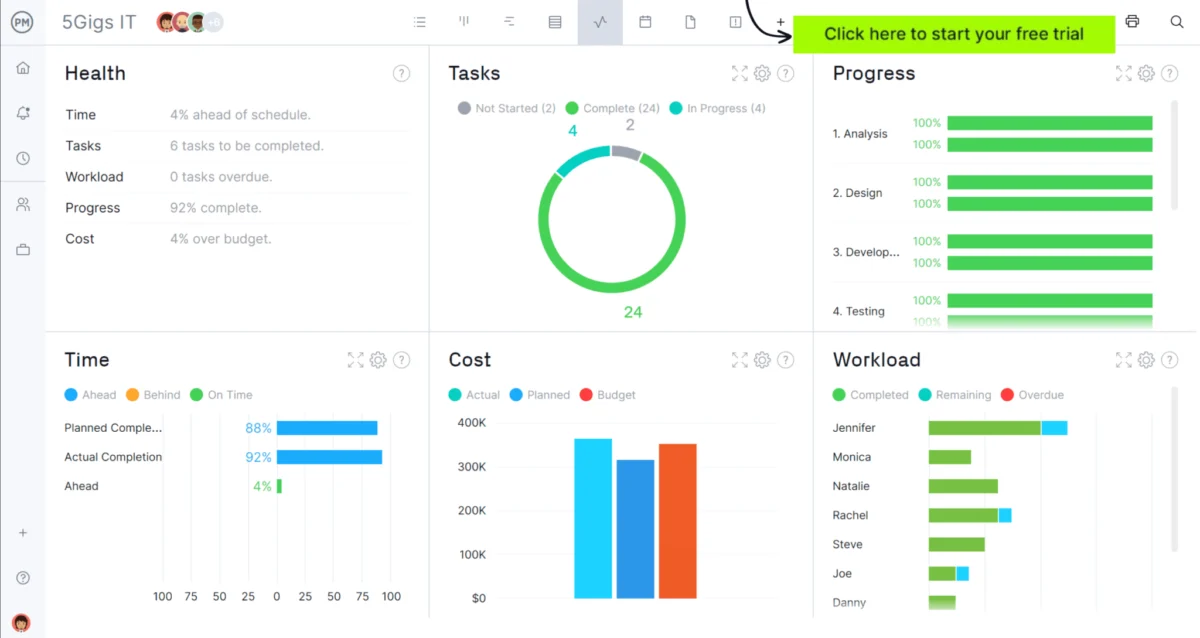
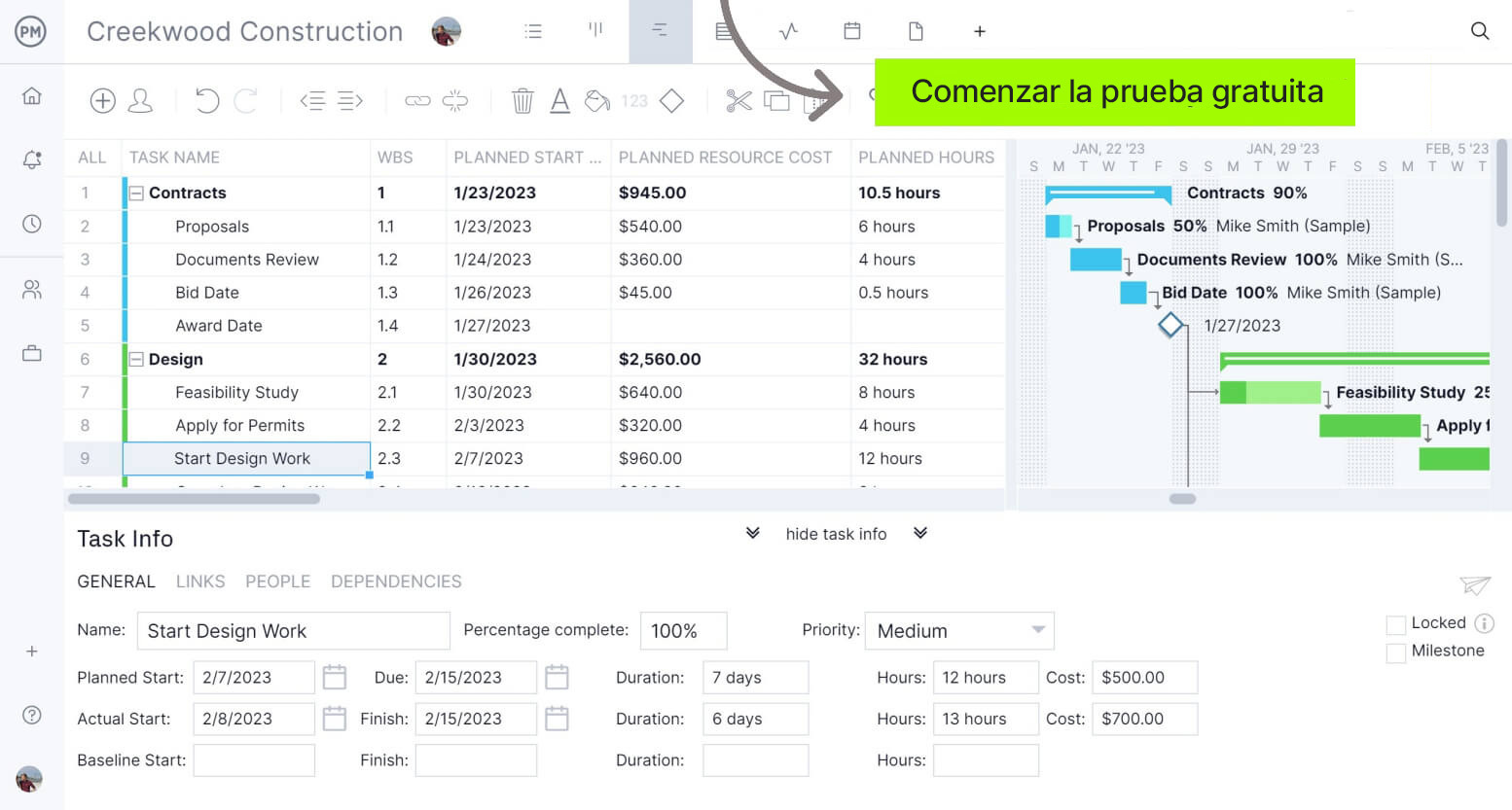
Advanced software solutions allow contractors to establish robust project schedules using interactive Gantt charts, linking task dependencies, and defining critical paths to prevent costly bottlenecks. Furthermore, real-time executive dashboards automatically aggregate live data from the field, translating complex labor hours, material expenditures, and resource allocations into easily digestible visual charts. This continuous stream of live data ensures that general contractors are never operating in the dark, enabling them to make swift, informed decisions that protect profit margins, satisfy clients, and ensure the long-term viability of their construction enterprises.