Arm launches AI Portal to streamline model deployment and optimization across the global compute ecosystem

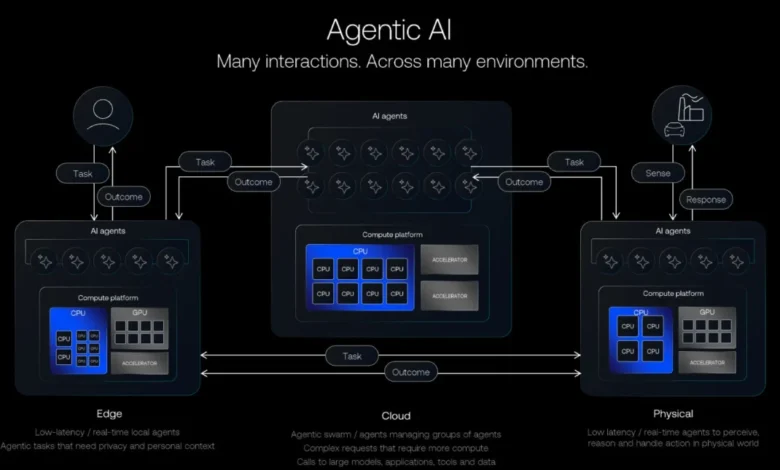
Arm has officially unveiled the Arm AI Portal, a comprehensive digital platform engineered to serve as the definitive clearinghouse for developers and autonomous AI agents tasked with discovering, optimizing, and deploying machine learning software across the vast Arm compute landscape. By centralizing access to pre-optimized models, granular performance telemetry, and streamlined deployment workflows, the platform addresses one of the most persistent bottlenecks in modern software engineering: the friction associated with transitioning AI applications from the laboratory to production environments.
The launch marks a significant shift in Arm’s strategic trajectory, moving beyond its traditional role as a silicon IP provider toward becoming a foundational software enablement partner. As artificial intelligence workloads migrate aggressively from centralized cloud infrastructure to the power-constrained environment of the "intelligent edge"—ranging from consumer smartphones and robotics to industrial sensors—the complexity of ensuring high-fidelity performance across heterogeneous hardware has surged. The Arm AI Portal is designed to dissolve these barriers, providing a unified interface that makes the entire Arm software ecosystem machine-discoverable and architecturally compatible.
The Growing Complexity of Edge AI Deployment
The proliferation of artificial intelligence has created an unprecedented fragmentation in the developer experience. Historically, software engineers have been forced to navigate a labyrinthine process of manual model selection, exhaustive benchmark testing, and iterative optimization tailored to specific instruction sets or neural acceleration hardware. This manual overhead is not merely a drain on human productivity; it represents a significant barrier to the scalability of AI agents.
As autonomous coding agents become increasingly prevalent in software development pipelines, they require more than just raw code; they require structured, machine-readable data signals. These agents must be able to verify model compatibility, interpret hardware-specific power constraints, and execute performance simulations without human intervention. The Arm AI Portal responds to this requirement by surfacing technical workflows as structured, discoverable assets. By integrating with the Model Context Protocol (MCP), Arm is enabling these agents to query its ecosystem for the most efficient model configurations, effectively bridging the gap between high-level AI concepts and low-level architectural execution.
Chronology of Arm’s Software Evolution
Arm’s journey toward the AI Portal began years ago as the company recognized that its ubiquitous architecture—which powers over 99% of the world’s smartphones and a growing share of the cloud—required a more robust software stack to maintain its competitive edge against x86 and custom-built silicon.
In 2021, Arm intensified its focus on the "Total Compute" strategy, which emphasized the synergy between hardware and software. By 2023, the focus sharpened specifically on AI, with the company releasing a suite of libraries, including the Arm Compute Library and the Arm NN SDK. However, these tools were often siloed, requiring deep domain expertise to integrate effectively.
The announcement of the Arm AI Portal is the culmination of this multi-year effort to consolidate these resources. Throughout 2024, Arm worked with key industry partners—including Alibaba, Raspberry Pi, and Ultralytics—to validate the portal’s workflows. The general availability launch today marks the transition from a closed-beta phase to a public-facing resource, with a roadmap that promises continuous updates to its tooling and model repository throughout the 2025 fiscal year.
Supporting Data and Technical Architecture
The portal provides an unprecedented level of transparency for AI practitioners. Each model entry is accompanied by rigorous performance metrics, including inference latency, memory footprint, power consumption, and overall model size. This data is critical for engineers designing for resource-constrained environments, where a model that performs flawlessly in the cloud may fail to meet the thermal or memory requirements of an edge device.
Supported software runtimes at launch include industry-standard frameworks such as ExecuTorch, LiteRT, and ONNX-RT. This cross-framework compatibility is essential, as it allows developers to leverage existing investments in PyTorch or TensorFlow while ensuring that the underlying execution layer is finely tuned for Arm’s Scalable Vector Extension (SVE) and SME (Scalable Matrix Extension) architectures.

For instance, in the domain of computer vision, the portal offers pre-optimized versions of the Ultralytics YOLO series, which are notoriously demanding on mobile hardware. By utilizing Arm’s proprietary optimization pipelines, these models achieve lower latency on mobile CPUs and NPUs compared to generic implementations. Similarly, large language models such as Alibaba’s Qwen and Google’s Gemma are available in quantized, Arm-ready formats, allowing for efficient execution on cloud-native Neoverse CPUs or mobile-optimized Cortex configurations.
Implications for the Developer Community and Industry
The implications of the Arm AI Portal extend far beyond a simple repository of models. By standardizing the optimization path, Arm is effectively lowering the barrier to entry for developers who are not hardware experts. In the past, achieving peak performance on Arm silicon required deep knowledge of vector instructions and memory access patterns. With the portal, these optimizations are baked into the deployment guide, allowing developers to focus on application-level logic rather than low-level performance tuning.
Furthermore, the integration of custom model optimization tools—scheduled for a staggered rollout—will allow enterprises to bring proprietary models into the Arm ecosystem with confidence. This is particularly relevant for sectors such as automotive, healthcare, and industrial IoT, where models must be trained on sensitive, proprietary data and then deployed on ruggedized hardware. Being able to run a "what-if" analysis on how a specific model will perform on a future Arm-based chip before the hardware is even mass-produced provides a significant competitive advantage in time-to-market.
Perspectives on the Future of AI Interoperability
Industry analysts observe that the Arm AI Portal is a preemptive strike against the fragmentation that threatens to stall the AI rollout. As the industry moves toward "AI-everywhere," the ability to maintain a consistent performance profile across vastly different hardware—from an ultra-low-power microcontroller in a smart thermostat to a high-performance server in a data center—is paramount.
"The challenge is no longer just about model accuracy; it is about deployment efficacy," notes an analyst familiar with the semiconductor ecosystem. "Arm is positioning itself as the ‘common language’ of AI. By providing this portal, they are ensuring that if a developer builds for Arm, they get the best performance possible without needing to be an expert in hardware architecture. This is a crucial step in democratizing AI development."
The collaboration with ecosystem partners such as Raspberry Pi also highlights the portal’s reach into the hobbyist and developer-maker communities. By making sophisticated AI tools accessible on low-cost hardware, Arm is fostering a grassroots movement of innovation that could define the next generation of AI applications.
Looking Ahead: The Roadmap for Agentic Development
The inclusion of the Model Context Protocol (MCP) in the portal’s architecture is perhaps the most forward-looking aspect of the launch. As AI development itself becomes increasingly automated, the portal will serve as the primary "knowledge base" for these systems. Instead of a human developer searching through documentation to find the right quantized model, an AI agent can query the portal’s API, retrieve the performance profile for a specific SoC, and automatically select the most efficient model for that target.
As Arm rolls out the next phase of the portal, which includes advanced custom model optimization tools and expanded support for emerging architectures, the platform is expected to become the central nervous system for the Arm-based AI development lifecycle.
In summary, the Arm AI Portal represents a strategic maturation of the Arm ecosystem. By addressing the fundamental disconnect between high-level AI software and low-level hardware performance, Arm is clearing the path for a new era of efficient, intelligent computing. Whether through the optimization of LLMs on cloud servers or the deployment of computer vision on edge devices, the portal provides the tools necessary to turn theoretical AI models into practical, real-world solutions. Developers can access the portal starting today, with a commitment from Arm to continue expanding its features in the coming months, signaling a long-term dedication to simplifying the complexities of the AI-driven future.
Related posts: