Generative AI Breakthrough Eliminates Quantum Computing Optimization Bottlenecks Through Strategic Research Collaboration

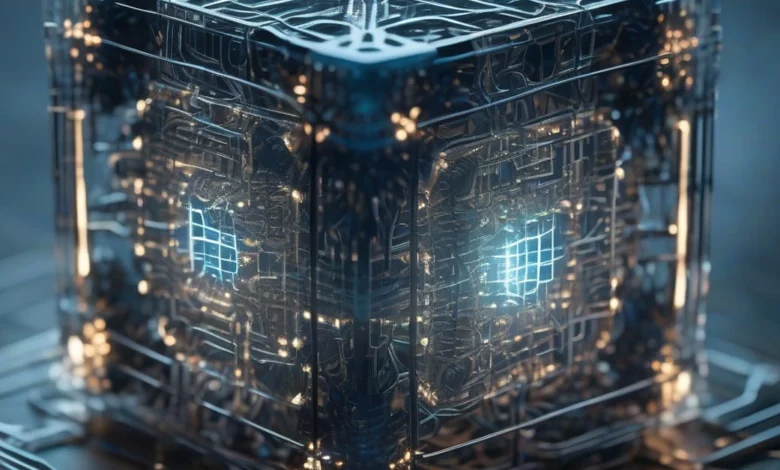
A groundbreaking research collaboration between IonQ, Oak Ridge National Laboratory (ORNL), NVIDIA, and the University of Tennessee has unveiled a transformative generative AI methodology designed to streamline the creation of quantum optimization circuits. By replacing traditional, iterative parameter tuning—a process historically plagued by computational drag—with a predictive AI-driven model, the team has effectively removed a primary barrier to scaling hybrid quantum systems. This advancement, recently recognized with a best paper award at IEEE Quantum Week in Toronto, provides a scalable blueprint for deploying quantum resources against the most daunting industrial and scientific challenges of the next decade.
The Evolution of the Quantum Workflow
Hybrid quantum optimization architectures function by decomposing massive, multi-variable problems into smaller, manageable subproblems. Traditionally, each of these segments requires the design of a bespoke quantum circuit. In legacy workflows, this process has been notoriously inefficient, relying on a "trial-and-error" loop known as Variational Quantum Eigensolver (VQE) tuning. In this paradigm, researchers must execute a circuit, measure the output, and manually adjust internal variables—an iterative cycle that consumes significant time and computational overhead.
As problem complexity increases, the number of decision variables grows, leading to an exponential rise in the time required for optimization. This "tuning tax" has long served as a financial and technical ceiling, often making the cost of quantum-assisted solutions prohibitive compared to classical alternatives. By integrating generative AI, the research team has successfully automated the circuit design phase, allowing the AI to synthesize the necessary logic instructions instantly rather than relying on iterative guesses.
Chronology of the Research Initiative
The project, which originated as a multidisciplinary effort to bridge the gap between theoretical quantum mechanics and practical high-performance computing (HPC), followed a rigorous development cycle.
In the initial phase, the team established a baseline by utilizing manual tuning methods on high-order benchmark problems. This phase confirmed the limitations of existing workflows, documenting a clear trend where circuit generation times ballooned as qubit requirements grew. Following this, the researchers shifted to the training phase, where they utilized a transformer-based architecture—the same underlying technology powering large language models like GPT. Instead of linguistic patterns, however, the model was trained on a curated dataset of high-quality, near-optimal quantum circuits.
By the experimental phase, the model was tested on its ability to predict optimal configurations for new, unseen problems. The researchers implemented a "candidate evaluation" strategy, where the AI generated ten potential circuit designs for each subproblem. These were then evaluated through simulation to determine the most accurate candidate, which was subsequently integrated into the primary problem-solving framework.
Comparative Performance Data and Scalability
The benchmark testing results, conducted using NVIDIA’s cuQuantum SDK and the CUDA-Q platform, provided a stark contrast between traditional methods and the new AI-driven approach. Using a 100-decision-variable benchmark problem, researchers analyzed performance as subproblems scaled from four to 12 qubits.
Under the traditional trial-and-error system, the time required to synthesize a circuit escalated from 34 seconds to over 11 minutes as complexity increased. In stark contrast, the generative AI model maintained a stable processing time of approximately 28 seconds, regardless of the increase in qubit count. This consistency is a vital metric for enterprise-level adoption, where predictable performance is necessary for integration into existing IT infrastructure.
Furthermore, the quality of the solutions improved significantly. The study reported a twofold increase in accuracy for larger subproblems compared to the manual approach. This suggests that the AI does not merely sacrifice quality for speed; rather, it internalizes the complex relationships within quantum data to produce superior, more reliable results than human-led tuning.
Infrastructure and Collaborative Synergy
The project leveraged the Defiant2 system at the Oak Ridge Leadership Computing Facility, utilizing an NVIDIA H200 GPU to handle the heavy lifting of the simulation. The decision to use simulation rather than physical quantum hardware allowed for a controlled, high-fidelity environment where the traditional and AI-based methods could be tested under identical constraints.
The collaboration represents a significant intersection of expertise. ORNL provided the leadership and access to world-class supercomputing facilities, while IonQ contributed the deep-stack quantum expertise required to train the AI on specific circuit logic. NVIDIA’s role was foundational, providing the software stack that allowed quantum algorithms to be architected for AI-driven synthesis from the onset. Graduate researchers from the University of Tennessee provided the analytical rigor required to validate the findings against standard industry metrics.
Broader Industry Implications
The success of this initiative signals a pivot in how the industry views the "quantum stack." For years, the reliance on experts with deep backgrounds in quantum physics has been a bottleneck for the broader commercial adoption of the technology. By automating the circuit synthesis process, this AI model lowers the barrier to entry, potentially allowing software engineers and data scientists—who may lack advanced degrees in quantum mechanics—to integrate quantum-assisted solutions into their workflows.
This democratization of quantum computing is expected to accelerate adoption across key sectors, including:
- Logistics and Supply Chain: Optimizing complex routing and distribution networks that are currently too computationally intensive for classical systems.
- Finance: Enhancing portfolio optimization and risk assessment models through faster, higher-fidelity simulations.
- Drug Discovery: Simulating molecular interactions with higher precision, reducing the time required to identify promising pharmaceutical candidates.
Moreover, the shift to AI-automated circuit design creates a strategic advantage for hybrid quantum-classical systems. By offloading the "tuning tax" to a high-speed AI layer, organizations can maximize the time spent on active quantum computation, effectively lowering the cost-per-result and increasing the return on investment for expensive quantum processing time.
Expert Analysis and Future Directions
The recognition of this research at IEEE Quantum Week underscores a growing industry consensus: AI is no longer a peripheral tool in quantum computing but a core component of the operational architecture. Analysts note that as quantum hardware matures—specifically as qubit count and coherence times increase—the complexity of circuit design will become humanly impossible to manage manually.
Looking ahead, the research team aims to scale this framework across larger HPC clusters and apply it to real-world, non-benchmark problems. The integration of this generative method with upcoming generations of physical quantum processors is the next logical step. If the consistency demonstrated in simulations holds true in physical hardware, it could fundamentally change the economics of the industry.
By establishing a repeatable, reliable, and scalable process for circuit generation, the IonQ and ORNL collaboration has effectively cleared one of the most persistent hurdles in the field. The "tuning tax" that once defined the limitations of hybrid quantum systems is being systematically dismantled. As the industry transitions from experimental benchmarks to functional, large-scale applications, the synergy between generative AI and quantum logic will likely become the foundational standard for the next generation of computational science.
The convergence of these technologies confirms that the path toward useful quantum utility is paved not just by more powerful hardware, but by smarter, automated software layers that can bridge the gap between human intent and quantum execution. As this research continues to evolve, the impact on global enterprise computing is expected to be profound, marking a definitive shift toward the practical, scalable era of quantum information science.