The human desire for recognition—a psychological impulse to be acknowledged for one’s contributions at home, in the workplace, and within the broader social fabric—is a near-universal trait. However, modern psychological and sociological research, echoed in literature such as Ryushun Kusanagi’s The Practice of Not Reacting: Zen Wisdom For A Happy Life, suggests that the fixation on external validation is often a precursor to chronic disappointment. When individuals equate their self-worth with the accolades or acknowledgement of others, they inadvertently grant external entities, such as media outlets, professional committees, or even family members, the power to dictate their sense of accomplishment.
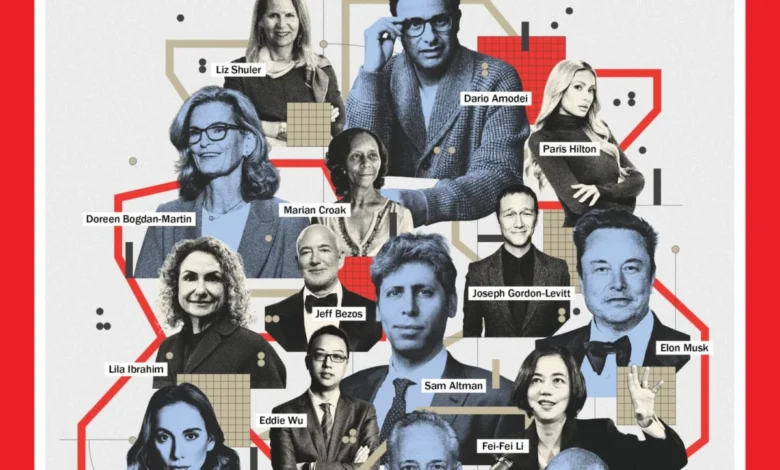
This dynamic becomes particularly acute for minority groups operating within professional and creative landscapes where institutional gatekeeping remains prevalent. In the United States, historical and demographic patterns often create environments where networking, hiring, and promotion cycles favor those within the dominant demographic. As the late 2026 release of the TIME100 AI list demonstrated, influence is frequently defined by subjective "narrative freshness" rather than empirical contributions, leading to the exclusion of key industry figures.
The Mathematics of Marginalization
The challenge faced by underrepresented groups in gaining professional recognition can be quantified through a basic analysis of market share and network effects. In a social or corporate ecosystem, members of a majority group (comprising, for example, 60% of the population) require only a fraction of their peer group to reach a critical mass of visibility. Conversely, an individual from a smaller demographic (representing, for example, 6% of the population) faces a structural deficit. Even if that individual captures 100% of their immediate demographic, their reach remains mathematically capped at 6% of the total available audience.

This phenomenon explains the frequent homogeneity observed in corporate leadership and media recognition. When decision-makers prioritize candidates or ideas that feel "familiar," they perpetuate a cycle where those outside the majority must perform at a significantly higher level simply to achieve parity. For many professionals, this "meritocracy gap" is not the result of malice, but rather the consequence of a system that optimizes for familiarity and existing social proof.
Chronology of Institutional Omissions
The recent controversy surrounding the 2026 TIME100 AI list highlights this discrepancy. The list, which aimed to catalog the most influential figures in artificial intelligence, omitted Jensen Huang, the co-founder and CEO of NVIDIA. Given that NVIDIA’s hardware serves as the physical backbone for the global AI infrastructure—evidenced by a quarterly revenue of $96.2 billion in late 2026, with $89 billion derived from data centers—the omission drew widespread criticism from industry observers. Similarly, Lisa Su, CEO of AMD, was excluded despite her pivotal role in developing the semiconductors that power modern computing.
The inclusion of high-profile celebrities and political figures on the same list, while arguably driving "narrative freshness," underscored a disconnect between the magazine’s editorial focus and the material reality of technological advancement. This pattern is not limited to journalism; it mirrors trends in academia and corporate recruiting, where institutional prestige often overshadows raw output.
Case Studies in Undeniable Results
Despite the limitations imposed by institutional gatekeepers, several recent cases illustrate the viability of prioritizing output over external validation.

- The Rise of Noah Shinn: In April 2026, entrepreneur Noah Shinn registered Spear Street Technology. Within four months, his AI-driven personal assistant product, Instinct, secured $350 million in funding from major venture capital firms including Kleiner Perkins, Index Ventures, and Benchmark. By bypassing the traditional route of seeking public recognition or influencer status, Shinn demonstrated that market utility functions as its own form of validation.
- The Academic Displacement of Stanley Zhong: The case of Stanley Zhong, a high-achieving high school graduate from Palo Alto, serves as a poignant example of the disconnect between academic gatekeeping and practical capability. Despite a 4.42 GPA and a 1590 SAT score, Zhong faced rejection from 16 of the 18 universities to which he applied. However, his professional trajectory was unaffected; Google hired him as a full-time software engineer, where he subsequently earned an "outstanding impact" rating. The subsequent legal challenge regarding Title VI rights has brought the conversation about institutional bias in admissions to the forefront of national discourse.
The Role of Public Markets as a Neutral Arbiter
For those seeking to circumvent the biases of professional and social hierarchies, public markets offer a unique, non-discriminatory arena. Unlike corporate boards or editorial panels, the stock market does not evaluate the demographic background or social pedigree of an investor.
The mechanism of capital compounding—where assets grow based on the underlying productivity of a company—provides a level playing field. Whether an investor belongs to a 60% majority or a 6% minority, a share of an index fund, such as one tracking the S&P 500, yields the same return. By shifting focus from "being recognized" to "owning the underlying assets," individuals can decouple their financial security from the whims of institutional gatekeepers.
Implications for Future Professional Development
The data suggests that the most effective strategy for navigating an environment characterized by systemic bias is the pursuit of "undeniable work." When output reaches a threshold of magnitude—such as building a company that controls essential infrastructure or demonstrating technical mastery that major corporations cannot ignore—the need for external validation becomes secondary.
For professionals and creators, the transition from seeking recognition to focusing on intrinsic motivation offers two distinct advantages. First, it mitigates the psychological toll of being overlooked by institutions that favor homogeneity. Second, it shifts energy toward activities that produce compounding results.

As observed by industry experts, the gatekeepers of the 21st century—be they media editors, college admissions boards, or corporate hiring committees—will continue to optimize for the narrative that best serves their immediate audience. However, the influence of these gatekeepers is increasingly being challenged by the speed and scale of the digital economy. In an era where results can be verified instantly through market participation and product adoption, the "ego tax" of chasing recognition is becoming an increasingly inefficient use of time and capital.
Ultimately, the lesson is one of structural reality: institutions are not inherently designed to be equitable, but they are increasingly forced to be functional. By aligning one’s personal goals with the production of value, individuals can ensure that their success remains tethered to their performance, rather than the shifting criteria of an external committee. In this framework, rejection is not a signal of failure, but rather a catalyst for focusing on more objective, measurable, and enduring forms of success.