Amazon Connect Talent revolutionizes high-volume recruitment through advanced AI integration to solve industry-wide hiring bottlenecks.

The global labor market is currently navigating a period of intense pressure, particularly within sectors characterized by high-volume recruitment needs, such as retail, logistics, manufacturing, and hospitality. For organizations in these fields, the ability to scale a workforce rapidly is not merely an operational goal—it is a critical determinant of financial health and service consistency. However, traditional hiring methodologies remain bogged down by manual scheduling, disjointed software stacks, and a fundamental inability to process candidate volume at the speed of modern commerce. Recognizing this systemic inefficiency, Amazon has officially launched Amazon Connect Talent, a comprehensive, AI-powered hiring solution designed to modernize the way enterprises identify and evaluate quality candidates at scale.
The Anatomy of the Hiring Bottleneck
To understand the significance of this launch, one must first examine the state of enterprise recruitment. For decades, talent acquisition teams have relied on a fragmented ecosystem comprising Applicant Tracking Systems (ATS), third-party scheduling software, and manual spreadsheet tracking. This "stitching together" of tools creates significant latency. When a retail chain requires 500 warehouse associates for a peak holiday season, the manual effort required to screen resumes, coordinate phone interviews, and provide feedback often leads to a "time-to-hire" window that lasts weeks.
During this delay, the "silver medalists"—highly qualified candidates who are actively looking for work—frequently accept competing offers. Industry data suggests that the average time-to-hire for entry-level roles can span between 20 and 40 days, depending on the complexity of the vetting process. For a business, this delay is costly. Unfilled roles result in understaffed shifts, leading to degraded customer experiences, lost revenue opportunities, and increased burnout among existing employees. The launch of Amazon Connect Talent is a direct response to these pressures, aiming to replace human-intensive administrative tasks with automated, data-driven AI agents.
A Chronology of Amazon’s Hiring Evolution
The development of Amazon Connect Talent did not occur in a vacuum; it is the culmination of decades of internal "hiring science" that has powered Amazon’s own growth from an online bookstore to a global logistics and cloud computing juggernaut.
In the early 2000s, Amazon established rigorous, data-driven hiring rubrics to ensure that its rapid expansion did not come at the expense of talent quality. This framework emphasized "bar raisers"—interviewers tasked with assessing candidates based on specific, non-negotiable behavioral competencies rather than subjective "culture fit."
By the mid-2010s, as the volume of applicants surged, Amazon began exploring machine learning applications to assist in resume parsing and interview scheduling. The formalization of these internal tools into a commercialized product, Amazon Connect Talent, represents the next phase of this evolution. By late 2024, the internal testing of these AI agents demonstrated that organizations could reduce the initial screening phase from days to mere hours, effectively allowing the hiring pipeline to operate on a 24/7 basis. The public release in September 2026 marks the broad availability of this enterprise-grade infrastructure.
Mechanics of the AI-Led Interview
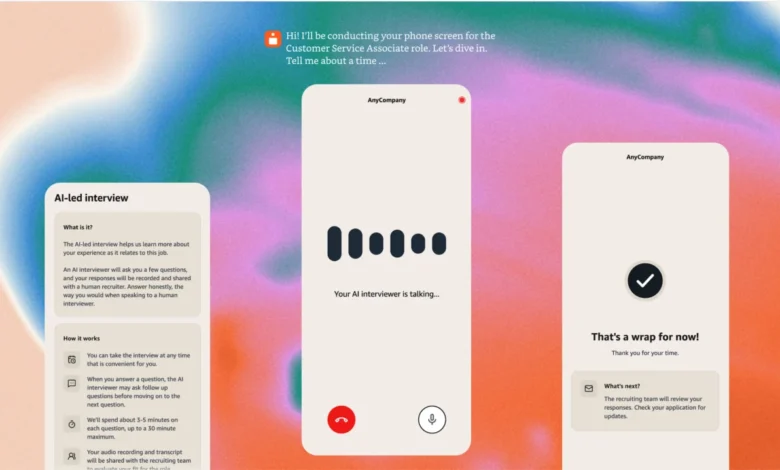
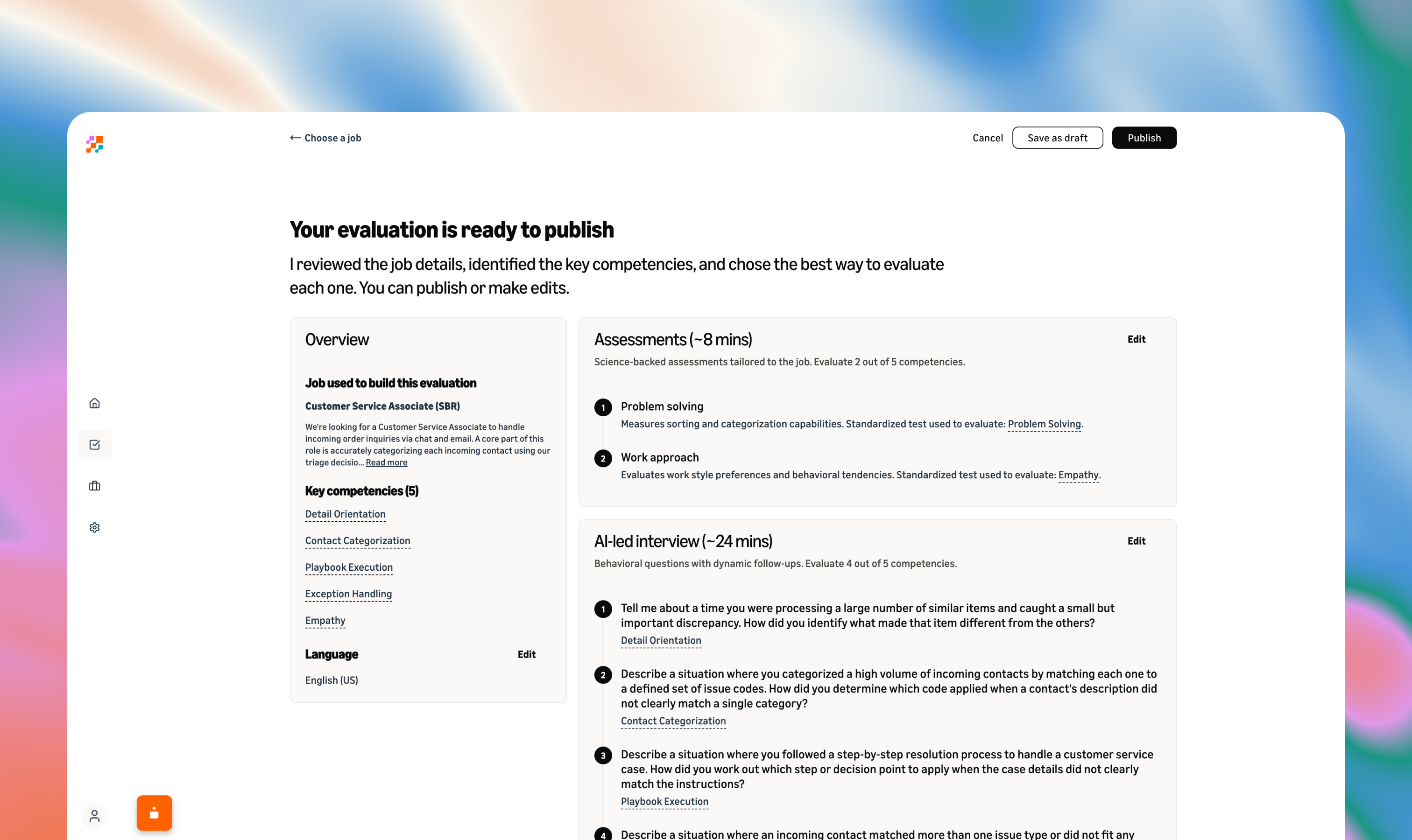
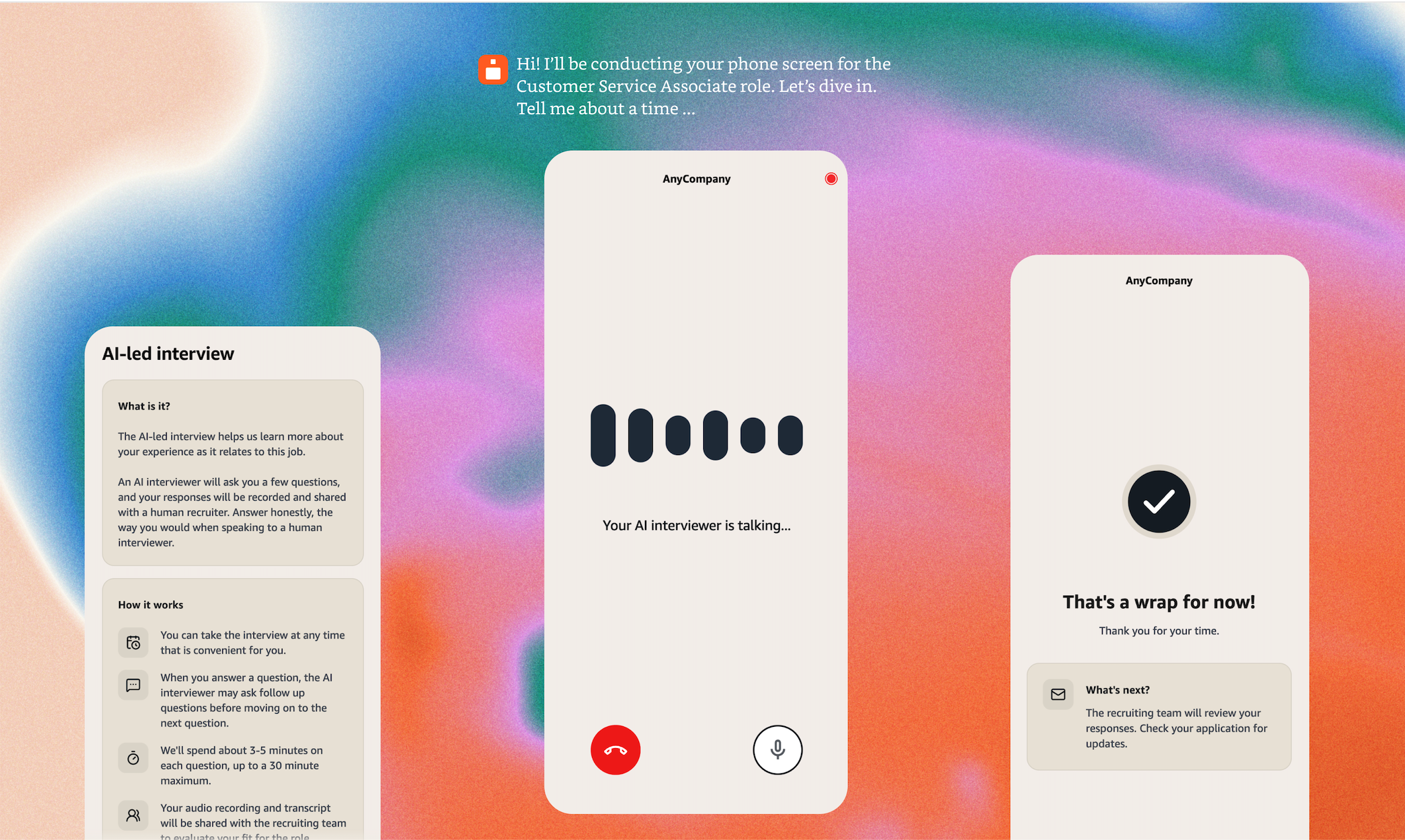
The core functionality of Amazon Connect Talent lies in its ability to conduct structured interviews through AI agents that are available around the clock. The workflow is designed to be seamless for both the recruiter and the applicant.
For the candidate, the process eliminates the common "phone tag" frustration. An applicant can log into the system from any device—whether it is a mobile phone or a desktop—at any time, such as late in the evening after their current daily responsibilities are completed. The AI agent guides the candidate through a series of structured, role-specific questions. Unlike traditional unstructured interviews, which can vary wildly in quality and focus depending on the interviewer’s mood or time constraints, the AI maintains a consistent, standardized approach for every single applicant.
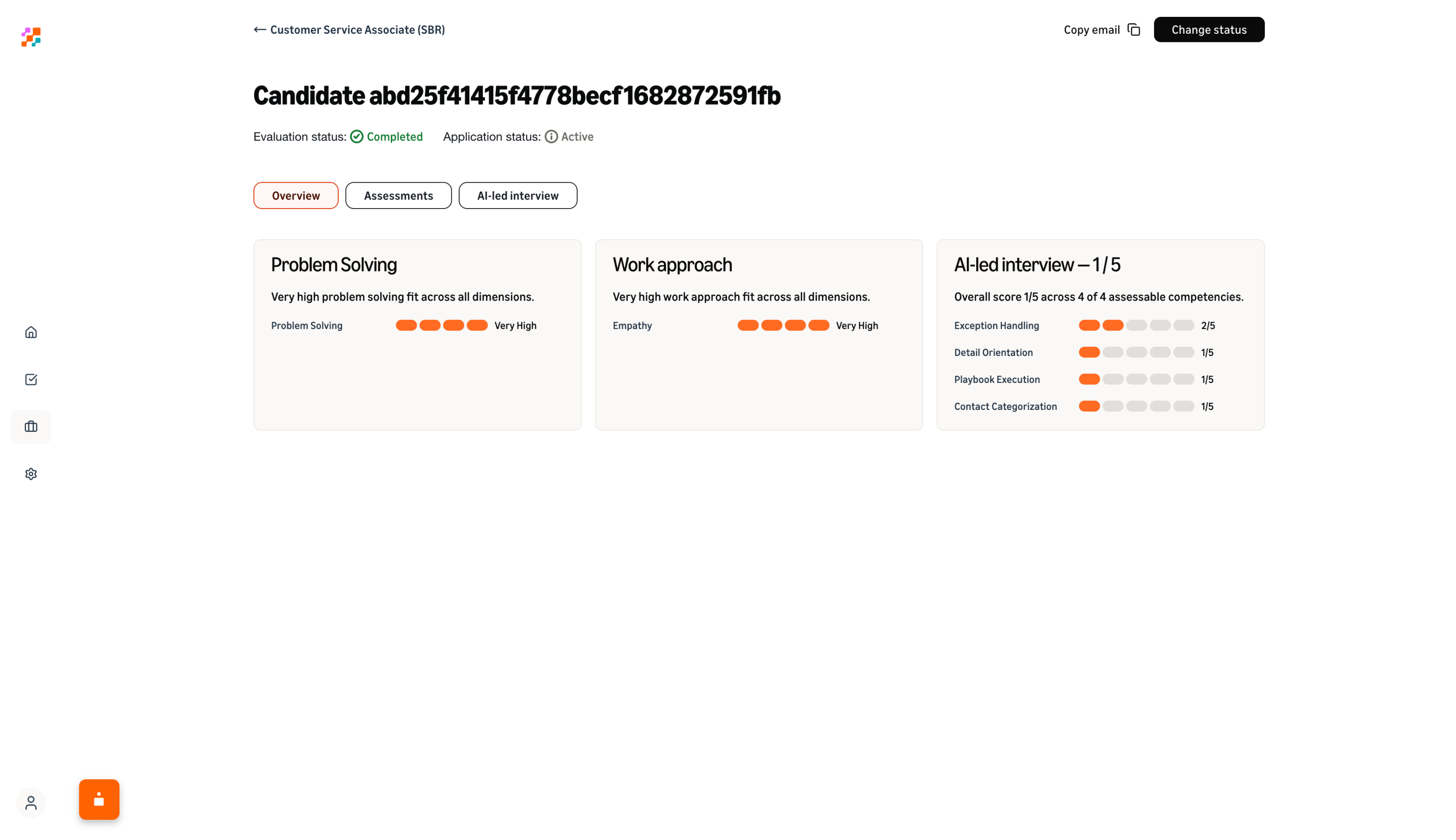
For the recruiter, the transformation is found in the "Review Dashboard." Upon logging in, the recruiter is not presented with a pile of resumes to screen but rather a ranked list of candidates accompanied by:
- Competency Scores: A granular breakdown of how the candidate performed across specific job-related skills.
- Evidence-Based Transcripts: Full transcripts of the interview, with the AI highlighting specific responses that justify the assigned score.
- Comparative Analytics: Tools that allow recruiters to weigh candidates against each other based on objective performance data rather than subjective impressions.
Mitigating Bias and Standardizing Evaluation
One of the most significant challenges in high-volume hiring is the prevalence of unconscious bias. Human interviewers are susceptible to "affinity bias" (favoring candidates who share similar backgrounds) or "halo effects" (allowing one positive trait to overshadow other performance metrics).
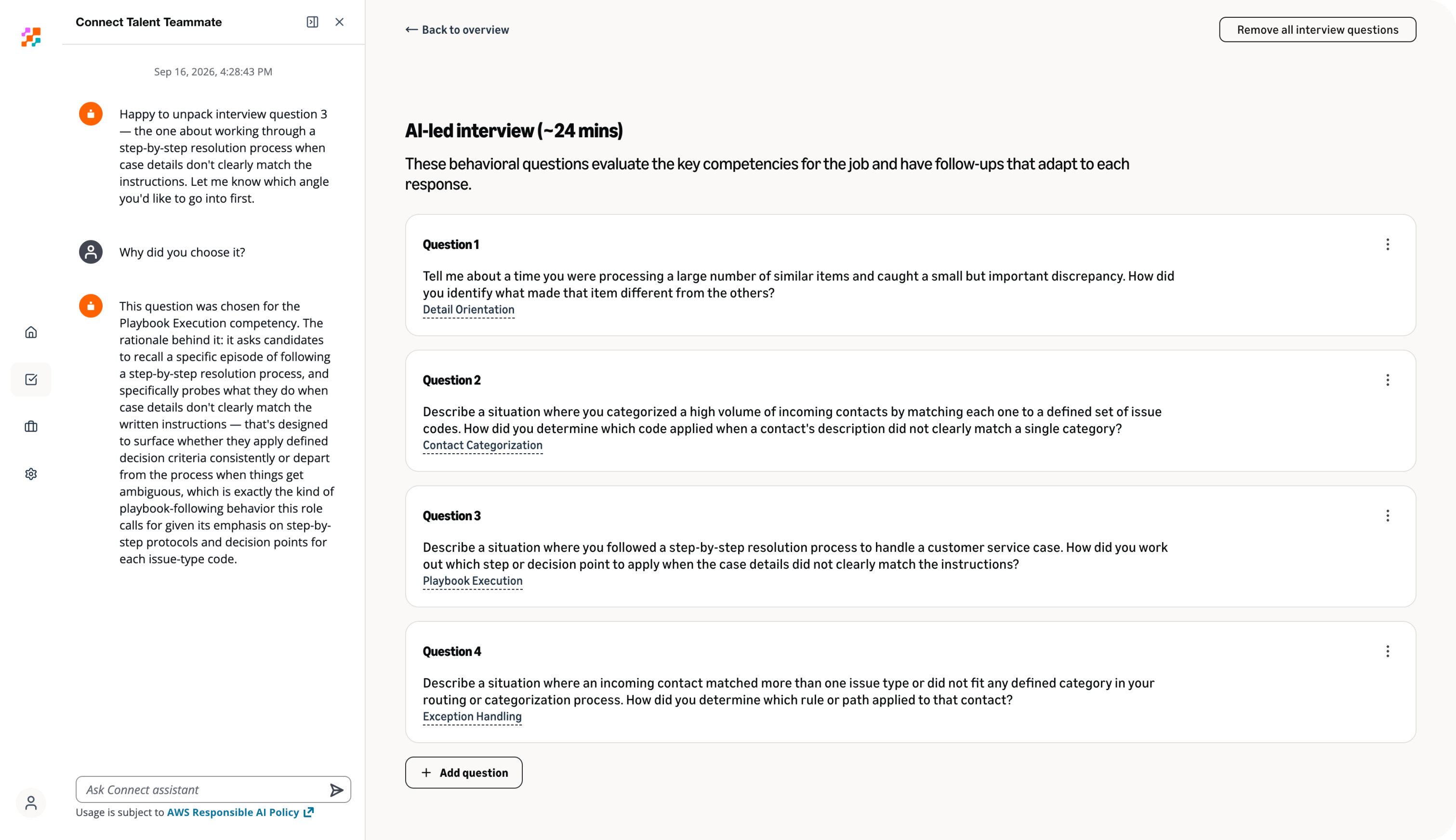
Amazon Connect Talent addresses these issues by anonymizing candidate data during the evaluation process. The AI is specifically trained to ignore extraneous information such as speaking style, confidence markers, or demographic indicators, focusing exclusively on job-related competencies—such as problem-solving, logical reasoning, and listening accuracy. Because every candidate is subjected to the same rubric, the system creates a "level playing field." This ensures that the thousandth candidate receives the exact same standard of evaluation as the first. This consistency is essential for large organizations that must comply with strict equal-opportunity hiring regulations.
Enterprise-Grade Security and Compliance
A recurring concern with AI adoption in human resources is the protection of sensitive personal data. Because the platform is built on the foundation of Amazon Web Services (AWS), it inherits the same security architecture used by global financial institutions and government agencies.
The system employs rigorous access controls and audit trails. Every interaction between the candidate and the AI agent is logged, ensuring that the hiring process is fully transparent and auditable. Furthermore, the system provides clear disclosures to candidates, ensuring that they understand the nature of the AI interaction and the criteria by which they are being measured. This transparency is intended to build trust with the applicant pool, which is increasingly sensitive to how their data is processed by automated systems.
Broader Implications for the Labor Market
The introduction of this tool signals a fundamental shift in the role of the recruiter. In the current paradigm, recruiters often spend 70% of their time on administrative tasks—scheduling, sending emails, and performing initial screenings—and only 30% on actual talent strategy and relationship building.
Amazon Connect Talent effectively inverts this ratio. By automating the screening and initial assessment, the platform frees recruiters to focus on the "human in the loop" aspect of hiring. They can dedicate their time to high-touch interactions, such as final-round interviews, negotiations, and candidate experience optimization. This shift suggests that the future of talent acquisition is not the replacement of the recruiter, but their empowerment through high-fidelity data.
Furthermore, the economic implications for companies struggling with high turnover are significant. By accelerating the hiring cycle, businesses can fill roles faster, thereby maintaining production quotas and service level agreements (SLAs) during peak periods. For industries like retail, where a single day of understaffing can equate to thousands of dollars in lost productivity, the ROI of such a system is measurable and immediate.
Conclusion
As the workforce continues to evolve and competition for skilled labor remains fierce, the adoption of AI-led hiring solutions like Amazon Connect Talent is likely to move from a competitive advantage to an industry standard. By combining the scale of AWS infrastructure with the proven hiring methodologies developed by Amazon over decades, the platform offers a robust solution to the inefficiencies that have plagued the recruitment industry for years. With recruiters maintaining final decision-making authority, the system preserves the human element of the hiring process while leveraging technology to ensure that the process is faster, fairer, and more effective than ever before. Organizations now have the tools to ensure that they are no longer losing their best candidates to the administrative bottlenecks of the past.