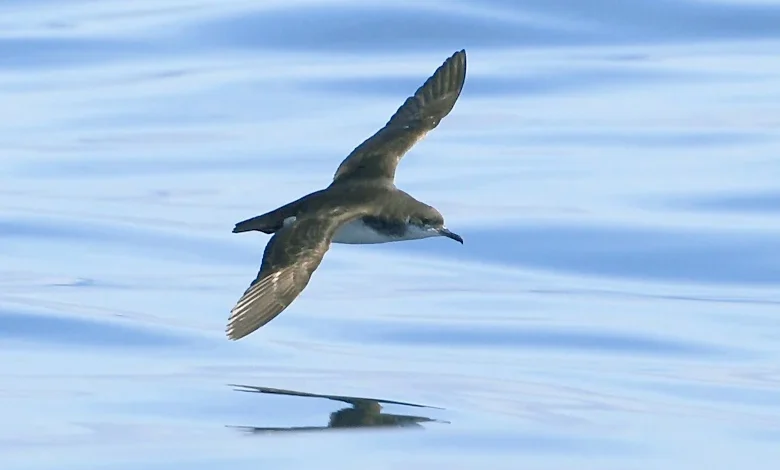
Flying across multiple time zones is a quintessential human experience, often associated with the fatigue and disorientation known as jet lag. This phenomenon occurs when our internal circadian rhythms—the biological clocks that regulate sleep, metabolism, and alertness—fall out of sync with the local time of our destination. However, a groundbreaking study published in the journal Science reveals that this physiological disruption is not an exclusively human burden. Research into the navigational habits of Manx shearwaters, medium-sized seabirds that traverse the vast expanses of the North Atlantic, indicates that these avian travelers effectively "jet-lag" themselves during their long-distance foraging excursions.
The Mechanism of Avian Navigation
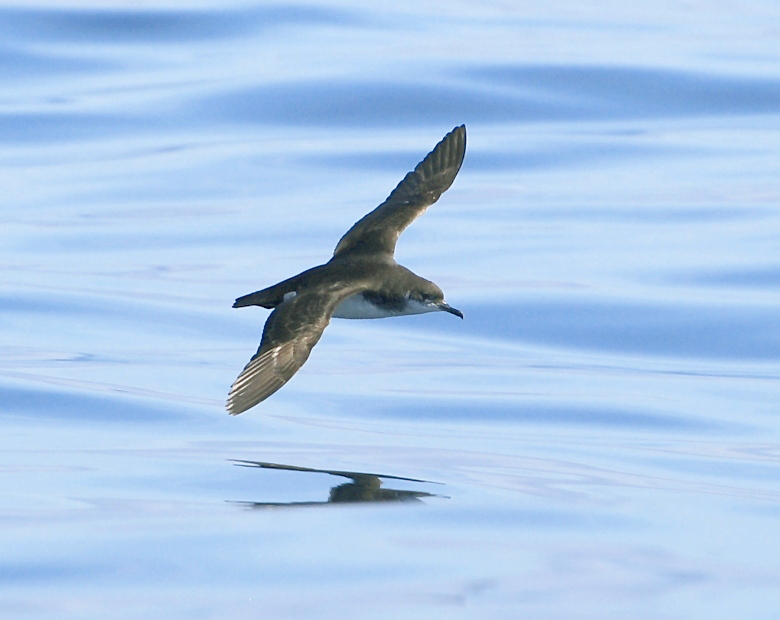
Manx shearwaters, scientifically known as Puffinus puffinus, are resilient seabirds that nest in coastal burrows throughout the North Atlantic, with significant populations residing in Wales and other parts of the United Kingdom. These birds are renowned for their incredible endurance, capable of traveling hundreds of kilometers in a single day to locate food sources. To navigate their return to their colonies, they rely on a sophisticated dual-system approach: a "map sense," which likely incorporates olfactory cues to determine their general location, and a "Sun compass," which dictates their flight path based on the position of the sun in the sky.
The reliance on a solar compass presents a significant navigational challenge. Because the sun’s position changes throughout the day—rising in the east, reaching its peak at midday, and setting in the west—a bird must possess a precise internal clock to interpret the sun’s angle correctly. Patrick Lewin, a behavioral and sensory ecologist at the University of Oxford and the lead author of the study, notes that the internal clock is the linchpin of this process. "At sunrise, when the sun is in the east, a bird needing to fly south must maintain a 90-degree angle relative to the sun. By midday, it must head directly toward the sun, and by sunset, it must adjust to a 90-degree angle on the opposite side," Lewin explains.
The study reveals that this internal clock is recalibrated at every dawn and dusk. However, the process is not perfect. As a bird travels across lines of longitude between sunrise and sunset, its internal timekeeping gradually drifts out of sync with local solar time. For every degree of longitude covered, the bird’s internal clock falls approximately four minutes behind or ahead of local time. Consequently, a shearwater flying east or west miscalculates the sun’s expected position, causing it to veer off its intended course.
Two Decades of Tracking Data
The discovery of this "avian jet lag" was made possible by an exhaustive analysis of long-term tracking data. Tim Guilford and Chris Perrins, both distinguished researchers at the University of Oxford, began equipping Manx shearwaters with GPS tags in 2004, shortly after the technology became sufficiently miniaturized for birds of their size. Over the next two decades, the research team compiled a robust database comprising 3,688 foraging trips undertaken by 1,045 individual birds from colonies along the western coast of the UK.
These foraging trips ranged in duration from a single day to two weeks. By isolating the homeward-bound segments of these journeys—periods characterized by rapid, direct flight—the researchers were able to map the birds’ trajectories with high precision. By calculating the exact point at which each bird last witnessed a sunrise, they established a baseline for when the bird’s internal clock was synchronized with local time. They then compared the observed flight deviations against the predicted errors that would result from a solar compass influenced by time-shift drift.
Analyzing the Data: Evidence of Drift
The data revealed that the time shifts experienced by the shearwaters were subtle but statistically significant. Most birds exhibited a time difference of 10 to 15 minutes, with one hour being the observed maximum. While such a discrepancy might seem negligible to a human traveler, it produces a measurable impact on the navigational accuracy of the birds.
Across 335 homing flights conducted over open water, out of sight of land, the shearwaters consistently veered in accordance with the researchers’ mathematical predictions regarding Sun compass bias. When flying east, the birds deviated clockwise; when flying west, they drifted anticlockwise. The researchers carefully analyzed potential confounding variables, such as the influence of crosswinds, the Coriolis effect, and the potential use of a magnetic compass, but found that none of these factors explained the observed flight paths as accurately as the hypothesis of solar compass error.
Implications for Navigation and Biology
The navigational errors induced by this jet lag were found to be relatively minor, reaching up to 15 degrees. Given that the birds possess a refined map sense, they are capable of identifying these deviations and making necessary mid-course corrections. The study estimated that for a shearwater flying 1,000 kilometers eastward in a day, the average navigational error would be approximately seven degrees, resulting in a minimal detour of about five kilometers.

Interestingly, when the birds followed coastlines, their paths remained subject to the same drift, moving closer to or further from the shore based on their expected compass error. This mirrors earlier findings regarding homing pigeons, which maintain parallel navigation systems: one based on compass orientation and another on familiar landmarks. The persistence of these errors suggests that the bird’s brain does not completely ignore the compass in favor of landmarks, but rather balances both inputs in a sophisticated, if imperfect, cognitive process.
Future Research and Broader Context
While the study provides compelling evidence for the impact of jet lag on navigation, many questions remain regarding the physiological and behavioral consequences of this phenomenon. Researchers have not yet determined whether these birds suffer from other common symptoms of jet lag, such as sleep deprivation, altered metabolic rates, or changes in foraging efficiency. Future investigations will likely focus on whether these time shifts correlate with reduced food intake or impacts on breeding success, as the birds attempt to balance their energetic needs with the biological costs of travel.
The implications of this research extend beyond avian biology. The finding suggests that any organism possessing an internal clock and traversing significant distances across lines of longitude—particularly those living near the poles where lines of longitude converge—may experience similar forms of chronic, low-level jet lag.
"In humans, frequent, long-term jet lag has significant negative health impacts," says Lewin. "By studying these animals, which are in a state of near-constant, minor jet lag during their foraging seasons, we may identify evolutionary adaptations or biological mechanisms that help them mitigate these effects. This could provide valuable insights for human medicine or even for the development of bio-inspired autonomous navigation systems."
As humanity continues to advance its own artificial navigation technologies, the "clockwork compass" of the Manx shearwater serves as a poignant reminder of the complexities inherent in biological orientation. The ability of these birds to navigate the vast, featureless Atlantic while battling their own internal clocks demonstrates a remarkable level of resilience—an evolutionary feat that continues to shape our understanding of the natural world. This study, published in Science (DOI: 10.1126/science.adz2542), marks a significant step forward in our understanding of animal movement and the biological constraints imposed by the rotation of the Earth.
Related posts: