Mastering Workplace Efficiency: A Strategic Blueprint for Modern Professional Productivity

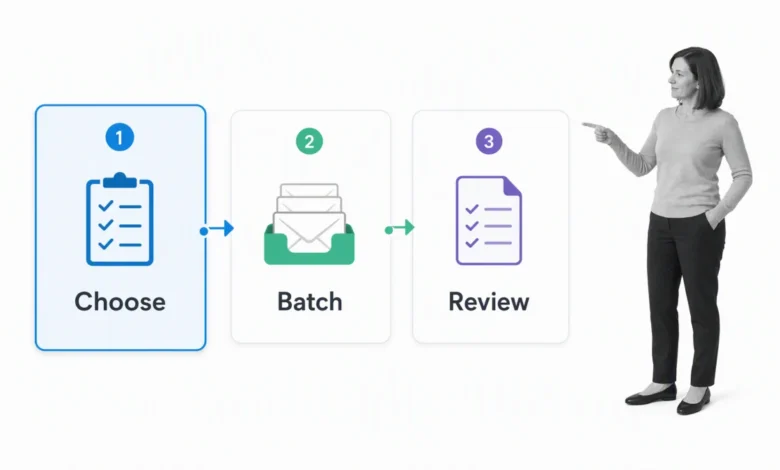
True workplace efficiency is defined not by the sheer volume of tasks completed, but by the ability to achieve high-value outcomes while minimizing the erosion of time, attention, and cognitive effort. In an era characterized by fragmented workflows and digital saturation, the challenge for both individual contributors and organizational leaders is to decouple "activity" from "progress." Recent insights from industry experts, including Zachary Sexton of Asian Efficiency, suggest that the path to sustainable productivity lies in a rigorous cycle of prioritization, systemization, and objective review.
The Evolution of Workplace Productivity
The modern office landscape has undergone a seismic shift over the last decade. The transition toward hybrid work models and the proliferation of asynchronous communication tools have inadvertently created a "noise economy." According to recent studies from the University of California, Irvine, it takes an average of 23 minutes and 15 seconds to regain deep focus after a distraction. This data point underscores a critical reality: the primary inhibitor of efficiency today is not a lack of effort, but the constant fracturing of cognitive resources.
In a recent episode of the Business Systems Explored podcast, productivity consultant Zachary Sexton addressed this crisis of focus. Sexton, whose work with Asian Efficiency centers on the intersection of human behavior and systematic operations, argues that efficiency is a deliberate design choice rather than a personality trait. The core philosophy presented is a continuous feedback loop: identify the high-impact outcome, secure the environment to achieve it, standardize repetitive operations, and audit the remaining friction points.
The Chronology of Effective Workflow Management
To transform organizational performance, teams must move away from reactive task management and toward a proactive cycle. This transformation typically follows a structured timeline:
- The Strategic Identification Phase (Morning): Rather than addressing the most urgent emails, top-tier performers designate the single most significant outcome for the day. This requires defining the "done" state before work commences.
- The Execution Block (Mid-Morning): Utilizing the concept of "energy mapping," professionals match their most cognitively demanding tasks—such as creative problem-solving or complex analysis—to the hours when their mental acuity is naturally at its peak.
- The Batching Interval (Afternoon): Routine administrative tasks, such as clearing inboxes or updating project trackers, are sequestered into specific, time-limited blocks. This prevents the "constant switching" cost that depletes mental reserves.
- The Review and Optimization Loop (Weekly): Every Friday, leaders and teams examine the week’s failures. By identifying where bottlenecks occurred—whether due to unclear communication or process gaps—they adjust the system for the following week.
Data-Driven Insights on Task Prioritization
Empirical evidence consistently supports the efficacy of "single-tasking" over the myth of multitasking. Research from the American Psychological Association (APA) suggests that shifting between tasks can cost as much as 40 percent of one’s productive time. When teams adopt a "work-in-progress" (WIP) limit, they mimic the principles of Kanban management. By restricting the number of active projects, managers force a clear hierarchy of importance.
When this approach is applied to teams, the implications are profound. By making priorities visible through shared project management platforms, organizations reduce the "guessing game" that plagues many departments. When a team member knows exactly which task is the priority, the overhead of coordination meetings and status-update emails decreases significantly.
The Role of Standard Operating Procedures (SOPs)
A primary cause of institutional inefficiency is the repeated "re-invention of the wheel." When a recurring task is handled differently each time it arises, it consumes excessive cognitive energy. The formalization of Standard Operating Procedures (SOPs) serves as a buffer against this entropy.
A robust SOP must encompass more than just a list of steps. It must define the trigger for the task, the designated owner, the necessary decision-making criteria, the evidence required to confirm success, and the expected outcome. Platforms such as Process Street have emerged to digitize this necessity, turning static documents into dynamic, governed workflows. By integrating AI into these procedures, teams can now automate approvals and create audit trails, effectively turning process management into a source of competitive advantage rather than a bureaucratic burden.
Institutional Responses to Meeting Fatigue
Perhaps the most significant drain on corporate efficiency is the "default meeting." A study published in Harvard Business Review noted that the average time spent in meetings has increased by 13.5 percent annually since 2020. Sexton suggests a radical restructuring of this time: meetings must be viewed as an investment of company capital.
If a meeting does not have a clearly defined objective and a list of required outcomes distributed beforehand, it should not occur. Effective meetings are characterized by:
- Pre-read requirement: Participants are expected to have reviewed context material prior to convening.
- The Decision Rule: If a meeting does not result in a clear decision or an assigned action item, the format is deemed unsuccessful and must be overhauled.
- Accountability: Every meeting must conclude with a record of who is responsible for which task and the deadline for completion.
The Human Element: Removing Blame from Process Friction
A critical distinction in high-performance cultures is the separation of "people" from "process." When an error occurs, organizations often default to blame, which inhibits long-term growth. Instead, the focus should be on the systemic cause. If a project deadline is missed, the inquiry should not be "Who failed?" but "What part of the process allowed this failure to occur?"
This perspective, often referred to as "blameless post-mortems," allows teams to iterate on their workflows. By identifying recurring constraints—such as bottlenecked approvals, ambiguous project scope, or redundant communication loops—organizations can refine their operations without compromising morale. As Zachary Sexton aptly summarizes: "Productivity applies to everybody. There’s no person out there who doesn’t want to do more."
Broader Implications for the Future of Work
The push for greater workplace efficiency is not merely about increasing output; it is about reclaiming the professional experience. When systems are clear and processes are standardized, the cognitive load on employees is reduced, leading to higher job satisfaction and lower burnout rates.
The trend toward "Compliance Operations" and automated workflow platforms indicates that the future of work will be heavily reliant on the ability to codify expertise. As businesses continue to navigate the complexities of global, digital-first operations, the ability to document, track, and optimize work will distinguish high-performing organizations from those that remain trapped in cycles of inefficiency.
Ultimately, the mastery of workplace efficiency requires a cultural commitment to the "loop." It demands that organizations value the quality of the result over the quantity of the time logged. By choosing one important outcome, protecting the time to execute it, and relentlessly auditing the process, individuals and teams can create a sustainable rhythm that serves both the bottom line and the well-being of the workforce. As the landscape of professional work continues to evolve, those who treat efficiency as a discipline—one that is practiced, reviewed, and refined—will be the ones who define the standards of their respective industries.