Will It Make the Boat Go Faster: How the British Men’s Eight Redefined High-Performance Leadership


The path to the gold medal podium at the 2000 Sydney Olympic Games for the British Men’s Eight was not paved with sudden athletic genius or a transformative recruitment cycle. Instead, it was forged through an relentless, multi-year commitment to incremental improvement and radical organizational alignment. For years, the British rowing program had languished in the lower tiers of international competition, consistently finishing in seventh or eighth place at world championships. Their transformation, which culminated in Olympic glory, serves as a masterclass in operational efficiency and leadership that resonates far beyond the sport of rowing.
A Chronology of Transformation
The trajectory of the British Eight changed in the late 1990s when the team moved away from traditional, siloed training models. Following the disappointment of the 1996 Atlanta Olympics, where the team failed to secure a podium finish, the program underwent a structural overhaul. Under the guidance of coach Martin McElroy and sports psychologist Dr. Chris Shambrook, the crew began a systematic dismantling of their previous habits.
By 1997, the team began formalizing the "Will it make the boat go faster?" philosophy. This was not a slogan for marketing purposes; it was a functional filter for every decision, from the brand of protein powder they consumed to the intensity of their recovery sessions. Throughout 1998 and 1999, the team shifted their focus from global outcome goals—such as simply wanting to win—to process-oriented benchmarks. This period was marked by an obsessive cataloging of variables that affected water resistance, stroke rate, and cardiovascular efficiency. By the time the team arrived in Sydney in September 2000, they had successfully shifted their collective identity from underdogs to a disciplined, synchronized unit capable of peak performance under the immense pressure of an Olympic final.
The Anatomy of the Breakthrough
The core of the British team’s success lay in their ability to translate abstract ambition into granular, daily alignment. In many corporate environments, "alignment" is treated as a soft skill, often relegated to HR workshops. For the 2000 British Eight, alignment was the primary engine of their performance.
Ben Hunt-Davis, a pivotal member of the crew, has frequently noted that the transition from a mid-tier team to champions began with the arduous process of establishing a shared vision. This required countless hours of dialogue to bridge the gap between "we might be able to" and the conviction of "we will do this." Research supports this approach; studies published in the International Review of Sport and Exercise Psychology indicate that focusing on "process goals"—controllable, daily actions—consistently outperforms a fixation on "outcome goals" in high-pressure environments. By de-emphasizing the scoreboard and prioritizing the "feel" and "rhythm" of their rowing, the crew maintained their composure while competitors became distracted by their own standing in the race.
Quantifying the Gains: A Data-Driven Approach
The shift to a "process-first" mentality was backed by rigorous measurement. The team tracked metrics that had previously been ignored by their rivals. While other teams looked at total race time, the British Eight analyzed the micro-fluctuations in boat speed during the middle 500 meters of a 2,000-meter race.
This data-driven rigor allowed them to identify that "drift"—the tendency for departments or individuals to pursue secondary objectives—was the greatest threat to their speed. In a business context, this is akin to a company where marketing, finance, and product development pursue divergent KPIs that, while individually positive, collectively degrade the company’s "boat speed." For the British crew, if a decision did not directly contribute to the reduction of drag or the increase of power output, it was discarded. This binary decision-making framework, while seemingly rigid, acted as a force multiplier for their efforts.
The Role of Candor and Systemic Trust
A critical, often overlooked aspect of the team’s success was their adoption of radical candor. The team culture was built on the premise that failing to point out a teammate’s error was a form of complicity in losing. In their sessions, the team utilized feedback as an adhesive, ensuring that no technical flaw went unaddressed.
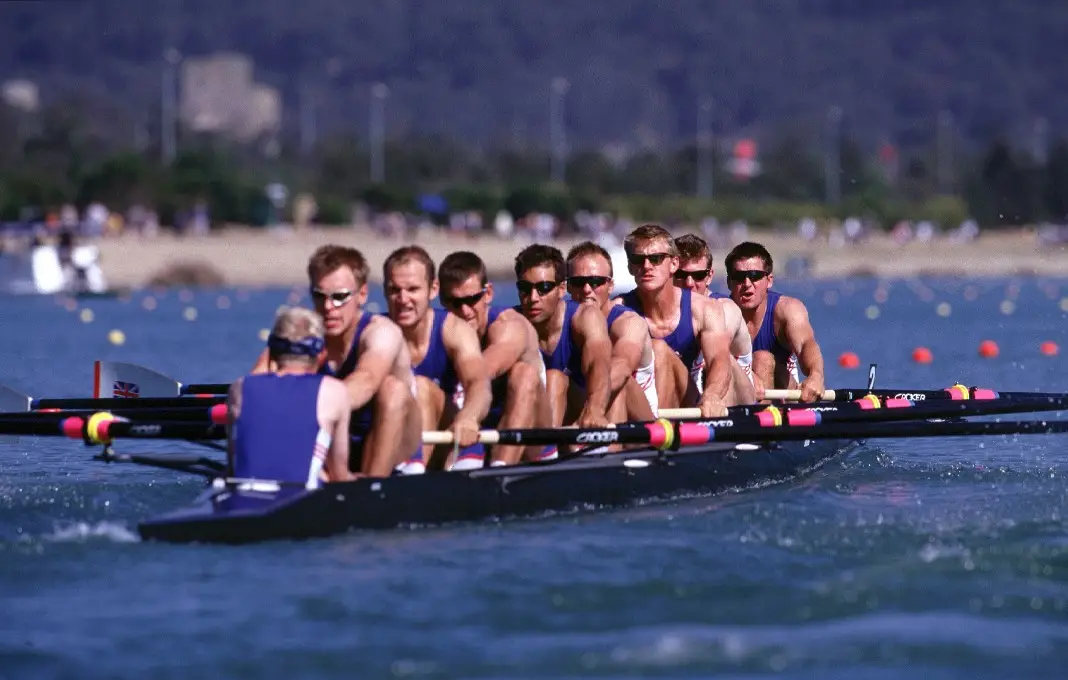
This environment was cultivated by Dr. Chris Shambrook, who helped the athletes distinguish between their personal egos and the objective reality of their performance. When tensions flared, the standard mediation question was, "What is most important: being right or the boat speed?" This effectively neutralized conflict by centering it on the objective. Data from the National Library of Medicine’s PubMed Central repository reinforces this, suggesting that organizational accountability is highest when feedback is reframed as a collaborative support mechanism rather than an adversarial critique.
Lessons for Modern Organizational Leadership
The implications for business leaders are profound. Many organizations suffer from "mission drift," where the sheer volume of tasks obscures the core objective. The British Eight’s experience demonstrates that performance under pressure is not a result of spontaneity, but of trust in a pre-established system.
When major market shifts, technological disruptions, or economic crises occur, the instinct of many management teams is to pivot toward untested strategies. The British Olympic strategy suggests the opposite: when the pressure peaks, the most effective teams double down on the fundamentals. The "system" acts as a guardrail, preventing the reactionary, frantic behavior that often characterizes failing organizations.
Fact-Based Analysis of Performance Outcomes
The success of the 2000 British Eight was not a singular event but the result of a compounding effect. If each small improvement—better synchronization, more efficient nutrition, refined stroke timing, and clearer communication—provided a 0.5% increase in speed, the cumulative effect over thousands of training hours was transformative.
This is the "aggregation of marginal gains" principle, popularized in later years by British Cycling but pioneered in the water by the 2000 rowers. Their victory in Sydney was the empirical result of this aggregation. By the time they reached the final, they were not just faster; they were more resilient, having stress-tested their decision-making processes against every conceivable distraction during their training cycle.
Conclusion: Sustaining the North Star
As organizations navigate the complexities of the current global economy, the challenge remains the same as it was on the waters of the Sydney International Regatta Centre: maintaining clarity amidst the noise. The "Will it make the boat go faster?" mantra remains one of the most effective tools for leaders tasked with guiding large, disparate groups toward a singular, high-stakes objective.
To replicate this success, leaders must first define what their "boat speed" is. Is it client retention? Is it product innovation? Is it operational margin? Once that north star is defined, every subsequent initiative, meeting, and expenditure must be audited against it.
The story of the 2000 British Men’s Eight is a testament to the idea that greatness is rarely the result of a singular epiphany. Instead, it is the product of hundreds of disciplined, aligned, and often mundane choices made consistently over time. In an era of constant distraction, the most competitive advantage a company can possess is the ability to ignore the irrelevant and focus exclusively on the mechanics that drive their specific, measurable success. By prioritizing process over outcome and candor over comfort, modern leaders can create the same level of internal synchronization that carried a crew from seventh place to the top of the Olympic podium.