Matrix Growth Academy Launches Zero to 100 Program to Bridge the B2B Startup Go-to-Market Skills Gap

The journey from an early-stage startup to a thriving enterprise valued in the hundreds of millions of dollars is fraught with invisible hurdles, particularly for founders hailing from technical and product-centric backgrounds. To address this persistent challenge in the entrepreneurial ecosystem, the newly unveiled Zero to 100 Matrix Growth Academy program has officially launched to provide a comprehensive, step-by-step masterclass on building robust go-to-market (GTM) engines. Designed specifically for B2B enterprises aiming to scale from inception to $100 million in revenue, the initiative seeks to codify a previously unstructured phase of business development that often serves as the graveyard for promising technology companies.
The launch of the academy arrives at a critical juncture for the venture capital and startup landscape. While the initial phase of launching a startup—namely achieving product-market fit—has been extensively documented through foundational texts like The Lean Startup, the subsequent phase of scaling has historically lacked a standardized operational playbook. Industry veterans note that while traditional scaling advice works exceptionally well for consumer-facing applications, it frequently leads to severe operational friction when applied blindly to business-to-business models.
Bridging the Gap Between Product and Profitability
For decades, conventional startup wisdom dictated that once a company secures initial product-market fit, founders should aggressively inject capital into sales and marketing to accelerate growth. However, B2B founders frequently report a perplexing phenomenon: increasing expenditure on customer acquisition fails to yield a proportional increase in sales.
According to industry analysts and growth experts, this disconnect stems from an unarticulated void between initial product validation and true, predictable enterprise scaling. This critical interim phase—the search for a repeatable, scalable, and profitable growth process—requires an entirely distinct set of organizational behaviors, team structures, and strategic focus areas. Technical founders, who often excel at product architecture but lack formal training in enterprise sales pipelines, marketing automation, or customer success frameworks, are frequently left navigating this maze through trial and error.
Premature scaling remains one of the leading causes of startup mortality. When companies attempt to advance to later-stage tactics before cementing their foundational GTM processes, they burn through capital reserves, demoralize early sales teams, and ultimately stall their momentum. The Zero to 100 Matrix Growth Academy was conceived to eliminate this guesswork by breaking down the evolutionary trajectory of a startup into a structured, chronological curriculum.
Expert Leadership and Curriculum Design
To spearhead the academy, the program’s founders partnered with seasoned sales executive Stephanie (Schatz) Friedman, former Senior Vice President of Sales and Customer Success at Xamarin, a mobile app development platform that scaled successfully before its acquisition by Microsoft. Friedman brings frontline expertise in architecting high-performing sales organizations, having built Xamarin’s sales division from the ground up to a $50 million operation comprising more than 100 sales professionals in under four years.
Collaborating with veteran entrepreneurs and venture capitalists, the leadership team designed a rigorous curriculum focused primarily on the foundational Zero to $20 million growth phase. Rather than treating sales, marketing, product development, and customer success as isolated silos, the academy emphasizes the construction of a unified, cross-functional growth team.
The program’s core philosophy hinges on the premise that startup tactics must be strictly stage-specific. By outlining clear operational goals, core focus areas, definitive exit criteria for each developmental stage, and common pitfalls to avoid, the academy provides executives with a navigational chart for their corporate evolution.
Inside the Inaugural San Francisco Event
The academy’s flagship event took place on September 11 in San Francisco, drawing an exclusive cohort of startup founders, chief executive officers, and senior enterprise executives. To maximize peer-to-peer networking value and facilitate candid discussions, attendance was strictly capped and curated to include only high-level decision-makers heading sales, marketing, product, and customer success departments.
The intensive day-long agenda was meticulously structured to guide attendees through the mechanics of enterprise acceleration. Proceedings commenced at midday with structured networking and a light lunch, setting a collaborative tone for the afternoon sessions.
The curriculum began with a comprehensive exploration of the founder roadmap, dissecting the seven key stages required to establish a repeatable and scalable growth process. Speakers detailed how these operational milestones directly correlate with corporate valuation cycles, equity dilution, and subsequent fundraising rounds.
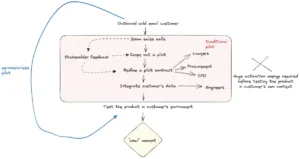
Transitioning to product-market fit, the sessions challenged conventional paradigms by advocating for a "sell, design, and build" methodology rather than the traditional "design, build, and sell" approach. Attendees received tactical advice on overcoming the psychological barrier of early-stage sales, conducting effective customer discovery interviews, and identifying concrete, quantifiable indicators of market validation over vanity metrics.
Mastering the B2B Funnel and Sales Operations
A significant portion of the curriculum was dedicated to modern B2B funnel design and buyer-centric architecture. Speakers elaborated on the five distinct components of a modern enterprise sales funnel, emphasizing buyer persona analysis and strategies designed to reduce the "Time to Wow!"—the duration required for a new user to experience tangible value from the software. Furthermore, the sessions contrasted Product-Qualified Leads (PQLs) with traditional Marketing-Qualified Leads (MQLs), highlighting how product-led growth models can turn the software itself into a primary customer acquisition vehicle.
In the realm of sales management, the curriculum addressed the delicate transition from founder-led sales to professional sales teams. Topics included hiring and onboarding the crucial first sales representative, managing the sales pipeline, constructing accurate revenue forecasts, and leveraging data-driven sales operations. Additionally, leadership strategies focused on maintaining high team morale, designing commission structures, and scaling management capacity sustainably.
Decoding the SaaS Business Model
Given the prevalence of subscription-based business models in modern technology, the academy dedicated an extensive module to Software-as-a-Service (SaaS) unit economics. Executives were instructed on how to dissect the three primary components of SaaS bookings and evaluate the interplay between Customer Acquisition Cost (CAC) and Lifetime Value (LTV).
The sessions also addressed advanced financial metrics, including the distinctions between dollar retention and logo retention, the strategic imperative of achieving negative net churn, and methodologies for calculating sales force capacity and individual productivity quotas.
Talent Acquisition and Organizational Design
Recognizing that human capital is the primary driver of enterprise value, the academy addressed the mechanics of building a high-volume recruiting machine. Frameworks for sourcing, interviewing, reference checking, and closing top-tier candidates were presented alongside best practices for structured onboarding.
The formal curriculum concluded with an examination of organizational design and the evolving role of the chief executive officer. Speakers analyzed how corporate hierarchies must transform across different funding stages, the fundamentals of building a resilient internal operating system, and best practices for managing governance relationships with institutional investors and boards of directors. The day culminated in an evening reception, offering attendees an extended opportunity for peer-to-peer networking and cocktail discussions.
Broader Implications for the Venture Ecosystem
The establishment of formal educational frameworks like the Zero to 100 Matrix Growth Academy reflects a broader maturation within the technology startup sector. As capital markets become increasingly discerning and investors place greater emphasis on capital efficiency rather than unbridled growth at all costs, the demand for predictable, repeatable go-to-market strategies has never been higher.
Industry observers note that programs of this nature help democratize institutional knowledge that was previously confined to Silicon Valley insiders or serial entrepreneurs who had learned through costly trial and error. By codifying best practices into an accessible curriculum—supplemented by digital video releases for those unable to attend in person—the academy aims to elevate the operational baseline of early-stage companies globally.
As the B2B software landscape continues to grow in complexity, initiatives that bridge the divide between technical innovation and commercial execution are expected to play a vital role in shaping the next generation of market-leading enterprises. For founders navigating the treacherous waters between their initial product launch and sustainable scale, structured programs offer a vital roadmap toward long-term viability and market dominance.