Surviving the Market Correction: A Strategic Analysis of Financial Resilience and Long-Term Investing

The recent volatility in global equity markets, particularly within the technology sector, has prompted a widespread re-evaluation of investment strategies among both retail and institutional investors. As major indices experience significant drawdowns, characterized by individual tech stocks retreating by 20% or more from their recent highs, market participants are increasingly focused on the mechanics of surviving cyclical downturns. While official definitions of a bear market—generally accepted as a 20% decline from recent peaks—are often debated by economists, the psychological and financial impact on investors remains a tangible reality that requires disciplined risk management.
The Anatomy of Market Corrections and Bear Markets
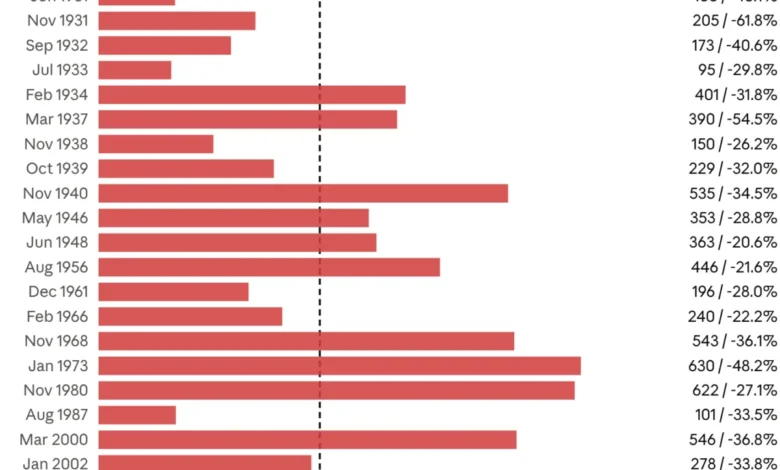
Historical data provided by market research firms, including Capital Group and Ned Davis Research, offers a vital framework for understanding the nature of these declines. Since 1954, the S&P 500 has experienced a 10% or greater correction approximately every 18 months. A more severe bear market, defined as a 20% decline, historically occurs on average every six years.
Chronologically, the frequency of these events underscores that market instability is not an anomaly but a recurring feature of the economic cycle. For instance, data dating back to 1928 indicates that there have been 27 distinct bear markets. On average, these periods involve a 35% decline in asset values and persist for approximately 289 days before reaching a market bottom. While post-1945 data shows a slight moderation in frequency—averaging one bear market every 5.1 years—the volatility inherent in equity markets serves as a constant reminder of the risks associated with concentrated portfolio allocations.
Sequence of Returns Risk for Retirees
For individuals in or near retirement, the primary concern during a downturn is "sequence of returns risk." This phenomenon refers to the timing of investment losses, which can be particularly devastating if they occur during the initial years of retirement when an investor is simultaneously withdrawing funds for living expenses. Unlike a salaried employee who may have years to recover from a market drop, a retiree who sells assets at depressed valuations risks depleting their capital base to a point where it can no longer generate sufficient long-term growth.

Financial analysts emphasize that the inability to replenish a portfolio through earned income makes retirees uniquely vulnerable. However, the risk is mitigated by maintaining a diversified portfolio and a sufficient cash buffer. By holding one to two years of living expenses in liquid, low-risk assets, retirees can avoid the necessity of liquidating equities during a cyclical trough, thereby allowing their core investments the time required to recover.
The Wealth Effect and Consumer Sentiment
The "wealth effect" is a critical psychological component of market performance. When equity markets are in an upward trajectory, consumers often feel a heightened sense of financial security, which correlates with increased discretionary spending. Conversely, as investment accounts contract, the subsequent decline in the wealth effect often leads to a contraction in consumer demand.
This feedback loop frequently precedes broader economic cooling. As households observe their net worth declining, they prioritize debt reduction and saving over discretionary consumption. Corporations, witnessing a decrease in revenue and a softening in consumer confidence, often respond by curbing capital expenditures and implementing workforce reductions to protect profit margins. This shift in corporate strategy is a lagging indicator that often confirms a recessionary environment well after market participants have begun to adjust their behavior.
Strategic Advantages During Downturns
While the immediate impact of a market decline is often negative, analysts point to several structural advantages for investors with long-term horizons.
- Valuation Normalization: Market corrections provide an opportunity to acquire high-quality assets at lower entry points. For investors with consistent cash flow—such as those contributing to 401(k) plans—a market decline effectively lowers the average cost basis, increasing the long-term compounding potential of their holdings.
- Tax-Loss Harvesting: Sophisticated investors utilize market volatility to realize losses, which can be used to offset future capital gains. Furthermore, periods of depressed asset valuations offer an opportune window for Roth conversions, as the tax liability on the transferred assets is calculated based on lower current market prices.
- Intergenerational Wealth Transfer: For parents and guardians, a market downturn presents a unique educational and financial opportunity. By investing on behalf of children during these periods, families can capitalize on multi-decade time horizons, where a temporary 30% decline becomes statistically insignificant over a 50-year period.
- Resilience Building: Institutional and private investors alike often view downturns as necessary "stress tests." These periods force a reassessment of risk tolerance and portfolio allocation. The ability to remain invested through a correction is considered a hallmark of a mature, disciplined investor.
The Role of Artificial Intelligence and Sector Volatility
Current market sentiment has been heavily influenced by the performance of the technology sector, particularly in the field of Artificial Intelligence (AI). While earlier projections suggested that AI-driven automation could lead to a rapid displacement of white-collar labor, the recent correction in AI-related stocks has led to a more tempered, realistic outlook.

The volatility in these names suggests that the market is currently recalibrating its expectations regarding the speed and profitability of AI integration. For the broader labor market, this serves as a buffer; if companies are struggling to justify the valuations of AI implementations, it follows that the adoption of such technologies may be more gradual than initially feared. This reality provides a sense of stability for the workforce, suggesting that the transformation of the job market will be an evolutionary process rather than an immediate disruption.
Institutional Perspective and Market Recovery
History serves as the strongest indicator of future performance, with every major S&P 500 correction since 1929 eventually leading to a full recovery. Data from Hartford Funds indicates that approximately 42% of the market’s strongest performance days over the last two decades occurred during bear markets. This statistic underscores the risk of attempting to time the market; missing the rebound often results in a significantly lower long-term return.
While the "peak-to-trough" decline typically lasts between 12 to 18 months, the period to return to previous highs can vary. However, for those with a long-term investment horizon, the objective remains constant: maintain a balanced allocation, avoid panic-driven divestment, and utilize periods of volatility to rebalance portfolios.
Conclusion
Market downturns are an inevitable component of a healthy, functioning capital market. They serve as a mechanism to purge speculative excess and realign asset prices with economic fundamentals. For the retiree, the worker, and the long-term investor, success during these periods is defined not by the avoidance of volatility, but by the ability to navigate it through rational planning, cost control, and a commitment to long-term objectives. As the economic cycle continues to turn, those who maintain their strategic focus are generally better positioned to benefit from the eventual market recovery.