Nvidia CEO Jensen Huang Takes Surprise Phone Call From President Donald Trump Live on Stage at the All-In Summit

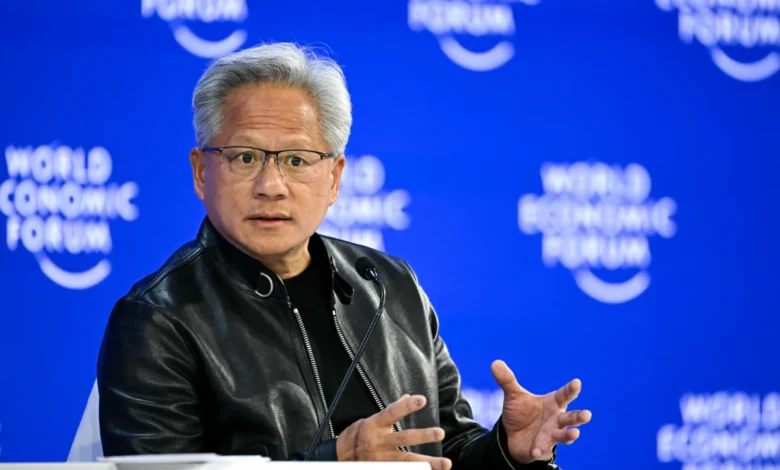
In a moment that likely sent immediate shockwaves through corporate public relations departments, Nvidia Chief Executive Officer Jensen Huang took a live phone call from President Donald Trump while on stage at the All-In Summit in Los Angeles. The incident, which unfolded on a Monday morning, blended high-stakes technology policy, presidential politics, and Silicon Valley culture in front of a live audience and a room full of prominent venture capitalists. Rather than sending the call to voicemail or stepping away from the microphone, Huang embraced the interruption, even attempting to broadcast the conversation to the conference attendees gathered to hear him speak.
The unexpected call occurred while Huang was appearing alongside the hosts of the popular podcast All-In—a group of high-profile technology investors that includes Chamath Palihapitiya, Jason Calacanis, and White House advisers David Friedberg and David Sacks. The live conversation quickly shifted from technical infrastructure and silicon manufacturing to the overarching geopolitical and domestic debates surrounding the future of artificial intelligence development, data center construction, and the regulatory pressures facing America’s leading technology corporations.
Chronology of the Live Presidential Interruption
The sequence of events began early Monday morning as Huang took the main stage at the All-In Summit to discuss the explosive growth of the artificial intelligence sector, the unprecedented demand for advanced graphics processing units (GPUs), and the burgeoning infrastructure required to support next-generation machine learning models.
Minutes into the conversation, Huang’s mobile phone began to ring. Recognizing the caller ID, the Nvidia executive acknowledged that the call could not be ignored. "I’m onstage with the besties," Huang told President Trump upon answering, playfully referencing the moniker used by the venture capitalist podcast hosts.
In an unscripted move that instantly became a viral talking point across media outlets and social platforms, Huang sought to share the conversation with the packed auditorium. Struggling briefly with the logistics of audio amplification, Huang requested an extra microphone from stagehands so that the president’s voice could carry through the venue’s sound system.
Trump, recognizing the setting, delivered a lighthearted critique of the tech executive’s technical troubleshooting abilities. "The great thing about life is Jensen can develop the most complex computer chip in the world… but he can’t figure out how to put you on speaker," Trump remarked over the phone line, drawing laughter from the crowd.
The Core Debate: Pacing Artificial Intelligence Development
Prior to the phone interruption, Huang and the All-In podcast hosts had been engaged in a substantive discussion regarding recent remarks made by Anthropic CEO Dario Amodei. Amodei had publicly advocated for a deliberate effort to "slow the pace" at which the capabilities of frontier artificial intelligence models are improved, citing safety, alignment, and societal preparedness concerns.
This cautious approach has created a distinct ideological divide within the upper echelons of the tech industry. While prominent industry leaders such as SpaceX and xAI CEO Elon Musk and OpenAI CEO Sam Altman have expressed alignment or agreement with the notion of careful pacing, Huang has consistently voiced a more aggressive philosophy focused on rapid innovation, infrastructure expansion, and maintaining global technological dominance.
The phone call with President Trump directly reinforced Huang’s perspective on the matter. Addressing the concept of slowing down artificial intelligence development, Trump offered a blunt assessment of the cautionary movement. "They’re just playing right in the hands of a lot of people that don’t want to see it happen," Trump stated, broadening the implication to geopolitical rivals. "That could be political people. It could also be China. And we’re not going to let that happen. It’s a hoax."
Huang readily agreed with the administration’s stance, responding, "You’re right. We’re not going to let that happen, sir," which prompted sustained applause from the summit audience.
Infrastructure Expansion and Local Opposition
The discussion between the executive and the president also touched upon a critical bottleneck facing the artificial intelligence boom: the massive physical infrastructure required to power and cool modern data centers.
Trump and various technology figures, including Y Combinator CEO Garry Tan, have frequently characterized local resistance to data center construction as part of an organized international campaign or psyop designed to stifle American economic momentum and technological supremacy. Proponents of rapid artificial intelligence scaling argue that restrictive zoning, environmental reviews, and localized pushback threaten to cede American leadership in critical technology sectors.
However, independent data suggests that public hesitation toward massive data center projects stems from more pragmatic, domestic concerns. Recent polling conducted by Gallup indicates that opposition to large-scale data center infrastructure is widespread among the American public. According to the data, roughly seven in ten Americans express opposition to the construction of data centers within their immediate local areas.
When researchers probed the underlying reasons for this skepticism, more than 50% of survey respondents pointed to the heavy strain that data centers place on environmental resources, particularly local power grids and water supplies necessary for cooling server racks. Furthermore, approximately 20% of respondents cited concerns regarding rising costs of living, increased electricity bills, and a perceived negative impact on their overall quality of life.
Despite these grassroots concerns, the executive branch’s messaging during the phone call remained firmly supportive of industry expansion. "We have to be a little bit careful… We have to do things and we have to do them prudently, but that doesn’t mean we’re going to stop an industry," Trump told Huang. "So I’m with you all the way. I didn’t even know how you felt about it. I just hoped you felt the same way as me. We’re going to lead."
Broader Economic and Geopolitical Implications
The unexpected call at the All-In Summit highlights the increasingly intertwined relationship between the current administration and Silicon Valley’s most influential figures. As artificial intelligence transitions from a speculative technological frontier to the cornerstone of modern economic and national security strategy, the dialogue between regulatory bodies and hardware manufacturers has grown increasingly direct.
Nvidia, as the dominant supplier of the advanced microchips fueling the global artificial intelligence transition, occupies a central position in these geopolitical dynamics. With export controls, domestic manufacturing incentives under legislation like the CHIPS Act, and national power grid modernization initiatives sitting at the forefront of policy debates, corporate leadership and government officials are in near-constant communication.
The public display of alignment between Huang and the White House underscores a shared determination among key industry players and policymakers to accelerate infrastructure deployment, irrespective of local pushback or calls for self-imposed industry slowdowns. As the United States and global competitors race to secure dominance in the next era of computing, the events in Los Angeles serve as a clear indicator that the acceleration of artificial intelligence will remain a top priority for both Washington and Silicon Valley, even as public debates over energy consumption and community impact intensify.