The True Cost of New Car Ownership and the Strategic Value of Keeping Older Vehicles

For many households, the decision to replace a aging vehicle is often framed as a simple matter of maintenance costs versus monthly payments. However, a deeper analysis of depreciation, tax implications, and the psychological burden of asset management reveals that the financial argument for keeping an older vehicle is often significantly stronger than conventional consumer wisdom suggests. Recent industry data and personal case studies underscore that the "hidden costs" of new car ownership—namely, the anxiety associated with maintaining a high-value asset—are frequently overlooked in favor of the immediate appeal of a new model.
The Financial Calculus: Depreciation and Upfront Capital
To understand the economic disparity between maintaining an older luxury vehicle and purchasing a new one, one must look at the total cost of ownership (TCO) over a fixed timeline. Consider a high-end luxury SUV with a market price of approximately $110,000. In a high-tax environment like San Francisco, where sales tax hovers at 8.625%, the initial out-of-pocket cost climbs to roughly $120,000 before the vehicle has accrued significant mileage.
Depreciation remains the most aggressive factor in this equation. Luxury vehicles typically experience a 20% value decline in the first year and an additional 10% to 15% in the second. For a $110,000 asset, this translates to a loss of $33,000 to $38,500 within 24 months. When combined with non-recoverable sales tax and the opportunity cost of tied-up capital, the expense of operating a new vehicle can exceed $2,000 per month, excluding insurance premiums and fuel.
Conversely, maintaining an 11-year-old vehicle, even with a conservative estimate of $3,000 per year in repairs, results in a monthly cost of approximately $250. This creates a delta of nearly $40,000 over a two-year period, effectively subsidizing any catastrophic mechanical failures that might occur in the older unit.

The Psychological Component: The "Anxiety Tax"
Beyond the balance sheet, there exists a psychological phenomenon often described as an "anxiety tax." This is the inherent stress associated with the preservation of a high-value asset. When an individual purchases a new vehicle, every parking scenario, public garage entry, and narrow street becomes a high-stakes calculation.
A recent incident involving a vehicle collision with a protruding bike rack highlights this dynamic. The damage to the bumper of an older, pre-dented vehicle resulted in momentary frustration, but ultimately provided a sense of relief compared to the potential emotional and financial toll of sustaining that same damage on a brand-new $110,000 purchase. The "first scratch" on a new car is a significant event that diminishes the owner’s satisfaction, whereas the twelfth scratch on an older vehicle is negligible, effectively lowering the stakes of daily operation.
Understanding the Four Layers of Car Pricing
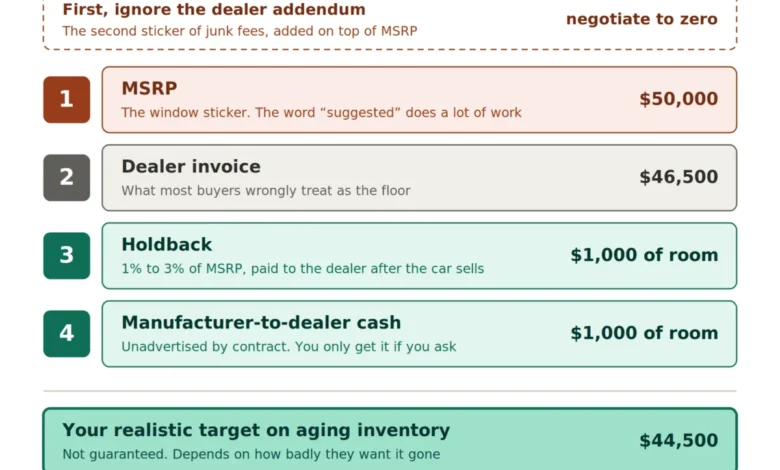
For those who proceed with a new purchase, navigating the automotive retail landscape requires a sophisticated understanding of dealer pricing structures. The industry utilizes four distinct layers of pricing that often obscure the actual cost of a transaction:
- MSRP (Manufacturer’s Suggested Retail Price): This figure, appearing on the federally mandated Monroney label, serves as a starting point. However, it is frequently inflated by "dealer addendums," which include high-margin, low-value items such as nitrogen-filled tires or VIN etching. These are often negotiable to zero.
- Dealer Invoice: Often mistaken by consumers as the dealer’s actual cost, the invoice price is merely a benchmark.
- Holdback: This is a critical, often misunderstood component. Manufacturers typically refund dealers 1% to 3% of the MSRP after a vehicle is sold. This allows a dealership to sell a vehicle "at invoice" while still securing a profit margin.
- Manufacturer-to-Dealer Cash: These are unadvertised incentives provided by manufacturers to help move specific inventory. Because dealers are often contractually prohibited from advertising these, consumers must proactively inquire about their existence.
Negotiation Strategies and Market Realities
The optimal approach to vehicle acquisition involves treating the process as three distinct, non-overlapping negotiations: the purchase price, the trade-in value, and the financing terms. Mixing these elements allows finance managers to obscure the true cost of the transaction.
Market timing also plays a significant role. The Labor Day weekend, for instance, marks the beginning of the fall sell-off season, a period where dealers seek to clear floor space for incoming model-year inventory. During these windows, pushing for pricing below the dealer invoice is statistically more feasible. Experts recommend securing an "out-the-door" price—which includes taxes, title, license, and documentation fees—in writing from multiple dealerships before physically visiting a showroom. This removes the leverage of the physical environment, where high-pressure sales tactics are most effective.

The 1/10th Rule for Financial Stability
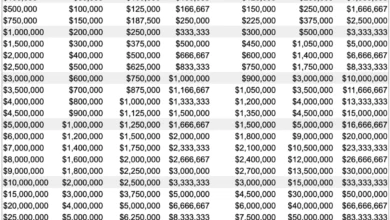
Financial planners often advocate for the "1/10th rule," which dictates that a household should spend no more than 10% of its gross annual income on the purchase price of a vehicle. Given the current average transaction price for new vehicles in the United States, which hovers around $50,000, this rule suggests that a household would require an annual gross income of $500,000 to maintain optimal financial health.
Adhering to this rule serves as a hedge against the financial volatility that often accompanies high-interest automotive loans. With average 60-month loan rates currently elevated, the practice of stretching loan terms to 72 or 84 months to reach a "comfortable" monthly payment often results in the consumer paying significantly more than the vehicle’s actual value due to interest accumulation.
Broader Implications of Vehicle Longevity
The decision to prioritize vehicle longevity over the aesthetic and technological benefits of a new model represents a shift toward more conservative asset management. As vehicles become increasingly complex and expensive, the barrier to entry for new car ownership continues to rise, while the reliability of late-model vehicles has improved significantly.
For many, the transition from viewing a car as a status symbol to viewing it as a utility—a depreciating asset that requires protection from the "anxiety tax"—is a crucial step in long-term wealth preservation. When the psychological burden of ownership is removed, the vehicle serves its purpose as a tool for transportation without imposing the additional, often hidden costs of maintaining a pristine appearance.
Ultimately, the choice to continue repairing a legacy vehicle, especially when facing potential life transitions such as relocation or family expansion, demonstrates a disciplined approach to capital allocation. By decoupling self-worth from the condition of one’s vehicle, consumers can insulate themselves from the pressures of the automotive retail market, prioritizing long-term financial flexibility over short-term consumption.