After four generations of camera stagnation, the Galaxy S27 might finally get a new main sensor

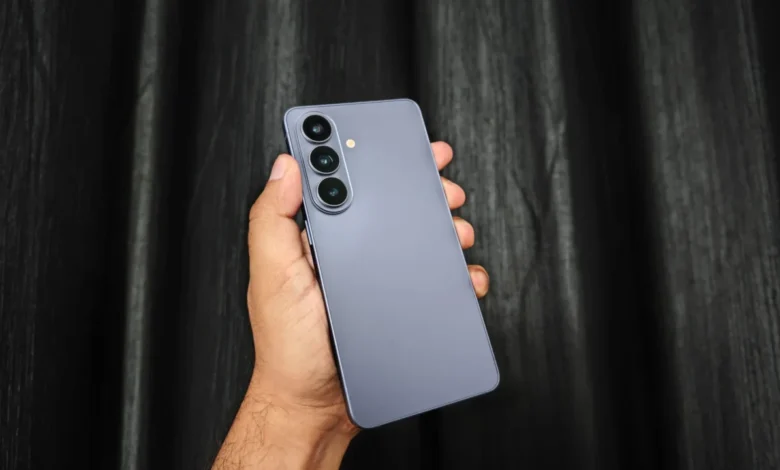
For several product cycles, Samsung has maintained a consistent, if predictable, approach to the camera systems on its non-Ultra flagship devices. Since the introduction of the Galaxy S22 in early 2022, the base and Plus models have utilized a 50MP primary sensor that has remained largely unchanged in its physical dimensions and core architecture. While the company has successfully leveraged more powerful Image Signal Processors (ISPs) within Qualcomm’s Snapdragon and its own Exynos chipsets, as well as increasingly sophisticated artificial intelligence algorithms, the underlying light-gathering capability of the hardware has reached a plateau. The move to Sony hardware represents a strategic pivot that could redefine the photographic hierarchy in the premium smartphone market.
A Legacy of Iteration: The Path from S22 to S26
To understand the significance of the rumored shift for the Galaxy S27, one must examine the chronological progression of Samsung’s camera strategy. The Galaxy S22 series introduced the 50MP ISOCELL GN3 sensor, a capable component that offered a significant jump over the 12MP sensors of previous generations. At the time, it was praised for its balance of resolution and low-light performance. However, this same sensor—or very slight variations of it—persisted through the Galaxy S23, S24, S25, and the most recent Galaxy S26 series.

Throughout this period, Samsung’s competitors were not standing still. Apple transitioned to 48MP sensors with larger physical footprints, while Google’s Pixel line adopted newer G-series ISOCELL sensors and Sony IMX units with superior dynamic range. By the time the Galaxy S26 hit the market, tech analysts noted that while Samsung’s color science and HDR processing were world-class, the raw detail and noise floor of the base models were beginning to lag behind competitors that prioritized hardware upgrades. The reliance on the GN3 architecture became a point of contention for enthusiasts who felt the "standard" flagships were being neglected in favor of the high-margin "Ultra" models.
Technical Analysis: Why a Sony Sensor Matters
The transition from Samsung’s ISOCELL to Sony’s sensor technology is not merely a change in brand; it is a shift in engineering philosophy. Sony’s latest mobile sensors, particularly those under the LYTIA brand, utilize a stacked CMOS architecture that separates the photodiodes and the pixel transistors into different layers. This design allows for larger photodiodes within the same physical footprint, significantly increasing the "full well capacity" of each pixel.
In practical terms, a new 50MP Sony sensor for the Galaxy S27 would offer several key advantages:

- Enhanced Dynamic Range: By capturing more light without saturating the pixels, the sensor can preserve detail in both the brightest highlights and the deepest shadows, reducing the "flat" look sometimes associated with heavy digital HDR processing.
- Reduced Signal-to-Noise Ratio: Sony’s advanced noise-reduction circuitry at the hardware level means that low-light photos—such as those taken in dim restaurants or at night—will appear cleaner with less grain.
- Improved Autofocus Speed: Sony’s All-Pixel Omni-directional PDAF (Phase Detection Autofocus) is widely regarded as the industry gold standard, offering near-instantaneous focus even on moving subjects or in challenging lighting conditions.
- Better Raw Data for AI: As Samsung pushes further into "Galaxy AI" features, the quality of the generative and corrective edits depends on the quality of the input. A sensor that provides more accurate color data and less noise gives the AI a better foundation for features like object removal or night-mode enhancements.
While the resolution is expected to remain at 50MP—a "sweet spot" for mobile photography that allows for efficient pixel binning—the physical size of the sensor and its light-gathering efficiency are the metrics where the S27 is expected to see the most substantial gains.
The Bifurcation of the S27 Series: Standard vs. Pro and Ultra
While the primary camera of the Galaxy S27 and S27+ is set for a major upgrade, early leaks suggest a more conservative approach to the secondary lenses. According to reports from GalaxyClub, the ultrawide camera on the base and Plus models may remain at 12MP. This suggests that Samsung is focusing its research and development budget on the lens used for 90% of consumer photos, while maintaining existing components for specialized shots to manage manufacturing costs.
However, the broader Galaxy S27 ecosystem may see the introduction of a new tier or a more distinct separation for the high-end models. Rumors persist regarding a "Galaxy S27 Pro" or a further enhanced "Ultra" model that would abandon the 12MP standard entirely. These premium variants are expected to feature 50MP sensors across the board—for the main, ultrawide, and telephoto lenses—creating a "triple-threat" system that allows for seamless 4K and 8K video switching without drops in quality or color shifts. Additionally, a new 16MP front-facing camera is reportedly in testing, which would replace the 12MP selfie sensor used in recent years.

Industry Implications and Market Reactions
The potential shift to Sony hardware is a complex move for Samsung, a company that prides itself on vertical integration. Samsung Electronics’ Mobile eXperience (MX) division usually prefers to source components from Samsung LSI (the chip and sensor design arm) to keep profits within the conglomerate. Turning to Sony, its chief rival in the image sensor market, suggests that the MX division has prioritized device performance over internal sourcing.
Market analysts suggest this move is a direct response to the "Prosumer" trend. "Smartphone users are keeping their devices longer, often three to four years," says a senior analyst at a major technology consultancy. "To convince a Galaxy S23 or S24 user to upgrade to the S27, Samsung cannot simply offer a faster chip and a brighter screen. They need a ‘hero feature,’ and a fundamental leap in camera hardware is the most visible way to demonstrate value."
While Sony has not officially commented on the partnership, the Japanese company has been aggressively expanding its sensor production capacity in anticipation of increased demand from top-tier Android manufacturers. If Samsung adopts Sony sensors for its highest-volume flagship series, it would represent a massive win for Sony’s semiconductor division and a significant challenge for Samsung’s own ISOCELL team to innovate and win back the business for the Galaxy S28.

Timeline and Development Stages
As of mid-2026, the Galaxy S27 series is in the "Advanced Prototyping" phase. At this stage, Samsung engineers test multiple hardware configurations to determine which provides the best thermal efficiency, battery impact, and image quality. It is important to note that the presence of Sony sensors in prototypes does not strictly guarantee their inclusion in the final retail units. Samsung often develops parallel prototypes—one with ISOCELL and one with Sony—to leverage better pricing during contract negotiations.
However, the consensus among leakers is that the "ISOCELL fatigue" within the company’s marketing department is real. With the Galaxy S26 having already pushed the 50MP GN3 sensor to its absolute limit, the S27 represents the logical jumping-off point for a new hardware era. The official unveiling of the Galaxy S27 series is expected in January or February of 2027, following Samsung’s traditional "Unpacked" schedule.
Conclusion: A Turning Point for Mobile Photography
If the Galaxy S27 and S27+ indeed launch with Sony-powered primary cameras, it will mark one of the most significant shifts in Samsung’s mobile strategy in recent memory. By moving away from a "good enough" hardware approach and embracing a "best-in-class" sourcing model, Samsung is signaling that it is ready to compete aggressively for the title of the world’s best camera phone.
For the average consumer, this means the next generation of Galaxy phones could finally deliver the "wow factor" in photography that has been somewhat muted in recent iterations. While the megapixels may stay the same, the quality of the pixels is set to change, potentially ushering in a new golden age for Samsung’s flagship photography. As the mobile industry moves toward 2027, all eyes will be on how these Sony sensors integrate with Samsung’s increasingly powerful AI, setting the stage for a high-stakes showdown with Apple and Google.