The Architecture of Resilience: Leadership and Governance in an Era of Perpetual Crisis


If you were alive in 2001, you know where you were 25 years ago this morning. The collective memory of that Tuesday in September serves as a foundational pivot point for the 21st century, marking the transition from a decade of post-Cold War optimism into a period defined by geopolitical instability, rapid technological disruption, and persistent economic volatility. For those working in the heart of New York City’s media and financial districts, the morning began with routine professional tasks—the preparation of newsletters and the calibration of daily market briefs—only to be shattered by the arrival of the first reports of an aerial assault on the Twin Towers.
The subsequent two and a half decades have been defined by what historians often describe as "polycrisis"—a state where multiple global risks interact such that the aggregate impact far exceeds the sum of the parts. From the immediate aftermath of the September 11 attacks to the protracted military campaigns in Iraq and Afghanistan, the 2008 financial collapse, the global COVID-19 pandemic, and the current wave of generative artificial intelligence, the modern era has demanded a recalibration of what it means to lead in the face of uncertainty.
A Chronology of Disruption: 2001 to the Present
To understand the evolution of modern leadership, one must first map the trajectory of the crises that have shaped the global business and political landscape since 2001.
- 2001: The September 11 terrorist attacks fundamentally altered global security protocols, international travel, and the domestic surveillance apparatus.
- 2003–2011: The Iraq War and the continued engagement in Afghanistan redirected trillions in capital and reoriented the focus of global intelligence and military strategy.
- 2008–2009: The subprime mortgage crisis triggered the Great Recession, the most significant contraction of the global economy since the 1930s, necessitating unprecedented government interventions and a total overhaul of banking regulations.
- 2020–2022: The COVID-19 pandemic forced a global lockdown, exposing the fragility of hyper-globalized supply chains and accelerating the digital transformation of the workforce.
- 2022–Present: The invasion of Ukraine and conflict in the Middle East have reignited concerns over energy security, inflation, and the stability of the rules-based international order.
Supporting Data: The Cost of Perpetual Instability
The sheer volume of crises over the last 25 years has had a measurable impact on institutional performance and societal trust. According to data from the World Bank and the IMF, the global economy has faced a recurring pattern of growth shocks. For instance, the 2008 financial crisis saw global GDP contract by 0.1% in 2009, the first such decline in the post-WWII era.
Furthermore, the pandemic era introduced a new variable: inflationary pressure fueled by supply chain disintegration. In 2022, global inflation reached an estimated 8.7%, the highest level since the 1990s, compelling central banks to engage in the most aggressive cycle of interest rate hikes in decades. These statistics represent more than mere numbers; they signify the extreme environmental stress under which business leaders have had to operate, forcing a shift from "just-in-time" supply chain efficiency to "just-in-case" resilience.
The Role of Leadership: Absorbing Fear and Exuding Hope
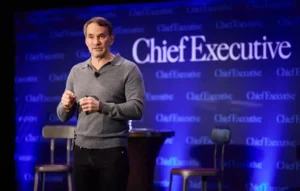
In the professional management sphere, the consensus regarding effective crisis response has shifted toward a model of psychological stabilization. Greg Brenneman, former CEO of Continental Airlines and a seasoned director at Home Depot, articulated this philosophy with precision: "You need to absorb fear and exude hope."
This directive is not merely a rhetorical flourish; it is a tactical approach to organizational management. When an organization faces an existential threat—whether a market collapse or a global pandemic—the primary function of leadership is the containment of panic. If the leadership team mirrors the anxiety of the staff or the market, the organizational structure often degrades into paralysis. By absorbing the fear—taking the weight of the uncertainty onto themselves—leaders create a vacuum that allows them to "exude hope" through the articulation of a clear, actionable path forward.
This strategy was visible during the 2008 financial crisis, where CEOs who were able to communicate transparently about the scope of the damage while maintaining a long-term vision for recovery were the ones who successfully retained talent and market share. Conversely, institutions where leadership succumbed to uncertainty often saw institutional collapse or rapid divestment.
The Rise of Artificial Intelligence: The New Frontier
As we enter the second quarter of the 21st century, the primary crisis-level disruption is the rapid integration of artificial intelligence. Unlike the kinetic crises of the past, AI represents a fundamental shift in the nature of labor, intellectual property, and decision-making.
Analysis from firms like McKinsey & Company suggests that generative AI could add between $2.6 trillion and $4.4 trillion to the global economy annually. However, the same report highlights the significant risk of labor displacement and the necessity for massive workforce upskilling. Leaders today face a dual challenge: they must harness the efficiency of these tools while managing the inherent fear of obsolescence within their organizations. The leadership playbook for this era is still being written, but the core tenet remains the same: the ability to process the volatility of the technology and provide a roadmap that turns disruption into opportunity.
Official Responses and Institutional Adaptation
Governments and corporations have adapted to this era of constant change by creating new internal structures. The post-9/11 era saw the creation of the Department of Homeland Security in the U.S., a massive consolidation of bureaucracy intended to prevent future intelligence failures. In the private sector, the rise of the Chief Risk Officer (CRO) and the increased focus on ESG (Environmental, Social, and Governance) metrics reflect a desire to quantify and mitigate the "aftershocks" mentioned by observers of the last two decades.
The lesson learned from 25 years of continuous upheaval is that stability is a transient state. Leadership, therefore, is no longer defined by the maintenance of the status quo but by the capacity for rapid transition. The most successful organizations have moved from a reactive stance—waiting for the next catastrophe—to a proactive stance, where "stress testing" is a constant feature of the corporate calendar.
Broader Implications and Future Outlook
The ripple effects of the last quarter-century are still being felt. We are currently living in a landscape where the geopolitical tensions of 2001 have evolved into a complex web of economic interdependence and ideological friction. The rise of the digital economy, while providing incredible tools for connectivity, has also enabled the rapid spread of misinformation, which complicates the leadership task of building consensus.
If there is a singular takeaway from the period between 2001 and 2026, it is that the capacity for human endurance is high, but the capacity for institutional failure is also ever-present. Leaders who have thrived in this environment are those who have mastered the art of context—understanding that every crisis, no matter how singular, is part of a broader historical narrative.
The mandate for the next generation of leaders is clear: they must be stewards of resilience. They must operate with the understanding that the "amplitude and aftershocks" of history are not anomalies, but the standard operating environment. By absorbing the fear inherent in rapid change and projecting a grounded, evidence-based hope, they can help navigate the complexities of an increasingly volatile world.
In looking back at the last 25 years, the lesson is not to avoid the storm, but to understand the mechanics of the vessel. Whether dealing with the aftermath of a national tragedy, a global financial collapse, or the dawn of a new technological epoch, the requirement for leadership remains constant: to provide a steady hand, a transparent vision, and an unwavering commitment to moving forward together, regardless of the gravity of the circumstances. The historical record suggests that while we cannot control the arrival of the next crisis, we can certainly control the quality of our response. That, ultimately, is the difference between organizational decline and institutional longevity.